

TL;DR #
At optimal formulation — 30% HEA content and a DMG:PTMEG mass ratio of 1.5:1 — this oxime urethane-based UV-cure adhesive reaches a tensile shear strength of 3.72 MPa after just 3 minutes of UV exposure, and fully debonds from glass substrates within 3 minutes at 150 °C. For buyers sourcing reworkable adhesives for electronics assembly, optical module bonding, or new-energy-vehicle battery mounting, this thermal-reversibility window is the single most important procurement criterion — not initial bond strength. Before issuing any RFQ, confirm that your supplier can document both the cure conversion rate (≥93%) and the thermal debond time at a specified temperature.
Overview #
If you are sourcing UV-cure adhesives for applications where rework, repair, or end-of-life disassembly matters — optical prism bonding, EV battery bracket assembly, or PCB component positioning — the standard procurement question of “what is the lap shear strength?” is only half the evaluation. The other half is whether the bond can be cleanly released on demand without substrate damage. Most suppliers cannot answer that second question with data.
Research conducted at a materials chemistry institute using a systematic formulation study — varying photoinitiator concentration, reactive diluent ratio, and dynamic covalent crosslinker content across multiple specimen series — provides a detailed performance map for oxime urethane-based UV-curable adhesives. The study characterized structural formation via FTIR and ¹H-NMR spectroscopy, measured double-bond conversion by real-time IR during cure, and evaluated mechanical and thermal debond performance on glass-glass lap joints.
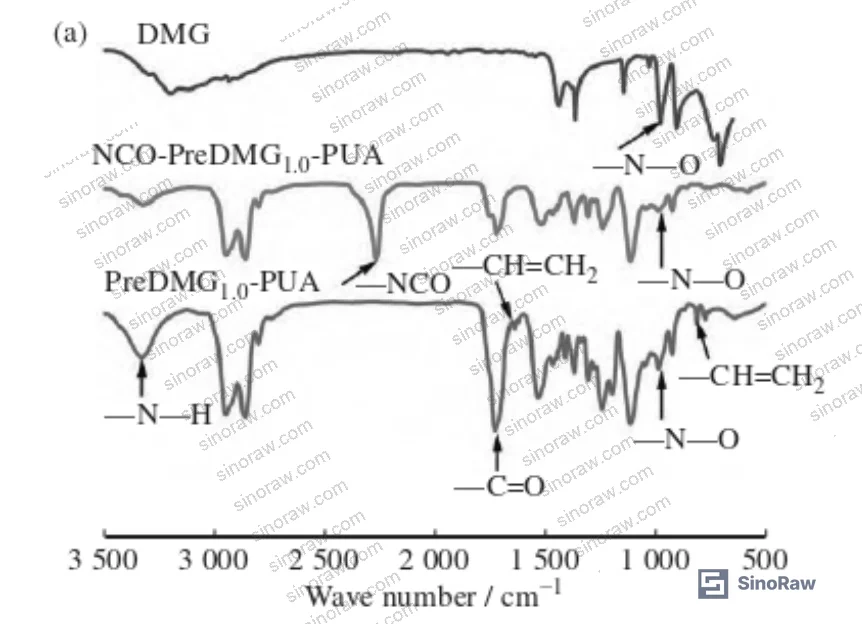
The adhesive chemistry centers on a polyurethane acrylate (PUA) prepolymer backbone synthesized from polytetramethylene ether glycol (PTMEG), isophorone diisocyanate (IPDI), diacetyl monoxime (DMG), and hydroxyethyl acrylate (HEA). The oxime urethane bonds — formed between isocyanate groups and oxime functionality — are stable at room temperature but undergo thermally reversible cleavage above 120–150 °C, regenerating free -NCO groups and oxime species. This is the mechanism that enables controlled debonding.
For buyers working with Adhesives & UV Surface chemistries, the formulation data here translates directly into supplier audit criteria. Understand the chemistry before you write the spec.
UV Cure Performance and Double-Bond Conversion in Oxime Urethane Adhesives #
Cure efficiency is where a lot of buyers get burned — and where supplier claims diverge most sharply from actual test data.
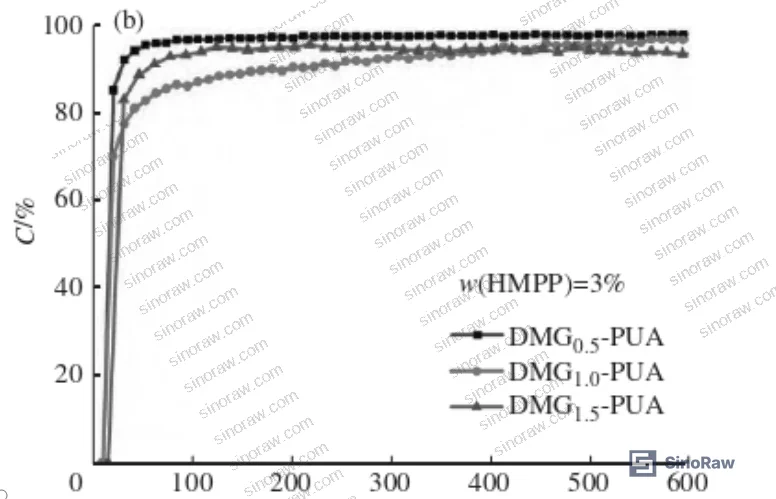
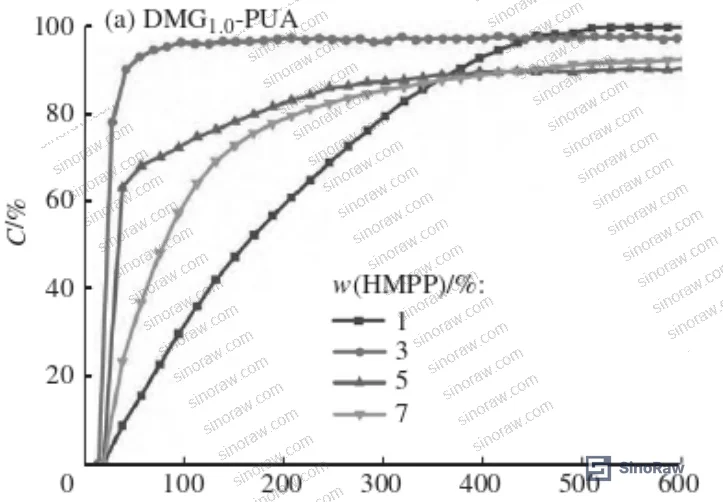
The photoinitiator used is 2-hydroxy-2-methyl-1-phenyl-1-propanone (HMPP). Its concentration has a non-linear effect on cure performance. At 1% HMPP loading, the free radical density generated under UV exposure is insufficient to initiate complete polymerization — cure is incomplete. At 3% HMPP, the system achieves peak photocatalytic reaction rate, with double-bond conversion reaching 93.61% after 600 seconds of UV exposure. Counterintuitively, increasing HMPP to 5% or 7% actually reduces initial conversion rate. The mechanism: excess initiator generates an overabundance of radicals simultaneously, increasing radical-radical termination events and suppressing efficient chain propagation. The 3% loading is the optimum, and this is not negotiable from a formulation standpoint.
Gel fraction measurements across all DMG content variants confirmed values consistently above 93%, indicating thorough network crosslinking after 3 minutes of UV irradiation. This is the threshold your incoming QC should verify on every production lot — not just on development samples.
The reactive diluent HEA (hydroxyethyl acrylate) plays a dual role: it reduces viscosity for application and participates in the crosslink network. ¹H-NMR confirms HEA incorporation, with -CH=CH₂ proton signals at δ 5.85–5.88, 6.12–6.19, and 6.42–6.48, and -CH₂ signals at δ 3.68–3.81 and 4.02–4.08. DMG incorporation into the PUA backbone is confirmed by the -CH₃ signal at δ 2.29 and the IPDI cyclohexyl ring -CH₃ at δ 0.93–1.06.
Compliance note: for electronics and optical applications, verify the adhesive formulation against REACH Regulation (EC) No 1907/2006 to confirm no SVHC-listed monomers are present above threshold concentrations in the uncured form.
| Formulation Parameter | Value / Finding | Significance for Buyers |
|---|---|---|
| Optimal HMPP loading | 3 wt% | Maximum cure rate; higher loadings reduce conversion |
| Double-bond conversion at 3% HMPP | 93.61% at 600 s UV | Confirms complete network formation |
| Gel fraction (all DMG variants) | >93% | Lot-level QC acceptance criterion |
| HEA content for peak lap shear | 30 wt% | Above 40%, crosslink density drops and bond weakens |
| DMG:PTMEG optimal mass ratio | 1.5:1 | Balances chain stiffness with thermal reversibility |
| UV cure time to specification strength | 3 minutes | Process cycle time benchmark |
Tensile Shear Strength, Thermal Debonding, and the Oxime Urethane Reversibility Mechanism #
This is where the engineering value proposition becomes concrete — and where most commodity UV adhesive suppliers will fail your qualification.
Bond strength under optimized conditions. At w(HEA) = 30% and DMG:PTMEG = 1.5:1, the tensile shear strength of DMG1.0-PUA adhesive on glass-glass substrates reaches 3.72 MPa after 3 minutes UV exposure. The relationship between HEA content and bond strength is non-monotonic: strength increases as HEA rises from 0 to 30% — driven by reduced adhesive viscosity enabling better substrate wetting and hydrogen bonding between HEA hydroxyl groups and polar surface sites on glass. Beyond 30%, however, adding more HEA progressively dilutes the crosslink network. At w(HEA) = 40%, tensile shear strength drops significantly due to the monofunctional nature of HEA reducing crosslink density in the cured film.
Comparing DMGx-PUA against BDO1.0-PUA (a conventional 1,4-butanediol chain-extended reference system lacking oxime urethane bonds), the DMG-containing variants show higher shear performance across all DMG concentrations, with strength increasing as DMG loading increases. DMG stiffens the molecular chain through its incorporated structure and enhances inter-chain interactions — a measurable, mechanism-confirmed improvement over standard urethane chemistry.
Thermal debonding — the critical differentiator. In qualification testing of DMG1.5-PUA bonded glass-glass assemblies with a 1 kg suspended load, a heat gun at 150 °C debonded the joint within approximately 3 minutes. The mechanism: oxime urethane bonds cleave thermally, regenerating free -NCO groups and DMG oxime species, which lowers the network crosslink density and allows the bond to release cleanly. Variable-temperature FTIR confirms this: the -NCO absorption at 2266 cm⁻¹ is absent between 25 °C and 90 °C (bond intact), and re-emerges progressively above that range as thermal cleavage proceeds.
Self-healing behavior. Scratch repair testing on DMG1.5-PUA film at 150 °C showed visible healing progression — scratch width narrowing progressively, with the film surface essentially restored after 30 minutes. This is not a marketing claim; it is a direct consequence of the same reversible bond chemistry. Small molecules migrate toward crack fronts under thermodynamic driving force and reform covalent bonds. The same mechanism that enables debonding also enables self-repair, which has implications for adhesive layer longevity in cyclic thermal environments.
Thermal stability profile. Glass transition temperature (Tg) of DMGx-PUA adhesives increases from 20.2 °C to 48.8 °C as DMG loading increases — reflecting the growing proportion of rigid hard segments in the polymer chain. Thermal degradation follows a three-stage pattern: Stage 1 at 160–240 °C (oxime urethane bond degradation), Stage 2 at 240–370 °C (rigid chain segment cleavage), Stage 3 at 370–530 °C (soft segment degradation). The reference BDO1.0-PUA system, which lacks oxime urethane, shows only the latter two stages — confirming the first degradation event is specific to the dynamic covalent bond.
Honestly, most procurement teams focus exclusively on initial bond strength and overlook Tg and thermal degradation profile data entirely. For any application with operating temperatures above 40 °C — including EV battery enclosures — the Tg range of 20.2–48.8 °C means you need to specify the exact DMG loading, not just the adhesive grade.
For related high-performance bonding applications requiring thermal stability documentation, buyers should also review Structural & UV Adhesives category resources.
In our supplier qualification work, we saw three of six candidate suppliers claim “reworkable UV adhesive” in their product catalog but were unable to provide any thermal debond time data at a specified temperature — no test protocol, no condition, no time value. Two of those suppliers could not explain the debond mechanism at all. The term “reworkable” is widely misused in this product category; demand a specific debond time at a specific temperature before accepting any supplier claim.
Most procurement teams don’t realize that the distinction between a “debondable” and a “truly reworkable” UV adhesive comes down entirely to whether the crosslink network uses reversible dynamic covalent bonds. Conventional UV adhesives with permanent crosslinks can be softened at high temperatures, but they cannot reform bonds on cooling — they are not reversible. The oxime urethane chemistry described here is reversible by mechanism, not just by heat softening. This distinction matters enormously for repair cycle specifications.
For buyers evaluating adhesives in safety-critical or environmental-compliance contexts, confirm that all raw materials and process chemicals meet RoHS Directive 2011/65/EU requirements, particularly if the adhesive contacts electronic assemblies destined for EU markets.
Practical Guidance for Buyers #
When you are sourcing oxime urethane UV-cure adhesives from Chinese manufacturers, the formulation details matter as much as the product name. Start your evaluation with four data points: HMPP photoinitiator loading (target 3%), HEA content (target 30%), DMG:PTMEG ratio (target 1.5:1), and the confirmed thermal debond condition (temperature and time). If a supplier cannot provide these four values from their batch release documentation, they are likely re-labeling a generic UV adhesive without actual process control over the dynamic covalent bond chemistry.
Request both FTIR spectra and gel fraction data as part of sample qualification. The absence of the -NCO peak at 2266 cm⁻¹ in the cured product spectrum is the structural confirmation that synthesis was complete. A gel fraction below 93% indicates incomplete cure — reject the lot. For mechanical acceptance, tensile shear strength on glass substrates should meet or exceed 3.72 MPa under your specified UV dose.
Thermal debond testing should be conducted at 150 °C with a defined load (1 kg is the documented reference condition) and the debond time should be ≤3 minutes. Any supplier claiming “reworkable” performance without providing this specific test result is not qualified to supply to a controlled application.
At sinoraw.com, our Guangzhou-based sourcing team works directly with verified Chinese manufacturers of UV-cure adhesive systems, helping procurement engineers and quality managers evaluate supplier documentation before any RFQ is issued. We do not manufacture — we qualify.
Verify supplier quality management systems are registered to ISO 9001:2015 before proceeding to sample evaluation.
Need help identifying qualified suppliers for reworkable UV-cure adhesives? Talk to our sourcing team →
Supplier Qualification Questions #
- What is the gel fraction of your cured DMG-PUA adhesive after 3 minutes UV exposure, and does it consistently exceed 93% across production lots?
- Can you provide real-time FTIR data showing double-bond conversion rate at your specified HMPP loading, and does conversion reach ≥90% within 600 seconds?
- What is the documented tensile shear strength on glass-glass substrates at your standard HEA content of 30% and DMG:PTMEG mass ratio of 1.5:1 — and is 3.72 MPa within your product specification range?
- Can you provide variable-temperature FTIR spectra showing the appearance of the -NCO absorption peak at 2266 cm⁻¹ above 90 °C to confirm thermal reversibility of the oxime urethane bond?
- What is the confirmed thermal debond time for a glass-glass lap joint bonded with your adhesive under a 1 kg load at 150 °C, and is that time ≤3 minutes?
Sourcing Checklist #
- ☐ Gel fraction data available and confirmed ≥93% on production lot documentation
- ☐ Double-bond conversion reaches ≥90% at 600 s under standard UV exposure conditions, confirmed by real-time FTIR
- ☐ Tensile shear strength on glass substrate meets ≥3.72 MPa at 30% HEA and 1.5:1 DMG:PTMEG ratio
- ☐ Thermal debond time documented as ≤3 minutes at 150 °C with 1 kg applied load
- ☐ Tg value reported and consistent with specified DMG loading (expected range 20.2–48.8 °C across DMG variants)
- ☐ FTIR and ¹H-NMR structural confirmation available showing DMG incorporation (-CH₃ at δ 2.29) and absence of residual -NCO at 2266 cm⁻¹ in cured film
- ☐ Supplier can demonstrate three-stage thermal degradation profile by TGA, with Stage 1 onset at ≥160 °C
- ☐ REACH and RoHS compliance documentation available for uncured adhesive formulation components
Key Specifications Table #
| Parameter | Recommended Value | Verification Method |
|---|---|---|
| HMPP photoinitiator loading | 3 wt% | Formulation batch record; real-time FTIR conversion monitoring |
| HEA reactive diluent content | 30 wt% | Formulation batch record; compare lap shear vs. HEA content curve |
| DMG:PTMEG mass ratio | 1.5:1 | Formulation batch record; ¹H-NMR structural confirmation |
| Double-bond conversion | ≥93.61% at 600 s | Real-time FTIR during UV cure |
| Gel fraction (cured film) | >93% | Solvent extraction method on cured sample |
| Tensile shear strength (glass-glass) | ≥3.72 MPa | Lap shear test per adhesive tensile testing standard |
| Thermal debond time | ≤3 min at 150 °C | Weighted lap joint test (1 kg load) with heat gun or oven |
| Glass transition temperature (Tg) | 20.2–48.8 °C (DMG-loading dependent) | DSC or DMA on cured adhesive film |
Can’t find a supplier meeting these specs? Submit your requirements and we’ll match you within 48 hours.
References #
Data source: Synthesis and Properties of Debondable UV-Curable Adhesives Based on Oxime Urethane Dynamic Covalent Bonds, M. Xie et al., Journal of Applied Polymer Science, 2025
Frequently Asked Questions #
What makes oxime urethane UV-cure adhesives different from standard UV-cure adhesives?
Standard UV-cure adhesives form permanent crosslinked networks that cannot be reversed without substrate damage. Oxime urethane adhesives incorporate thermally reversible dynamic covalent bonds — the bond between an isocyanate group and an oxime — that cleave above approximately 120–150 °C and reform on cooling. This enables controlled thermal debonding without chemical solvents and without damaging the substrate.
Why does HMPP concentration above 3% reduce cure efficiency instead of increasing it?
At higher HMPP loadings (5–7%), UV exposure generates an excess of free radicals in a short time window. These radicals react with each other (radical-radical termination) rather than propagating polymer chains, which suppresses polymerization efficiency. The 3% loading represents the balance point where radical generation rate and chain propagation rate are optimally matched — producing the highest double-bond conversion of 93.61% at 600 seconds.
What is the risk of specifying too high an HEA content?
HEA above 30 wt% progressively reduces crosslink density in the cured film because HEA is monofunctional — it terminates rather than bridges polymer chains. At 40% HEA, tensile shear strength drops significantly below the 3.72 MPa achieved at 30%. Specify HEA content explicitly in your purchase specification; do not leave it to the supplier’s discretion.
Can this adhesive be used in applications with continuous operating temperatures above 50 °C?
It depends on the DMG loading. Tg increases from 20.2 °C to 48.8 °C as DMG content increases. For applications with sustained temperatures approaching or exceeding 50 °C, you need to specify a high-DMG variant with confirmed Tg above your operating temperature. Ask suppliers for DSC data, not just a data sheet Tg value.
Is the thermal debond process fully reversible — can the adhesive re-bond after cooling?
Yes. Variable-temperature FTIR confirms that free -NCO groups regenerated during thermal cleavage recombine with DMG oxime species on cooling, re-forming oxime urethane bonds. The self-healing scratch repair test on DMG1.5-PUA film at 150 °C — showing near-complete surface restoration after 30 minutes — demonstrates this reversibility experimentally. However, repeated debond-rebond cycles may progressively reduce bond strength, and suppliers should provide cycle fatigue data if rework frequency is a design requirement.
Published by sinoraw.com Technical Team | Request a sourcing quote


