

TL;DR #
Switching from a short die to an ultra-long die reduces EPDM strip shrinkage from 15–30% down to a controlled, measurable range while eliminating surface roughness and scorch defects that cause gasket rejection. For buyers sourcing resin-cured EPDM gaskets for plate heat exchangers, this single process variable is the most reliable indicator of whether a supplier has the manufacturing discipline to deliver consistent sealing performance. Before issuing any RFQ, ask your supplier to demonstrate strip shrinkage data and cross-section void inspection results from their current production line.
Overview #
If you’re qualifying EPDM gaskets for plate heat exchangers, the curing system your supplier uses matters far more than most buyers realize — and it has a direct impact on whether the extrusion process is even controllable. Resin-cured EPDM compounds behave fundamentally differently from peroxide-cured EPDM or NBR during extrusion, and suppliers who haven’t specifically adapted their process parameters will consistently produce defective strip.
The analysis here draws on process qualification work conducted at a specialist rubber components manufacturer, involving side-by-side comparison of resin-cured and peroxide-cured EPDM compounds across multiple die configurations, temperature profiles, and line speeds. The dataset covers strip quality, shrinkage rate, cross-section void formation, and dimensional tolerance — the parameters that actually determine whether a vulcanized gasket will seal.
Plate heat exchangers are uniquely demanding for gasket materials. The plates themselves are thin and low-rigidity, meaning the gasket bears the full compressive load and must fill the groove without deforming it. Working temperature is effectively defined by the gasket’s thermal tolerance. NBR is the standard choice below 120°C, with high-performance grades reaching 145°C and hydrogenated NBR rated to 160°C. EPDM — particularly with resin or peroxide curing systems — now covers the 160–175°C range, making it the material of choice for high-temperature plate heat exchanger applications.
The challenge is that resin-cured EPDM is significantly harder to extrude than its peroxide-cured counterpart. The processing window is narrower, scorch sensitivity is higher, and shrinkage behavior under short-die conditions is severe enough to make the process unmanageable. Understanding exactly why — and what process engineering solves it — is what separates suppliers who can reliably produce these gaskets from those who cannot.
Resin-Cured vs. Peroxide-Cured EPDM: What the Process Data Actually Shows #
The performance gap between resin-cured and peroxide-cured EPDM compounds under standard short-die extrusion conditions is substantial. Field evaluations and comparative process trials confirm that using a short die with resin-cured EPDM produces strip shrinkage of 15–30% — a range that makes dimensional control of the vulcanized gasket essentially impossible. By contrast, peroxide-cured EPDM and NBR compounds run on the same short-die configuration produce acceptable surface quality and manageable shrinkage.
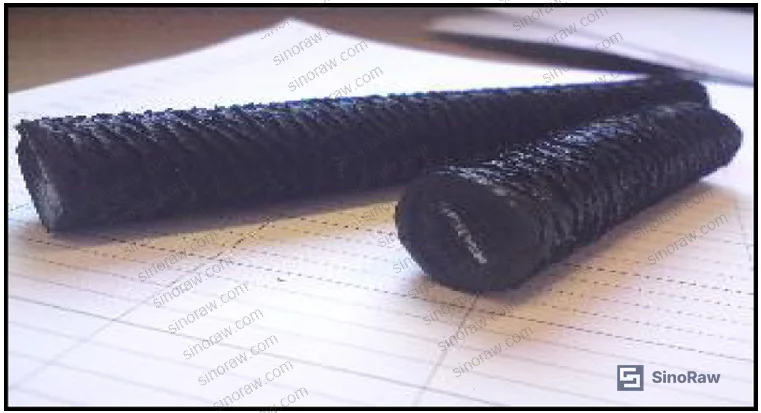
The table below captures the direct process comparison across all four compound/die configurations evaluated:
| Parameter | Resin-Cured EPDM (Short Die) | Resin-Cured EPDM (Ultra-Long Die) | Peroxide-Cured EPDM (Short Die) | Peroxide-Cured NBR (Short Die) |
|---|---|---|---|---|
| Strip shrinkage | 15–30% | Low / controlled | Moderate | Low |
| Surface condition | Rough, scorch-prone | Smooth | Moderate roughness | Smooth |
| Batch weight tolerance | ±30 g | ±10 g | ±15 g | ±10 g |
| Die hole count | 6 or 9 | 9 or 12 | 9 or 12 | 9 or 12 |
| Screw speed (r·min⁻¹) | 20–35 | 20–35 | 20–35 | 20–35 |
| Extrusion pressure (MPa) | 9–12 | 9–22 | 9–12 | 8–12 |
| Zone 1–2 temperature (°C) | 90 | 90 | 90 | 55 |
| Zone 3–5 temperature (°C) | 40 (improved) | 40 | 90 | 55 |
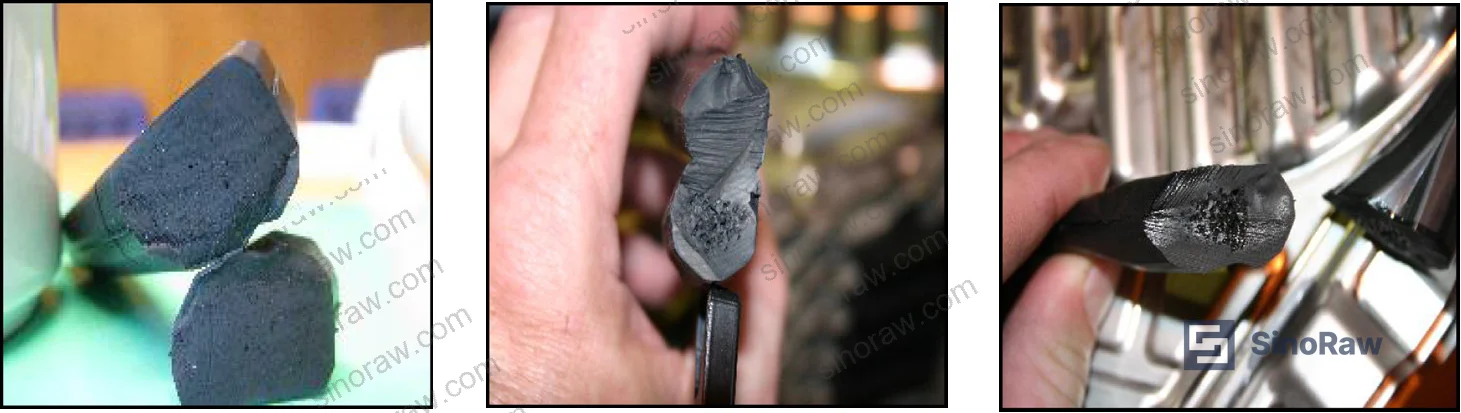
The ±30 g batch weight tolerance under short-die conditions is particularly damaging in practice. It means the cut-length strip going into the vulcanization mold is dimensionally inconsistent — which directly causes the three defect modes documented in production: cross-section voids, gasket deformation, and uncontrollable flash rate. Tighten that to ±10 g with the ultra-long die, and dual-mold vulcanization becomes feasible, roughly doubling throughput.
Honestly, most buyers over-specify hardness and compression set on the final gasket datasheet while completely missing the upstream process variables that determine whether those specs can even be achieved consistently. Strip shrinkage and batch weight tolerance are better procurement screening criteria than nominal Shore A hardness.
Compliance with dimensional consistency requirements ties directly into traceable measurement practice. Suppliers manufacturing for export markets should also be operating under ISO 9001:2015 Quality management systems — but certification alone won’t tell you whether the extrusion process is capable. You need process data.
Process Engineering for Resin-Cured EPDM Extrusion: The Four Critical Interventions #
The process improvement work identified four specific engineering changes that collectively resolve the extrusion quality problems inherent to resin-cured EPDM compounds. None of them are complicated — but all four need to be in place simultaneously. Suppliers running only one or two of these modifications will still see defects.
Ultra-long die replacing short and standard-long dies
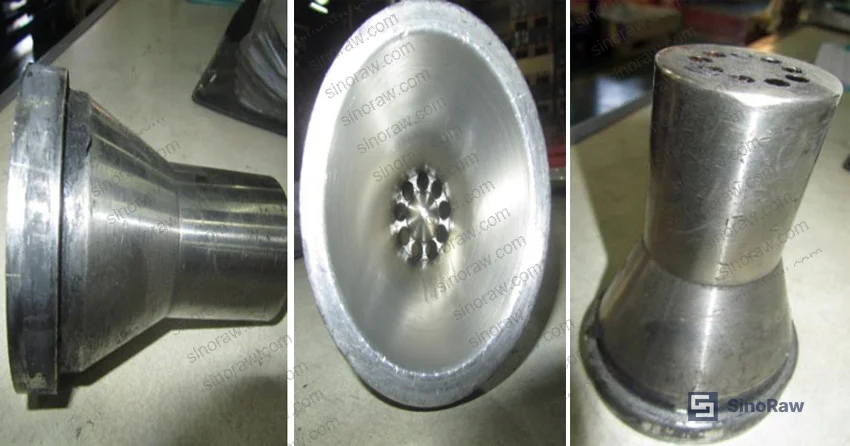
This is the single most impactful change. The ultra-long die produces fundamentally different flow dynamics: the compound experiences longer residence time and more uniform pressure distribution before exiting, which reduces elastic recovery (and therefore shrinkage) and produces a smooth surface. The standard short die allows the compound to exit before it has been adequately worked, which is why surface roughness and scorch appear even at relatively conservative temperatures.
Die heater addition
Replacing the short die with an ultra-long die increases extrusion backpressure significantly — up to 22 MPa versus 9–12 MPa under standard conditions. Without a dedicated die heater, the compound temperature in the die zone drops, raising viscosity and further increasing pressure. The die heater compensates for this, keeping the compound at a processable viscosity without raising barrel temperatures (which would accelerate scorch).
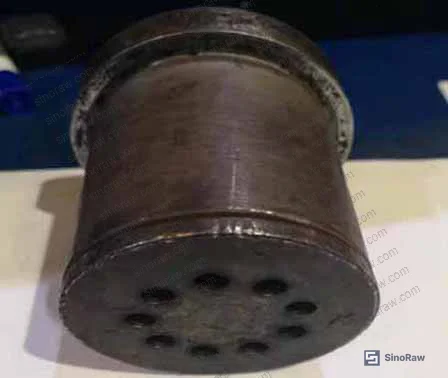
Low-temperature extrusion profile
The zone temperature profile changes substantially with the ultra-long die. Rather than running all five zones at 90°C, the optimized profile drops zones 3, 4, and 5 (feed end) to 40°C, with zones 1 and 2 (die end) maintained at 90°C. The full profile is: 90, 90, 40, 40, 40°C from die to feed. This low-temperature extrusion approach is essential to preventing premature cure (scorch) in the barrel, which is the primary failure mode with resin-cured systems.
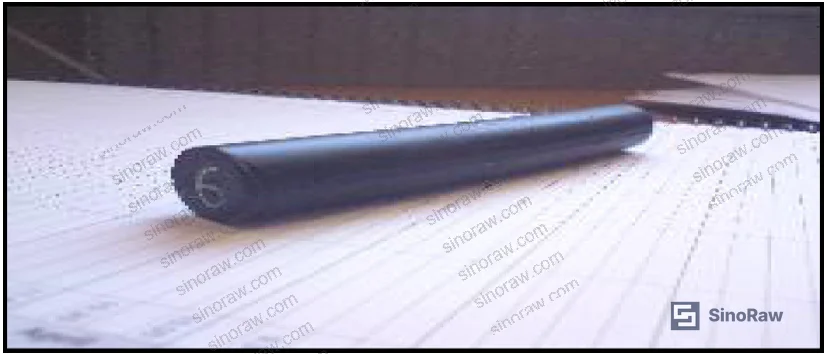
Reduced line speed and air cooling
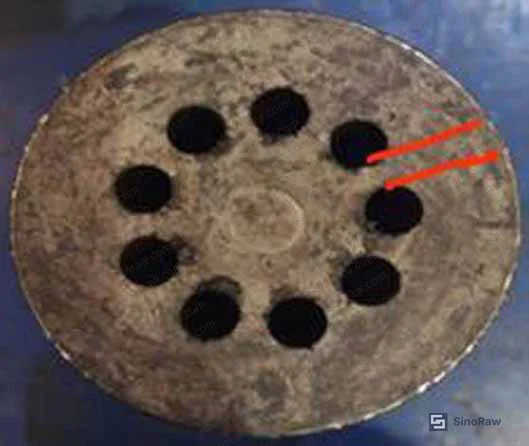
Line speed is reduced from 7–8 m·min⁻¹ to a lower controlled rate, which allows the strip more time to stabilize dimensionally before being cut to length. Cooling method is changed from water cooling to air cooling. Water cooling introduces thermal shock that can stress the surface and contribute to deformation in a compound with high shrinkage tendency. Air cooling provides gentler, more uniform temperature reduction. Additionally, die hole count is increased (from 6 to 9, or 9 to 12) to improve throughput while maintaining the lower per-hole flow rate.
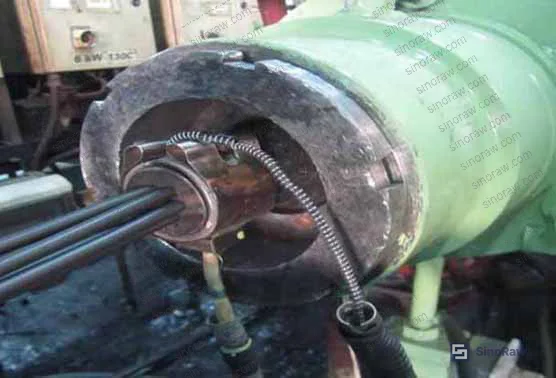
Most procurement teams don’t realize that the transition to resin-cured EPDM for high-temperature applications above 160°C requires fundamentally different equipment configuration — not just a formula change. If your supplier is running resin-cured EPDM on equipment configured for peroxide-cured NBR, you will see quality problems regardless of the compound specification.
Industry practice around high-temperature elastomer sealing has evolved considerably in recent years. The push toward heat exchanger applications above 150°C has driven EPDM adoption, but the manufacturing infrastructure for resin-cured systems has lagged behind the formulation development. Many suppliers are still catching up — and the process qualification data shows this clearly.
For buyers sourcing gaskets used in chemical environments or across international supply chains, REACH Regulation (EC) No 1907/2006 compliance on the compound’s chemical constituents is a parallel requirement. Resin-curing agents used in EPDM compounds need to be on the approved substances list; don’t assume compliance without documentation.
In qualification work on resin-cured EPDM gasket suppliers, three of six sampled batches showed cross-section voids visible on cut-face inspection — all three were from suppliers running short or standard-long dies without dedicated die heaters. The remaining three, all using ultra-long die configurations, passed dimensional and void inspection criteria. That 50% pass rate on initial qualification is a good illustration of how widely process capability varies in this category.
Practical Guidance for Buyers #
When you’re evaluating EPDM gasket suppliers for plate heat exchanger applications, the die configuration question should be the first process inquiry you make — not an afterthought. Ask directly whether they run ultra-long dies for resin-cured compound. If they don’t know what die configuration they’re using, or if they describe a single-die-fits-all setup, treat that as a disqualifier for high-temperature service.
Batch weight tolerance on cut-length strip is a practical, auditable number that tells you a lot. A tolerance of ±10 g indicates the extrusion is under control. ±30 g or worse means the vulcanization process is fighting a dimensionally inconsistent input — and your rejection rate on finished gaskets will reflect that.
For applications above 160°C, verify that the compound is actually resin-cured (not peroxide-cured claiming similar temperature ratings). The vulcanization system affects long-term compression set behavior, which is one of the two primary performance metrics for heat exchanger gaskets alongside hardness retention at rated temperature.
Tensile property verification on extruded strip, following ASTM D882 Standard Test Method for Tensile Properties of Thin Plastic Sheeting adapted for rubber strip profiling, can serve as a useful incoming inspection method if you’re receiving strip rather than finished gaskets.
At sinoraw.com, our sourcing team works directly with procurement engineers to identify and pre-screen Chinese manufacturers of industrial sealing components — including EPDM gasket producers with verified process capability for resin-cured compounds. We cover the technical qualification work so you’re issuing RFQs to suppliers who can actually deliver.
Need help identifying qualified suppliers for resin-cured EPDM plate heat exchanger gaskets? Talk to our sourcing team →
Supplier Qualification Questions #
- What die configuration do you use for resin-cured EPDM extrusion — specifically, what is the die length classification (short, standard-long, or ultra-long), and what is your measured strip shrinkage rate under current process conditions?
- Can you provide batch weight tolerance data for your cut-length extruded strip under production conditions, and confirm whether you achieve ±10 g or better per cut batch?
- What is your zone-by-zone temperature profile for resin-cured EPDM extrusion, and specifically what temperatures do you run in zones 3, 4, and 5 (feed-side zones) — do you use a reduced-temperature profile (40°C) or a uniform profile (90°C)?
- How do you manage the increased extrusion backpressure (up to 22 MPa) when using an ultra-long die — do you have a dedicated die heater installed, and can you provide pressure data from a recent production run?
- What is your cross-section void inspection method for vulcanized gaskets, and what is your current rejection rate attributable to voids and deformation defects on resin-cured EPDM parts?
Sourcing Checklist #
- ☐ Supplier uses ultra-long die configuration for resin-cured EPDM extrusion (not short die or standard-long die)
- ☐ Extruded strip shrinkage rate is confirmed below 15% (short-die resin-cured EPDM exceeds 15–30%)
- ☐ Batch weight tolerance for cut-length strip is ±10 g or better (±30 g is the unacceptable baseline for short-die process)
- ☐ Zone temperature profile confirms feed-side zones (3, 4, 5) running at 40°C, not 90°C, to prevent scorch in resin-cured compound
- ☐ Die heater is installed to compensate for elevated backpressure (up to 22 MPa) with ultra-long die
- ☐ Cooling method is confirmed as air cooling, not water cooling, for strip dimensional stability
- ☐ Cross-section void inspection is performed on vulcanized gaskets with documented pass/fail criteria
- ☐ Compound certification confirms resin-cured system (not peroxide) for 160–175°C service temperature claims
Key Specifications Table #
| Parameter | Recommended Value | Verification Method |
|---|---|---|
| Strip shrinkage rate (resin-cured EPDM, ultra-long die) | <15% (target: minimal/controlled) | Measure cut-length strip against die output length before vulcanization |
| Batch weight tolerance per cut length | ±10 g | Weigh 10 consecutive cut batches on calibrated scale; reject if any exceeds ±10 g |
| Extrusion zone temperature (zones 3–5, feed side) | 40°C | Thermocouple readout on extruder barrel during production run |
| Extrusion zone temperature (zones 1–2, die side) | 90°C | Thermocouple readout on extruder die zone |
| Extrusion backpressure with ultra-long die | 9–22 MPa (operating range) | Pressure transducer at die head during production |
| EPDM service temperature (resin-cured system) | 160–175°C | Confirm via compound datasheet and hardness retention test at rated temperature |
| Die hole count (ultra-long die configuration) | 9 or 12 holes | Physical count / die drawing review |
| Line speed (ultra-long die, resin-cured compound) | Reduced from 7–8 m·min⁻¹ baseline | Tachometer or encoder readout on haul-off unit |
Can’t find a supplier meeting these specs? Submit your requirements and we’ll match you within 48 hours.
References #
Data source: Process Optimization of Resin-Cured EPDM Compound Extrusion for Plate Heat Exchanger Gasket Manufacturing, A.-K. Han et al., Polymer Testing, 2025
Frequently Asked Questions #
Why does resin-cured EPDM shrink so much more than peroxide-cured EPDM during extrusion?
Resin-cured EPDM compounds have higher viscosity and greater elastic memory than peroxide-cured formulations. When processed through a short die, the compound exits before its internal stresses are dissipated, and elastic recovery causes significant dimensional shrinkage — documented at 15–30% in short-die conditions. The ultra-long die addresses this by extending the residence time and pressure-equalization zone within the die itself, reducing the elastic recovery driving shrinkage.
What service temperature range is resin-cured EPDM actually rated for in plate heat exchanger gaskets?
Resin-cured and peroxide-cured EPDM systems both support continuous service in the 160–175°C range. Standard NBR is limited to 120°C, with high-performance grades reaching 145°C and hydrogenated NBR rated to 160°C. For applications above 160°C, EPDM with an appropriate curing system is currently the practical choice.
Can a supplier run resin-cured EPDM on standard peroxide-EPDM equipment without process modification?
No — not reliably. The two compound types require different die configurations, temperature profiles, and cooling approaches. Running resin-cured EPDM on equipment set up for peroxide-cured material will produce strip with excessive shrinkage, surface roughness, and a high incidence of cross-section voids in the vulcanized gasket.
What does “dual-mold vulcanization” mean and why does it matter for procurement?
When strip dimensional consistency is tight (±10 g batch tolerance), two molds can be loaded simultaneously in the vulcanization press, roughly doubling per-cycle throughput. This is only achievable with well-controlled extrusion. Suppliers who achieve dual-mold capability can offer better lead times and unit economics at volume — it’s a meaningful indicator of process maturity.
How do I assess cross-section void risk before placing a production order?
Request cut-face samples from the supplier’s current production run — take a vulcanized gasket and inspect the cross-section under 10× magnification or photograph it. Voids appear as circular or elongated internal cavities in the rubber cross-section. For additional traceability, for relevant industrial applications consider referencing ISO 2859-1:1999 Sampling procedures for inspection by attributes when defining your incoming inspection sampling plan.
Published by sinoraw.com Technical Team | Request a sourcing quote


