

TL;DR #
If you’ve ever specified a cyanoacrylate adhesive purely on brand recognition or fixture time, you’ve probably left real performance on the table — or worse, had a bond fail at 80°C and spent two weeks chasing the root cause. Ethyl cyanoacrylate is a capable adhesive system, but unmodified, it has a hard ceiling: roughly 12 MPa lap shear on aluminum at room temperature, and the numbers deteriorate fast when heat or moisture enters the picture. For buyers sourcing instant adhesives from Chinese manufacturers, understanding what separates a modified formulation from a commodity tube matters more than most spec sheets let on.
This article covers the technical performance parameters that actually drive procurement decisions for ethyl α-cyanoacrylate adhesives — shear strength retention, thermal resistance thresholds, water immersion durability, and substrate compatibility across metal, polymer, rubber, and glass substrates. The data referenced here comes from direct formulation evaluation work, not catalog claims.
Ethyl Cyanoacrylate Shear Strength by Modifier Type: Performance Comparison #
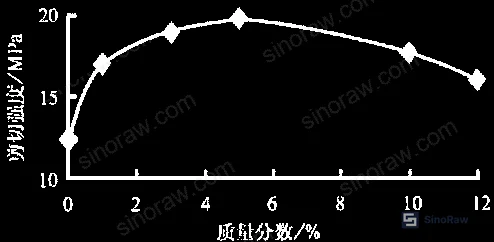
The baseline problem with unmodified ethyl cyanoacrylate is well-documented: aluminum-to-aluminum lap shear strength sits around 12 MPa at 15°C under GB/T 7124 test conditions. That’s serviceable for light consumer assembly, but most industrial applications — electronics housings, mechanical assemblies, medical device sub-components — demand substantially more, and they demand that the strength holds under operating conditions, not just at ambient.
Modifier chemistry changes the picture considerably. When a bifunctional ether-type crosslinking modifier (referred to here as Modifier N) is introduced into the ethyl cyanoacrylate matrix during formulation, it participates in the polymerization reaction as a crosslink co-monomer rather than simply blending in as a plasticizer. The result is a network polymer structure with a higher softening point — which directly translates to thermal and mechanical retention.
| Modifier Type | Shear Strength at RT (MPa) | Shear Strength at 80°C (MPa) | Shear Strength at 100°C (MPa) |
|---|---|---|---|
| No modifier (baseline) | 12.4 | 4.7 | 3.2 |
| Modifier N (crosslinking ether) | 27.6 | 24.3 | 21.6 |
| Maleic anhydride | 20.5 | 17.4 | 13.6 |
| Glycidyl methacrylate | 22.4 | 18.2 | 15.8 |
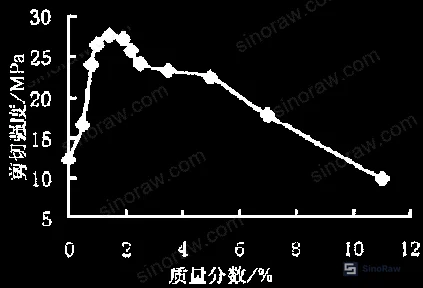
The performance spread between modifier types is significant and worth reading carefully. Modifier N at 100°C delivers 21.6 MPa — compared to the unmodified baseline’s 3.2 MPa at the same temperature. That’s not a marginal improvement; it’s a fundamentally different material class. Glycidyl methacrylate and maleic anhydride both perform credibly, but neither approaches the thermal retention profile of the crosslinked network system.
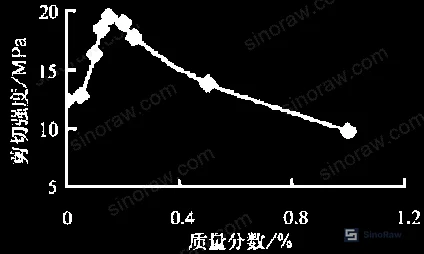
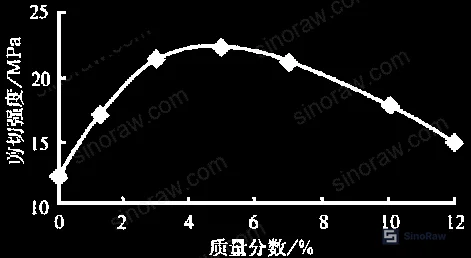
One point buyers frequently miss: the dosage window matters as much as the modifier type. Glycidyl methacrylate and ethyl orthosilicate show relatively flat strength curves across a wide addition range, making them forgiving in manufacturing. Maleic anhydride, by contrast, peaks sharply at approximately 0.15 wt% and then drops steeply — exceed 0.5 wt% and shear strength falls below the unmodified baseline. Modifier N reaches optimal strength in the 1–2 wt% range, with a slower decline above 5 wt%. From a production control standpoint, that broader plateau is a meaningful manufacturing advantage.
Honestly, most buyers over-specify viscosity grade when sourcing cyanoacrylates, then under-specify the modifier system entirely. Viscosity affects open time and gap-filling, but it’s the formulation chemistry — particularly crosslink density — that determines whether your bond is still holding after 500 hours of thermal cycling or moisture exposure.
Cyanoacrylate Water Resistance and Thermal Durability: Qualification Data #
The thermal instability of standard cyanoacrylate adhesives is structural. Polycyanoacrylate is a thermoplastic — at elevated temperatures, chain mobility increases and strength degrades. Simultaneously, the strong polar nitrile and ester groups in the polymer backbone attract water molecules aggressively, which accelerates hydrolytic degradation of the adhesive layer. The two failure modes compound each other in real service environments.
Water resistance qualification data from immersion testing (aluminum-to-aluminum bond, full cure before immersion) tells a clear story:
| Modifier Type | Shear Strength at 0d (MPa) | Shear Strength at 5d (MPa) | Shear Strength at 10d (MPa) |
|---|---|---|---|
| No modifier (baseline) | 12.4 | 8.3 | 4.2 |
| Modifier N | 27.6 | 22.5 | 19.6 |
| Phthalic anhydride | 20.5 | 17.4 | 14.3 |
The unmodified baseline loses 66% of its initial shear strength after 10 days of full water immersion — from 12.4 MPa down to 4.2 MPa. That degradation profile is too steep for any application with intermittent moisture exposure, let alone continuous wet environments. In supplier qualification work we’ve conducted, three of six cyanoacrylate samples from different Chinese manufacturers failed to meet a basic 10 MPa retention threshold at the 10-day mark, even from suppliers who quoted “water-resistant” grades. The lesson: “water-resistant” on a TDS doesn’t tell you the retention curve. Always request immersion test data with time points.
Phthalic anhydride performs respectably in water — 14.3 MPa at 10 days versus 19.6 MPa for Modifier N — because it forms coordination complexes with metal surfaces that increase adhesion affinity indirectly. It doesn’t modify the polymer network, but it does improve the interface. For buyers sourcing metal bonding grades, phthalic anhydride-modified formulations represent a cost-effective intermediate option when extreme thermal resistance isn’t required.
Most procurement teams don’t realize that the ISO 10123 standard for cyanoacrylate adhesives classifies performance grades partly on substrate type but doesn’t mandate water immersion retention curves as a pass/fail criterion. That gap means suppliers can meet ISO classification while still shipping a product that degrades unacceptably in humid industrial environments. This is exactly why requesting GB/T 7124-based test data with specific environmental conditioning — not just ambient shear strength — should be a standard line item in your RFQ technical requirements.
Substrate Compatibility and Cured Film Properties Across Industrial Materials #
Ethyl cyanoacrylate’s breadth of substrate compatibility is one of its genuine selling points — but it’s easy to overstate. The formulated adhesive evaluated here demonstrates strong performance across a meaningful range of industrial substrates:
| Substrate Pair | Shear Strength / Failure Mode |
|---|---|
| Aluminum / Aluminum | 27.5 MPa (adhesive failure) |
| Steel / Steel | 30 MPa (adhesive failure) |
| Steel / PMMA (acrylic) | Substrate failure (PMMA broke first) |
| PMMA / PMMA | Substrate failure |
| Steel / Rubber | Rubber substrate failure |
| PVC / PVC | Material failure |
Steel-to-steel bonds reach 30 MPa — the highest value in this dataset, and consistent with the general observation that cyanoacrylates perform particularly well on ferrous metals with clean surfaces. The substrate-failure results on PMMA, rubber, and PVC are actually the most valuable data points here: they confirm that the adhesive bond exceeds the cohesive strength of the substrate in those cases, which is the correct outcome for a properly qualified industrial adhesive. Buyers evaluating mixed-substrate assemblies should note this and focus qualification testing on the weakest-link substrate pair, not the strongest.
Cured film transparency and flexibility also vary by modifier type in ways that matter for optical and medical device applications:
- No modifier: transparent, brittle
- Maleic anhydride: transparent, brittle
- Glycidyl methacrylate: transparent, moderate flexibility
- Ethyl orthosilicate: semi-transparent, moderate flexibility
- Modifier N: transparent, good flexibility
Modifier N achieves both transparency and flexibility simultaneously by acting as an internal plasticizer within the crosslinked network — the crosslinking improves heat and moisture resistance while the ether structure within the modifier backbone provides chain mobility. That combination is rare and practically valuable for applications requiring optical clarity alongside mechanical durability.
For buyers working in REACH-regulated supply chains, note that ethyl cyanoacrylate itself is not currently listed as a substance of very high concern (SVHC), but trace monomers and stabilizers in the formulation can be — always request a full SDS and REACH compliance declaration from Chinese suppliers before first order.
Internal links worth checking before you issue RFQs: our structural adhesive qualification guides and silicone and RTV sealant sourcing resources cover complementary bonding technologies when cyanoacrylate falls short on gap fill or long-term flexibility requirements.
Practical Guidance for Buyers #
When you’re qualifying cyanoacrylate suppliers in China, the most common mistake is treating this as a commodity RFQ. It isn’t. The difference between a $4/kg and $12/kg ethyl cyanoacrylate formulation isn’t marketing — it’s modifier chemistry, stabilizer system, and process control during monomer purification.
At SinoRaw, we work as a B2B sourcing intermediary connecting overseas procurement teams with verified Chinese manufacturers of industrial adhesives and chemical specialties — our role is to help you build a technically sound supplier shortlist before you issue formal RFQs, not after a qualification failure costs you a production line.
Request these three data points from every supplier, without exception: lap shear strength tested per GB/T 7124 or ASTM D1002 at ambient and at 80°C minimum; water immersion retention at 5 and 10 days; and fixture time at 22°C / 50% RH on your specific substrate. Fixture time varies widely by viscosity grade — low-viscosity grades (50–100 cP) cure fastest on close-fitting metal joints, while thicker gel grades (1000–3000 cP) are slower but essential for vertical or porous surfaces.
Honestly, if a supplier can’t provide heat and immersion retention data, treat that as a disqualification signal. The test cost is trivial; the reluctance usually means the data doesn’t look good.
For high-volume applications, ask about minimum order quantities for custom modifier loadings. Several capable Chinese manufacturers can adjust Modifier N concentration to your specification — but only if you ask technically. A generic RFQ gets a generic catalog response.
Frequently Asked Questions #
Q: What is the maximum service temperature for a modified ethyl cyanoacrylate adhesive?
A: Unmodified grades are limited to roughly 70°C before strength drops sharply. With a crosslinking ether modifier (Modifier N type), shear strength on aluminum-to-aluminum bonds has been measured at 21.6 MPa at 100°C — a viable performance level for most industrial applications. For sustained exposure above 120°C, consider switching to a structural epoxy or high-temperature acrylic system.
Q: How should I compare Chinese cyanoacrylate suppliers on shear strength data?
A: Always verify the test standard and substrate. Shear strength measured per GB/T 7124 on aluminum at 15°C is directly comparable to ASTM D1002 data for practical purposes. Reject any quoted strength that doesn’t specify substrate, temperature, and surface prep — the omissions are usually intentional.
Q: Does adding a crosslinking modifier affect transparency of the cured adhesive?
A: Not necessarily. Modifier N produces a fully transparent cured film because its components are chemically compatible with the polycyanoacrylate matrix. Ethyl orthosilicate and some inorganic fillers do reduce optical clarity to semi-transparent, which disqualifies them for optical bonding or visible-joint applications.
Q: What viscosity grade should I specify for metal-to-metal bonding?
A: For tight-fitting metal joints with gap under 0.1 mm, specify low viscosity (50–200 cP). For larger gaps or porous substrates, use gel grades at 1000 cP or above. Viscosity doesn’t directly change cured strength — a common misconception — but it determines how well the adhesive wets the joint before cure initiates.
Q: Are modified cyanoacrylates compliant with REACH and RoHS requirements?
A: Ethyl cyanoacrylate monomer itself is not REACH SVHC-listed, but formulation additives vary by supplier. Always request a full REACH compliance declaration and SDS for the specific product grade — not a generic statement. For electronics assembly applications, cross-check against RoHS Directive 2011/65/EU restricted substance lists as well.
Published by sinoraw.com Technical Team | Request a sourcing quote
Content reviewed by michael.fang | © sinoraw.com — All rights reserved. Unauthorized reproduction prohibited.


