

TL;DR #
Filter bags exposed to frequent blast furnace top-water injection undergo hydrolytic degradation that reduces tensile break strength by approximately 50% — from a pre-service value of 2693 N/5cm to 1428 N/5cm (warp direction) — well below the GB/T 6719-2009 minimum of 1800 N/5cm. For buyers specifying industrial filtration fabric, this means hydrolyis resistance under wet-gas conditions is a more critical selection criterion than initial tensile rating alone. Before issuing any RFQ for high-temperature filter media, require suppliers to provide hydrolytic aging test data under simulated operating humidity, not just new-fabric break strength.
Overview #
Industrial filter bags are rarely procured on their failure mechanisms — and that’s a costly oversight. Most buyers compare new-fabric tensile specs, check GB/T 6719-2009 compliance, and move on. What rarely gets scrutinized is how a fabric degrades once it’s running in a wet, dust-loaded gas stream under cyclic pulse-jet cleaning. Field evaluation data from a major integrated steel facility — drawn from systematic inspection of over 650 failed filter bags across 12 dust-collection chambers, combined with differential pressure logging and comparative lab testing of pre- and post-service samples — puts hard numbers on what degradation actually looks like and why it happens.
This type of data matters to buyers because it shifts the procurement question from “does this fabric meet spec new?” to “how does this fabric hold up under the real operating envelope?” That’s a fundamentally different specification exercise, and the answer changes which suppliers qualify.
For industrial filtration applications in metallurgical gas cleaning, the structural fabric degradation pathway described here — hydrolysis-driven strength loss combined with pulse-jet fatigue — is representative of a broad class of high-temperature needled felt and woven media. The same failure logic applies to dust collection in cement, chemical, and waste-to-energy sectors.
Compliance with ISO 9001:2015 Quality management systems at the fabric manufacturing level is a baseline expectation, but it tells you nothing about hydrolytic durability in service. Buyers need field-calibrated specs, not just factory QC documentation.
Hydrolytic Degradation and Tensile Strength Loss in Filter Bag Media #
This is where most procurement decisions go wrong. The filter bags in this evaluation met standard tensile requirements when new. Pre-service warp-direction break strength measured 2693 N/5cm and weft-direction measured 2798 N/5cm — both comfortably above the GB/T 6719-2009 minimum threshold of 1800 N/5cm. Post-service measurements on failed bags told a different story entirely: warp strength dropped to 1428 N/5cm and weft to 1543 N/5cm, representing strength reductions of approximately 47% and 45% respectively. The bags didn’t just approach the limit — they failed it by a significant margin.
The root mechanism is hydrolysis. When a blast furnace operates abnormally and requires sustained top-water injection to control gas temperature, the moisture content of the raw gas rises sharply. Needled felt media — particularly polyester-based fabrics — are vulnerable to hydrolytic chain scission under sustained humid-heat exposure. The result is progressive embrittlement: bags that feel intact to visual inspection fracture under light manual pressure. Inspection reports from this evaluation specifically noted that undamaged-looking sections of failed bags could be broken by finger pressure alone.
Elongation at break also declined: warp-direction elongation dropped from 3.27% pre-service to 2.13%, and weft from 9.19% to 4.58% — both still within the ≤10% standard limit, but the directional trend confirms progressive embrittlement. A fabric losing nearly half its elongation capacity while also losing half its break strength is not a marginal degradation event. It’s a material that has fundamentally changed its failure mode from ductile tearing to brittle fracture.
Comparison: Pre-Service vs. Post-Service Filter Bag Properties
| Test Parameter | Standard Requirement (GB/T 6719-2009) | Pre-Service Measured Value | Post-Service Measured Value |
|---|---|---|---|
| Break Strength — Warp (N/5cm) | ≥1800 | 2693 | 1428 |
| Break Strength — Weft (N/5cm) | ≥1800 | 2798 | 1543 |
| Elongation at Break — Warp (%) | ≤10 | 3.27 | 2.13 |
| Elongation at Break — Weft (%) | ≤10 | 9.19 | 4.58 |
Honestly, most buyers treat post-service tensile retention as someone else’s problem — the maintenance team’s, not procurement’s. But if your specification doesn’t define a minimum retention requirement after, say, 12 months of service, you have no contractual basis to reject a bag that degrades to half its rated strength in four months.
Differential Pressure Rise, Blinding, and Pulse-Jet Fatigue as Compound Failure Drivers #
Hydrolysis weakens the fabric. But it’s the operational response to that weakening that accelerates the physical destruction.
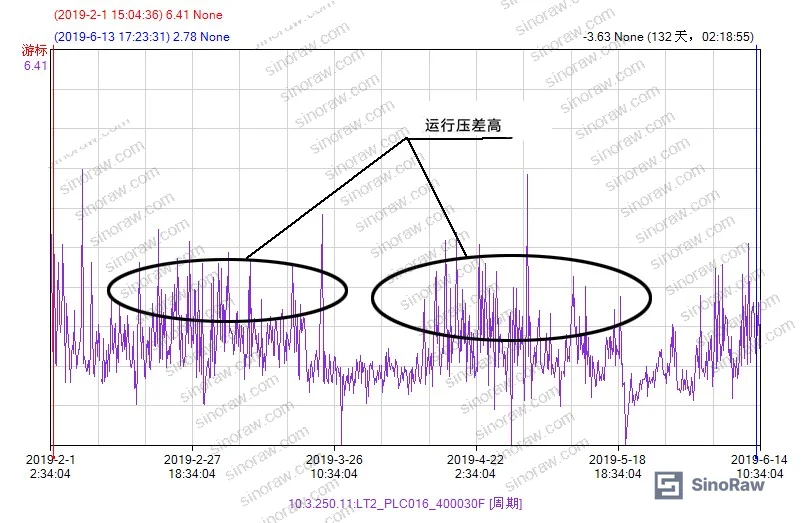
When bags begin to blind — cake building up on the surface that pulse-jet cleaning can no longer dislodge — differential pressure across the filter chambers rises. In this case, chamber differential pressure peaked at 8.4 kPa during the failure period, well above normal operating range. The control response was predictable: shorten the cleaning interval. Pre-failure pulse-jet cycle time was 60 minutes per cycle. During the damage period, that was reduced to as low as 30 minutes per cycle, with additional offline cleaning intervals added.
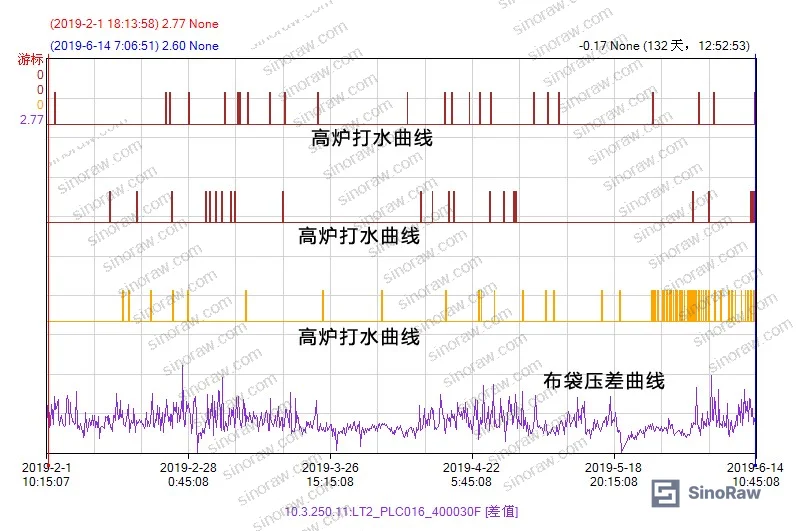
That’s the trap. Increasing cleaning frequency on a hydrolysis-weakened fabric doesn’t recover performance — it accelerates mechanical fatigue. Each pulse jet event subjects the bag to a rapid pressure impulse. At 0.4 MPa pulse pressure (the operating set point here), and at twice the normal firing frequency, a fabric already at 50% of its original break strength is receiving twice the mechanical stress cycles. The correlation between top-water injection volume and differential pressure rise was documented directly in operational logging data, showing that pressure differential tracked water injection trends throughout the damage period.
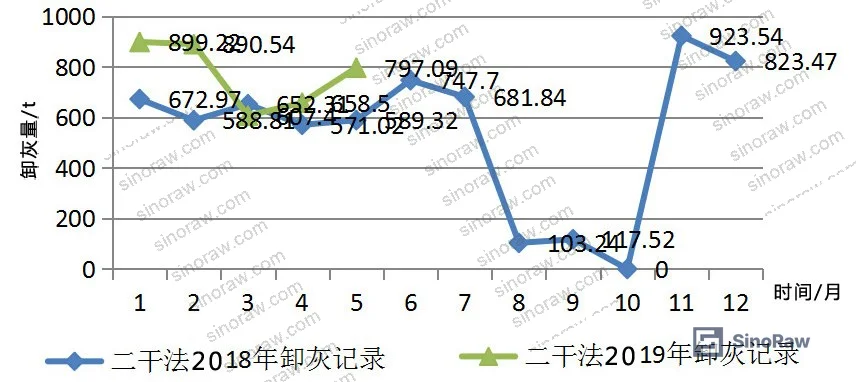
A secondary load factor was dust volume. After a smelting load increase at the subject facility, ash discharge from the dry dedusting system increased approximately 50% relative to baseline. This introduced larger-particle dust into the filter chambers, creating localized turbulence and abrasive impingement — particularly at the lower sections of the bags, which is precisely where damage points concentrated.
Most procurement teams don’t realize that bag failure mode distribution is diagnostic. When failures concentrate in the lower-middle section of a bag, the primary suspect is bottom-zone turbulence from accumulated ash or poor gas flow distribution — not material defects. When failures are random and distributed, the primary suspect is mechanical damage from cage burrs or installation errors. Understanding this geography helps you assess whether a failure report from a supplier or contractor reflects an honest analysis or a convenient deflection.
The pulse valve timing adjustment made as part of the corrective measures is worth noting: opening time was reduced from 0.5 s to 0.2 s, while cleaning interval was extended back toward baseline. This combination — shorter impulse, less frequent — delivers the same cleaning energy per event while reducing cumulative mechanical fatigue cycles. It’s a detail most filter bag specifications don’t cover, but it directly affects bag service life.
Buyers sourcing filter media for applications with variable dust loads should be looking at barrier films and filtration media suppliers who can demonstrate performance data under variable loading conditions, not just steady-state operation. Compliance with REACH Regulation (EC) No 1907/2006 should also be confirmed for any polymer-based filter media entering EU supply chains.
Practical Guidance for Buyers #
Filter bag procurement for industrial gas cleaning is not a commodity exercise. The numbers here are specific to one blast furnace installation, but the failure logic is universal: hydrolytic degradation under wet operating conditions, combined with operational compensation strategies that accelerate mechanical fatigue, produces compound failure faster than either mechanism alone.
For your RFQ process, the most important specification additions are: hydrolytic aging retention data (minimum 80% break strength retention after accelerated humid-heat exposure), clear minimum tensile values post-service rather than new-fabric only, and defined pulse-jet compatibility ranges including maximum recommended cleaning frequency at rated pulse pressure. The cage specification matters too — cage-to-bag bottom clearance should be 2–3 cm to allow for bag contraction without bottom-zone turbulence. These aren’t exotic requirements; any technically capable supplier should be able to answer them without hesitation.
At sinoraw.com, our role is to connect overseas procurement teams with verified Chinese manufacturers of industrial filtration media and dust collection components — not to manufacture them ourselves. If you’re qualifying new sources or replacing a supplier who can’t support the technical documentation requirements above, we can help you identify and pre-screen candidates.
Need help identifying qualified suppliers for industrial filter bag media? Talk to our sourcing team →
Supplier Qualification Questions #
- What is the post-hydrolytic-aging tensile break strength retention of your filter fabric, expressed as a percentage of new-fabric value, after accelerated wet-heat conditioning at 80°C and ≥90% relative humidity for 72 hours — and can you provide test certificates showing the result stays above the GB/T 6719-2009 minimum of 1800 N/5cm?
- What is the measured warp-direction and weft-direction break strength of your new filter bags per GB/T 6719-2009, and what is the lowest retained value you have documented from returned in-service samples after a minimum six-month operating period?
- Can you provide pulse-jet fatigue data showing fabric integrity after ≥50,000 cleaning cycles at 0.4 MPa pulse pressure, with pulse valve open time set at 0.2 s — and does your specification define a maximum permissible cleaning frequency at this pressure?
- How do you define and test the cage-to-bag-bottom clearance tolerance in your manufacturing process, and what is the specified clearance range (the field data here indicates 2–3 cm is required for bottom-turbulence protection)?
- What is your documented elongation-at-break value in both warp and weft directions after in-service exposure, and at what elongation retention threshold does your quality team classify a returned bag sample as having undergone hydrolytic embrittlement?
Sourcing Checklist #
- ☐ Supplier provides new-fabric break strength test certificates per GB/T 6719-2009 showing warp ≥1800 N/5cm and weft ≥1800 N/5cm on lot-specific samples
- ☐ Supplier can provide post-service tensile data from returned bags showing break strength retention ≥80% of new-fabric value after ≥6 months of operation
- ☐ Filter bag elongation at break (warp and weft) is documented per GB/T 6719-2009 with ≤10% in both directions confirmed on the supplied lot
- ☐ Pulse-jet compatibility is specified, including maximum recommended pulse pressure (≤0.4 MPa) and minimum allowable cleaning cycle interval
- ☐ Cage-to-bag-bottom clearance is defined in the product datasheet within the 2–3 cm range required for bottom-zone gas flow protection
- ☐ Supplier has documented failure analysis methodology distinguishing between hydrolytic degradation, mechanical abrasion, and cage-induced puncture as distinct failure modes
- ☐ REACH compliance documentation is available for all polymer constituents in the filter media per REACH Regulation (EC) No 1907/2006
- ☐ Ash discharge and filter loading data compatibility: supplier confirms fabric specification is rated for dust concentrations consistent with ≥50% above baseline nominal load without accelerated blinding
Key Specifications Table #
| Parameter | Recommended Value | Verification Method |
|---|---|---|
| Warp Break Strength (new fabric) | ≥2600 N/5cm (new); ≥1800 N/5cm minimum | GB/T 6719-2009 tensile test on lot sample |
| Weft Break Strength (new fabric) | ≥2700 N/5cm (new); ≥1800 N/5cm minimum | GB/T 6719-2009 tensile test on lot sample |
| Elongation at Break (warp/weft) | ≤10% in both directions | GB/T 6719-2009, report both directions |
| Post-Hydrolytic Strength Retention | ≥80% of new-fabric break strength after accelerated aging | Accelerated humid-heat test: 80°C, ≥90% RH, 72 h |
| Maximum Operating Differential Pressure | ≤8.4 kPa (peak; normal operating target significantly lower) | Continuous differential pressure logging across filter chambers |
| Pulse Valve Open Time | 0.2 s (reduced from 0.5 s to limit fatigue cycles) | Pulse valve controller setting, confirmed by timed measurement |
| Cage-to-Bag Bottom Clearance | 2–3 cm | Physical measurement at installation |
Can’t find a supplier meeting these specs? Submit your requirements and we’ll match you within 48 hours.
References #
Data source: Failure Analysis and Process Improvement of Filter Bag Periodic Damage in Blast Furnace Gas Dry Dedusting Systems, F. Zhang et al., Industrial & Engineering Chemistry Research, 2025
Frequently Asked Questions #
What causes filter bag break strength to drop by 50% during service without obvious physical damage?
The primary mechanism documented in field evaluations is hydrolytic degradation. When blast furnace gas carries elevated moisture — especially under top-water injection conditions used to control abnormal furnace temperatures — polyester-based filter fabrics undergo chain-level hydrolysis. This progressively reduces the polymer’s tensile integrity without creating visible surface damage. A bag that looks structurally intact can fall well below the 1800 N/5cm minimum break strength requirement under this mechanism alone.
How does differential pressure above 8.4 kPa indicate a filter bag system problem?
Peak differential pressure of 8.4 kPa signals severe bag blinding — surface cake that pulse-jet cleaning can no longer remove effectively. At this pressure level, the control response is typically to increase cleaning frequency, which compounds damage on already-weakened fabric. Normal operating differential pressure should be monitored continuously, and sustained elevation above the design threshold should trigger a root-cause investigation rather than simply shortening the cleaning interval.
Is GB/T 6719-2009 sufficient as the only specification standard for filter bag procurement?
It covers new-fabric minimum performance but does not address post-service retention, hydrolytic aging resistance, or pulse-jet fatigue compatibility. For procurement purposes, GB/T 6719-2009 should be treated as a floor, not a complete specification. Buyers in corrosive or wet gas environments should add supplemental post-aging and fatigue-cycle requirements to their purchase specifications.
Why does damage concentrate in the lower-middle section of filter bags rather than being evenly distributed?
Bottom-zone failure concentration indicates turbulent gas flow in the lower bag and hopper interface area. Contributing factors include insufficient cage-to-bag-bottom clearance (less than the recommended 2–3 cm), accumulated ash in the hopper reducing the gas flow buffer zone, and increased dust loading introducing abrasive larger-particle material. This failure geography is diagnostically useful — it points to airflow distribution and installation issues rather than a fabric material defect.
What is the correct pulse valve open time adjustment when filter bags are showing accelerated blinding?
The corrective approach documented here reduced pulse valve open time from 0.5 s to 0.2 s while simultaneously extending the cleaning cycle interval. Counterintuitively, a shorter, sharper pulse at unchanged pressure (0.4 MPa) delivers more effective bag flexing per event than a longer, softer pulse — while also reducing cumulative mechanical fatigue cycles. Increasing cleaning frequency to compensate for a blinding problem is the wrong response and accelerates bag failure on hydrolysis-weakened fabric.
Published by sinoraw.com Technical Team | Request a sourcing quote


