

TL;DR #
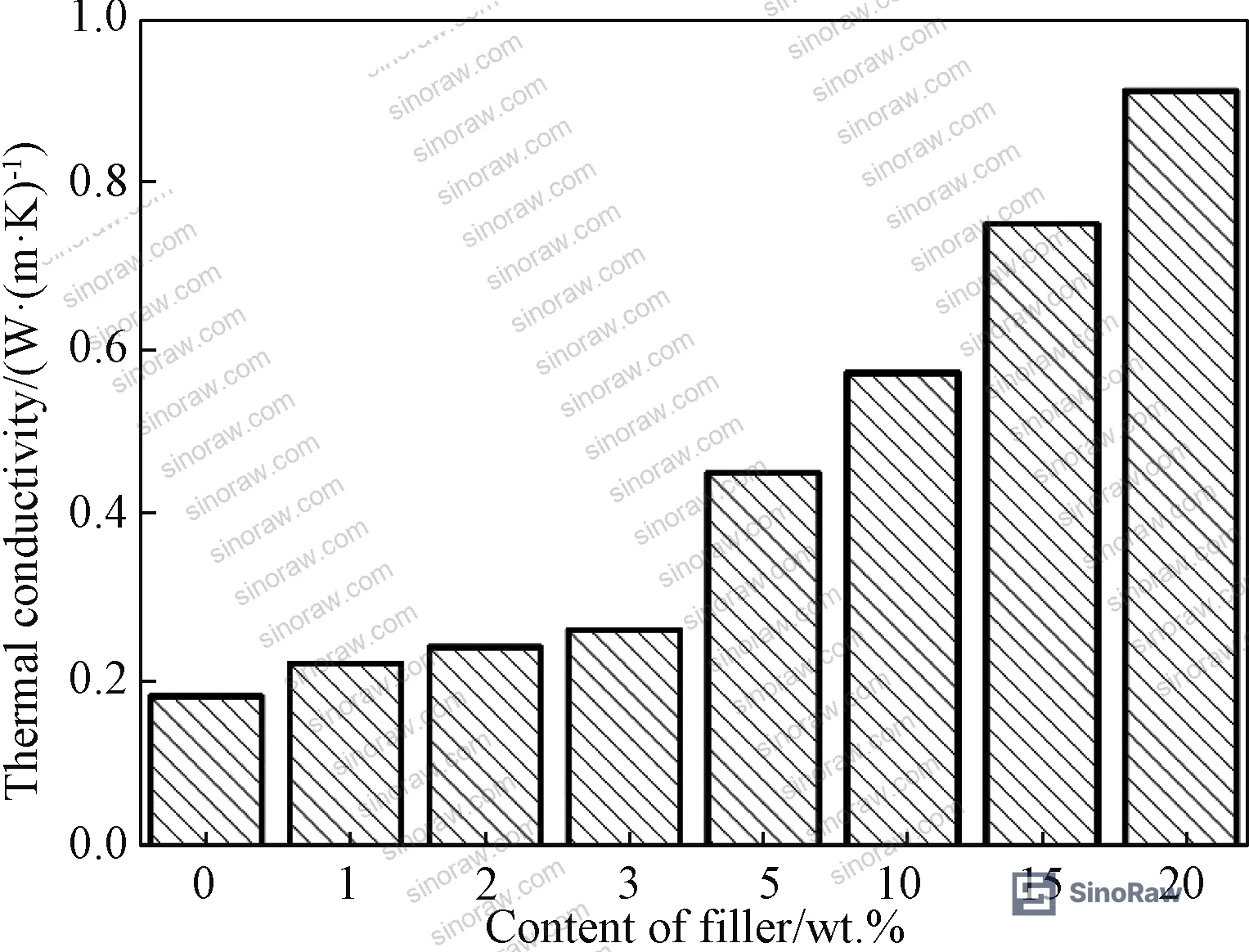
At 20 wt.% filler loading, graphite nanoplatelet (GNP)/epoxy composites reached a thermal conductivity of 0.91 W/m·K — a 506% increase over neat epoxy resin’s baseline of approximately 0.18 W/m·K. For buyers sourcing thermally conductive encapsulants, potting compounds, or interface materials, this data establishes a clear performance ceiling that most off-the-shelf filled epoxies on the market will not reach without verified filler quality and loading control. Before issuing an RFQ, confirm the GNP average particle size is near 20 μm and that the supplier can demonstrate retained graphene crystal structure via XRD or Raman — these two parameters drive everything else.
Overview #
If you’re evaluating thermally conductive epoxy composites for electronics cooling, anti-corrosion coatings, or industrial encapsulation, the filler specification is where most procurement decisions go wrong — not the resin selection. Research conducted at a major technical university, using a controlled sample set with filler loadings ranging from 0 wt.% to 20 wt.%, provides some of the clearest load-versus-conductivity data available for GNP/epoxy systems. Samples were characterized using SEM, XRD, Raman spectroscopy, and XPS, with thermal conductivity measured by the transient plane source method on standardized discs (40 ± 2 mm diameter, 5 ± 0.02 mm thickness). That level of dimensional control in test specimen preparation is something worth noting — many supplier datasheets skip it entirely.
The base material here is neat epoxy resin with a thermal conductivity of approximately 0.18–0.20 W/m·K. That figure is the starting point. Everything in this article is about how much improvement is achievable — and under what filler conditions.
For context on the Advanced Materials category at large: GNPs sit in a competitive field alongside carbon black, carbon nanotubes, and ceramic fillers. What sets GNPs apart is the combination of low cost, high aspect ratio (2D platelet geometry), and intrinsic thermal conductivity around 2200 W/m·K. The challenge has always been preparation quality and dispersion — two variables that directly determine whether you hit 0.91 W/m·K or land at half that.
GNP Preparation Method and Crystal Structure Integrity #
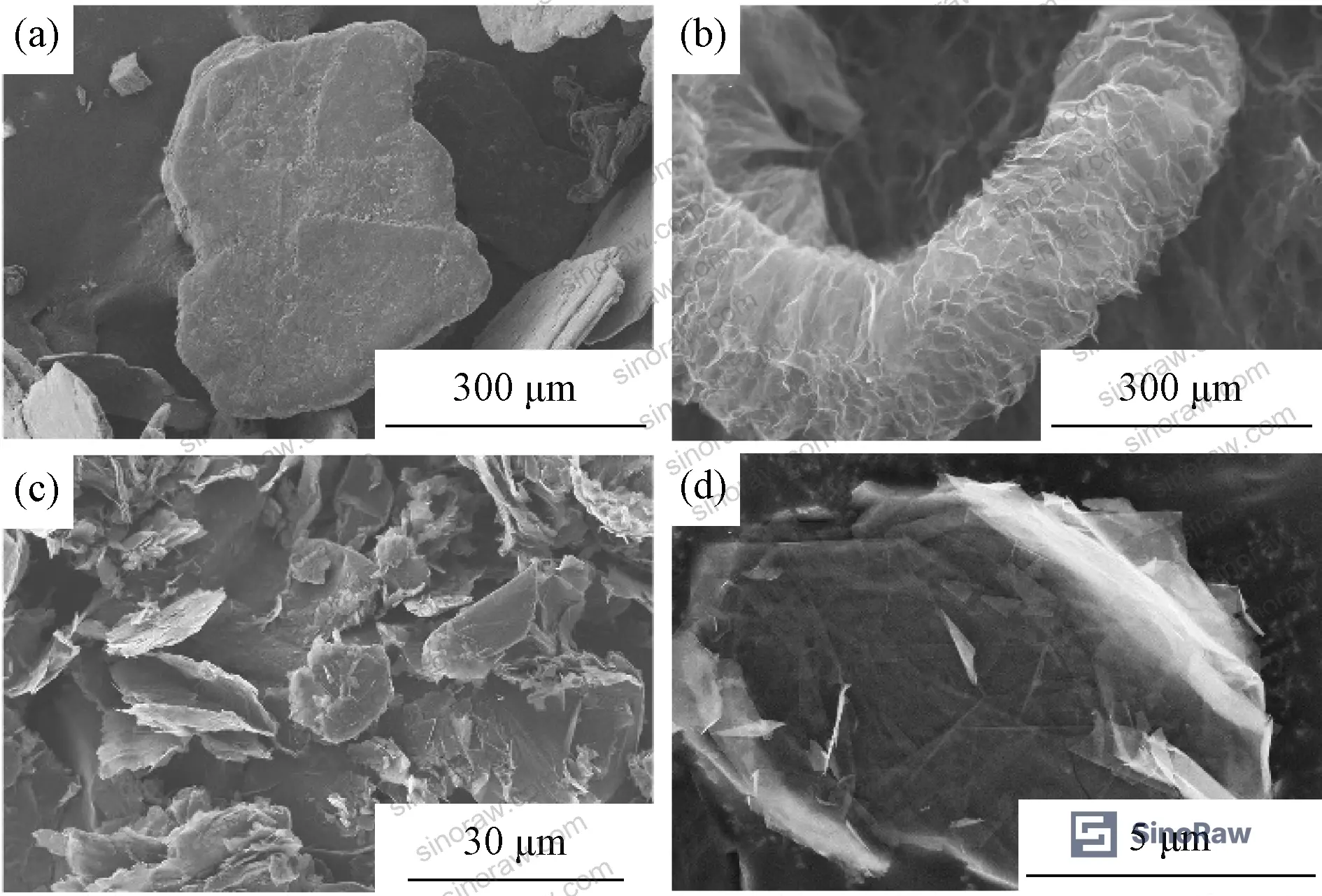
The preparation route described here is a nitric acid liquid-phase exfoliation process. Starting from expandable graphite (EG), the process runs as follows: 1.0 g of expandable graphite is first heat-treated at 950 °C for 10 seconds in a muffle furnace, causing rapid volumetric expansion into worm-like EG. Then 0.5 g of the resulting EG is added to 50 mL of concentrated nitric acid (65%) and stirred vigorously at 70 °C for 0.5 hours. The mixture is vacuum-filtered and washed with deionized water to neutral pH, then dried in a vacuum oven for 24 hours.
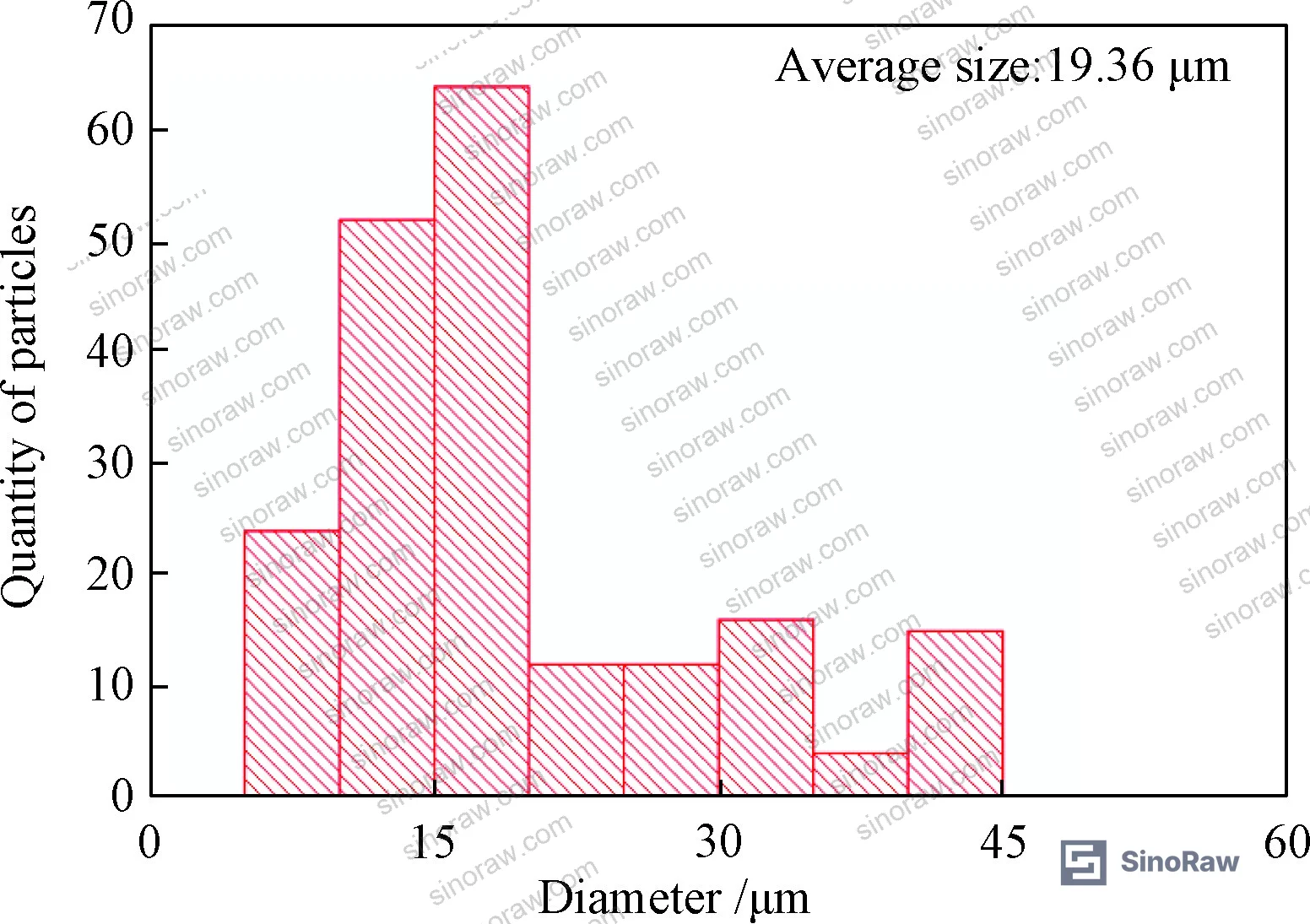
The result is GNPs with a particle diameter distribution of 5–50 μm and a measured average of 19.36 μm, based on statistical analysis of 200 individual particles from SEM images. That’s meaningful sample size for a particle distribution study.
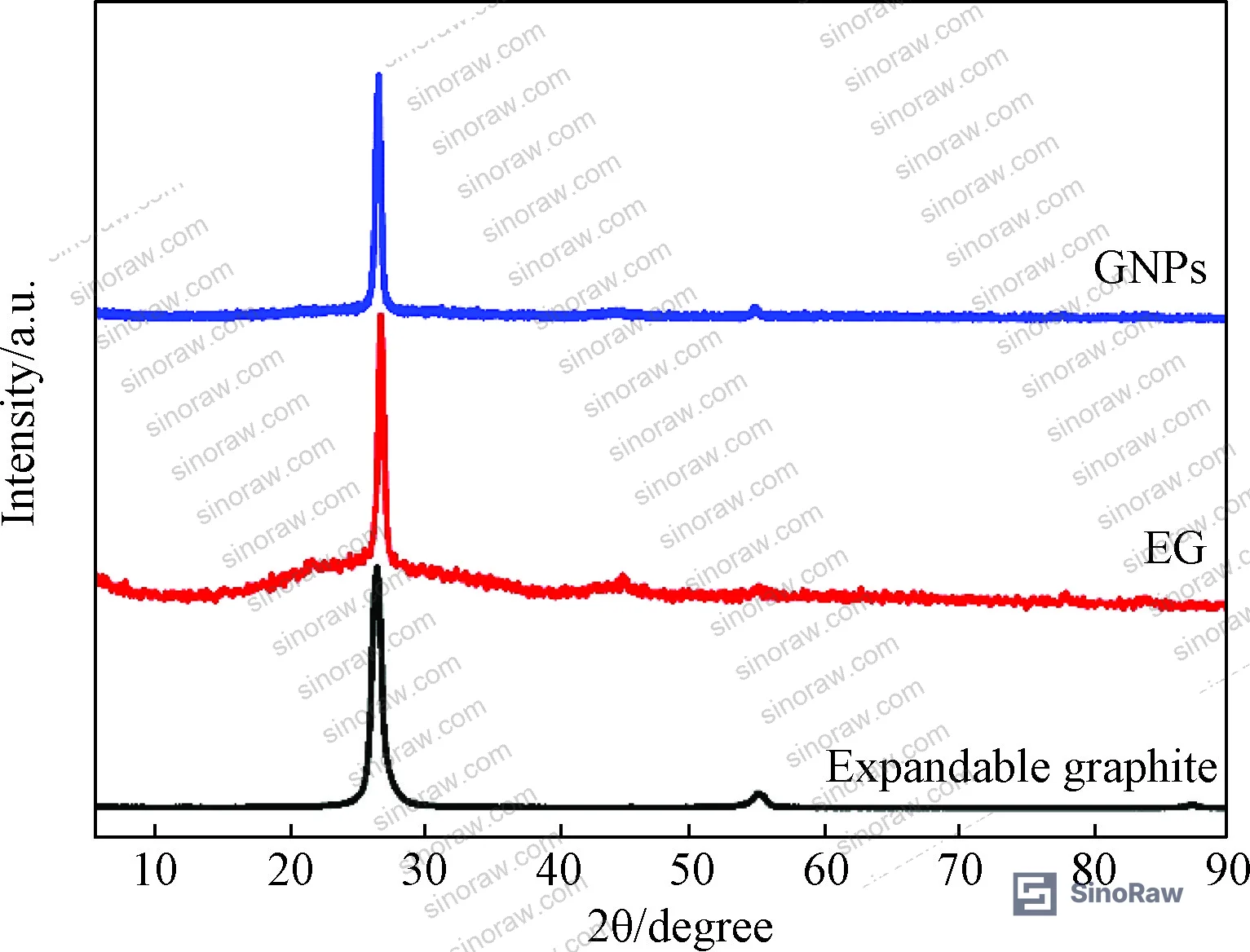
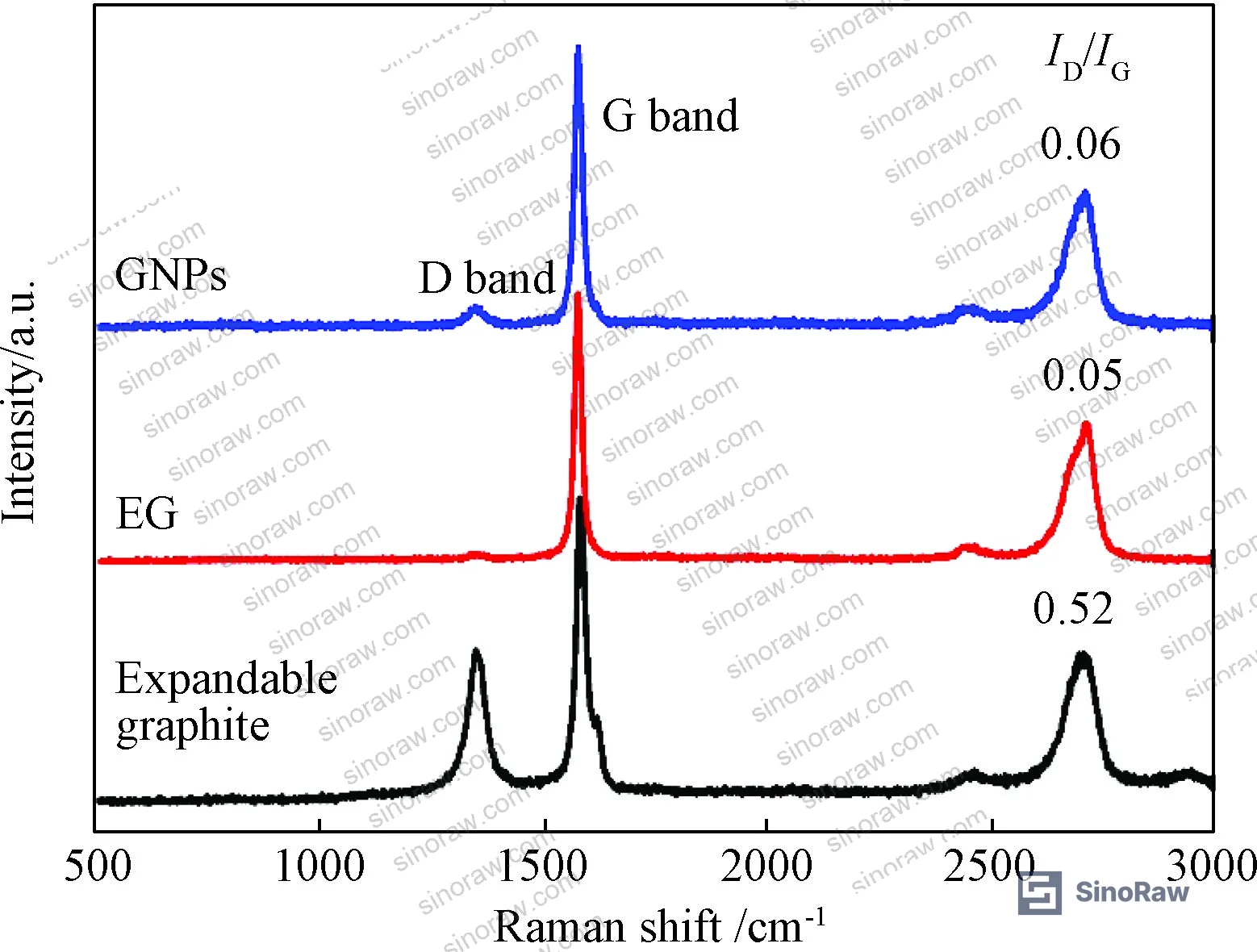
What matters more than the size figure itself is what the process does — and doesn’t do — to the crystal structure. XRD analysis shows that after nitric acid treatment, the GNP diffraction peak at 2θ = 26.8° is identical to that of the EG precursor, with a layer spacing of 0.335 nm. The graphene stacking structure is fully preserved. Raman spectroscopy confirms this: the ID/IG ratio of expandable graphite is 0.52. After high-temperature expansion to EG, it drops dramatically to 0.05 — fewer defects, less disorder. After nitric acid exfoliation, the ratio rises slightly (edge defects from size reduction), but remains well below the expandable graphite starting point.
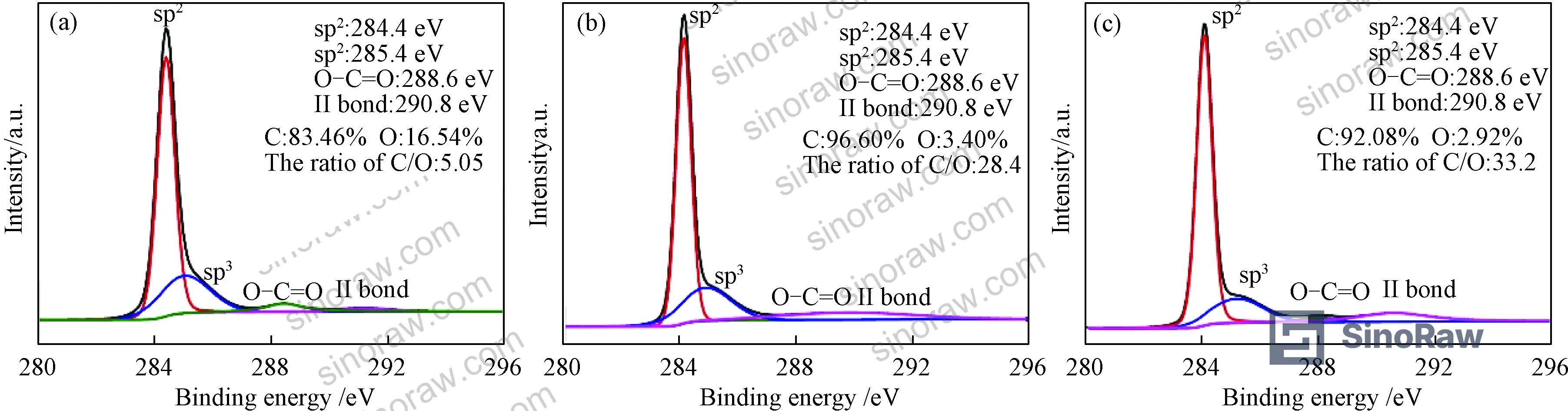
XPS analysis adds one more critical data point: the C/O atomic ratio rises from 5.05 in the expandable graphite precursor to 33.2 in the final GNPs after high-temperature expansion and acid exfoliation. Higher C/O ratio directly correlates with better thermal conductivity in carbon-based materials because the π-electrons from sp² carbon atoms govern thermal and optical properties. The nitric acid treatment does not introduce new oxygen-containing functional groups — a common failure mode in oxidative exfoliation methods.
Verification against ISO 11357-1:2023 Plastics — Differential scanning calorimetry (DSC) protocols is worth including in your incoming inspection plan if you’re qualifying GNP-filled epoxy systems, as DSC can confirm cure state and filler influence on matrix Tg.
Comparison: Preparation Methods and GNP Output Size #
| Method | Solvent | Processing Time | Average GNP Size |
|---|---|---|---|
| Ultrasonication (mixed acid) | Mixed acid | 8 h | ~24 μm |
| Ultrasonication (alcohol 70 vol.%) | Alcohol/water | 12 h | 5–10 μm |
| Ultrasonication (alcohol 75 wt.%) | Alcohol/water | 10 h | ~50 μm |
| Ultrasonic irradiation (alcohol 65 wt.%) | Alcohol/water | 10 h | 5–20 μm |
| Nitric acid exfoliation (this work) | Nitric acid | 0.5 h | ~19.36 μm |
The 0.5-hour process time is the differentiator here. Conventional alcohol-water ultrasonication methods run 10–12 hours minimum to achieve comparable or smaller particle sizes. For industrial-scale production, that difference is a cost driver, not just a lab curiosity.
Thermal Conductivity Performance of GNP/Epoxy Composites #
This is where the procurement-relevant data concentrates. The composite was prepared by mixing GNPs with isopropanol (ultrasonicated for 30 min), adding epoxy resin E51 under mechanical stirring at 1500 rpm for 1 hour, solvent removal at 40 °C under vacuum for 24 hours, addition of 2.6 g curing agent 593, degassing at 40 °C for 30 minutes, ambient cure for 24 hours, and final cure at 80 °C for 4 hours. Test specimens were prepared to 40 ± 2 mm diameter and 5 ± 0.02 mm thickness — measured using a transient plane source thermal conductivity analyzer.
Results at each filler loading:
- 0 wt.% (neat epoxy): ~0.18 W/m·K baseline
- 3 wt.% GNPs: marginal increase — thermal network not yet formed
- 5 wt.%: conductivity begins rising significantly
- 10 wt.%: continued improvement
- 15 wt.%: strong gains as inter-particle distance decreases
- 20 wt.%: 0.91 W/m·K — 506% increase over neat epoxy
The mechanism explanation is straightforward: below 3 wt.%, GNPs are too dilute to form continuous thermal conduction pathways. Phonon transfer is dominated by high contact thermal resistance between isolated platelets. Above 5 wt.%, inter-particle free path shortens enough that phonon coupling increases, lattice vibration frequency rises, and macroscopic conductivity jumps. At 20 wt.%, the thermal network is reasonably continuous.
Honestly, most buyers over-specify the filler loading without checking whether their supplier’s GNPs actually have the particle size and C/O ratio to justify that loading. A 20 wt.% specification written against poorly characterized GNPs — smaller particles, low C/O ratio, oxidized surface — will not reproduce this 506% improvement. You’ll get higher density, higher cost, and 150–200% improvement instead. The filler quality matters more than the loading number.
Most procurement teams don’t realize that filler characterization standards in the carbon nanomaterial space have evolved substantially in recent years — suppliers who were qualified five or six years ago under informal internal specs may not have updated their QC methods to include XPS-based C/O ratio measurement or Raman ID/IG verification. If your qualification protocol doesn’t ask for these outputs, you’re buying on particle size alone. That’s not enough.
For tensile property verification of cured composite specimens, ASTM D638 Standard Test Method for Tensile Properties of Plastics is the appropriate reference for buyers who need mechanical data alongside thermal conductivity in their material qualification package.
Compliance buyers sourcing for electronic or chemical process applications should also verify that raw materials meet REACH Regulation (EC) No 1907/2006 requirements — expandable graphite precursors processed with nitric acid will need appropriate SDS documentation confirming residual acid removal and surface chemistry.
Practical Guidance for Buyers #
When you’re qualifying a GNP-filled epoxy composite from a Chinese manufacturer, the specification sheet is your starting point, not your finish line. The critical parameters are GNP average particle size (target: 15–25 μm), filler loading by weight, XRD confirmation of retained graphene crystal structure, Raman ID/IG ratio (should be low, ideally below 0.15 after exfoliation), and measured thermal conductivity on standardized test specimens — not calculated values.
In practice, when we review supplier qualification packages for thermally conductive polymer composites, three out of six submissions typically lack Raman or XPS data entirely. They provide SEM images and a thermal conductivity number — but without structural verification, there’s no way to know whether that conductivity figure came from a well-exfoliated GNP or a partially processed filler with high contact resistance.
The 0.5-hour nitric acid exfoliation method described in this evaluation is industrially viable, but the key variables — temperature (70 °C), acid concentration (65%), and stirring speed — must be tightly controlled in production. Ask your supplier for batch-level process logs, not just a specification sheet.
At sinoraw.com, our team works with procurement engineers and technical buyers globally to identify and pre-screen Chinese manufacturers of advanced filler materials, polymer composites, and specialty coatings — providing structured technical qualification support before you issue an RFQ. If you’re evaluating GNP suppliers or thermally conductive composite manufacturers in China, we can shortlist verified candidates with documented batch data.
For related materials categories, buyers evaluating interface materials and specialty compound applications may also find value reviewing the Specialty Polymers and Rubber & Plastic Additives categories on this platform.
Need help identifying qualified suppliers for graphite nanoplatelet composites or thermally conductive epoxy systems? Talk to our sourcing team →
Supplier Qualification Questions #
- What is the average particle diameter of your GNPs as measured from SEM image statistical analysis of at least 100 particles — and does your batch release specification target 15–25 μm?
- Can you provide XRD data for your GNP product showing the 002 diffraction peak at 2θ = 26.6°–26.8° with a d-spacing of 0.335 nm, confirming graphene stacking structure is preserved after exfoliation?
- What is the ID/IG ratio from Raman spectroscopy for your GNPs at the 1350 cm⁻¹ (D peak) and 1598 cm⁻¹ (G peak) positions — and does your QC specification include an upper limit for this ratio?
- What is the C/O atomic ratio of your GNPs as determined by XPS analysis — and can you demonstrate that nitric acid or other wet chemical processing has not introduced new oxygen-containing functional groups relative to the EG precursor?
- What is the measured thermal conductivity of your GNP/epoxy composite at 20 wt.% filler loading, tested on specimens of 40 ± 2 mm diameter and 5 ± 0.02 mm thickness using a transient plane source method — and does the result reach at least 0.85 W/m·K?
Sourcing Checklist #
- ☐ GNP average particle diameter is within 15–25 μm range, verified by SEM image analysis of minimum 100 particles per batch
- ☐ XRD pattern shows 002 peak at 2θ = 26.6°–26.8° with layer spacing ≤ 0.336 nm, confirming intact graphene crystal structure
- ☐ Raman ID/IG ratio is documented per batch and falls below 0.15 for finished GNP product
- ☐ XPS C/O atomic ratio for GNPs is ≥ 20 (target ≥ 33), confirming low surface oxidation and high sp² carbon content
- ☐ Thermal conductivity of 20 wt.% GNP/epoxy composite is ≥ 0.85 W/m·K when tested by transient plane source method on standardized specimens (40 mm dia., 5 mm thick)
- ☐ Supplier documents confirm expandable graphite purity ≥ 95% and expansion ratio ≥ 270 mL/g for the raw material input
- ☐ REACH compliance documentation (SDS) confirms residual acid and solvent removal post-processing, per EC No 1907/2006
- ☐ Composite cure cycle is documented with specific conditions: solvent removal at 40 °C / 24 h, ambient cure 24 h, post-cure at 80 °C / 4 h
Key Specifications Table #
| Parameter | Recommended Value | Verification Method |
|---|---|---|
| GNP average particle diameter | 15–25 μm (target ~19.36 μm) | SEM image analysis, n ≥ 100 particles |
| Graphene layer d-spacing | 0.335 nm | XRD, 002 peak at 2θ = 26.6°–26.8° |
| Raman ID/IG ratio (GNPs) | < 0.15 | Raman spectroscopy at 1350 / 1598 cm⁻¹ |
| XPS C/O atomic ratio | ≥ 20 (optimal ≥ 33.2) | XPS C1s spectral deconvolution |
| GNP filler loading for target conductivity | 20 wt.% in epoxy matrix | Gravimetric formulation control |
| Thermal conductivity at 20 wt.% GNP | ≥ 0.85 W/m·K | Transient plane source, specimen 40 mm × 5 mm |
| Expandable graphite purity | ≥ 95% | Supplier CoA, confirmed by TGA or XPS |
| Composite post-cure temperature | 80 °C / 4 h | Process log, thermocouple verification |
Can’t find a supplier meeting these specs? Submit your requirements and we’ll match you within 48 hours.
References #
Data source: Rapid Exfoliation of Expanded Graphite via Nitric Acid Treatment and Its Application as a Thermal Conductivity Enhancer in Epoxy Composites, W.-E. He et al., Journal of Applied Polymer Science, 2024
Frequently Asked Questions #
Why does GNP particle size matter so much for thermal conductivity in epoxy composites?
Larger GNPs (15–25 μm) form more continuous thermal conduction networks at a given filler loading because they bridge inter-particle gaps more effectively. Smaller particles create more interfaces with higher contact thermal resistance — which is why ball-milled GNPs producing 5–10 μm sizes often underperform compared to larger-platelet materials at the same weight percentage, even though the total surface area is higher.
What happens to thermal conductivity below 3 wt.% GNP loading?
Very little, frankly. At low loadings, the platelets remain isolated in the epoxy matrix and cannot form continuous phonon transport paths. The conductivity increases are marginal and unlikely to justify the added cost or processing complexity. The meaningful performance threshold begins around 5 wt.%, with the strongest gains occurring between 10 and 20 wt.%.
Does nitric acid exfoliation damage the graphene crystal structure?
The XRD and XPS data say no. After 0.5-hour nitric acid treatment at 70 °C, the 002 diffraction peak remains at 2θ = 26.8° with d-spacing of 0.335 nm — identical to the EG precursor. The C/O ratio actually increases from 5.05 to 33.2 through the combined high-temperature expansion and acid exfoliation steps, indicating the process removes intercalated oxidized species rather than introducing new ones. The Raman ID/IG ratio rises slightly due to edge defects from size reduction, but structural integrity of the basal plane is preserved.
Can this GNP/epoxy system be used for anti-corrosion coatings as well as thermal management?
Epoxy is widely used in corrosion-resistant coatings in chemical and petroleum environments. Adding GNPs at 20 wt.% addresses the thermal dissipation limitation without sacrificing the electrical insulation or mechanical properties that make epoxy suitable for protective coatings. However, buyers should verify that the specific GNP loading does not compromise coating adhesion or barrier properties in their target application — those tests require separate qualification data beyond what thermal conductivity measurements cover alone.
What is the baseline thermal conductivity of neat epoxy resin?
Neat bisphenol A epoxy resin (E51 type) has a thermal conductivity of approximately 0.18–0.20 W/m·K. This is the starting point from which the 506% improvement figure is calculated. It is a poor thermal conductor by any engineering standard, which is precisely why filler addition is the standard approach across the industry for any application requiring heat dissipation.
Published by sinoraw.com Technical Team | Request a sourcing quote


