

TL;DR #
After 90 days of immersion in 22% hydrochloric acid at 40 °C, FKM gaskets lost 47.23% of their recovery rate with highly erratic degradation behavior — making them a poor choice for chlor-alkali flange applications despite their reputation for chemical resistance. PTFE showed near-zero performance change while EPDM degraded predictably, meaning life expectancy can actually be modeled and maintenance intervals scheduled. If you’re specifying gaskets for HCl service right now, prioritize PTFE for long-term static seals and EPDM where scheduled replacement is operationally feasible.
Overview: Why Standard Chemical Resistance Charts Are Getting Buyers Into Trouble #
The most common procurement mistake I see in chlor-alkali sealing applications is over-reliance on generic chemical compatibility tables. Those tables will tell you FKM has “good” resistance to hydrochloric acid. What they won’t tell you is that under realistic operating conditions — 40 °C, 22% HCl concentration, extended exposure — FKM gaskets can lose nearly half their sealing recovery capacity, and do so in a way that’s nearly impossible to model or predict.
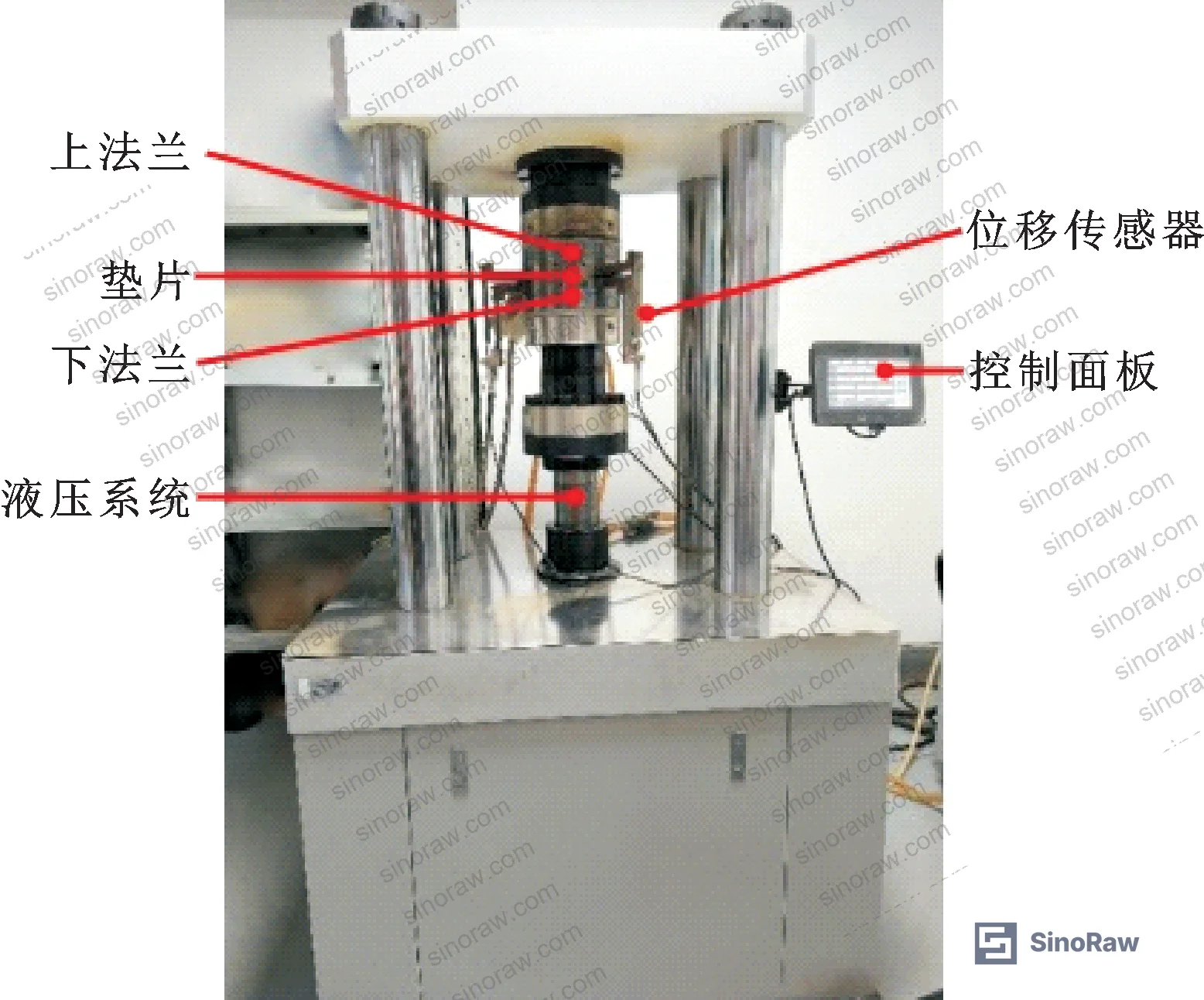
This evaluation draws on controlled laboratory work conducted at a university-based reliability engineering institute, where three non-metallic gasket materials — PTFE, EPDM, and FKM — were subjected to a 90-day acid immersion protocol with compression-resilience testing at seven sampling intervals (7, 14, 21, 30, 45, 60, and 90 days). Sample geometry was standardized at φ115 mm × 34 mm × 1.5 mm (DN25 full-face flanges), and all testing followed the compression-resilience test method for pipe flange gaskets. The dataset covers 69 individual specimens across three material groups, giving the degradation curves enough statistical weight to be meaningful.
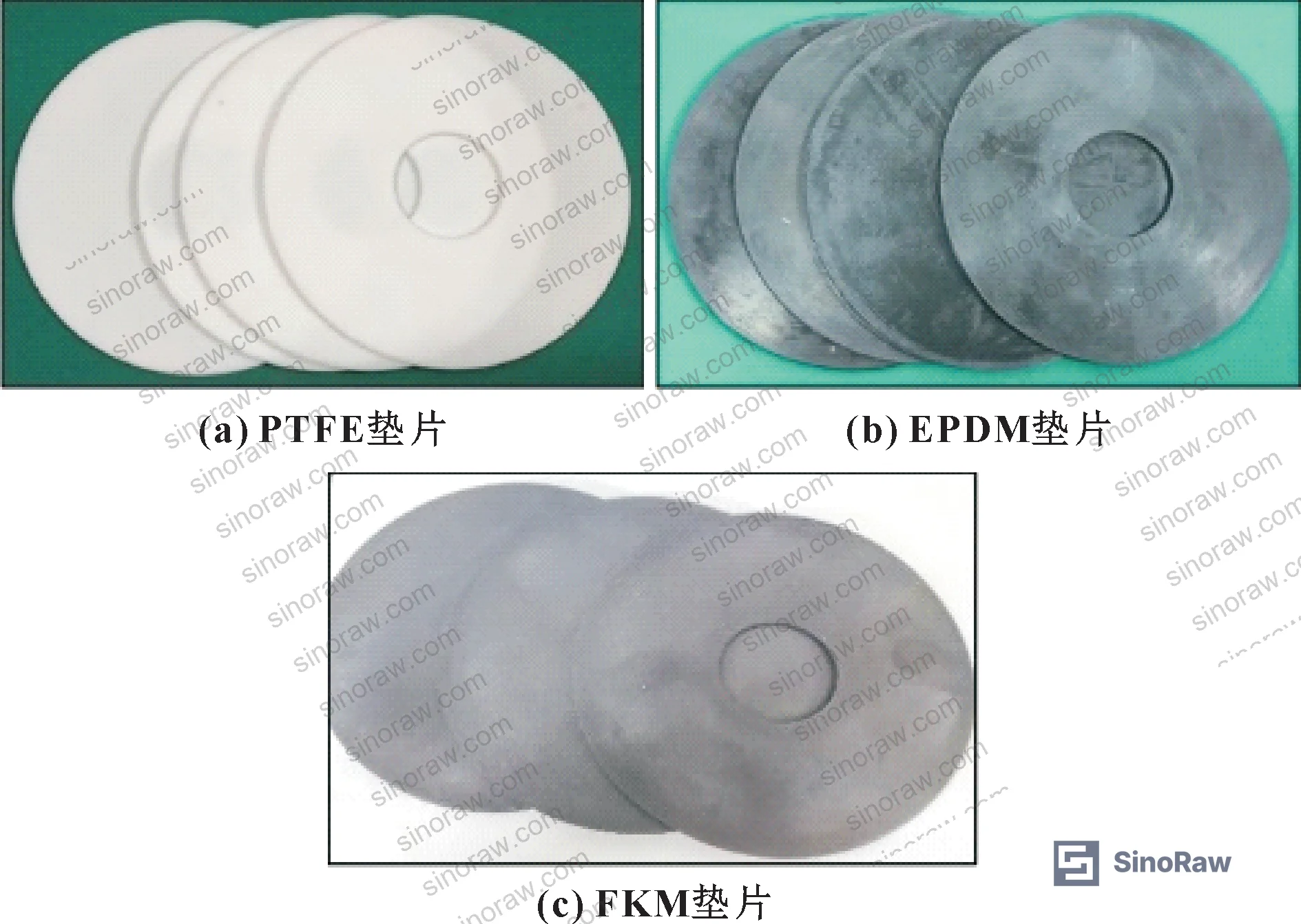
The findings are directly relevant to procurement engineers specifying seals for HCl purification, stripping, and dehydration pipelines. For buyers evaluating Pump & Valve Seals or gasket suppliers in this chemical segment, the data here should inform both material selection and supplier qualification criteria.
Compression and Recovery Performance After HCl Exposure: PTFE vs EPDM vs FKM #
This is where the numbers do the talking — and where the standard compatibility chart falls apart.
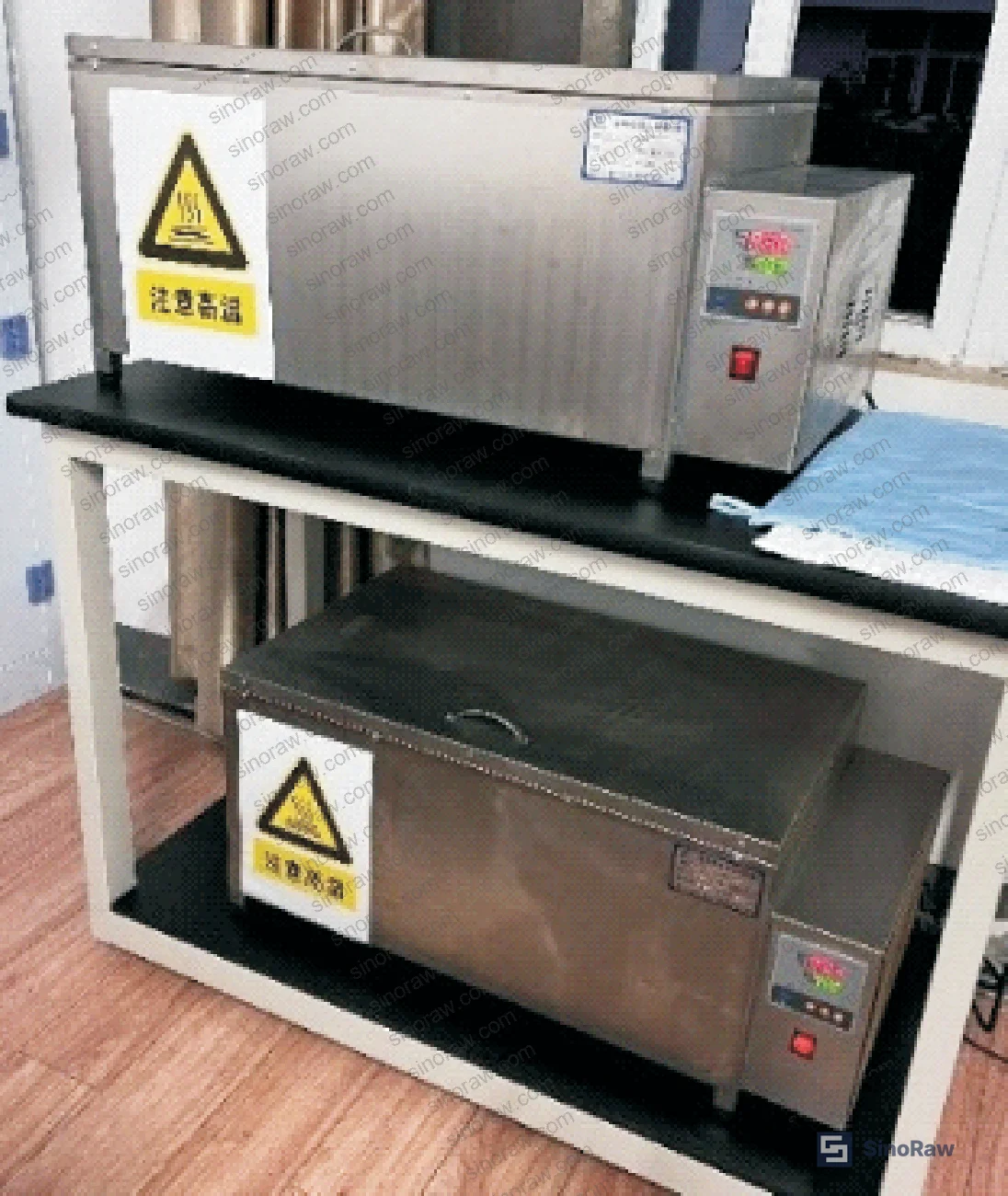
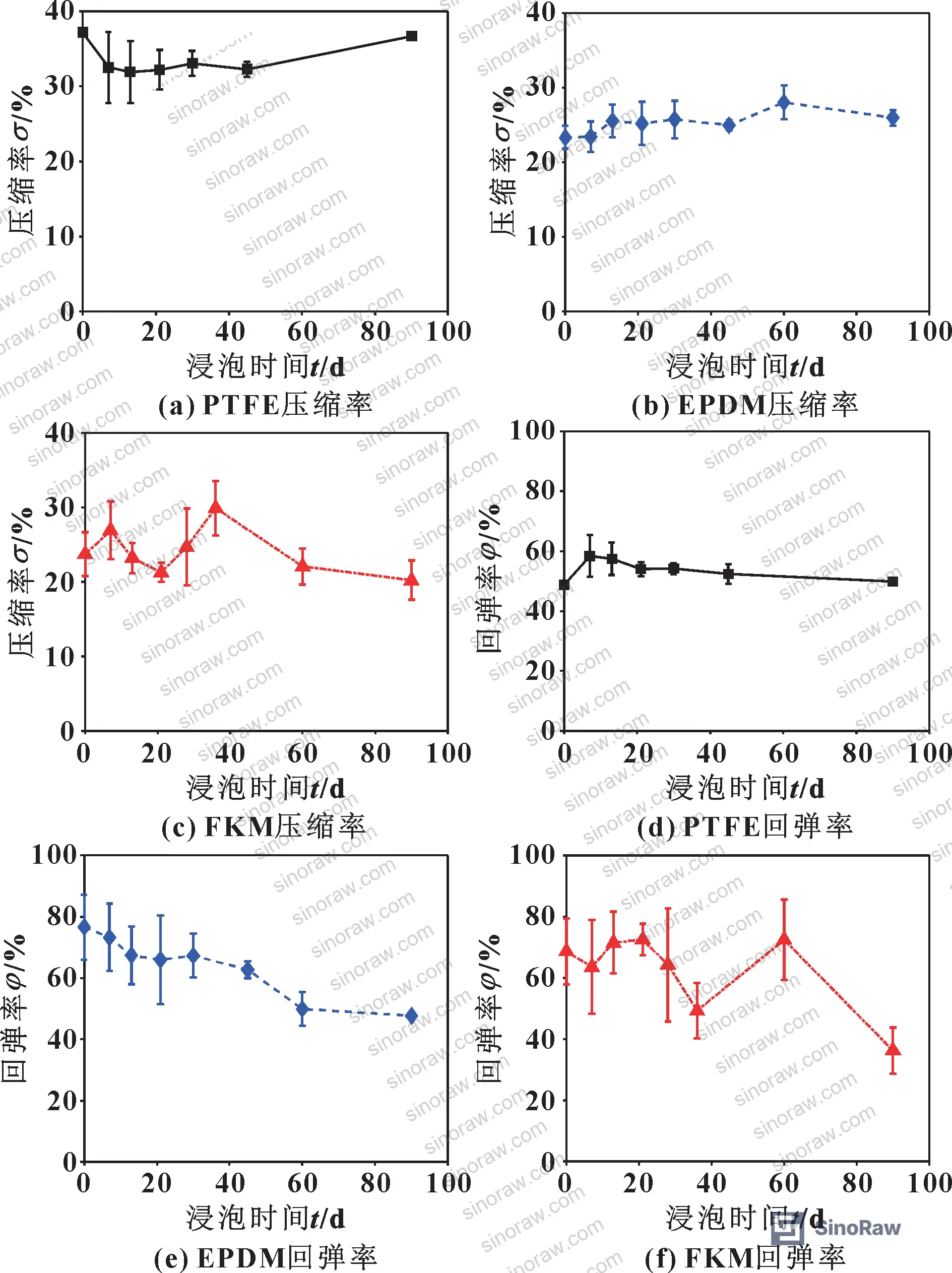
Compression Rate Changes After 90-Day Immersion at 40 °C / 22% HCl:
| Gasket Material | Compression Rate Change | Recovery Rate Change | Degradation Trend |
|---|---|---|---|
| PTFE | −0.97% | +1.80% | Stable — no meaningful degradation |
| EPDM | +11.32% | −37.71% | Stable, monotonic — highly predictable |
| FKM | −14.80% | −47.23% | Unstable — erratic, high scatter |
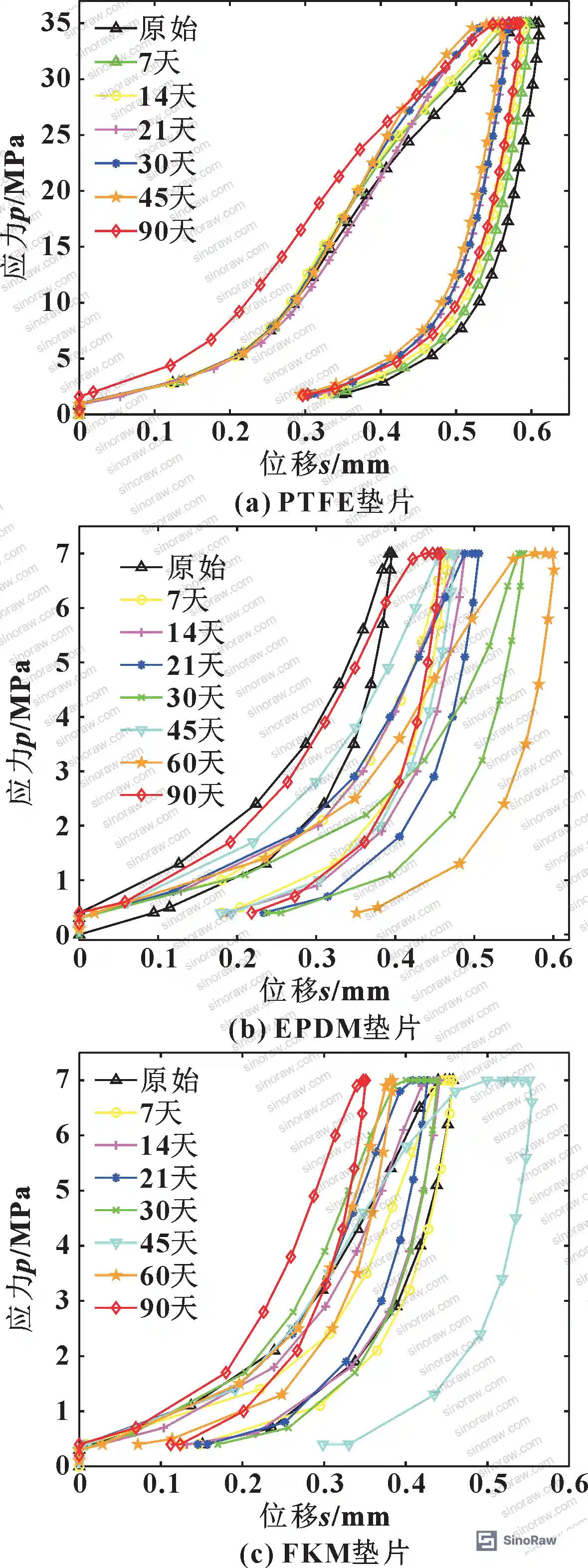
The PTFE result is essentially what you’d expect from a material with C–F bond chemistry: extremely low surface energy, near-zero hydrogen bonding with HCl molecules, and negligible acid penetration. The compression rate barely moved (−0.97%) and recovery actually improved slightly (+1.80%), which reflects the material’s structural stability rather than any meaningful change.
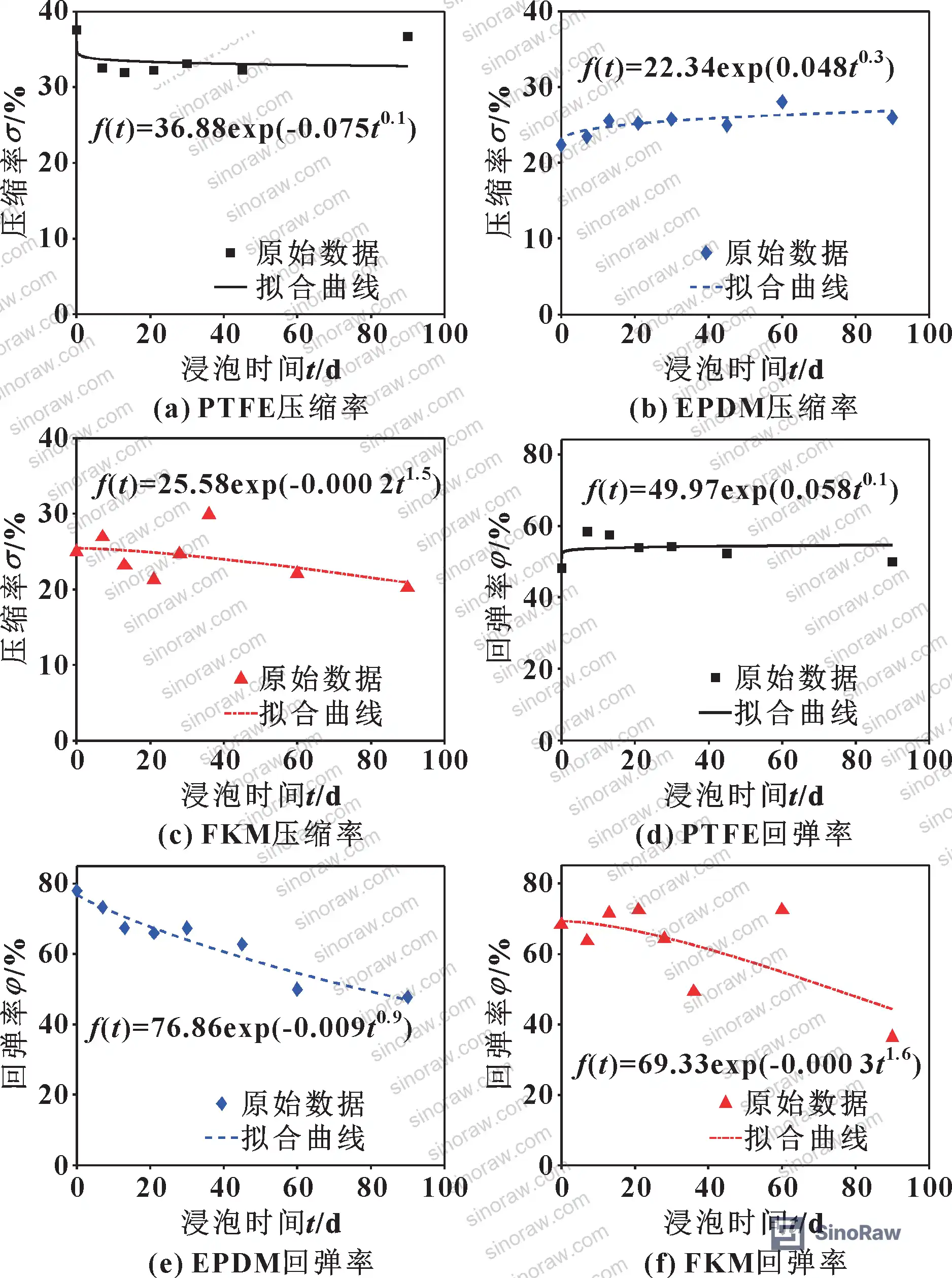
EPDM behaves differently, but in a way that’s actually useful. The compression rate climbed 11.32% over 90 days as HCl penetrated the rubber network and caused swelling. The recovery rate dropped a significant 37.71%. But — and this matters for procurement — the degradation trend was stable and monotonic. When regression modeling was applied using an empirical aging formula, EPDM yielded the lowest root mean square error (RMSE) of all three materials for both compression and recovery models. The EPDM compression model reached minimum RMSE of 0.88% at the model parameter α = 0.3, and recovery model minimum RMSE of 2.73% at α = 0.9. That predictability means you can build replacement intervals around real data.
FKM is the problem case. Both compression rate (−14.80%) and recovery rate (−47.23%) declined simultaneously — which indicates the HCl is attacking not just the rubber network structure but also the physical entanglement points in the fluoropolymer matrix. The degradation scatter was large across the entire 90-day period. When the same aging models were applied, FKM returned the highest RMSE values of the three materials, confirming that its degradation under HCl is not stable enough to model reliably.
Honestly, the FKM result surprised us during qualification review. The material’s vulcanizate structure contains residual unsaturated double bonds from the curing intermediate — and under prolonged HCl exposure, those bonds get polarized and the filler-polymer interaction weakens. The end result is simultaneous compression and recovery loss with high data dispersion. That’s a difficult failure mode to manage in the field.
Degradation Modeling and Service Life Prediction for HCl Gasket Applications #
The practical value of this dataset isn’t just material ranking — it’s the ability to model service life for EPDM in a way you can actually use for maintenance scheduling.
The aging empirical formula applied here uses a power-law exponential form: for monotonically increasing performance metrics, f(P) = A·exp(k·t^α), and for decreasing metrics, f(P) = A·exp(−k·t^α). The constants A, k, and α are determined by nonlinear regression across the experimental dataset, with α stepped through the interval (0, 2) in 0.1 increments to find the minimum RMSE.
For EPDM specifically, this approach works well. The compression rate increases smoothly and the regression fits tightly. For procurement purposes, this means a supplier providing EPDM gaskets for HCl service should be able to give you not just a material spec sheet, but a projected service interval based on your operating conditions.
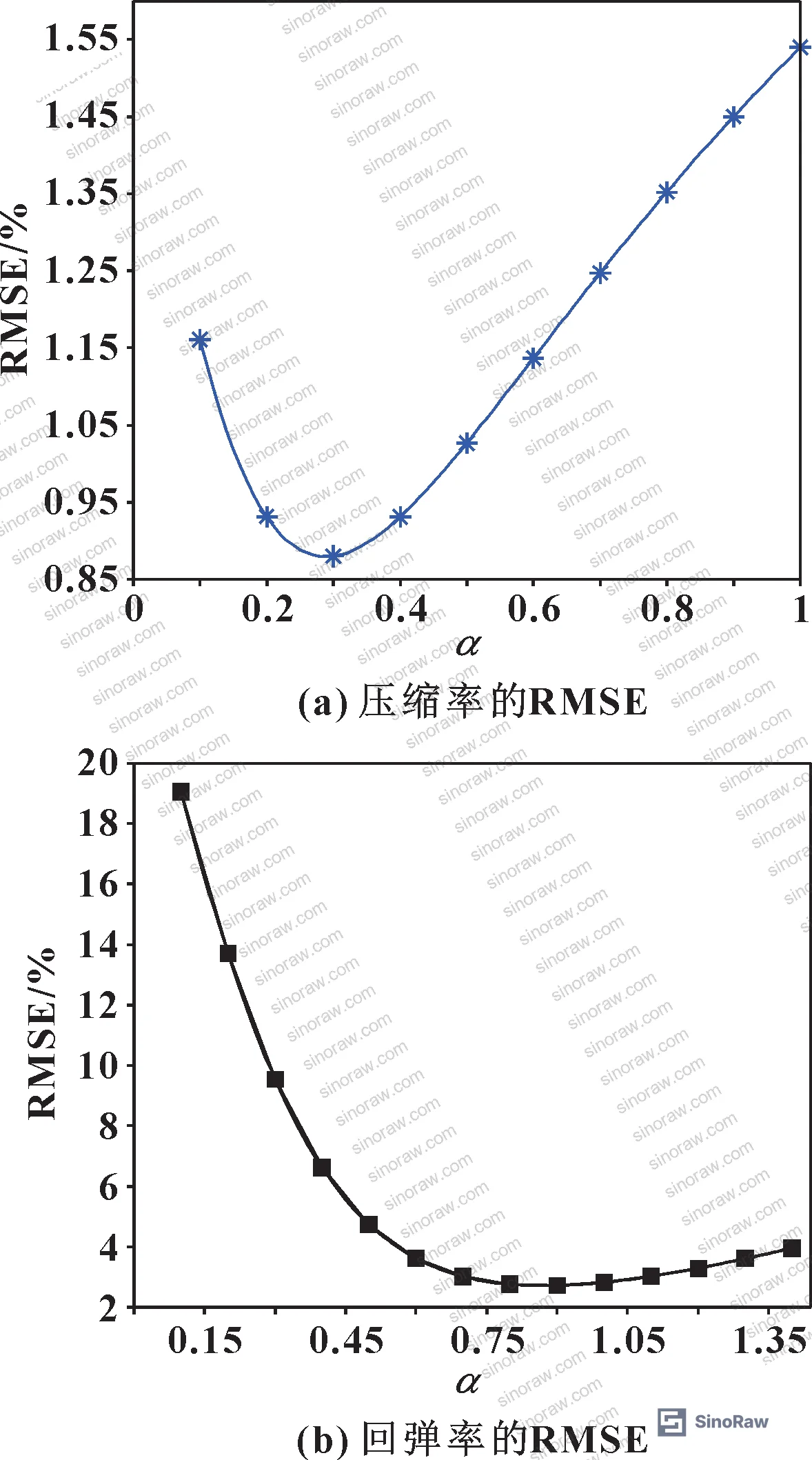
For PTFE, the model is almost irrelevant — the material simply doesn’t degrade meaningfully at these conditions. For FKM, the high RMSE values mean any service life prediction would carry large uncertainty. That’s the fundamental problem with specifying FKM in HCl environments: you can’t reliably schedule its replacement.
Most procurement teams don’t realize that FKM’s excellent track record in petroleum and solvent applications doesn’t translate directly to concentrated acid environments. The failure mechanism is completely different, and the chemical resistance charts rarely flag this distinction. This is a known issue in the sealing industry that doesn’t get enough attention in standard supplier documentation.
From a mechanical properties baseline: PTFE starts with a tensile strength of 31.60 MPa and elongation of 142.93%; EPDM at 2.53 MPa / 110.43%; FKM at 11.84 MPa / 160.24%. These starting differences matter for initial seal performance, but as the acid immersion data shows, initial properties don’t predict long-term stability in aggressive chemical environments.
Compliance verification for these materials should reference REACH Regulation (EC) No 1907/2006 for chemical substance restrictions in sealing materials, and ISO 9001:2015 for supplier quality system validation. For incoming inspection of gasket batches, sampling protocols per ISO 2859-1:1999 provide a structured framework for acceptance testing.
Practical Guidance for Buyers #
If your application is HCl pipeline sealing — purification, stripping, absorption, or dehydration service — the selection hierarchy is clear: PTFE first, EPDM second, FKM not recommended.
For PTFE, the flat degradation curve means you’re essentially buying a long-life solution that won’t need frequent replacement tracking. The trade-off is higher unit cost and lower initial compressibility. In static flange applications where leakage risk is high, that’s the right trade-off to make.
For EPDM, the 37.71% recovery rate drop over 90 days is real and needs to be factored into your maintenance intervals. The upside is that the degradation is stable and modelable — which means if you can characterize your operating temperature and acid concentration, you can build a replacement schedule with reasonable confidence. Honestly, most buyers in this space under-engineer their EPDM replacement intervals because they don’t have actual degradation data to work from. Now you do.
Don’t specify FKM for HCl service without extensive qualification data specific to your operating conditions. The combination of unstable degradation behavior and large data scatter means unexpected leaks are a real risk.
When evaluating Chinese suppliers for this category, look specifically for manufacturers who can provide compression-resilience test data — not just hardness or tensile specs. A supplier who only hands you a Shore A hardness value and a chemical resistance chart is not giving you what you need to qualify the product for acid service. At sinoraw.com, our team works with procurement engineers and quality managers globally to identify and pre-qualify Chinese gasket manufacturers who can demonstrate this level of technical documentation — reach out if you need help navigating the supplier landscape.
Need help identifying qualified suppliers for PTFE or EPDM gaskets for HCl service? Talk to our sourcing team →
Supplier Qualification Questions #
- Can you provide compression rate and recovery rate test data measured per GB/T 12622—2008 (or equivalent flange gasket test method B), both before and after immersion in 22% HCl at 40 °C for a minimum of 30 days?
- What is the recovery rate retention percentage of your EPDM gaskets after 90 days of acid immersion — and is that degradation monotonic or does the curve show reversal or scatter above 15% RMSE?
- For PTFE gaskets, what is the compression rate change (%) after 90-day HCl immersion, and can you demonstrate that recovery rate change remains within ±3% of baseline?
- What vulcanization system is used for your FKM gaskets, and can you provide elongation and tensile strength data (baseline: tensile strength ≥11 MPa, elongation ≥150%) along with HCl immersion degradation curves showing performance at 7, 14, 30, 60, and 90-day intervals?
- Does your EPDM gasket product have a documented degradation model (empirical aging formula with regression coefficients) that can be used to predict service life at a specified HCl concentration and temperature — and what is the RMSE of that model against your experimental data?
Sourcing Checklist #
- ☐ Supplier provides compression-resilience test data per GB/T 12622—2008 (Test Method B) or equivalent international standard, not just hardness or tensile spec sheets.
- ☐ PTFE gasket batch data shows compression rate change ≤2% and recovery rate change within ±3% after minimum 30-day HCl immersion at 22% concentration, 40 °C.
- ☐ EPDM gasket degradation data demonstrates monotonically stable trend with RMSE ≤5% when fitted to an empirical aging model across at least 5 sampling intervals.
- ☐ Supplier documentation includes baseline mechanical properties: PTFE tensile strength ≥30 MPa, EPDM elongation ≥100%, FKM tensile strength ≥10 MPa with supporting test certificates.
- ☐ FKM gaskets are explicitly qualified or disqualified for the target HCl concentration — suppliers who claim universal HCl suitability for FKM without immersion degradation data should be flagged.
- ☐ Gasket dimensions comply with DN25 full-face flange (FF-type) or specified flange standard, with dimensional tolerances documented.
- ☐ Supplier quality system is certified to ISO 9001:2015 with scope covering elastomeric and fluoropolymer sealing products.
- ☐ Material composition complies with REACH Regulation (EC) No 1907/2006 — supplier provides substance declaration for all regulated chemicals in the gasket compound.
Key Specifications Table #
| Parameter | Recommended Value | Verification Method |
|---|---|---|
| PTFE recovery rate change after 90-day HCl immersion (22%, 40 °C) | ≤ +2% (increase acceptable) | Compression-resilience test per GB/T 12622—2008, pre/post immersion comparison |
| EPDM compression rate increase after 90-day HCl immersion | ≤ 12% increase from baseline | Compression-resilience test with 7-interval sampling (7, 14, 21, 30, 45, 60, 90 days) |
| EPDM degradation model RMSE (compression rate) | ≤ 1.5% | Nonlinear regression with empirical aging formula, minimum 5 data points |
| FKM recovery rate after 90-day HCl immersion | Not recommended: expect ≥45% drop with high scatter | Full immersion protocol per GB/T 1690—2010, multi-interval resilience measurement |
| Tensile strength — PTFE baseline | ≥ 30 MPa | Standard tensile test, pre-immersion |
| Elongation — FKM baseline | ≥ 150% | Standard elongation test, pre-immersion |
| Test immersion conditions | 40 °C / 22% HCl (w/w) / 90 days | GB/T 1690—2010 liquid resistance immersion protocol |
Can’t find a supplier meeting these specs? Submit your requirements and we’ll match you within 48 hours.
References #
Data source: Compression-Resilience Degradation Behavior of Non-Metallic Gaskets Under Hydrochloric Acid Immersion Conditions, Z. Yu et al., Polymer Testing, 2023
Frequently Asked Questions #
Why is FKM not recommended for HCl pipeline gaskets if it’s marketed as a high-performance chemical-resistant material?
FKM’s reputation is well-earned in petroleum, solvent, and high-temperature applications, but its vulcanizate structure contains residual unsaturated double bonds that are vulnerable to polarization under prolonged acid exposure. In 22% HCl at 40 °C, both compression rate and recovery rate declined simultaneously — 14.80% and 47.23% respectively — with erratic, high-scatter behavior that makes service life prediction unreliable. The degradation mechanism is fundamentally different from solvent environments, and most standard chemical compatibility tables don’t reflect this distinction clearly enough.
Can EPDM gaskets be used in HCl service, and how do you schedule replacements?
Yes — EPDM is the recommended choice when periodic replacement is operationally feasible. Its degradation in HCl is predictable: the empirical aging model fits the experimental data with an RMSE as low as 0.88% for compression rate and 2.73% for recovery rate. This means you can establish a data-driven replacement interval based on your actual operating temperature and acid concentration, rather than guessing.
What test standard governs compression-resilience testing for pipe flange gaskets?
The applicable standard is GB/T 12622—2008, which specifies Test Method B for compression rate and recovery rate measurement of pipe flange gaskets. The immersion protocol for rubber and thermoplastic materials follows GB/T 1690—2010.
Does PTFE require any special post-processing or annealing before use in HCl service?
The test data was generated on unannealed PTFE gaskets made from pure material. The near-zero degradation (−0.97% compression rate change, +1.80% recovery rate change after 90 days) suggests that annealing is not necessary to achieve good acid resistance, though it may affect initial mechanical properties. Verify with your supplier whether their production process includes annealing, as this can affect dimensional stability under load.
How do loading and unloading rates affect the compression-resilience test results?
In this evaluation, loading rate was set at 0.1 MPa/s and unloading rate at 0.2 MPa/s. The compression and recovery curves for all three materials showed non-linear, non-conservative behavior — meaning the loading and unloading paths don’t overlap. This is normal for elastomers and PTFE, and it’s why single-point hardness tests are insufficient for qualifying gaskets in dynamic sealing applications.
Published by sinoraw.com Technical Team | Request a sourcing quote


