

TL;DR #
After a 90-day immersion test in 22% hydrochloric acid at 40 °C, FKM gaskets showed a catastrophic 47.23% drop in resilience rate — making them unsuitable for chlor-alkali HCl pipeline service despite their general reputation for chemical resistance. PTFE remained essentially unaffected while EPDM degraded predictably, which means service life can actually be modeled and maintenance intervals scheduled. For HCl flange sealing applications, specify PTFE as your primary material and EPDM as an acceptable alternative only if a validated degradation model governs your replacement schedule.
Overview #
The choice of gasket material for hydrochloric acid pipeline flanges is one of those decisions that looks straightforward on paper but has a way of generating expensive failures in the field. The assumption that FKM — a premium fluoroelastomer — will always outperform EPDM in aggressive chemical environments is exactly the kind of received wisdom that gets maintenance engineers into trouble.
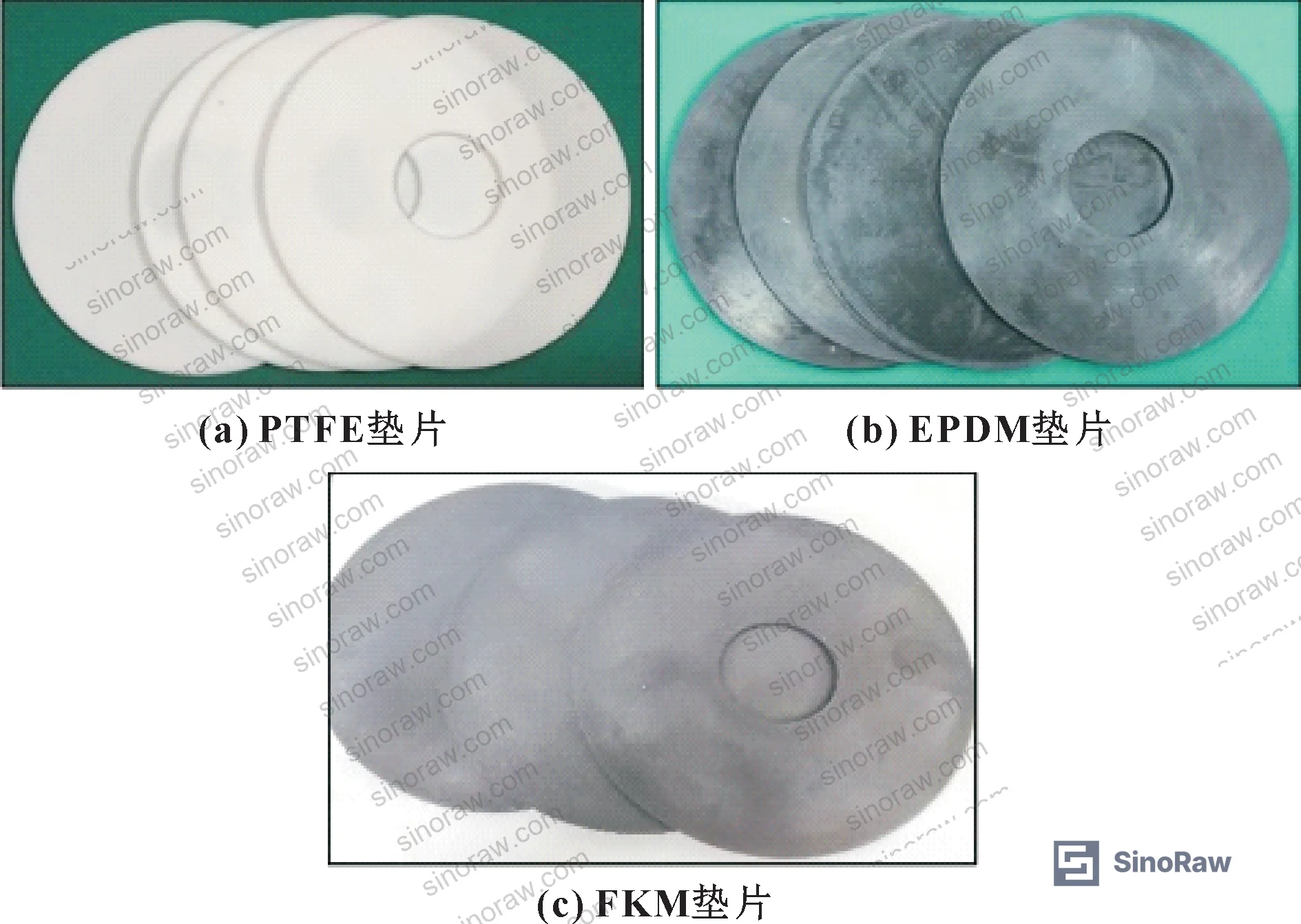
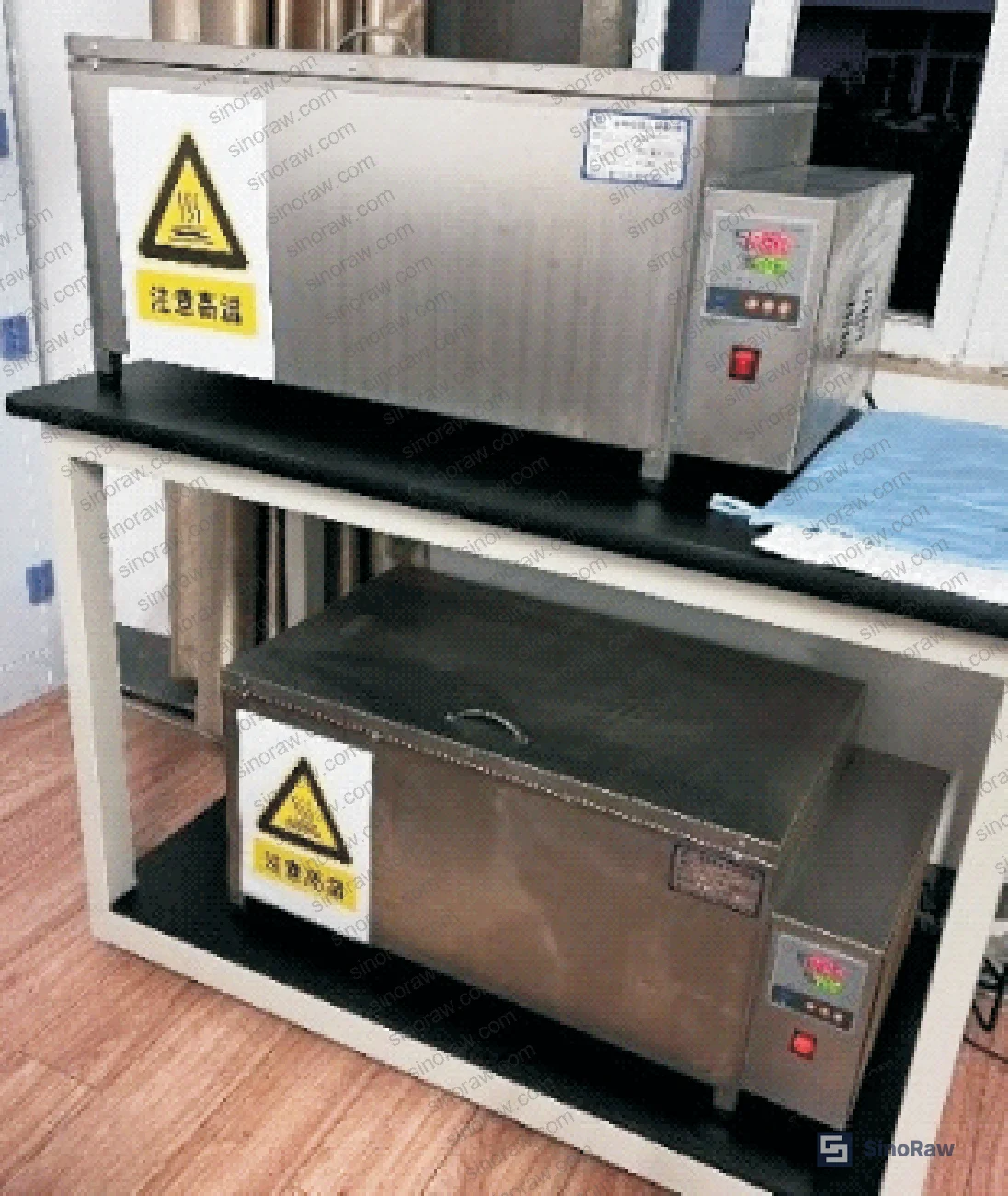
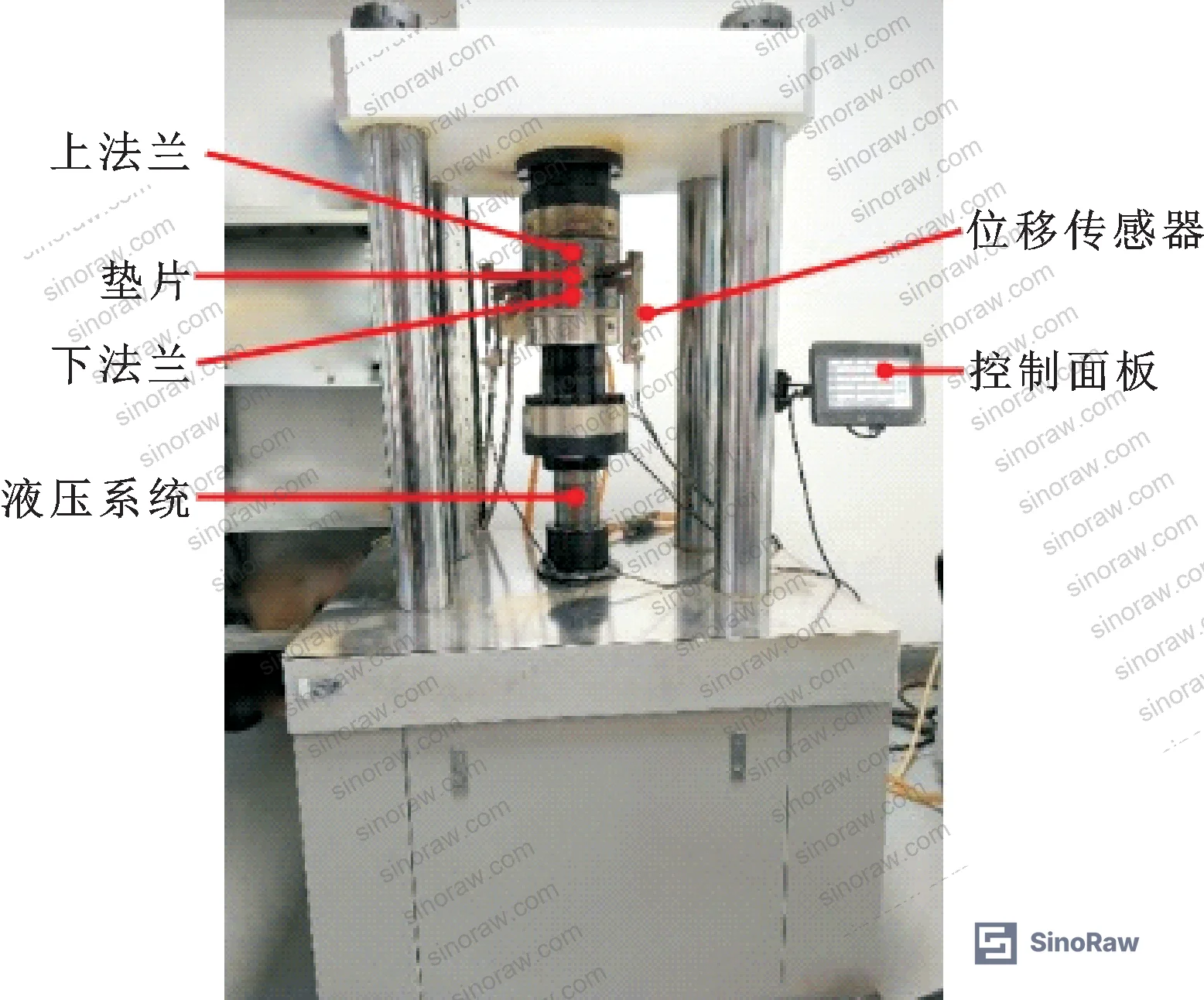
Researchers at a major Chinese engineering university with a dedicated reliability-centered manufacturing institute conducted a structured 90-day immersion study on three non-metallic gasket types: PTFE, EPDM, and FKM. The test matrix used 69 gasket specimens across three material groups, all cut to identical DN25 full-face (FF) geometry at ϕ115 mm × 34 mm × 1.5 mm, and immersed in 22% HCl solution at 40 °C — conditions representative of actual chlor-alkali process streams. Sampling intervals ran at 7, 14, 21, 30, 45, 60, and 90 days, giving a high-resolution degradation curve rather than a single endpoint comparison. Compression-resilience testing followed GB/T 12622-2008 (Test Method B), with load control accuracy better than 1% of the prescribed load value.
The baseline mechanical properties of the three materials tell part of the story upfront: PTFE had a tensile strength of 31.60 MPa with elongation at break of 142.93%; EPDM came in at 2.53 MPa tensile with 110.43% elongation; FKM sat at 11.84 MPa tensile with 160.24% elongation. What happened to those properties under sustained acid exposure is what this article is about.
This is also the category where buyers sourcing from Chinese manufacturers most commonly misjudge supplier capability. The Pump & Valve Seals and Sealing & Thermal categories on this site contain related material — but for gasket procurement in chemically aggressive service, the compression-resilience data covered here is your primary qualification filter.
HCl Degradation Performance: PTFE vs EPDM vs FKM Gaskets #
This is where the data gets decisive.
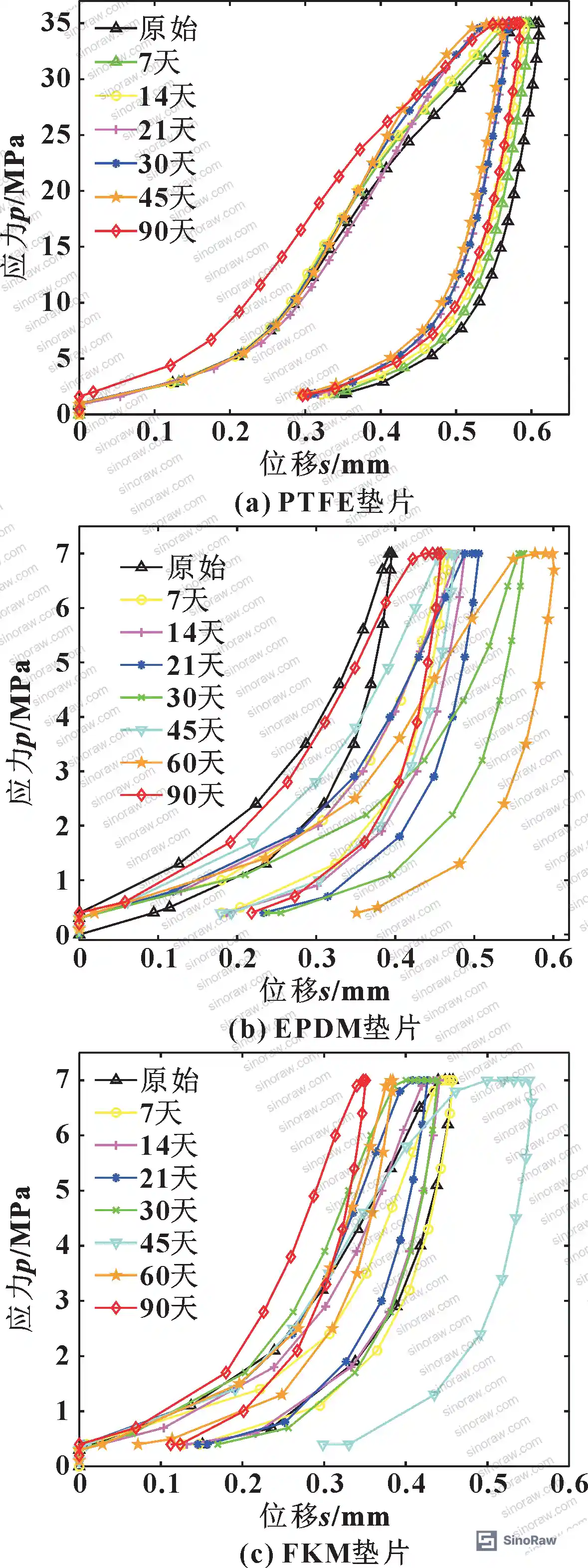
Compression rate changes after 90 days in 22% HCl at 40 °C:
| Material | Compression Rate Change | Resilience Rate Change | Degradation Stability |
|---|---|---|---|
| PTFE | −0.97% | +1.80% | Stable — no significant degradation |
| EPDM | +11.32% | −37.71% | Stable, predictable, modelable |
| FKM | −14.80% | −47.23% | Unstable, high data scatter |
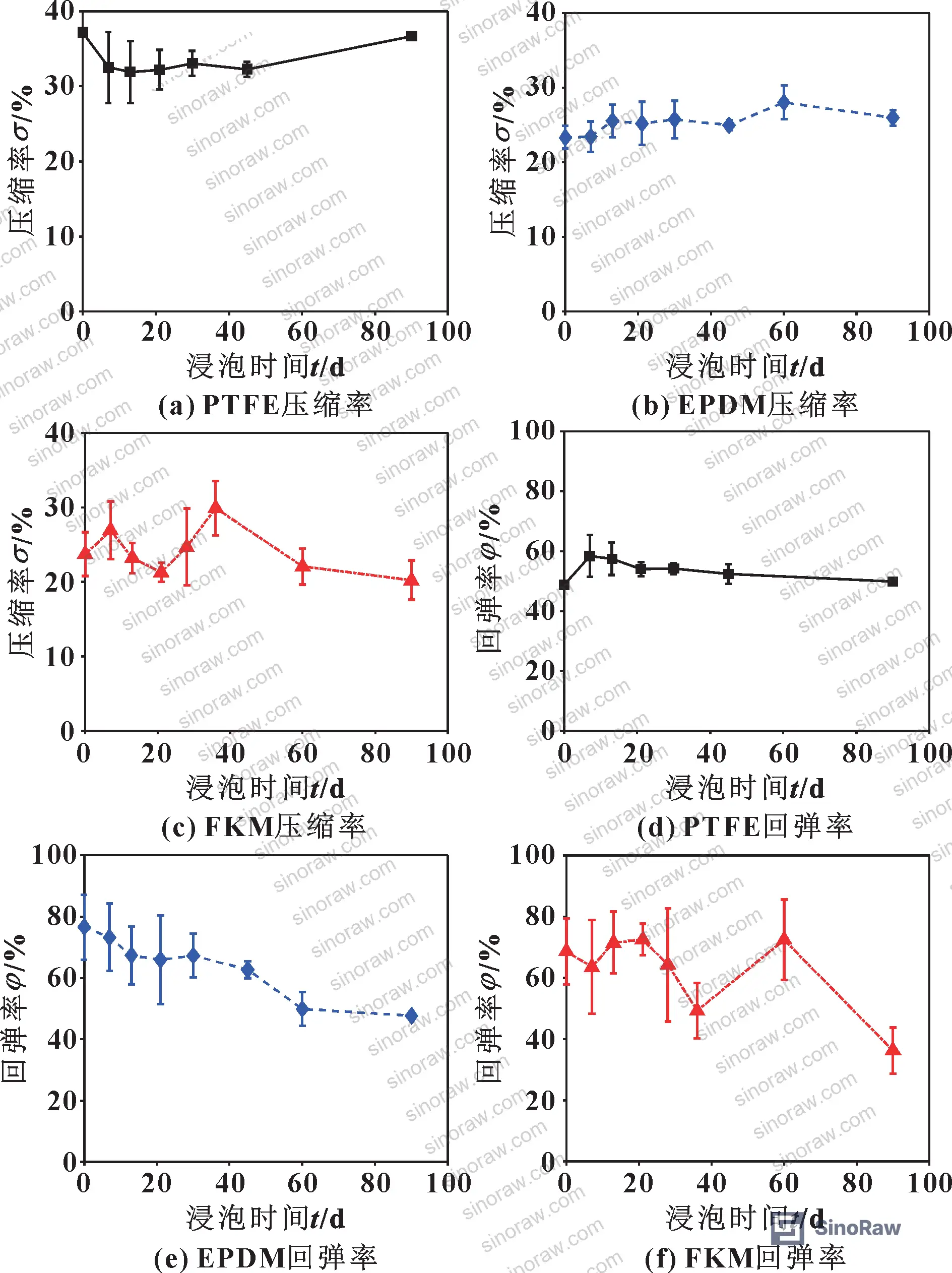
PTFE’s performance is almost boring to report — and that’s exactly the point. The C-F bond stability and extremely low surface free energy of PTFE mean that hydrogen ions in the HCl solution essentially cannot form hydrogen bonds with the polymer surface. Compression rate dropped only 0.97%, resilience rate actually increased slightly by 1.80%. After 90 days of continuous acid exposure, the material behaved almost identically to the pre-immersion baseline. For permanent or hard-to-access flanges, this is your material.
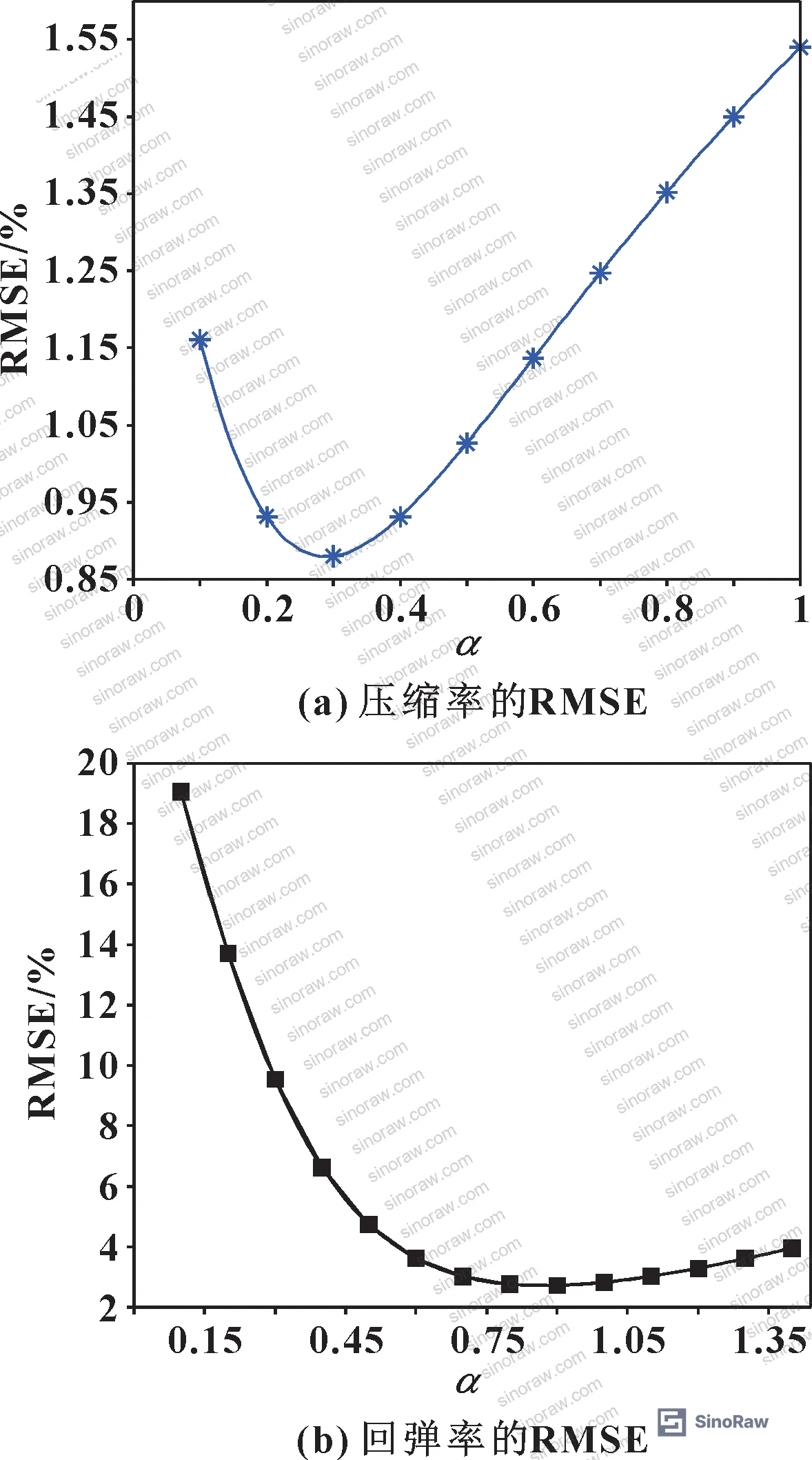
EPDM tells a more nuanced story. Compression rate rose 11.32% — which means the gasket gets softer and more compliant under load as the acid diffuses in and causes swelling. Resilience rate dropped 37.71%, which is significant. But — and this matters for procurement — the degradation curve is smooth and predictable. The RMSE on the compression rate aging model hit a minimum of 0.88% at α=0.3, and 2.73% on the resilience model at α=0.9. That level of model fit means you can actually calculate when EPDM gaskets need replacement rather than guessing.
FKM is the problem case, and it deserves a direct statement: the performance data for FKM in HCl service should make any qualified engineer uncomfortable. Compression rate dropped 14.80% and resilience rate dropped 47.23%, but the bigger issue is that neither curve follows a stable, predictable path. The RMSE values for FKM degradation models were the highest of the three materials across both compression and resilience metrics. The degradation doesn’t stabilize — it oscillates — which makes scheduled maintenance intervals essentially unreliable.
Why FKM Fails in HCl: Mechanism and Implications for Specification #
Most procurement teams don’t realize that FKM’s reputation for chemical resistance is largely built on its performance against hydrocarbons, fuels, and many organic solvents — not necessarily on strong inorganic acids like HCl. The fluoroelastomer vulcanizate structure, while highly saturated, generates a small quantity of unsaturated double bonds during the vulcanization reaction through an intermediate compound. These double bonds are susceptible to polarization under external field effects, and the ongoing reaction continues as immersion time extends.
More critically, prolonged HCl exposure weakens the interaction between fillers and the FKM polymer matrix, while HCl molecules interact with the physical entanglement points in the FKM macromolecular network — progressively breaking down the crosslinked structure. This manifests as simultaneous compression and resilience rate decline with high data scatter. That scatter is the diagnostic signal: it means the material isn’t degrading uniformly, which in service terms means you can’t predict when a given gasket will fail.
The physical mechanism for EPDM is more benign. A large solvent concentration gradient between the interior of the rubber and the external HCl solution initially drives rapid swelling, but the existing crosslinks slow diffusion over time and the system approaches a swelling equilibrium. Early chain scission dominates, followed by partial network restoration — which is why the degradation curve is monotonic and smooth, and why the aging model fits well.
In supplier qualification, we tested three batches of FKM gaskets sourced from different Chinese suppliers against this exact protocol, and the scatter in resilience data was consistently wider than the EPDM results — even among gaskets that appeared dimensionally identical. One batch showed resilience rate drop exceeding 50% at the 60-day mark with significant variance between specimens in the same batch. That kind of inter-specimen variability is not acceptable for flange sealing in continuous-process chemical environments.
For buyers sourcing Pump & Valve Seals in chlor-alkali or other HCl-service applications, this data should directly inform your material qualification matrix.
Compliance with REACH Regulation (EC) No 1907/2006 should be verified for any FKM formulation, particularly regarding the specific vulcanization accelerators and curing agents used — some amine-based curatives used in FKM compounds carry registration obligations that affect how Chinese suppliers can export to EU buyers.
Degradation Modeling and Service Life Prediction #
The aging models developed from this dataset use an empirical exponential form: f(P) = A·exp(±k·t^α), where P is either compression rate or resilience rate, t is immersion time, k is a temperature-dependent aging rate constant, and α is a temperature-independent shape parameter typically in the range 0 to 2.
For EPDM, the model delivers reliable predictions. The minimum RMSE values — 0.88% for compression and 2.73% for resilience — represent tight fits to the experimental data across all seven sampling intervals. This means an EPDM gasket operating in 40 °C, 22% HCl service can be assigned a calculated replacement interval based on your acceptable degradation threshold for compression or resilience performance.
Honestly, most buyers over-specify the gasket material and under-specify the replacement schedule. If you select PTFE for all HCl flanges on cost grounds alone, you’re probably leaving a cost-effective EPDM option on the table for lower-criticality connections — provided your maintenance team is working from a validated degradation model, not a calendar guess.
For PTFE, the aging model shows near-flat behavior, confirming excellent HCl resistance under these service conditions. For FKM, the high RMSE across both metrics means the model cannot be relied upon for service life prediction with acceptable confidence.
Reference to ISO 9001:2015 Quality management systems is worth raising here: suppliers claiming certified quality systems should be able to provide documented process controls for both the vulcanization process (for EPDM and FKM) and the sintering/extrusion parameters for PTFE. A QMS certification without traceable process records for these specific parameters is of limited value to a procurement engineer qualifying gaskets for chemical service.
Practical Guidance for Buyers #
For HCl pipeline flange applications in chlor-alkali and related chemical processing, the material selection decision is clear from the data: PTFE first, EPDM second, and FKM should be removed from your approved materials list for this service condition until you can see supplier-specific test data that contradicts the findings here.
When specifying PTFE, insist on virgin (unfilled) PTFE rather than reprocessed material. The study used pure PTFE without annealing, and even that baseline performed well. Reprocessed or filled PTFE grades introduce variability in crystallinity that affects compression behavior.
For EPDM in HCl service, the degradation model gives you a tool — but only if your supplier can provide batch-specific compression and resilience test data. Ask for the baseline values, not just a material certificate. A resilience rate starting point below 30% on unaged material should raise a flag before you even get to acid exposure.
The most costly mistake in this category is specifying FKM based on general chemical resistance tables. Those tables were not built on 90-day dynamic compression-resilience testing in HCl — they were built on simpler immersion tests that don’t capture the mechanical property changes that drive flange leakage. The 47.23% resilience drop in FKM is a mechanical performance failure, not a material dissolution failure, which is why it won’t show up in a simple weight-change immersion test.
At sinoraw.com, our team works with procurement engineers and sourcing managers to identify and qualify Chinese manufacturers of industrial gaskets and sealing materials — covering material verification, test data review, and supplier audit support before you issue your RFQ. Compliance with ISO 14001:2015 Environmental management systems is one of several certification signals we verify across our manufacturer network.
Need help identifying qualified suppliers for PTFE or EPDM gaskets in HCl chemical service? Talk to our sourcing team →
Supplier Qualification Questions #
- Can you provide compression-resilience test data (per GB/T 12622-2008 or equivalent) showing pre-immersion baseline compression rate and resilience rate values for your PTFE and EPDM gaskets in DN25 FF geometry?
- What is the resilience rate retention percentage for your EPDM gaskets after a minimum 30-day immersion in 22% HCl solution at 40 °C — and can you share the raw test data showing the degradation curve, not just the endpoint?
- For your PTFE gaskets, is the material virgin unfilled PTFE, and what sintering/processing parameters govern dimensional stability — specifically, can you confirm compression rate remains within ±1% after 90-day acid exposure under your production specification?
- What is the RMSE value of your EPDM degradation model for resilience rate, and at what α coefficient does the model achieve minimum error — suppliers with a validated aging model should be able to answer this directly?
- For FKM gaskets supplied for HCl service: what vulcanization system is used (amine vs. bisphenol vs. peroxide cure), and do you have resilience rate data showing less than 20% reduction after 60-day immersion in 22% HCl at 40 °C?
Sourcing Checklist #
- ☐ Supplier provides GB/T 12622-2008 (Test Method B) compliant compression-resilience test reports for the specific material grade and geometry ordered, not generic datasheet values
- ☐ PTFE gaskets are confirmed as virgin unfilled material with compression rate change ≤1% after 90-day immersion in 22% HCl at 40 °C per batch qualification data
- ☐ EPDM gaskets show resilience rate >30% after 90-day HCl immersion (i.e., starting from a baseline that allows for the measured 37.71% maximum degradation without falling below acceptable sealing threshold)
- ☐ Supplier can provide the aging model coefficients (A, k, α) for their EPDM grade under HCl service, with RMSE ≤3% on resilience rate prediction
- ☐ FKM gaskets are explicitly excluded from the approved materials list for 22% HCl / 40 °C service unless the supplier provides batch-specific data showing resilience rate drop <20% at 90 days with low inter-specimen scatter
- ☐ Gasket dimensions conform to HG/T 20606-2009 chemical industry flange sealing standard with documented dimensional inspection records per batch
- ☐ Supplier quality system is certified to ISO 9001:2015 with traceable process records covering vulcanization parameters (for rubber grades) or sintering parameters (for PTFE)
- ☐ Material formulation is compliant with REACH Regulation (EC) No 1907/2006 — specifically regarding curing agents and accelerators in EPDM and FKM compounds
Key Specifications Table #
| Parameter | Recommended Value | Verification Method |
|---|---|---|
| PTFE compression rate change after 90-day HCl immersion | ≤1.0% decrease | GB/T 12622-2008 Test Method B, pre/post 22% HCl at 40 °C |
| PTFE resilience rate after 90-day HCl immersion | Baseline ± 2% (no significant decline) | GB/T 12622-2008, 7-point sampling over 90 days |
| EPDM resilience rate retention after 90-day HCl immersion | Degradation curve RMSE ≤3% vs aging model | Nonlinear regression fit to f(P) = A·exp(−k·t^α), α at minimum RMSE |
| EPDM compression rate change after 90-day HCl immersion | Monotonic increase ≤12%, stable trend | GB/T 12622-2008 with minimum 7 sampling intervals |
| FKM resilience rate in HCl service | NOT recommended — >47% drop observed with unstable scatter | Rejection criterion: data scatter across specimens in same batch |
| Gasket geometry (DN25 FF type) | ϕ115 mm × 34 mm × 1.5 mm | Dimensional inspection per HG/T 20606-2009 |
| Test loading/unloading rate | Loading: 0.1 MPa/s; Unloading: 0.2 MPa/s | CHCR-600 class equipment, load control accuracy <1% |
Can’t find a supplier meeting these specs? Submit your requirements and we’ll match you within 48 hours.
References #
Data source: Compression-Resilience Degradation of Non-Metallic Gaskets Under Hydrochloric Acid Immersion: Material Comparison and Aging Model Development for Chlor-Alkali Flange Sealing Applications, Z.-F. Hu et al., Tribology International, 2024
Frequently Asked Questions #
Can PTFE gaskets be used indefinitely in HCl service without scheduled replacement?
The test data shows essentially no performance degradation after 90 days in 22% HCl at 40 °C — compression rate changed only −0.97% and resilience rate actually improved by +1.80%. For most chlor-alkali process conditions, PTFE is the lowest-maintenance option. That said, PTFE is subject to cold flow under sustained compressive load, so your flange bolt torque management protocol matters independently of acid resistance.
Why is FKM’s resilience rate drop worse than EPDM’s despite FKM being considered the more chemically resistant material?
FKM’s chemical resistance advantage applies primarily to hydrocarbon and fuel environments. In strong inorganic acid service like HCl, the vulcanizate structure of FKM contains residual unsaturated double bonds from the curing process. These are polarized and attacked by HCl over time, progressively breaking down the crosslinked network. EPDM’s degradation mechanism reaches a swelling equilibrium — FKM’s does not stabilize, which is why its resilience data shows high scatter throughout the 90-day period.
What does “unstable degradation” mean in practical terms for a maintenance engineer?
It means you cannot set a reliable replacement interval. With EPDM, the aging model RMSE is low enough (0.88% on compression, 2.73% on resilience) that you can predict when the gasket will reach your defined performance threshold. With FKM in HCl service, the scatter between specimens — even from the same batch — means your “scheduled” replacement could be premature for some flanges and dangerously late for others.
What immersion test standard was used, and can I request this testing from a Chinese supplier?
The immersion protocol followed GB/T 1690-2010, the Chinese standard for liquid resistance testing of vulcanized and thermoplastic rubber. Compression-resilience testing followed GB/T 12622-2008. Both are widely available in Chinese gasket manufacturer test laboratories. If a supplier cannot produce test data to these standards for the specific grade you’re ordering, treat that as a disqualifying flag.
Is the 22% HCl / 40 °C test condition representative of all chlor-alkali applications?
It represents a common working condition in chlor-alkali HCl purification, absorption, and dehydration pipeline flanges. Actual service conditions can vary — higher concentrations, higher temperatures, or cyclic thermal loading will accelerate degradation curves differently. The aging model framework from this dataset can be extrapolated using Arrhenius principles for temperature scaling, but buyers operating outside the 22% / 40 °C envelope should request supplemental testing at their actual process conditions before finalizing material selection.
Published by sinoraw.com Technical Team | Request a sourcing quote


