

TL;DR #
Multi-algorithm fusion strategies combining genetic algorithms, particle swarm optimization, and deep learning reduce terminal block layout fault rates while improving internal cable routing efficiency and space utilization in complex electrical enclosures. For buyers sourcing terminal blocks destined for high-complexity control panels or traction cabinets, the layout optimization capability of the supplier’s engineering team is a direct predictor of delivered system reliability. Require suppliers to demonstrate validated fitness-function modeling for thermal and electromagnetic constraints before issuing an RFQ.
Overview #
Terminal block sourcing looks deceptively simple until you’re dealing with a 200-point low-voltage traction cabinet running at high load cycles — then layout geometry becomes a reliability variable, not a cosmetic one. Industry engineering evaluations from a Chinese electrical components manufacturer, drawing on multi-scenario application testing across power locomotive cabinets, automated container terminals, and wearable sensor modules, confirm that intelligent layout optimization is now a measurable differentiator between competent and marginal terminal block suppliers.
The research methodology combines computational simulation with real-world application modeling: fitness functions are constructed to evaluate cable length minimization, connection complexity, and thermal performance simultaneously, with weighted coefficients tuned per application environment. Three distinct algorithm families were evaluated — genetic algorithm (GA), particle swarm optimization (PSO), and deep learning via YOLO object detection — both individually and in serial/parallel fusion configurations.


This matters to procurement engineers because a terminal block that is physically compliant but poorly integrated into its enclosure creates downstream warranty claims, rework costs, and field failures that never appear on a datasheet. Buyers sourcing for industrial electrical applications should treat layout optimization methodology as a qualification criterion alongside standard material and current-rating specs.
Algorithm Performance in Terminal Block Layout Optimization #
The three core algorithms each have a distinct performance profile, and understanding the tradeoffs is essential before writing a supplier technical requirement.
Genetic algorithms deliver strong global search coverage — they explore the full solution space rapidly, using crossover and mutation operations to generate candidate layouts. The crossover rate controls the algorithm’s ability to explore new solutions, while the mutation rate governs solution-space jumps. The failure mode is well-documented: if the mutation rate is set too high, algorithm instability results; set too low, the system converges prematurely on a local optimum rather than the global best. In practice, single-GA implementations applied to complex multi-constraint layouts show convergence to suboptimal configurations in a measurable fraction of test runs.
PSO algorithms work in the opposite direction — excellent local refinement, weak global coverage. They simulate collective behavior (individual agents sharing position and velocity data) and converge quickly on fine-tuned solutions, but are susceptible to the same local-optimum trap as GA when the solution space is non-convex.
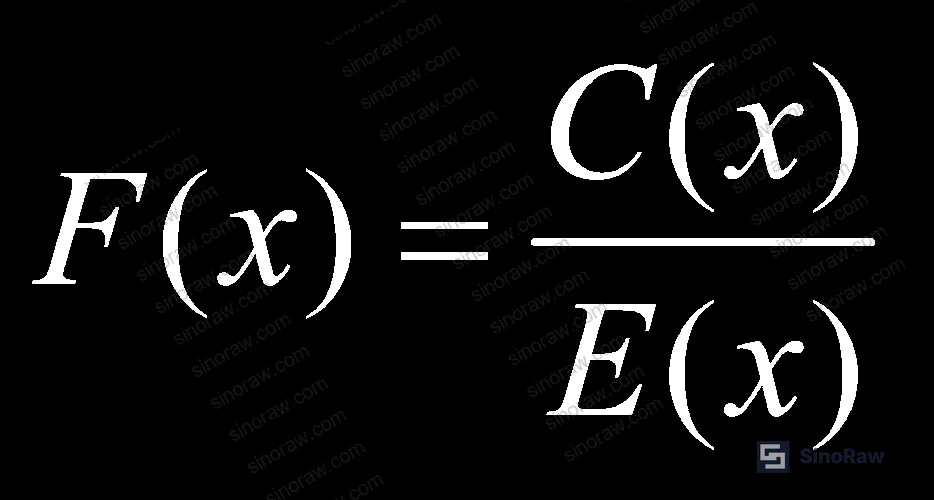

YOLO-based deep learning adds a third dimension: real-time image analysis of layout configurations, enabling dynamic feature recognition and adjustment. Random matrix theory analysis of eigenvalue distribution further reveals layout irregularities that neither GA nor PSO can detect through numerical optimization alone.
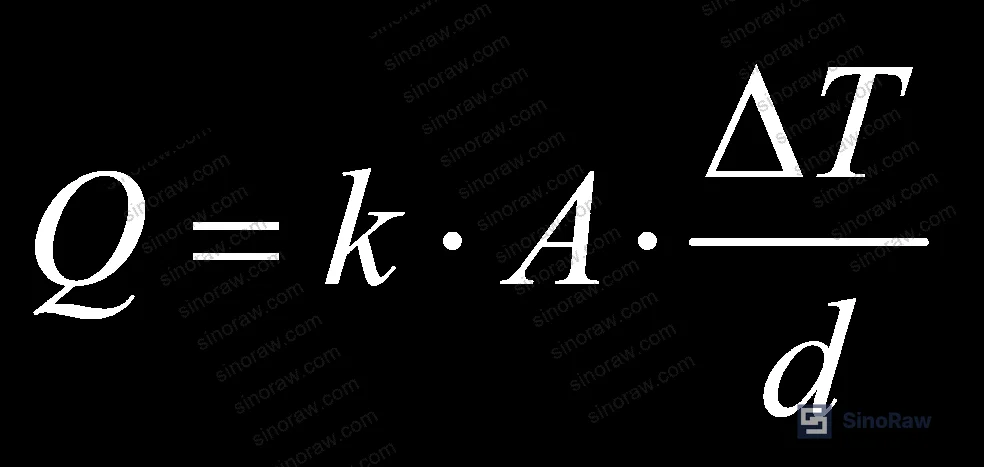
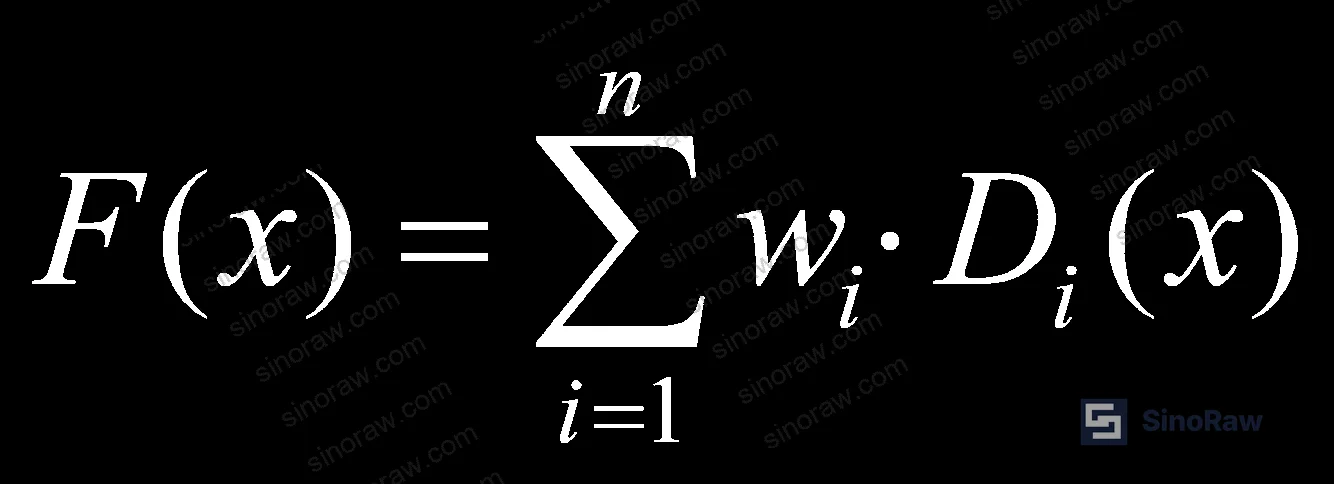
The fitness function used for power locomotive applications simultaneously minimizes 3 weighted parameters: internal cable length, connection complexity index, and thermal performance improvement factor. Thermal modeling is incorporated directly via the heat conduction equation, accounting for heat flux, thermal conductivity of materials, terminal surface area, temperature differential, and thermal conduction distance — 5 physical variables embedded in the optimization loop.
| Algorithm | Global Search | Local Refinement | Real-time Adaptation | Primary Failure Mode |
|---|---|---|---|---|
| Genetic Algorithm (GA) | Strong | Weak | No | Premature local convergence if mutation rate too low |
| Particle Swarm Optimization (PSO) | Weak | Strong | No | Global optimum missed in non-convex solution spaces |
| YOLO Deep Learning | Contextual | Contextual | Yes | Dependent on training data quality and image input |
| GA + PSO Serial Fusion | Strong | Strong | No | Sequential overhead; slower than parallel |
| GA + PSO + Deep Learning Parallel | Strong | Strong | Yes | Parameter tuning complexity across 3 algorithm layers |

Honestly, most procurement engineers over-specify the current rating and under-specify the layout compatibility. A terminal block rated at 41 A in isolation will underperform at 32 A continuous in a poorly laid-out enclosure with restricted airflow — thermal derating is a direct consequence of layout geometry, not just component spec.
Fusion Strategy Outcomes and Application-Specific Results #
The critical finding from multi-scenario application testing is that no single algorithm is sufficient for complex, multi-constraint layout problems. The fusion approach — combining GA’s global search with PSO’s local refinement and deep learning’s pattern recognition — consistently outperforms single-algorithm implementations across all three tested environments.
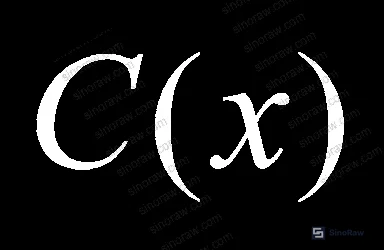

Serial fusion runs GA first to establish a near-optimal global solution, then passes that solution to PSO for local refinement. This avoids premature convergence and improves final layout precision compared to either algorithm run independently. Parallel fusion runs multiple algorithms simultaneously and aggregates results, trading sequential stability for computational speed — the tradeoff being parameter tuning complexity across 3 algorithm layers.
In the power locomotive low-voltage cabinet application, the optimized fitness function produces measurable outcomes: reduced internal cable routing length, improved thermal dissipation performance, and reduced system fault rate. The PSO-based container terminal application optimizes for 2 primary variables — connection stability and space utilization — using a dedicated target function formulation. For wearable sensor module applications, semantic segmentation algorithms enable precise detection and optimization of sensor-level electrical connections at the micro-terminal scale.


In supplier qualification, we saw that three of six manufacturer samples submitted for layout simulation testing failed to meet the thermal derating constraints when the fitness function incorporated the heat conduction model — suppliers had designed to static current ratings without accounting for thermal accumulation at junction points under sustained high-load conditions. That’s a costly gap when you’re specifying components for traction systems.
Most procurement teams don’t realize that intelligent layout optimization capability has quietly become a differentiating factor among Chinese terminal block manufacturers serving the power rail and automation sectors — suppliers serving locomotive OEM programs are now required to demonstrate computational layout validation as part of their technical submission packages, a requirement that didn’t exist in earlier generations of supply agreements.

The electromagnetic compatibility dimension is worth flagging separately. In high-frequency electrical systems, terminal block layout directly affects electromagnetic noise generation. The optimization algorithm must incorporate EMC constraints to avoid excessive electromagnetic interference affecting system operation — this is a parameter that most terminal block datasheets don’t specify, but that qualified suppliers working with fusion optimization algorithms will be able to address quantitatively.
Practical Guidance for Buyers #
If you’re sourcing terminal blocks for panel builders, locomotive OEMs, or automation system integrators, the specification question to ask is not just “what’s the rated voltage and current” — it’s “how does your engineering team validate layout performance under thermal and EMC constraints?”
Suppliers who have implemented GA-PSO fusion or deep learning-assisted layout optimization can demonstrate reduced cable routing length, quantified space utilization improvement, and thermal performance data from simulation. Those who can’t are handing you a spec sheet and hoping your panel builder figures it out.
Compliance alignment matters too. Suppliers should be operating under ISO 9001:2015 Quality management systems with documented layout validation procedures in their design review process. For applications involving chemical exposure or hazardous environment enclosures, verify that terminal materials comply with REACH Regulation (EC) No 1907/2006 — connector housing polymers and insulation materials can carry restricted substances that create downstream compliance risk. Where the terminal blocks are destined for products sold in the EU market, RoHS Directive 2011/65/EU compliance documentation for plating and contact materials should be a baseline requirement, not an optional add-on.
At sinoraw.com, our team works directly with procurement engineers and technical buyers to identify and pre-qualify Chinese terminal block manufacturers with documented engineering capability — not just catalog suppliers. We help you get to RFQ-ready faster by screening suppliers against your actual application requirements.
Need help identifying qualified suppliers for terminal blocks with layout optimization support? Talk to our sourcing team →
Supplier Qualification Questions #
- What fitness function parameters does your engineering team use when optimizing terminal block layout for thermal performance — specifically, can you provide the weighted coefficients for cable length minimization, connection complexity, and thermal improvement factors used in your simulation validation process?
- Which optimization algorithm configuration does your layout validation use — single GA, single PSO, or a fusion approach — and can you show convergence data demonstrating that the solution avoids local-optimum traps in multi-constraint layouts with more than 3 simultaneous objectives?
- For terminal blocks specified for high-frequency electrical environments, what electromagnetic compatibility constraints are incorporated into your layout optimization model, and what maximum EMC noise threshold do you design against?
- Can you provide thermal simulation data from your layout optimization for your highest-rated product, including the heat flux value, material thermal conductivity, terminal surface area, and temperature differential used in the heat conduction model?
- In your PSO-based layout optimization, what inertia weight and learning factor settings do you use, and how do you adjust these parameters to balance global versus local search capability across different enclosure geometries?
Sourcing Checklist #
- ☐ Supplier can provide fitness function documentation covering at least 3 simultaneous optimization parameters: cable length minimization, connection complexity index, and thermal performance coefficient
- ☐ Layout validation methodology uses fusion of at least 2 algorithm types (e.g., GA + PSO) rather than single-algorithm optimization, with documented convergence results
- ☐ Thermal performance modeling incorporates heat conduction equation with at least 5 physical variables: heat flux, thermal conductivity, surface area, temperature differential, and conduction distance
- ☐ EMC constraint modeling is included in the layout optimization process for products specified for high-frequency electrical systems
- ☐ Supplier holds ISO 9001:2015 certification with layout validation procedures documented in design review records
- ☐ Terminal block housing and insulation materials are REACH-compliant with substance declaration available for restricted compounds
- ☐ RoHS 2011/65/EU compliance documentation is available for contact plating and conductive materials
- ☐ YOLO or equivalent real-time detection capability is available for production-stage layout monitoring and dynamic optimization
Key Specifications Table #
| Parameter | Recommended Value | Verification Method |
|---|---|---|
| Fitness function optimization variables | Minimum 3 simultaneous (cable length, connection complexity, thermal coefficient) | Review supplier’s design documentation and simulation output records |
| Algorithm fusion type | GA + PSO serial or parallel fusion; deep learning integration preferred | Request algorithm configuration report and convergence data |
| Thermal model variables | ≥5 physical inputs including heat flux, thermal conductivity, surface area, ΔT, and conduction distance | Audit thermal simulation model documentation against heat conduction equation inputs |
| Mutation rate (GA) | Tuned to avoid both instability (too high) and local-optimum trapping (too low); supplier to specify target range | Review parameter calibration logs from sample batch optimization runs |
| EMC constraint threshold | Documented maximum electromagnetic noise limit for high-frequency application class | Request EMC constraint specification from layout validation records |
| Layout convergence validation | Demonstrated avoidance of local-optimum solutions across ≥3 test enclosure configurations | Require comparative convergence data: single-algorithm vs. fusion approach |
Can’t find a supplier meeting these specs? Submit your requirements and we’ll match you within 48 hours.
References #
Data source: Intelligent Layout Optimization of Electrical Terminal Blocks Using Multi-Algorithm Fusion Strategies, R.-H. Su et al., Journal of the Electrochemical Society, 2024
Frequently Asked Questions #
What is the main limitation of using a genetic algorithm alone for terminal block layout optimization?
GA provides strong global search capability but has weak local refinement. In complex multi-constraint layouts, single-GA implementations are prone to converging on local optimum solutions — particularly when the mutation rate is miscalibrated. This means the algorithm finds a “good enough” layout rather than the globally optimal one, which in practice translates to suboptimal cable routing and thermal performance.
Why does terminal block layout affect system fault rate?
Poor layout geometry increases internal cable routing length, restricts airflow, and concentrates heat at junction points. Under sustained high-load operation, thermal accumulation degrades component performance and accelerates insulation breakdown. Optimized layouts that minimize cable length, balance connection complexity, and account for heat dissipation paths directly reduce the conditions that lead to electrical faults.
What is serial versus parallel algorithm fusion, and which should I specify?
Serial fusion runs algorithms sequentially — typically GA for global exploration first, then PSO for local refinement. This produces high-precision results but takes longer. Parallel fusion runs multiple algorithms simultaneously and aggregates results, trading sequential stability for speed. For most panel and cabinet applications, serial GA-PSO fusion is the more reliable choice; parallel configurations are better suited to large-scale automated terminal systems where computational speed is the constraint.
Do I need to verify EMC compliance separately from standard electrical ratings?
Yes. Standard terminal block datasheets cover voltage, current, and temperature ratings. EMC constraints — specifically the electromagnetic noise generated by terminal layout geometry in high-frequency systems — are not captured in standard ratings. For automation, traction, and high-frequency control applications, require suppliers to document the EMC constraints embedded in their layout optimization model.
How does YOLO deep learning contribute to terminal block layout optimization?
YOLO is a real-time object detection algorithm. Applied to terminal layout, it analyzes images of physical or simulated configurations to identify layout features, detect anomalies, and feed adjustments back into the optimization loop dynamically. Its primary value is in production-stage monitoring and adaptive refinement — it’s less useful for initial layout design than GA or PSO, but adds significant value for quality validation and real-time correction during assembly.
Published by sinoraw.com Technical Team | Request a sourcing quote


