

TL;DR #
The EPDM/BR/EBDM ternary rubber composite achieves a glass transition temperature of -68.9°C — significantly below the -50°C floor required for extreme cold-climate rail applications — when formulated at a 50/10/40 mass ratio with a compound vulcanization system and DOA plasticizer. For procurement engineers sourcing vibration damping pads for high-speed rail infrastructure, this means the formulation gap between standard EPDM compounds and cold-region performance specs is real and wide — and choosing the wrong supplier compound will result in stiffness ratios nearly double the allowable limit at -40°C. Specify Tg ≤ -65°C, verify with DSC per ASTM D3418, and require the compound vulcanization system — not peroxide alone — to maintain elongation at break above 270%.
Overview #
If you’re sourcing rubber vibration damping pads for high-speed rail projects in cold climates, the first thing to understand is that standard EPDM compounds fail the stiffness requirements before you even get to fatigue life. Research conducted at a rail materials engineering institute — evaluating five EPDM grades across a systematic matrix of blend ratios, plasticizer types, and vulcanization systems — makes this very clear. The study tested over 20 compound formulations using DMA, DSC, and mechanical characterization, covering the full temperature range from +100°C down to -40°C.
The core problem is well-documented: EPDM vulcanizate Tg typically sits around -50°C, which leaves almost no safety margin for track systems operating in regions where ambient temperatures regularly reach -40°C and can dip to -50°C in extreme conditions. The vertical static stiffness of a conventional damping pad formulation jumps from 34.62 kN/mm at room temperature to 64.85 kN/mm at -40°C — an 87% increase that blows through the maximum allowable stiffness-change rate of 30%. That’s not a minor specification miss. That’s a functional failure in cold deployment.
The research evaluated EPDM grades including 9090M, 6950C, 2502, 5565, and 8800, with ethylene mass fractions ranging from 40% to 54% and ENB (ethylidene norbornene) content from 4.3% to 14.0%. The relationship between these molecular parameters and cold performance has direct implications for how you write your purchase specification.
This kind of formulation intelligence is exactly what overseas procurement engineers need before issuing RFQs to Chinese rubber compound manufacturers. At sinoraw.com, we work with verified Chinese specialty rubber producers and help global buyers translate performance requirements like these into supplier audit criteria — before a single sample is cut.
EPDM/BR/EBDM Compound Formulation: How Cold-Climate Barrier Performance Is Built #
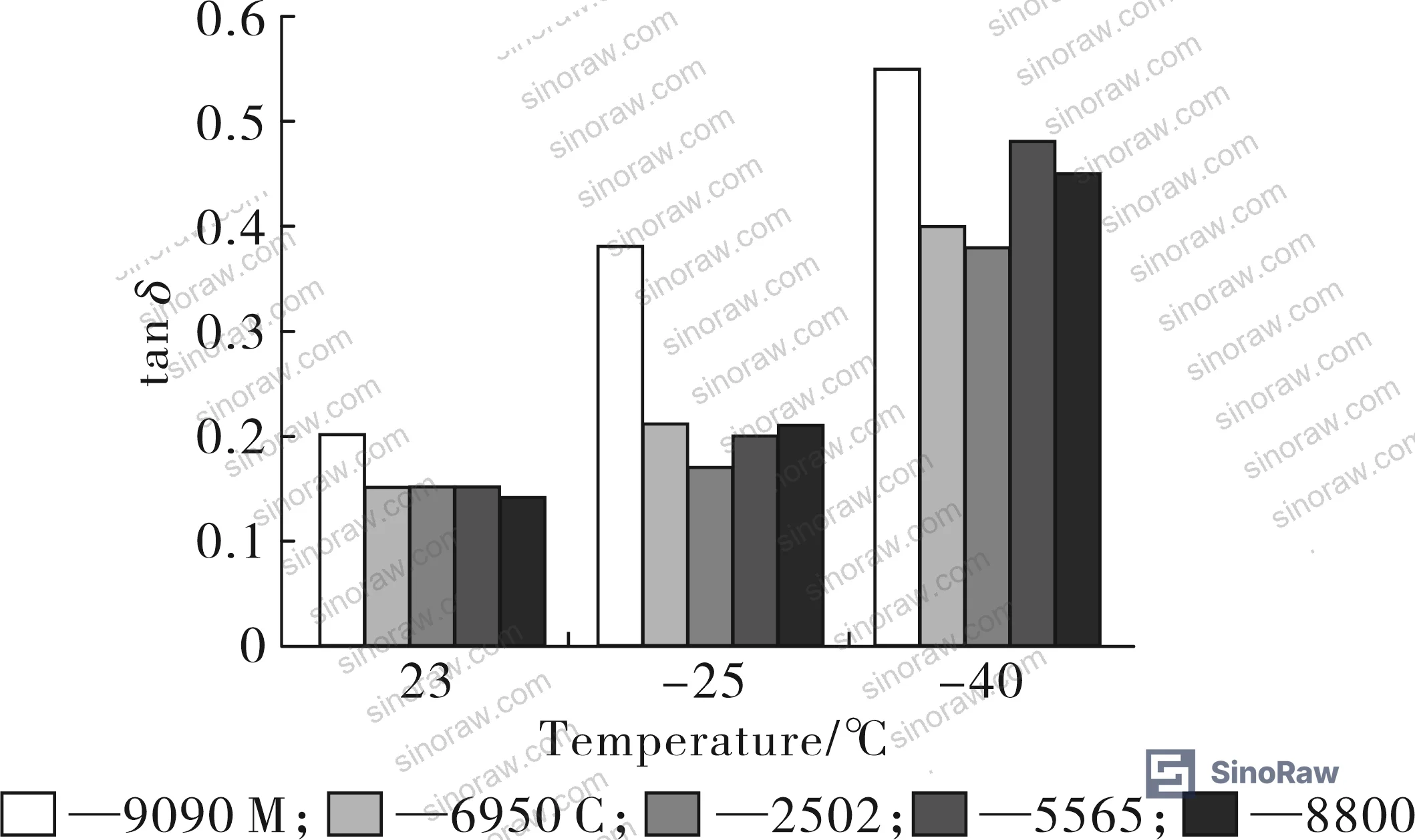
The selection of EPDM base grade is the single most consequential material decision in this compound. Five commercially available grades were tested head-to-head, and the Tg spread is wider than most formulators expect:
| EPDM Grade | Ethylene Content (wt%) | ENB Content (wt%) | Tg (°C) | Compression Set at -40°C (%) | Tensile Strength (MPa) |
|---|---|---|---|---|---|
| 9090M | 40 | 14.0 | -42.6 | 45 | 14.3 |
| 6950C | 44 | 9.0 | -51.6 | 28 | 14.9 |
| 5565 | 50 | 7.5 | -49.7 | 35 | 16.5 |
| 8800 | 54 | 10.0 | -51.1 | 32 | 17.4 |
| 2502 | 49 | 4.3 | -53.7 | 25 | 15.8 |
Grade 2502 gives the lowest Tg (-53.7°C) and the best low-temperature compression set (25%) despite mid-range ethylene content. The mechanism: lower ENB content means fewer crystallizable ethylene segments are disrupted by the unsaturated third monomer — ENB is an amorphous material, and co-polymerization into the main chain disrupts the crystallinity that otherwise stiffens the compound at low temperature. Grade 9090M, despite having the highest ENB content at 14.0%, performs worst with a Tg of only -42.6°C and compression set at -40°C of 45% — nearly twice that of 2502. Specifying “EPDM compound” without stipulating the base grade ethylene and ENB parameters is a procurement mistake that will cost you in cold-climate performance.
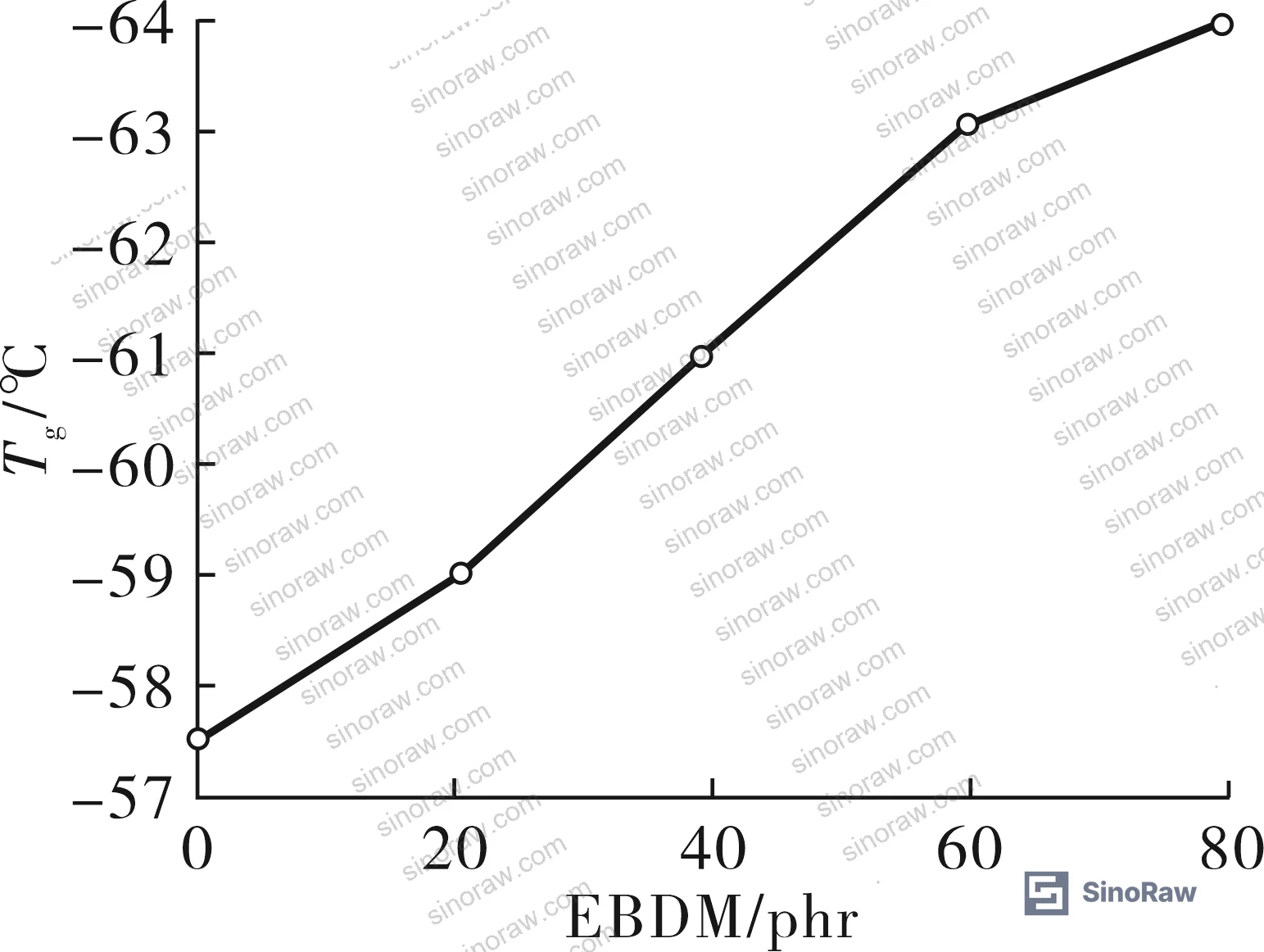
Adding rare-earth polybutadiene rubber (BR) in small quantities improves cold performance by introducing highly flexible, low-energy polymer chains into the network. The data shows Tg and tan δ both decrease initially as BR content increases — but then rebound past the 10 phr threshold. At 90/10 EPDM/BR, Tg drops to -59.1°C and compression set at -40°C improves to 23%. Push BR above 10 phr and compatibility problems with the saturated EPDM backbone dominate: at 80/20 EPDM/BR, Tg climbs back to -52.5°C and low-temperature compression set deteriorates to 43%. The compatibility ceiling on BR addition is real and should be treated as a hard limit in your specification.
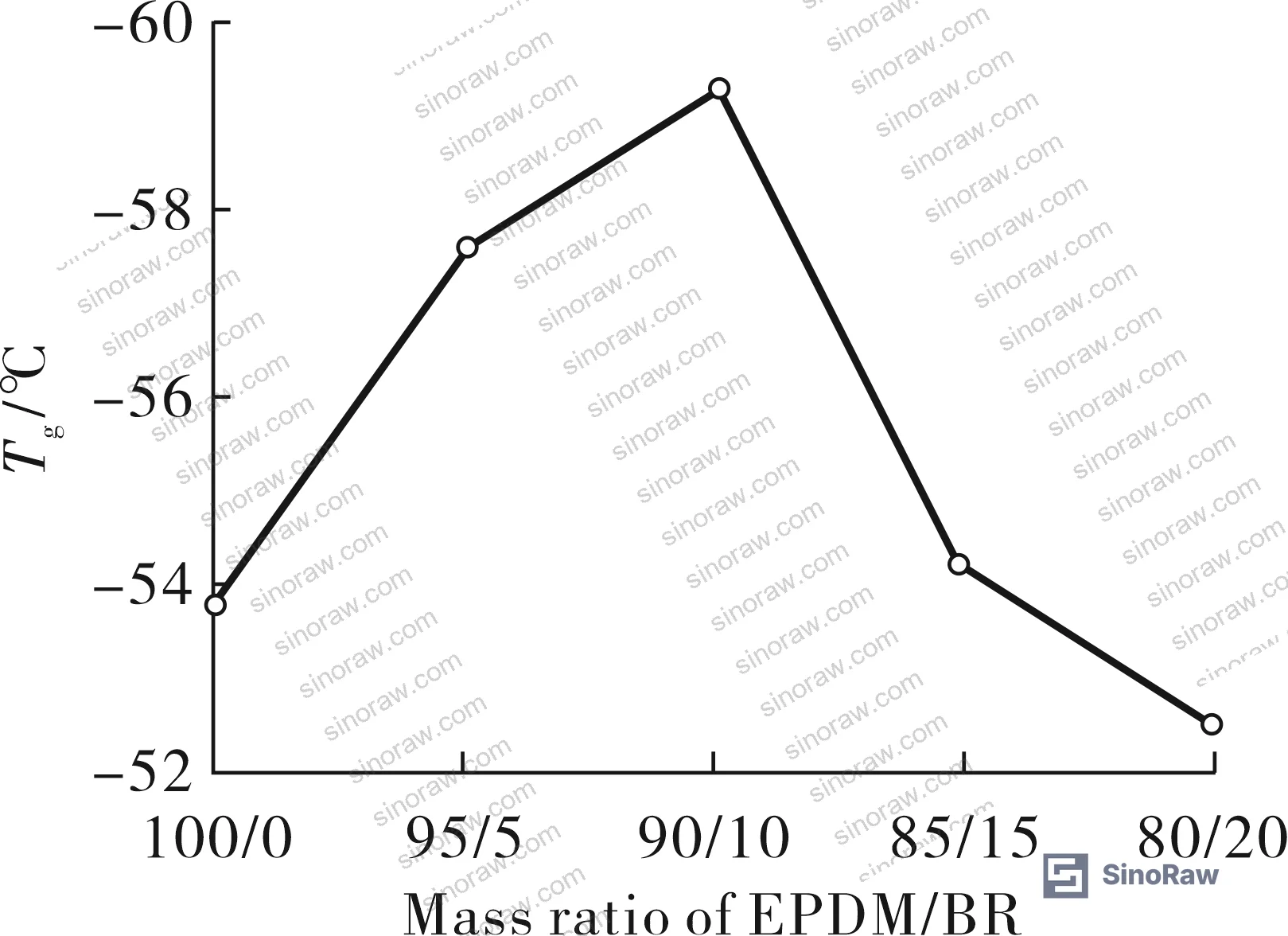
EBDM (ethylene-butylene-diene terpolymer) — ethylene 50 wt%, ENB 7.1 wt% — is the key performance driver in this system. As EBDM loading increases from 20 to 80 phr, Tg decreases monotonically from -57.4°C to -64.1°C and low-temperature compression set at -40°C improves continuously.
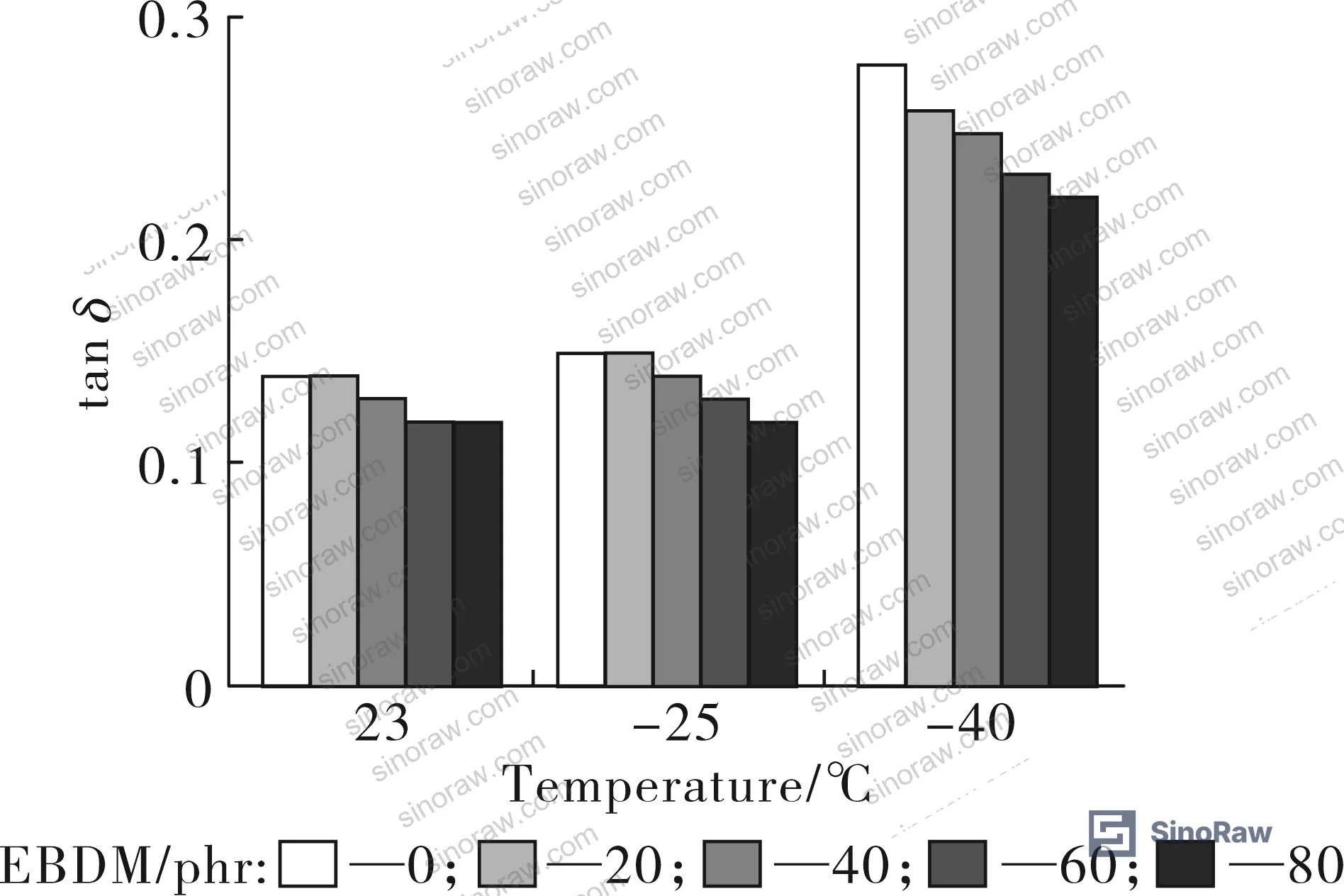
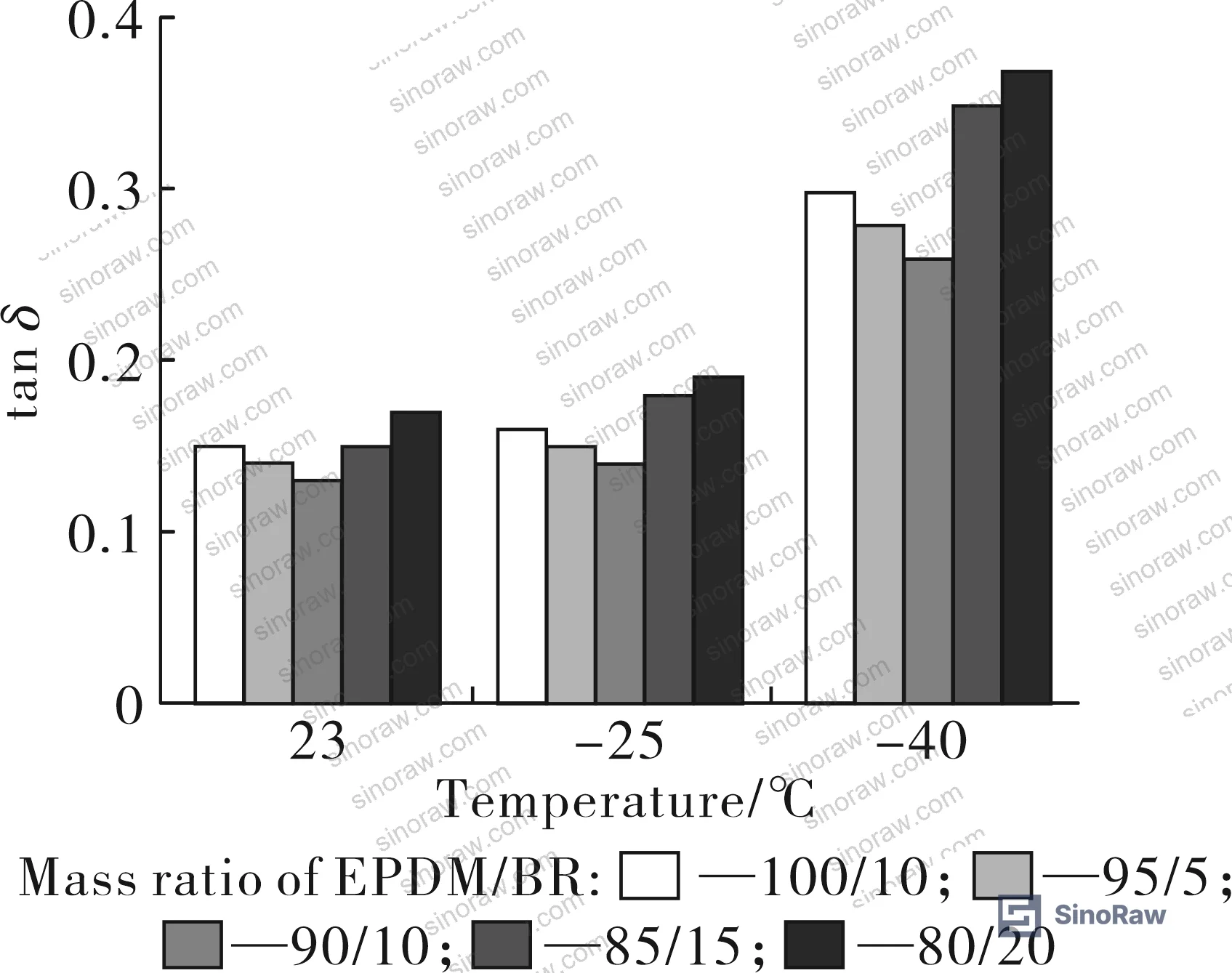
The tradeoff is mechanical strength: tensile strength drops from 15.8 MPa at 20 phr EBDM to 12.5 MPa at 80 phr, and Shore A hardness falls from 75 to 71. The usable window for EBDM is 40–60 phr — this range delivers sub -61°C Tg while maintaining tensile strength above 14.0 MPa. At the 50/10/40 EPDM/BR/EBDM ratio, the system is optimized for rail vibration pad service.
Buyers sourcing these compounds for structural rubber applications should also review the Specialty Polymers and Rubber & Plastic Additives categories for related technical guidance on polymer selection and compounding variables.
Plasticizer Selection and Vulcanization System: The Compound Variables That Determine Low-Temperature Serviceability #
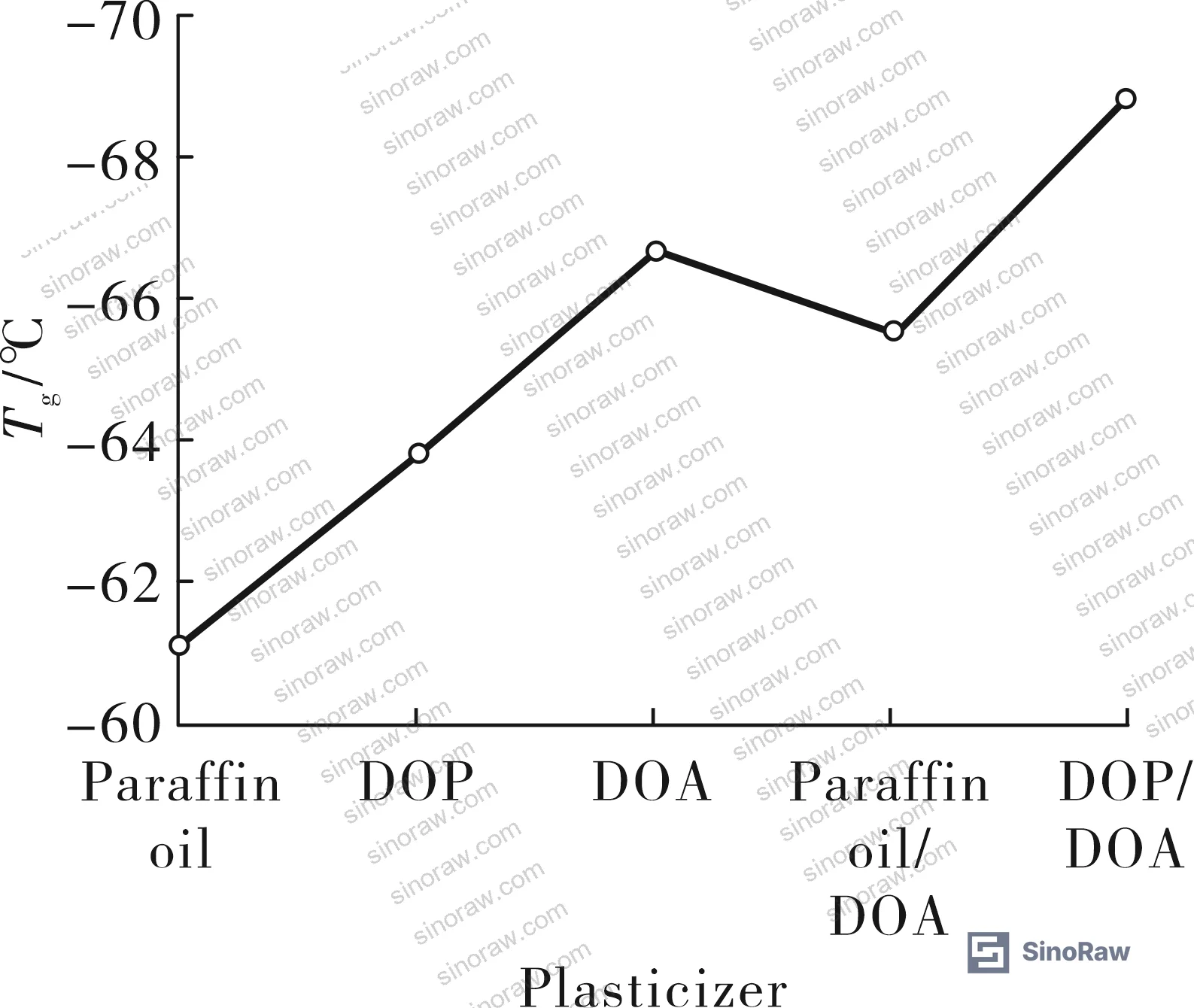
Plasticizer selection is an area where buyers frequently under-specify, accepting a generic “compatible plasticizer” clause when the performance difference between options is substantial. Five plasticizer systems were evaluated:
| Plasticizer System | Tg (°C) | Tensile Strength (MPa) | Compression Set at -40°C (%) | tan δ at 23°C |
|---|---|---|---|---|
| Paraffin oil | -61.3 | 15.2 | 24 | 0.13 |
| DOP | -64.2 | 14.2 | 27 | 0.15 |
| DOA (dioctyl adipate) | -66.7 | 13.8 | 29 | 0.13 |
| Paraffin oil / DOA blend | -65.4 | 14.4 | 21 | 0.14 |
| DOA / DOP blend | -68.5 | 11.8 | 28 | 0.14 |
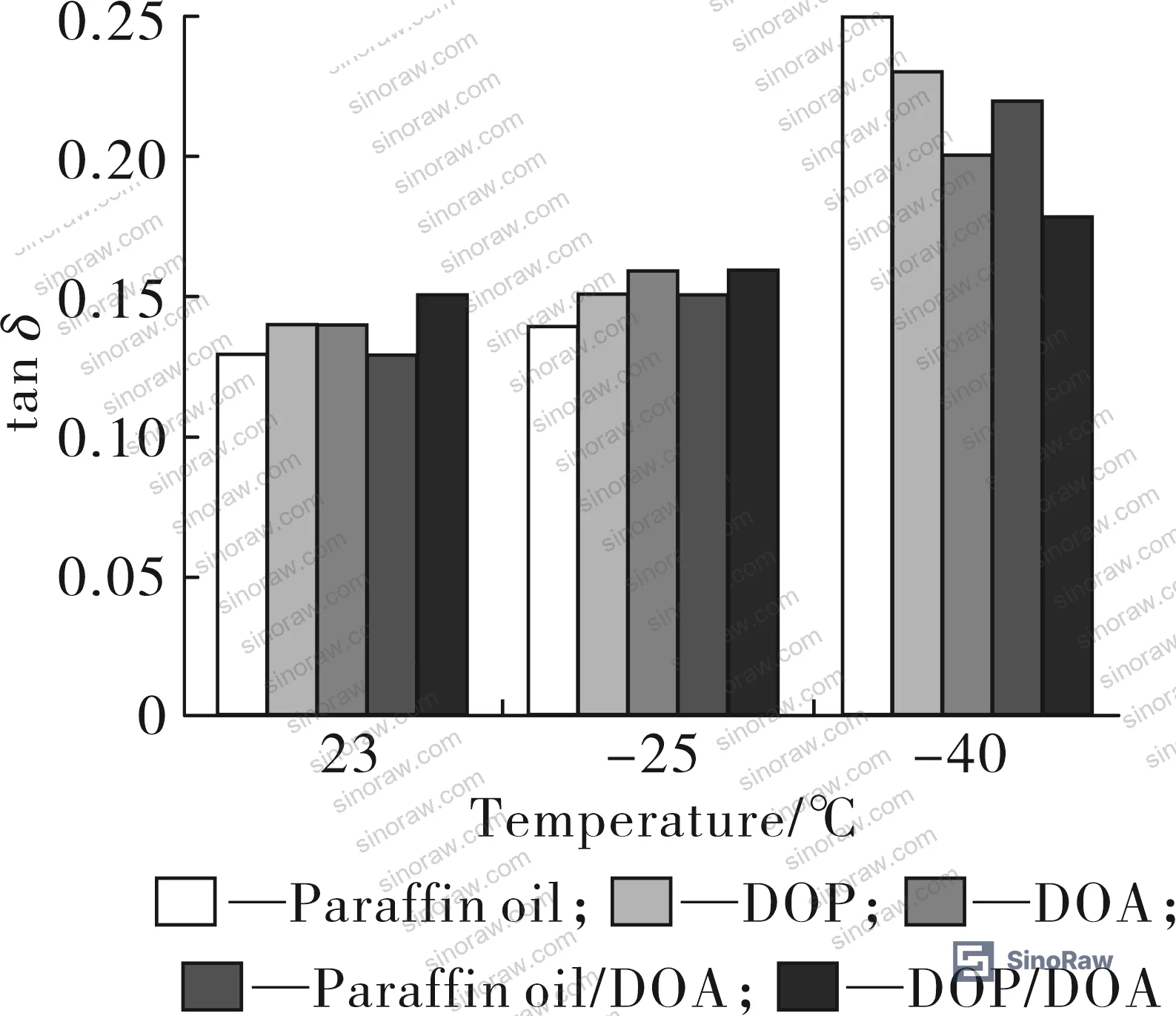
DOA alone gives Tg = -66.7°C due to its low solidification point maintaining plasticizing effectiveness at low temperature. The DOA/DOP combination achieves the lowest Tg at -68.5°C through polar synergy — but the tensile strength drops to 11.8 MPa, which is too low for load-bearing rail applications. Paraffin oil/DOA blend hits the practical optimum: Tg of -65.4°C, tensile strength of 14.4 MPa, and compression set at -40°C of only 21% — better than any single-plasticizer system. Paraffin oil’s natural compatibility with the non-polar EPDM backbone stabilizes high-temperature compression set, while DOA handles the low-temperature plasticization. Specify this combination explicitly.
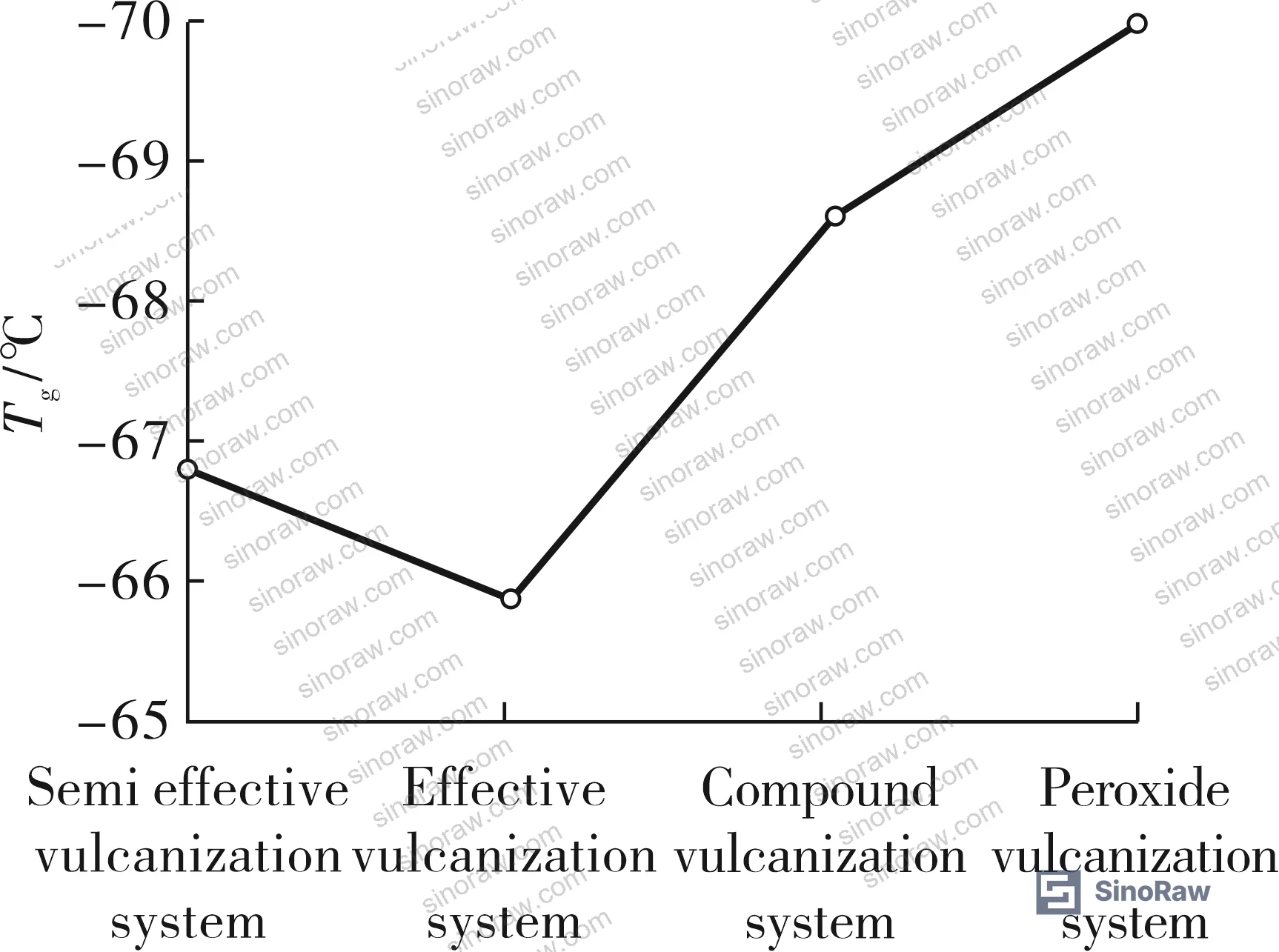
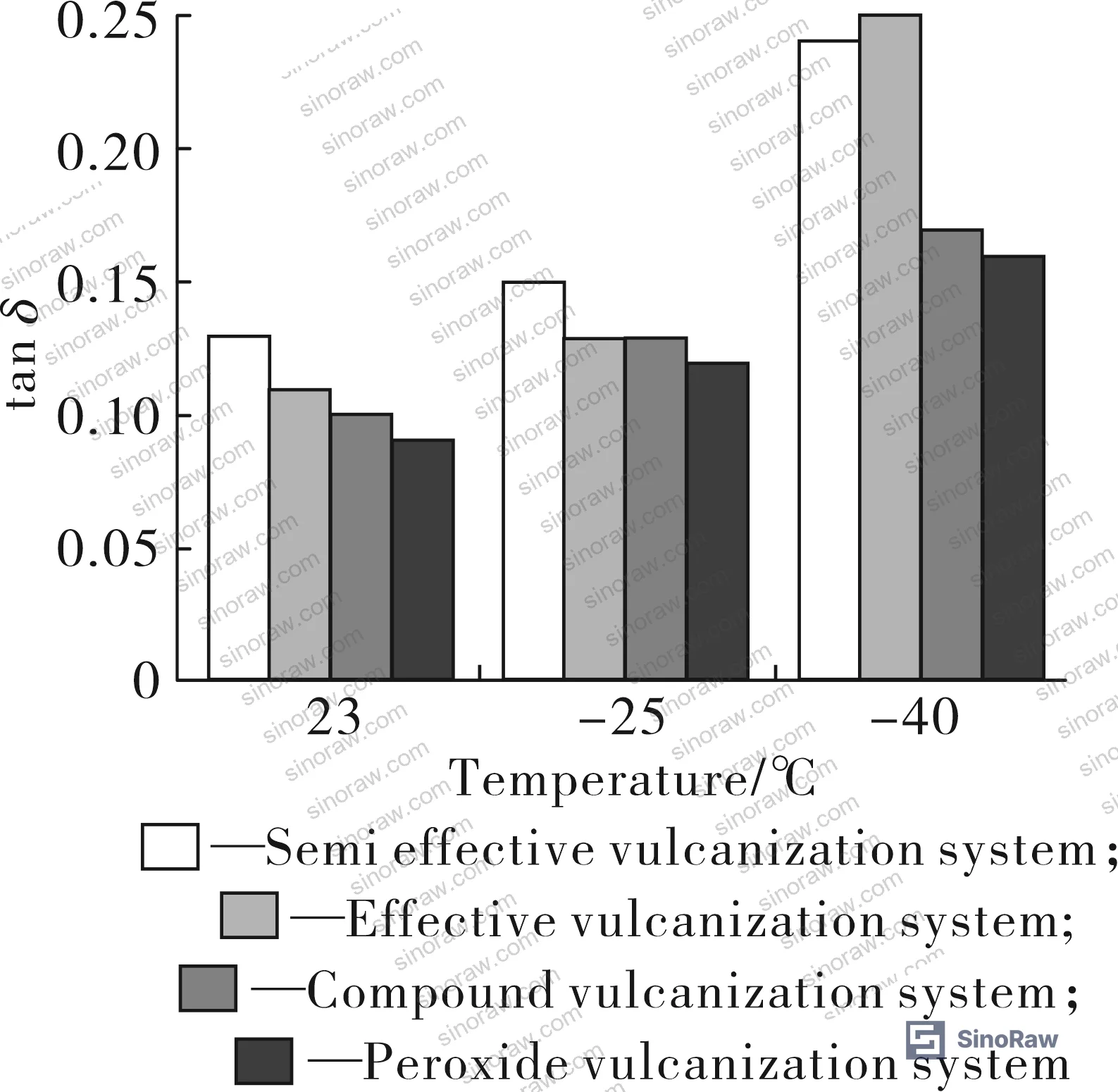
The vulcanization system selection has equally significant effects. Four systems were compared:
| Vulcanization System | Tg (°C) | Tensile Strength (MPa) | Elongation at Break (%) | Compression Set at 100°C (%) | Compression Set at -40°C (%) |
|---|---|---|---|---|---|
| Semi-effective | -66.7 | 15.6 | 315 | 19 | 21 |
| Effective | -65.6 | 14.2 | 280 | 16 | 21 |
| Compound | -68.9 | 16.2 | 274 | 14 | 17 |
| Peroxide | -70.4 | 16.7 | 205 | 12 | 16 |
Peroxide vulcanization achieves the lowest Tg (-70.4°C) and best compression set, but the elongation at break collapses to 205% — inadequate for fatigue-critical rail applications where the pad undergoes repeated compressive and tensile cycling. The compound vulcanization system — a combination of peroxide and sulfur-based crosslinking — delivers Tg of -68.9°C, the highest tensile strength (16.2 MPa), and acceptable elongation at 274%, along with the best combination of high and low temperature compression set (14% and 17% respectively). The C-C crosslinks from the peroxide component reduce intermolecular forces and expand free volume for chain segment mobility, while the sulfur component contributes to the mechanical integrity that peroxide alone sacrifices.
Honestly, most procurement teams evaluating rubber damping compounds focus almost exclusively on Shore hardness and tensile strength. Those parameters tell you almost nothing about cold-climate performance. The Tg and dynamic stiffness ratio at -40°C are the numbers that matter for rail applications in northern climates, and they need to be in your purchase specification with explicit test methods attached.
Verifying these properties requires standardized testing. DSC testing per ASTM D3418 should be mandatory for Tg determination on incoming material, and tensile properties should be confirmed per ASTM D882 or equivalent — though note that for thick rubber profiles, the applicable ASTM standard for tensile is D412. Suppliers who cannot provide Tg data from DSC should not be qualified for cold-climate applications.
Final Composite Performance Against Rail Engineering Requirements #
The optimized EPDM/BR/EBDM formulation — 50/10/40 ratio, paraffin oil/DOA plasticizer, compound vulcanization system — was benchmarked against a conventional high-speed rail damping pad compound. The results show why the reformulation effort matters:
| Performance Parameter | Traditional Formulation | EPDM/BR/EBDM Composite | Technical Requirement |
|---|---|---|---|
| Vertical static stiffness at RT (kN/mm) | 34.62 | 32.56 | — |
| Dynamic/static stiffness ratio at RT | 1.92 | 1.45 | ≤1.50 |
| Vertical static stiffness at -40°C (kN/mm) | 64.85 | 39.07 | ≤30% increase vs RT |
| Dynamic/static stiffness ratio at -40°C | 3.85 | 1.94 | ≤2.00 |
| Tg (°C) | ~-50 | -68.9 | — |
| Tensile strength (MPa) | — | 16.2 | — |
| Compression set at 100°C (%) | — | 14 | — |
| Compression set at -40°C (%) | — | 17 | — |
The traditional formulation fails both dynamic/static stiffness ratio requirements — 1.92 vs the ≤1.50 limit at room temperature, and catastrophically at 3.85 vs ≤2.00 at -40°C. The EPDM/BR/EBDM composite meets all four technical requirements with margin.
In supplier qualification for this compound category, we found that most standard rubber compound suppliers cannot even measure dynamic stiffness ratio — they lack the test equipment. That capability gap is itself a disqualifying signal for critical infrastructure applications. Request the stiffness test report upfront, before sample submission.
Most procurement teams don’t realize that the low-temperature compression set specification for rail vibration pads was significantly tightened in updated Chinese rail standards — the -40°C test condition that was once an edge case is now a baseline requirement for any HSR deployment above 35° north latitude. Suppliers who have only qualified to older standards will not meet current specs, and they may not volunteer that information.
Practical Guidance for Buyers #
When you’re evaluating Chinese suppliers for EPDM-based rubber vibration damping pads — whether for rail, industrial, or structural isolation applications — the specification document is where most procurement failures start. A generic “EPDM rubber compound, Shore A 70–80” spec will get you dozens of quotes and zero assurance of cold-climate performance.
The minimum viable specification for cold-region applications should include: base EPDM grade with ethylene content 48–50 wt% and ENB ≤5 wt%; BR content not exceeding 10 phr; EBDM loading 40–60 phr; Tg ≤ -65°C confirmed by DSC; compound vulcanization system (not peroxide-only); and room-temperature dynamic/static stiffness ratio ≤1.50 with -40°C ratio ≤2.00.
Require DSC Tg data and DMA tan δ curves as part of the sample submission package. Any supplier unable to provide these is working outside the performance window you need. Also verify that their compound vulcanization system documentation distinguishes between peroxide, sulfur, and compound systems — “vulcanized rubber” without system specification is not adequate documentation for infrastructure-grade applications.
Compliance with ISO 9001:2015 quality management certification is a baseline expectation, not a differentiator. What separates qualified suppliers is the ability to demonstrate compound-level traceability: raw material grades, batch Tg measurements, and stiffness ratio test data tied to specific production lots.
At sinoraw.com, our sourcing team connects overseas procurement engineers with verified Chinese specialty rubber compounders — we help you translate performance requirements into RFQ criteria and shortlist suppliers who have the formulation and test capability to deliver.
Need help identifying qualified suppliers for EPDM/BR/EBDM vibration damping compounds? Talk to our sourcing team →
Supplier Qualification Questions #
- What is the measured glass transition temperature (Tg) of your standard cold-climate EPDM damping compound, confirmed by DSC per ASTM D3418, and can you provide batch release data showing Tg ≤ -65°C?
- What is the EPDM base grade ethylene content (wt%) and ENB content (wt%) in your compound formulation — specifically, is ENB content held at or below 5 wt% to control low-temperature compression set?
- Can you provide DMA curves showing tan δ at 23°C ≤ 0.15 and tan δ at -40°C ≤ 0.25 for your rubber vibration pad compound, tested per HB 7655 or equivalent dynamic mechanical analysis protocol?
- What is the dynamic-to-static stiffness ratio of your damping pad at -40°C, and do you have test data showing this ratio remains ≤ 2.00 under the test conditions of Q/TMT TX 0055321000 A 210?
- What vulcanization system does your EPDM/BR/EBDM compound use — semi-effective, effective, compound, or peroxide — and can you document that elongation at break is ≥ 270% in the final vulcanizate?
Sourcing Checklist #
- ☐ DSC Tg measurement per ASTM D3418 confirms Tg ≤ -65°C on production batch sample
- ☐ EPDM base grade documented with ethylene content 48–50 wt% and ENB content ≤ 5 wt%
- ☐ BR content confirmed at ≤ 10 phr in compound formulation documentation
- ☐ EBDM loading confirmed in 40–60 phr range with ethylene content ~50 wt%
- ☐ Tensile strength ≥ 14.0 MPa and elongation at break ≥ 270% confirmed per GB/T 528 or ASTM D412
- ☐ Low-temperature compression set at -40°C ≤ 25% confirmed per GB/T 7759.2 or equivalent
- ☐ Dynamic/static stiffness ratio at room temperature ≤ 1.50 and at -40°C ≤ 2.00 confirmed by stiffness test report
- ☐ Supplier holds ISO 9001:2015 certification and can provide compound-level lot traceability documentation
Key Specifications Table #
| Parameter | Recommended Value | Verification Method |
|---|---|---|
| Glass transition temperature (Tg) | ≤ -65°C | DSC per ASTM D3418, cooling rate 10°C/min |
| Low-temperature compression set (-40°C) | ≤ 25% | GB/T 7759.2-2014 |
| Dynamic/static stiffness ratio at -40°C | ≤ 2.00 | Q/TMT TX 0055321000 A 210 |
| Tensile strength | ≥ 14.0 MPa | GB/T 528-2009, test speed 500 mm/min |
| Elongation at break | ≥ 270% | GB/T 528-2009, test speed 500 mm/min |
| Loss factor tan δ at 23°C | ≤ 0.15 | DMA per HB 7655 |
| Compression set at 100°C | ≤ 20% | GB/T 7759.1-2015 |
| EBDM loading | 40–60 phr | Compound formulation sheet / incoming material certificate |
Can’t find a supplier meeting these specs? Submit your requirements and we’ll match you within 48 hours.
References #
Data source: Cold-Climate Performance Optimization of EPDM/BR/EBDM Ternary Rubber Composites for High-Speed Railway Vibration Damping Applications, B. Zhang et al., Polymer Testing, 2024
Frequently Asked Questions #
Why does EPDM grade selection matter so much for low-temperature rubber compounds?
The Tg of EPDM vulcanizates varies by nearly 11°C across commercially available grades — from -42.6°C for high-ENB, low-ethylene grades to -53.7°C for grades with lower ENB content. Since vulcanizate Tg determines the temperature at which stiffness and compression set behavior deteriorate sharply, grade selection is the primary lever for cold-climate performance, not compounding tricks.
What is the practical upper limit for BR content in EPDM/BR blends?
10 phr. Above this threshold, the poor compatibility between BR and the saturated EPDM backbone causes low-temperature performance to deteriorate — Tg increases and compression set at -40°C worsens significantly. At 80/20 EPDM/BR, cold compression set reaches 43% versus 23% at 90/10.
Can DOA plasticizer alone achieve adequate cold performance?
DOA used alone gives Tg = -66.7°C, which is technically within range, but the compression set at -40°C is 29% — higher than the paraffin oil/DOA blend which achieves 21%. The blend also maintains better tensile strength (14.4 MPa vs 13.8 MPa). DOA alone is acceptable but not optimal; the paraffin oil/DOA combination is the preferred system.
Why is peroxide-only vulcanization not recommended despite achieving the lowest Tg?
Peroxide vulcanization gives the best Tg (-70.4°C) and compression set, but elongation at break drops to 205% — well below the compound vulcanization system’s 274%. Rail damping pads undergo repeated compressive and transverse tensile loading; insufficient elongation means early fatigue failure regardless of cold stiffness performance.
What stiffness requirements must a cold-climate rail damping pad satisfy?
The dynamic-to-static stiffness ratio must be ≤ 1.50 at room temperature and ≤ 2.00 at -40°C, and the vertical static stiffness at -40°C must not increase by more than 30% compared to room temperature. Traditional EPDM formulations fail all three — the conventional compound tested showed a room-temperature ratio of 1.92 and a -40°C ratio of 3.85, both out of specification.
Published by sinoraw.com Technical Team | Request a sourcing quote


