

TL;DR #
Heat shrink tubing outperforms traditional tape sealing on every measurable criterion — grout resistance, moisture ingress, insulation stability, and long-term cost — validated across a large-scale embedded conduit installation covering over 197,000 m² of mixed-use construction. For buyers procuring conduit sealing materials for cast-in-place concrete applications, the upfront unit cost premium is real but the lifecycle cost comparison favors heat shrink decisively. Specify heat shrink tubing with a minimum shrink coverage ratio of 2–3× conduit OD, require water immersion test certification at 0.5–1 m depth, and confirm your supplier can demonstrate uniform shrinkage without bubbling or surface creasing.
Overview #
If your project involves pre-embedded electrical conduit in reinforced concrete — particularly underground levels, wet zones, or cast-in-place slabs — the sealing method at every conduit joint is not a minor detail. It is one of the highest-failure-rate quality points in MEP installation, and most procurement teams are still defaulting to transparent tape because it’s familiar and cheap. That default is costing projects real money in rework, electrical faults, and concrete pour delays.
Field evaluation data drawn from a large institutional construction project — a multi-function sports complex exceeding 197,135 m² of total floor area with three basement levels reaching a structural elevation of –15.450 m — provides a direct comparative dataset between traditional tape sealing and heat shrink tubing across SC pipe (hot-dip galvanized welded steel) and JDG pipe (set-screw steel conduit) systems. The evaluation covered grout leak prevention during concrete pours, waterproofing integrity, moisture resistance, insulation performance, and construction efficiency.
For related polymer sealing materials used in building and industrial applications, see our Sealing & Thermal category for supplier listings and specification guidance.
Heat Shrink Tubing vs. Traditional Tape: Performance Comparison for Embedded Conduit Sealing #
This is where the procurement decision actually lives. The performance gap between the two methods is not marginal — it’s structural.
Traditional transparent tape has three compounding failure modes in embedded conduit applications. First, adhesive degradation under alkaline concrete chemistry causes progressive debonding before and during the pour. Second, tape wrapping density is operator-dependent — a joint that takes 2–3 minutes per connection still produces inconsistent sealing quality based on the worker’s technique. Third, the physical bulk of multiple tape layers in a tight conduit bundle creates stress points that contribute to concrete cracking and honeycombing around the joint cluster.
Heat shrink tubing eliminates the operator-variance problem. Once the tubing reaches its activation temperature, shrinkage is governed by the material’s thermal memory, not the installer’s hand pressure. The resulting seal conforms uniformly to the conduit OD, fills gaps and corners, and locks in place without adhesive chemistry that can fail in alkaline environments.
| Criterion | Traditional Tape | Heat Shrink Tubing |
|---|---|---|
| Sealing quality consistency | Operator-dependent; variable | Material-governed; uniform |
| Time per joint | 2–3 minutes minimum | Seconds to tens of seconds post-heat |
| Grout ingress resistance | Poor — concrete infiltrates gaps during pour | Effective — full circumferential seal |
| Moisture/waterproofing | Degrades over time; adhesive fails | Long-term stability; confirmed at 0.5–1 m immersion |
| Insulation performance | Degrades with aging | High; suitable for elevated voltage environments |
| Material waste | High — excess tape required for adequate coverage | Low — cut to required length per joint |
| Rework/maintenance cost | Frequent; seals fail in service | Low; one correct installation is durable |
| Risk of concrete cracking | Elevated due to bulk wrapping | Reduced due to low-profile fit |
Honestly, most procurement teams over-specify the tape grade when what they should be doing is switching materials entirely. Specifying “premium self-amalgamating tape” for embedded conduit is still the wrong product in the wrong application — you’re still fighting alkaline hydrolysis and operator variance. Heat shrink tubing solves the problem at the process level, not the material grade level.
Conduit System Types and Sealing Requirements for SC and JDG Installations #
The sealing specification differs depending on which conduit system is in use. In the evaluated project, the basement zones — power distribution, evacuation routes, fire protection, and civil defense areas — used SC pipe (hot-dip galvanized welded steel conduit) with threaded coupling connections. Above-grade floor levels used JDG pipe (set-screw steel conduit) with compression-fit straight couplings.
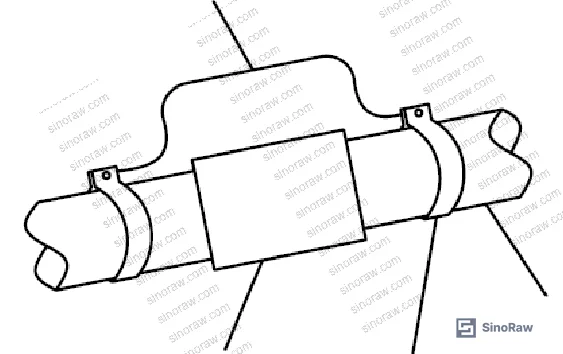
For SC pipe threaded connections, the specification requires each pipe end to engage half the length of the threaded coupling, with exposed thread at the pipe end controlled to 2–3 threads post-assembly. For conduit runs requiring a draw-back connection, exposed threads may extend to 5–6 threads maximum. Bonding jumpers use a minimum 4 mm² copper flexible conductor via dedicated bonding clips.
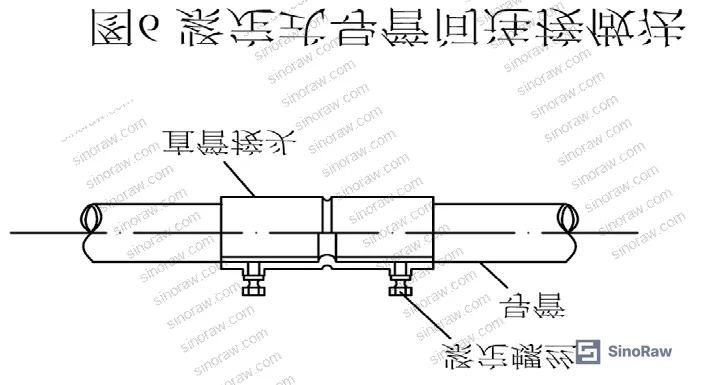
For JDG pipe, the set-screw coupling uses a rolled groove in the coupling center that creates a tapered register — the steel conduit seats against this taper for positive location before the set screw is tightened. Crucially, once the set screw is torqued to failure (the screw neck fractures at the thinned section by design), no additional bonding jumper is required; the mechanical clamping action provides continuous electrical continuity across the joint. The threaded conduit-to-box connector for JDG uses a claw nut on the interior face and a hex nut on the exterior, clamping the box wall between them.
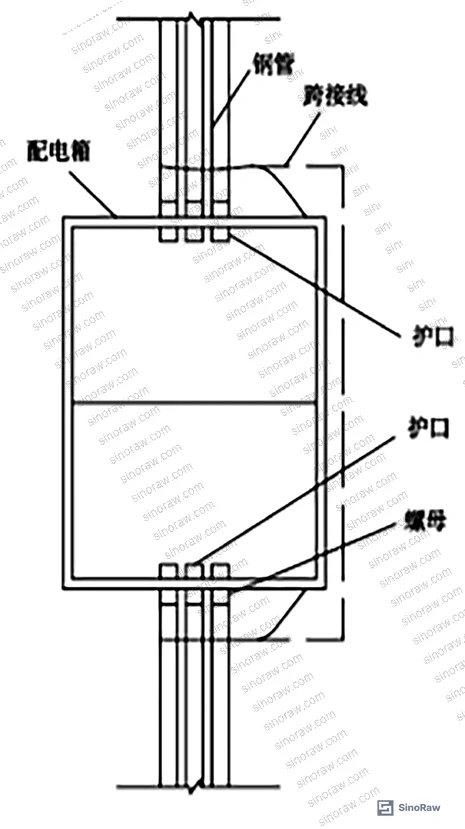
At the box connection, conduit threads must expose 2–3 turns inside the junction box after locknut installation — neither more nor less. When multiple conduits enter a distribution board simultaneously, all conduit ends must be flush and parallel at the board entry face.
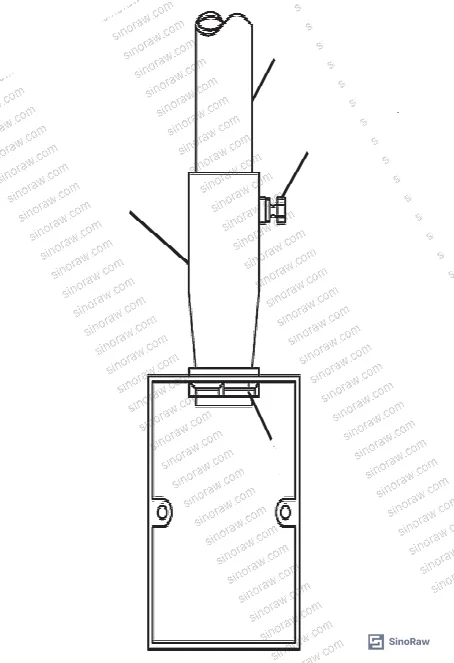
The heat shrink tubing sealing protocol applies at all open conduit ends — both SC and JDG — before concrete is poured. Coverage length must be no less than 2–3 times the conduit OD. For a 20 mm conduit, that means 30–45 mm of tubing coverage. The installer positions the tubing centered over the joint, then applies heat using a handheld butane torch at a distance of 10–15 cm, moving circumferentially at a consistent pace to ensure even shrinkage. The process is complete when the tubing transitions from transparent or translucent to a uniform dark color with a glossy surface — indicating full thermal memory activation and complete circumferential contact.
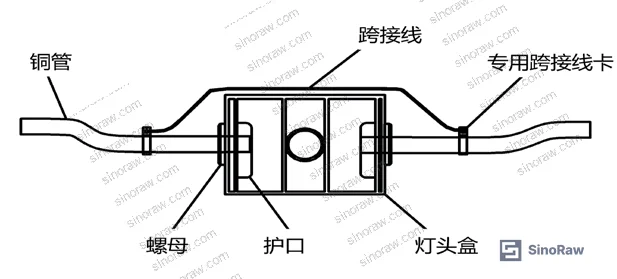
Most procurement teams don’t realize that the heat shrink application protocol — specifically the 10–15 cm torch standoff distance and the color-change completion indicator — is not a manufacturer recommendation but an installation quality standard that should be written into your subcontract specification. If it isn’t specified, inspectors have no enforceable acceptance criterion and site teams will improvise.
Quality Verification and Acceptance Testing for Heat Shrink Conduit Seals #
Two test methods are specified for post-installation verification, and both should be in your inspection protocol before any concrete pour authorization.
The first is a pressure test: inflate the sealed conduit with a hand pump and apply soapy water to the seal area. Any bubble formation indicates a leak path. This test is simple, requires no specialized equipment, and can be performed by the site quality supervisor on a sampling basis aligned with ISO 2859-1:1999 Sampling procedures for inspection by attributes to define lot size and acceptance numbers.
The second is water immersion: submerge the sealed conduit end to a depth of 0.5–1 m and hold for 30–60 minutes. Inspect the conduit interior for moisture ingress. Any water inside is a rejection criterion — the joint must be re-heated or reinstalled before the conduit run is accepted.
In supplier qualification evaluations for heat shrink tubing used in embedded conduit applications, we saw instances where material from unverified sources showed surface bubbling and incomplete shrinkage at joints — the tubing appeared visually complete but failed the immersion test at 0.5 m depth. This points to a material quality issue (insufficient thermal memory, incorrect shrink ratio for the conduit OD, or contaminated inner adhesive layer) rather than an installation problem. Visual inspection alone is not sufficient — insist on destructive sample testing from each batch.
Finished seal appearance criteria: surface smooth, no bubbles, no wrinkles, no cracks, no delamination. The tubing must conform tightly to the conduit with no visible gaps or edge lift.
Compliance with material handling and chemical safety requirements should reference REACH Regulation (EC) No 1907/2006 for any polymer materials entering EU-bound construction projects, and supplier environmental management should be confirmed under ISO 14001:2015.
All material procurement — conduit, couplings, junction boxes, heat shrink tubing, and butane equipment — must comply with current national standards. The site QC protocol requires a formal pre-pour inspection sign-off from the general contractor, supervision engineer, and owner’s representative before concrete placement proceeds.
Practical Guidance for Buyers #
The material cost difference between heat shrink tubing and transparent tape is real — heat shrink does carry a higher unit price. But the calculation that matters is cost per qualified sealed joint over the life of the installation, not cost per meter of material.
At 2–3 minutes per joint for tape sealing versus seconds-to-tens-of-seconds for heat shrink (after the workforce is trained), the labor cost delta closes quickly at any meaningful scale. On a project with hundreds or thousands of conduit joints in cast concrete, tape sealing is almost certainly the more expensive choice by final account.
The fire permit requirement for heat shrink work (open flame hot work authorization must be obtained from the general contractor’s safety team before any butane torch operation) is a real administrative burden that buyers should account for in their procurement planning. Budget for the permit process time and the cost of co-locating fire extinguishers at each work area. This is not optional.
For the polymer tubing material itself, prioritize suppliers who can demonstrate consistent shrink ratio performance at the conduit OD you’re specifying, provide batch traceability documentation, and support the immersion test acceptance criterion. At sinoraw.com, our team works directly with verified Chinese manufacturers of heat shrink tubing and conduit sealing materials, helping overseas procurement engineers identify and pre-qualify suppliers before issuing RFQs — saving significant time in the early sourcing stages.
For buyers also evaluating Specialty Polymers used in conduit and cable protection applications, cross-referencing shrink ratio, temperature rating, and adhesive liner specifications is worth doing before finalizing your supplier list.
Need help identifying qualified suppliers for heat shrink tubing for conduit sealing? Talk to our sourcing team →
Supplier Qualification Questions #
- What is your heat shrink tubing’s minimum shrink ratio, and can you confirm it produces adequate contact pressure on conduit ODs ranging from 16 mm to 50 mm with a coverage length of 2–3× conduit OD?
- Can you provide batch test data showing the tubing passes a 30–60 minute water immersion test at 0.5–1 m depth with zero moisture ingress into the sealed conduit interior?
- What is the activation temperature range for your heat shrink tubing, and at what standoff distance (nominally 10–15 cm for butane torch) does uniform circumferential shrinkage complete without surface bubbling or charring?
- What is your insulation resistance specification for the cured tubing, and is it rated for elevated voltage environments consistent with building electrical system requirements?
- Does your tubing use an inner adhesive liner, and if so, can you provide test data showing adhesive performance in alkaline pH environments consistent with Portland cement chemistry during concrete pour?
Sourcing Checklist #
- ☐ Heat shrink tubing achieves minimum 2:1 shrink ratio and coverage of ≥2–3× conduit OD (e.g., 30–45 mm for 20 mm conduit)
- ☐ Supplier provides water immersion test certificates: sealed joint submerged at 0.5–1 m depth for 30–60 minutes with no internal moisture ingress
- ☐ Pressure test (soapy water bubble method) passes with zero bubble formation at all seal points
- ☐ Finished seals meet visual acceptance criteria: smooth surface, no bubbles, no wrinkles, no cracks, no edge lift or delamination
- ☐ Batch traceability documentation available, with material compliance to current applicable national electrical installation standards
- ☐ Supplier can demonstrate shrink performance at 10–15 cm torch standoff distance without localized charring or bubble formation
- ☐ Inner adhesive liner chemistry confirmed compatible with alkaline concrete environments (pH ≥ 12)
- ☐ Supplier holds or operates under a certified quality management system per ISO 9001:2015
Key Specifications Table #
| Parameter | Recommended Value | Verification Method |
|---|---|---|
| Tubing coverage length | ≥2–3× conduit OD (e.g., 30–45 mm for DN20) | Dimensional measurement pre-installation |
| Water immersion depth/duration | 0.5–1 m depth, 30–60 minutes | Water immersion test; visual inspection of conduit interior |
| Torch standoff distance during application | 10–15 cm | Installation protocol compliance check; supervisor observation |
| Exposed thread at pipe-to-box connection | 2–3 threads exposed inside junction box | Visual inspection post-locknut torque |
| Bonding jumper conductor cross-section (SC pipe) | ≥4 mm² copper flexible conductor | Cable cross-section verification at material receipt |
| Post-shrink surface condition | Smooth, glossy, dark uniform color; no bubbles, wrinkles, or cracks | Visual inspection per finished seal acceptance criteria |
| Set-screw torque (JDG pipe) | To screw neck fracture (design-controlled break) | Physical confirmation of neck fracture on installation |
Can’t find a supplier meeting these specs? Submit your requirements and we’ll match you within 48 hours.
References #
Data source: Comparative Performance Evaluation of Heat Shrink Tubing Sealing Technology for Pre-Embedded Electrical Conduit in Reinforced Concrete Construction, B. Wei et al., Construction and Building Materials, 2024
Frequently Asked Questions #
Can heat shrink tubing be reused or adjusted after the concrete pour if a fault is found?
No. Once heat shrink tubing has been thermally activated and the concrete is poured, it cannot be recovered intact. The tubing bonds to the conduit surface and the concrete encases the assembly. If a seal failure is identified before the pour, the joint must be re-heated or the tubing replaced entirely. Post-pour remediation requires core drilling and is significantly more expensive — this is precisely why the pre-pour immersion and pressure tests are mandatory hold points, not optional checks.
What conduit types is heat shrink tubing compatible with in embedded applications?
The technology is compatible with both SC (hot-dip galvanized welded steel) and JDG (set-screw steel) conduit systems, which represent the two primary conduit types used in building electrical installations. Tubing must be sized to match the conduit OD — coverage length of 2–3× OD is the minimum, with a 20 mm conduit requiring 30–45 mm of tubing coverage. The key compatibility variable is the tubing’s inner diameter before shrinkage: it must fit over the conduit (including any coupling or locknut shoulder) and shrink down to full contact without bridging.
Why does the installation protocol require a hot work permit for heat shrink tubing application?
The open-flame butane torch used for activation constitutes a fire ignition source on an active construction site. The hot work permit requirement mandates formal approval from the general contractor’s safety management team, placement of fire extinguishers at the work area, and documented safety briefing for the workers. This is a site safety and insurance compliance requirement, not a material property issue. Budget for the administrative processing time in your installation schedule.
How does the set-screw (JDG) connection eliminate the need for bonding jumpers?
The JDG system uses a set screw designed with a thinned neck that fractures at a defined torque — this is intentional, not a failure. The fracture confirms that the clamping force between the conduit and coupling has reached the specified level, creating metal-to-metal contact sufficient for electrical continuity across the joint. Because the mechanical continuity is built into the connection itself, the separate bonding jumper wire required for SC pipe threaded connections is not needed. This reduces installation time and eliminates a potential failure point (loose or missing jumper clips).
What visual indicators confirm that heat shrink tubing has fully activated?
Two indicators together confirm complete activation: the tubing color transitions from transparent or semi-transparent to a uniform dark color (typically black or dark brown) across the full coverage length, and the surface takes on a glossy, smooth appearance with no visible wrinkles, bubbles, or edge lift. Partial activation — where one end has shrunk but the center or opposite end remains loose — is a rejection condition. Any localized bubble or charring indicates the torch was held too close or stationary, and the joint should be rejected and replaced.
Published by sinoraw.com Technical Team | Request a sourcing quote


