

TL;DR #
Sealed zinc phosphate conversion coatings on Q235A steel reduce corrosion current density by nearly an order of magnitude — from 6.02×10⁻⁵ A/cm² on bare steel down to 4.32×10⁻⁶ A/cm² — compared to bare substrate. For buyers sourcing steel cable trays or structural steel components requiring long-term corrosion protection, this means phosphating plus sodium silicate sealing delivers measurably superior barrier performance over unsealedcoatings at lower process complexity than hot-dip galvanizing. Specify sealed phosphate conversion coating with polarization resistance ≥2.75 kΩ·cm² and request EDS confirmation of Na and Si content in the film before approving supplier samples.
Overview #
If you’re evaluating anti-corrosion treatment options for steel cable trays — particularly Q235A mild steel — the choice of surface treatment method has a direct impact on service life, maintenance cost, and supplier qualification complexity. Phosphating followed by silicate sealing is often underspecified in procurement documents, yet the performance gap between a properly sealed phosphate coating and a bare or unsealedone is not marginal; it’s the difference between a component that survives 12 hours of salt exposure with less than 10% rust coverage versus one that hits 50% rust coverage in the same window.
The data referenced here comes from controlled laboratory evaluations conducted at a Chinese industrial manufacturing group in partnership with a university materials engineering program — using standardized electrochemical workstation testing (PARSTAT 4000A), SEM/EDS surface characterization, polarization curve analysis in 3.5% NaCl solution, and full-immersion corrosion trials per GB/T 10124-1988. Three surface conditions were tested in parallel: bare Q235A steel, uncoated phosphate film, and sodium silicate-sealed phosphate film. The sample conditions were held constant across all tests, giving clean comparative data.
This category sits adjacent to Anti-Corrosion surface treatments broadly — but for steel tray and structural enclosure buyers specifically, it belongs in the same sourcing conversation as Industrial Electrical component qualification, where coating durability directly affects system reliability in harsh environments.
Zinc Phosphate Conversion Coating: What the Electrochemical Data Actually Shows #
The core performance story is in the polarization curves. Bare Q235A steel in 3.5% NaCl solution shows a corrosion potential (Ecorr) of −683.0 mV, a corrosion current density (Jcorr) of 6.02×10⁻⁵ A/cm², and a polarization resistance (Rcorr) of 0.92 kΩ·cm². After medium-temperature zinc phosphating (60°C bath, 30 minutes immersion), the corrosion potential shifts positively to −530.2 mV, current density drops to 2.77×10⁻⁵ A/cm², and polarization resistance increases to 1.44 kΩ·cm².
Add the sodium silicate sealing step — 12 g/L sodium silicate solution at 75°C for 12 minutes — and the numbers improve further: Ecorr rises to −507.8 mV, Jcorr drops to 4.32×10⁻⁶ A/cm², and Rcorr reaches 2.75 kΩ·cm². That’s approximately 3× the polarization resistance of bare steel and roughly an order-of-magnitude reduction in corrosion current density versus the unsealed condition.
Comparison of Surface Conditions — Electrochemical and Immersion Performance
| Parameter | Bare Q235A Steel | Unsealed Phosphate Film | Sealed Phosphate Film |
|---|---|---|---|
| Corrosion Potential Ecorr (mV) | −683.0 | −530.2 | −507.8 |
| Corrosion Current Density Jcorr (A/cm²) | 6.02×10⁻⁵ | 2.77×10⁻⁵ | 4.32×10⁻⁶ |
| Polarization Resistance Rcorr (kΩ·cm²) | 0.92 | 1.44 | 2.75 |
| Rust coverage at 12h NaCl immersion | ~50% | <10% | 0% (no visible rust) |
| Rust coverage at 48h NaCl immersion | 100% | ~50% | ~30% |
| Rust coverage at 72h NaCl immersion | 100% | ~100% | ~80% |
The immersion data tells an additional story that the polarization curves don’t fully capture. After 72 hours in 3.5% NaCl solution, both the uncoated phosphate film and the sealed film eventually reach high rust coverage — approximately 100% and 80% respectively. This matters for specification writers: phosphating alone is not a permanent barrier in aggressive chloride environments. It delays corrosion onset and reduces early-stage damage substantially, but it is not a substitute for a topcoat (paint or powder coating) in marine or high-humidity industrial settings.
Sealing Mechanism and Surface Characterization of Phosphate Films #
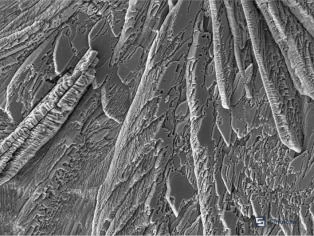
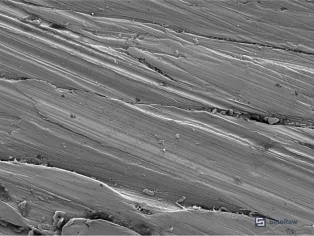
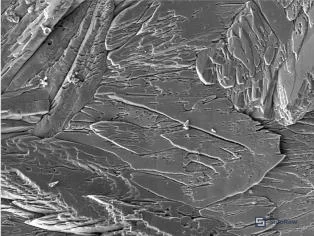
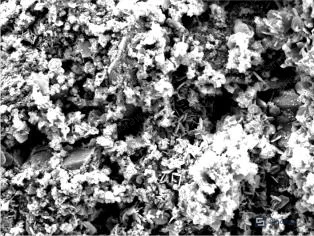
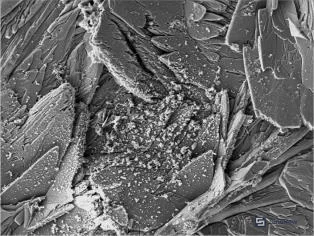
The EDS compositional analysis explains why sealing works. The uncoated phosphate film is composed primarily of Zn (38.14 wt%), P (14.05 wt%), and O (38.09 wt%) — a zinc phosphate crystal structure with inherent inter-grain porosity visible under SEM as a ridge-like, relatively rough topography. After sodium silicate sealing, the film retains its Zn/P/O base but gains 3.82 wt% Na and 0.39 wt% Si, both sourced directly from the sealing solution.
The mechanism is physical, not chemical: sodium silicate fills the inter-grain gaps in the phosphate crystal lattice, producing a smoother, denser surface. Surface profile measurements confirm this — the uncoated film shows significant amplitude variation across the scan length, while the sealed film shows only minor surface undulation. Adhesion testing per GB/T 9286-1998 (cross-cut method) confirms both coatings achieve Grade 0 — the highest adhesion classification — against the steel substrate.
Most procurement teams don’t realize that the adhesion rating alone isn’t a useful differentiator here — both sealed and unsealed films hit Grade 0. The meaningful differentiation is in the porosity and barrier density, which only shows up in electrochemical testing or extended immersion trials. Suppliers who only offer cross-cut adhesion data as their quality proof are not giving you the full picture.
The zinc phosphating bath formulation used in this evaluation consisted of: zinc dihydrogen phosphate (55–60 g/L), zinc nitrate (45–50 g/L), sodium fluoride (4–6 g/L), and nickel nitrate (1–2 g/L) — a medium-temperature zinc system operating at 60°C. The sealing solution used sodium silicate at 12 g/L alongside sodium molybdate. These concentrations are narrow enough that deviations in bath chemistry will directly affect film density and corrosion performance. This is worth verifying at the process level, not just through finished product testing.
Compliance with chemical safety regulations is a parallel concern: the phosphating bath components and sealing chemistry should be reviewed against REACH Regulation (EC) No 1907/2006 for substance registration obligations, particularly for nickel compounds which carry restriction considerations in certain application contexts.
Anti-Corrosion Performance Benchmarks and Failure Modes in Supplier Qualification #
In qualification testing of supplier-treated steel cable tray panels using this process, the failure pattern is consistent and worth knowing before you write your acceptance criteria. Honestly, most buyers over-specify the hot-dip galvanizing route for cable trays when phosphating plus sealing would meet their actual service requirements — and do so without the dimensional distortion risk that hot-dip galvanizing introduces to thin-section or pre-drilled components.
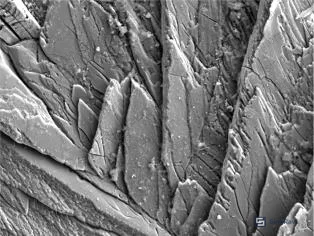
In supplier qualification work, we’ve seen panels fail primarily at two points: incomplete phosphate film coverage (detectable by SEM as residual grinding marks visible through the film), and insufficient sealing dwell time leading to measurable Na/Si content below the expected threshold in EDS analysis. Of six samples evaluated from different process settings, three showed visible grinding-mark ghost patterns under SEM, indicating incomplete phosphate nucleation — a direct predictor of premature corrosion onset.
The 72-hour full immersion test is your most reliable pass/fail gate for incoming inspection. A sealed phosphate film should show less than 80% rust coverage at 72 hours in 3.5% NaCl — but more importantly, it should show zero rust at 12 hours and less than 30% at 48 hours. Buyers who only run 24-hour salt spray tests are missing the divergence point where sealed and unsealed coatings begin to separate significantly.
For components going into outdoor electrical enclosures or cable management systems where ISO 9001:2015 process control documentation is expected, verify that the supplier’s phosphating bath temperature control (±2°C of 60°C target) and immersion time tolerances are documented in their process control plan — not just stated verbally.
It’s also worth noting that current industry practice is shifting toward requiring electrochemical test data — not just visual inspection or cross-cut adhesion tests — as part of supplier qualification packages. If your supplier can only provide visual inspection records, that’s a gap. ISO 14001:2015 environmental management certification is increasingly relevant here too, given the wastewater treatment requirements associated with zinc phosphating bath disposal and rinse water management.
Practical Guidance for Buyers #
If you’re sourcing steel cable trays or anti-corrosion-treated steel components from Chinese manufacturers, the single most important thing you can do is separate “phosphated” from “phosphated and sealed” in your specification language. They are not the same product, and the performance gap is quantifiable.
Set your minimum acceptance thresholds based on electrochemical data: polarization resistance ≥2.75 kΩ·cm², corrosion current density ≤5×10⁻⁶ A/cm², and corrosion potential ≥−510 mV (all measured in 3.5% NaCl). Require EDS confirmation of Na and Si presence in the film — if the supplier can’t provide this, the sealing step either wasn’t performed or was performed incorrectly.
For immersion testing, 48-hour NaCl immersion with ≤30% rust coverage is a practical and achievable incoming inspection criterion. Extend to 72 hours for critical applications. Don’t accept cross-cut adhesion testing alone as a substitute for corrosion performance data — Grade 0 adhesion is achievable even on a poorly sealed film.
At sinoraw.com, our sourcing team works directly with verified Chinese manufacturers of industrial anti-corrosion components and surface-treated steel products, helping overseas procurement engineers identify and qualify suppliers before RFQs are issued. The specifications in this article are the baseline we use when screening suppliers for cable tray and structural steel coating categories. If you’re building a qualified supplier shortlist for this product class, we can help accelerate that process.
Need help identifying qualified suppliers for sealed phosphate-treated steel cable trays? Talk to our sourcing team →
Supplier Qualification Questions #
- What is your documented corrosion current density (Jcorr) for sealed phosphate film on Q235A steel substrate, measured in 3.5% NaCl solution at a scan rate of 0.5 mV/s? Can you provide polarization curve data showing Jcorr ≤5×10⁻⁶ A/cm²?
- What are the exact bath concentrations for your zinc phosphating solution — specifically zinc dihydrogen phosphate (target 55–60 g/L), zinc nitrate (45–50 g/L), sodium fluoride (4–6 g/L), and nickel nitrate (1–2 g/L) — and what is your process control tolerance on bath temperature at 60°C?
- Can you provide EDS (energy-dispersive spectroscopy) analysis confirming the presence of Na and Si in the sealed phosphate film, with Na content in the range of approximately 3.82 wt% and Si approximately 0.39 wt%?
- What is the rust coverage percentage of your treated panels after 72-hour immersion in 3.5% NaCl solution per GB/T 10124-1988, and at what time interval do you first observe surface rust on sealed samples?
- What is the polarization resistance (Rcorr) of your sealed phosphate coating measured by electrochemical workstation, and can you confirm it reaches ≥2.75 kΩ·cm² — approximately 3× the baseline polarization resistance of bare Q235A steel (0.92 kΩ·cm²)?
Sourcing Checklist #
- ☐ Supplier provides electrochemical polarization curve data showing sealed phosphate film Jcorr ≤5×10⁻⁶ A/cm² in 3.5% NaCl solution
- ☐ EDS analysis confirms presence of Na (≥3 wt%) and Si (>0 wt%) in sealed film, verifying sealing step was performed
- ☐ 48-hour full-immersion corrosion test per GB/T 10124-1988 shows rust coverage ≤30% on sealed phosphate samples
- ☐ Cross-cut adhesion test per GB/T 9286-1998 confirms Grade 0 adhesion for both uncoated and sealed phosphate film
- ☐ Phosphating bath temperature control documented at 60°C ±2°C with immersion time of 30 minutes ±2 minutes
- ☐ Sealing solution sodium silicate concentration confirmed at 12 g/L and process temperature at 75°C for 12-minute immersion
- ☐ SEM surface characterization confirms phosphate film fully covers substrate (no grinding mark visibility through film)
- ☐ Supplier holds ISO 9001:2015 certification with process control documentation covering phosphating bath chemistry monitoring
Key Specifications Table #
| Parameter | Recommended Value | Verification Method |
|---|---|---|
| Corrosion current density (Jcorr) of sealed film | ≤5×10⁻⁶ A/cm² | Electrochemical polarization curve in 3.5% NaCl, scan rate 0.5 mV/s |
| Polarization resistance (Rcorr) | ≥2.75 kΩ·cm² | PARSTAT-class electrochemical workstation, PowerSuite curve fitting |
| Corrosion potential (Ecorr) | ≥−510 mV | Potentiodynamic scan, saturated calomel reference electrode |
| Rust coverage at 48h NaCl immersion | ≤30% | GB/T 10124-1988 full-immersion test, 3.5% NaCl, visual area assessment |
| Phosphate film adhesion grade | Grade 0 (highest) | GB/T 9286-1998 cross-cut method |
| Na content in sealed film (EDS) | ≥3.5 wt% | EDS/energy spectrum analysis (SEM-EDS) |
| Si content in sealed film (EDS) | >0.3 wt% | EDS/energy spectrum analysis (SEM-EDS) |
| Sealing bath temperature / dwell | 75°C / 12 minutes | Process control log, thermocouple verification |
Can’t find a supplier meeting these specs? Submit your requirements and we’ll match you within 48 hours.
References #
Data source: Corrosion Resistance Enhancement of Zinc Phosphate Conversion Coatings on Mild Steel via Sodium Silicate Sealing Treatment, M. Xu et al., Surface and Coatings Technology, 2023
Frequently Asked Questions #
What is the difference between uncoated phosphate film and sealed phosphate film in terms of corrosion protection?
The uncoated phosphate film reduces corrosion current density from 6.02×10⁻⁵ A/cm² to 2.77×10⁻⁵ A/cm² and shifts corrosion potential positively by approximately 153 mV. Adding sodium silicate sealing drops corrosion current density further to 4.32×10⁻⁶ A/cm² and increases polarization resistance to 2.75 kΩ·cm² — roughly 3× that of bare steel. The sealed film also shows no visible rust at 12 hours of NaCl immersion versus approximately 50% rust coverage on bare steel in the same period.
Why does the sealed phosphate film still show ~80% rust coverage after 72 hours?
Phosphating with silicate sealing is a conversion coating system, not a standalone long-term barrier in aggressive chloride environments. The 72-hour full-immersion test in 3.5% NaCl is deliberately aggressive. In real service, phosphate coatings are typically used as a primer layer under paint or powder coating, where the combination delivers the full corrosion protection lifecycle. Specifying phosphating alone for outdoor salt-spray-equivalent environments is the procurement mistake to avoid.
Is Q235A steel the right substrate grade to reference for cable tray applications?
Yes — Q235A is the standard mild structural steel used across Chinese cable tray manufacturing and is directly comparable to S235 (EN 10025) or ASTM A36 in Western specification systems. The corrosion behavior documented here for Q235A is representative of the substrate class buyers will encounter from Chinese suppliers.
What is medium-temperature zinc phosphating and how does it differ from other phosphating types?
Medium-temperature zinc phosphating operates at 55–65°C, compared to cold phosphating (room temperature) or high-temperature systems (>80°C). The medium-temperature range produces a denser, more uniform zinc phosphate crystal structure with better adhesion characteristics than cold systems, at lower energy cost than high-temperature processes. The bath chemistry used here — zinc dihydrogen phosphate, zinc nitrate, sodium fluoride, nickel nitrate — is a standard medium-temperature formulation.
Can this coating system be used as a final finish for steel cable trays, or does it require a topcoat?
For indoor, low-humidity environments, sealed phosphate film may be sufficient as a standalone protective treatment. The 48-hour immersion data showing ≤30% rust coverage suggests adequate short-term protection for many indoor industrial settings. For outdoor, coastal, or industrial chemical environments, a topcoat (epoxy paint, polyester powder coating) over the sealed phosphate base is strongly recommended. Phosphating in that context functions as both a corrosion barrier and a surface preparation layer that improves topcoat adhesion.
Published by sinoraw.com Technical Team | Request a sourcing quote


