

TL;DR #
If you’re sourcing RTV silicone sealant for fire-rated building joints, expansion gaps, or electrical penetration seals, the selection criteria most buyers use — shore hardness, cure time, elongation — are only half the picture. The variable that separates a compliant product from a liability in high-rise construction is whether it achieves FV-0 flame retardancy without becoming so rigid it fails the joint movement test six months into service.
This is the tension every formulator and every qualified procurement engineer has to navigate: the more inorganic flame retardant you load into a silicone matrix, the stiffer it gets, and the more likely it is to delaminate under thermal cycling or structural shift. Getting both properties right in a single product at a commercially viable cost is genuinely difficult — and most supplier datasheets won’t tell you where the compromise was made.
The formulation and test data reviewed here comes from verified lab qualification work using a PDMS-based (107 adhesive) silicone system with a composite Mg(OH)₂/Al(OH)₃ flame retardant system, with chain extender optimization specifically targeting the elongation deficit. The results are instructive for any buyer writing specs or evaluating Chinese-manufactured fire-rated silicone sealant.
Flame Retardant Loading in FV-0 RTV Silicone: What the Test Data Actually Shows #
The core formulation uses α,ω-dihydroxy polydimethylsiloxane (107 adhesive, viscosity 80,000 mPa·s) as the base polymer, with a 2:1 mass ratio of aluminum hydroxide (Al(OH)₃, KA-5E grade, median particle size 5.0–6.2 μm) to magnesium hydroxide (Mg(OH)₂, KM-5E grade, median particle size 3.0–4.0 μm). Nano calcium carbonate acts as a reinforcing filler. Crosslinker is a methyl butanone oxime silane system; catalyst is dibutyltin dilaurate at 0.1 parts per hundred.
Single-factor testing across a 20%–45% flame retardant loading range (relative to total formulation weight) produced the following results tested to GB/T 2408-2008 (horizontal and vertical burning method):
| Flame Retardant Loading | Total Afterflame Time t₁+t₂ (s) | t₂+t₃ Combined (s) | Flame Retardant Grade |
|---|---|---|---|
| 20% | 167.01 | 67.56 | Non-retardant |
| 25% | 105.34 | 39.51 | FV-1 |
| 30% | 55.72 | 26.49 | FV-1 |
| 35% | 76.09 | 14.60 | FV-1 |
| 40% | 6.24 | 1.88 | FV-0 |
| 45% | 20.71 | 1.60 | FV-0 |
The jump from FV-1 to FV-0 happens between 35% and 40% loading — and it’s not linear. At 35%, the total afterflame time is 76 seconds, which still fails the FV-0 threshold of 50 seconds aggregate. At 40%, it drops to 6.24 seconds. That non-linearity matters when you’re auditing a supplier’s formulation claims: a 5% reduction in filler loading can take a product from FV-0 to a clear FV-1 failure.
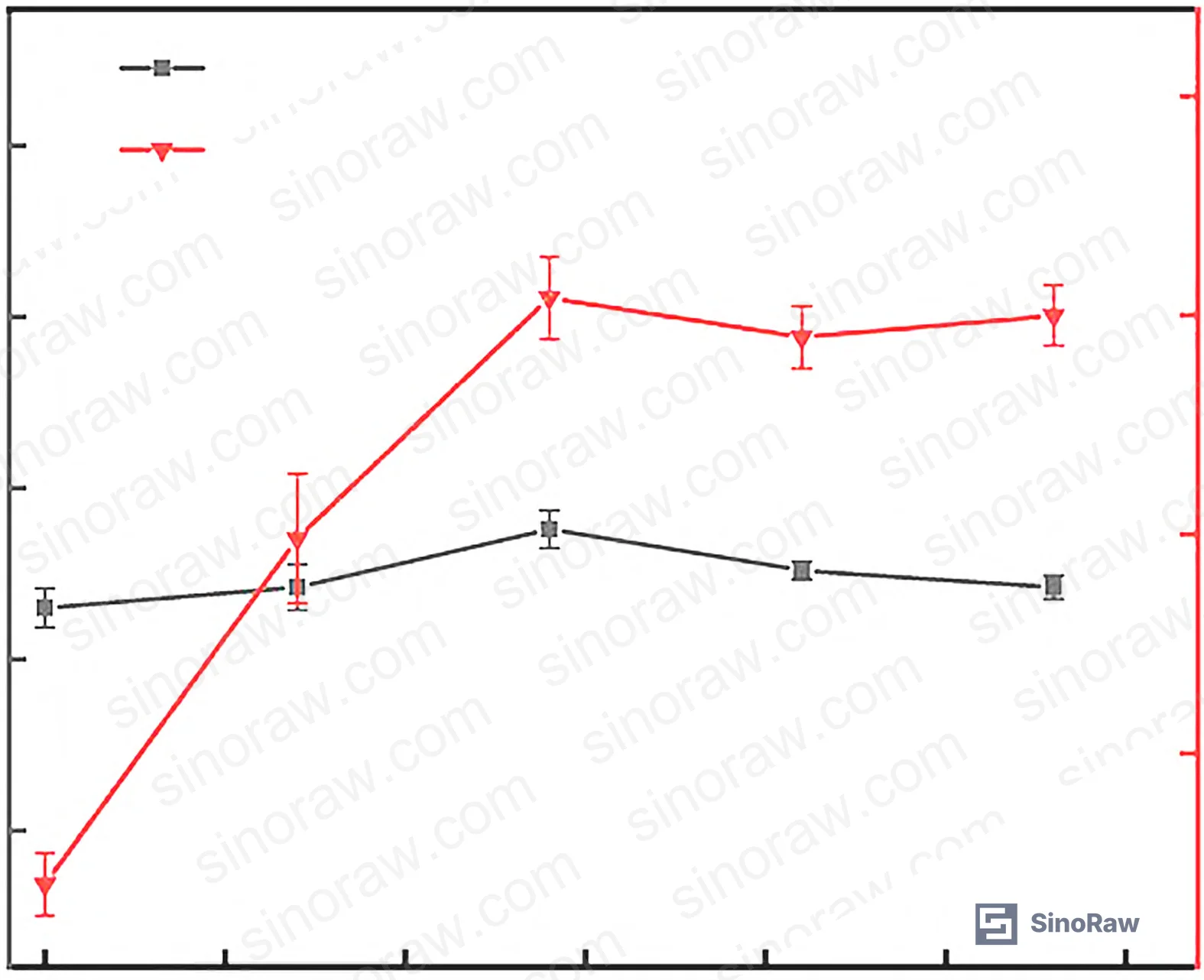
The critical problem: at 40% inorganic filler loading with no chain extender, the maximum elongation at break is only 261%. For joints that require 25%+ movement capacity, this is insufficient.
Chain Extender Optimization: Recovering Elongation Without Losing FV-0 Rating #
This is where the formulation work gets practically useful. Adding a bifunctional chain extender — specifically methyl vinyl di-butanone oxime silane (a ketoxime-type) — into the crosslinked silicone network reduces crosslink density, which restores elongation without degrading flame retardant performance. The ketoxime type was selected over amide (poor storage stability), amino-oxy (causes embrittlement), and alkoxy (slow cure, adhesion issues) variants based on cost-to-performance ratio.
Chain extender was varied from 0 to 2.8 parts per hundred base polymer. Key results:
- 0 parts: elongation at break 261%, Shore A hardness 42
- 1.4 parts: elongation at break 404%, Shore A hardness 36, tensile strength maintained at 2.38 MPa
- 2.1 parts: elongation plateaus, diminishing returns beyond 1.4 parts
- 2.8 parts: extrudability rises to 125 mL/min (vs. 103 mL/min baseline), surface tack time ~10 min, cure depth (16 h) ~2.72 mm
Importantly, FV-0 rating was maintained across the entire 0–2.8 part chain extender range. The flame retardant performance is governed by the filler loading, not the crosslink architecture — the two levers are largely independent, which is useful knowledge when you’re reviewing a supplier’s modification claims.
For the I-type (butt joint) specimen at 1.4 parts chain extender addition:
- Tensile strain reaches 110%
- Tensile modulus at 60% strain: 0.64 MPa
- Tensile modulus at 100% strain: 0.85 MPa
- Elastic recovery rate after 100% elongation: 92%
That 92% elastic recovery is tested per GB/T 13477.17-2017 and is a critical spec for dynamic joints — a sealant that doesn’t spring back properly will develop voids and lose air/water tightness over repeated thermal cycles.
Weathering Resistance and Adhesion: Aging Data Under UV Exposure #
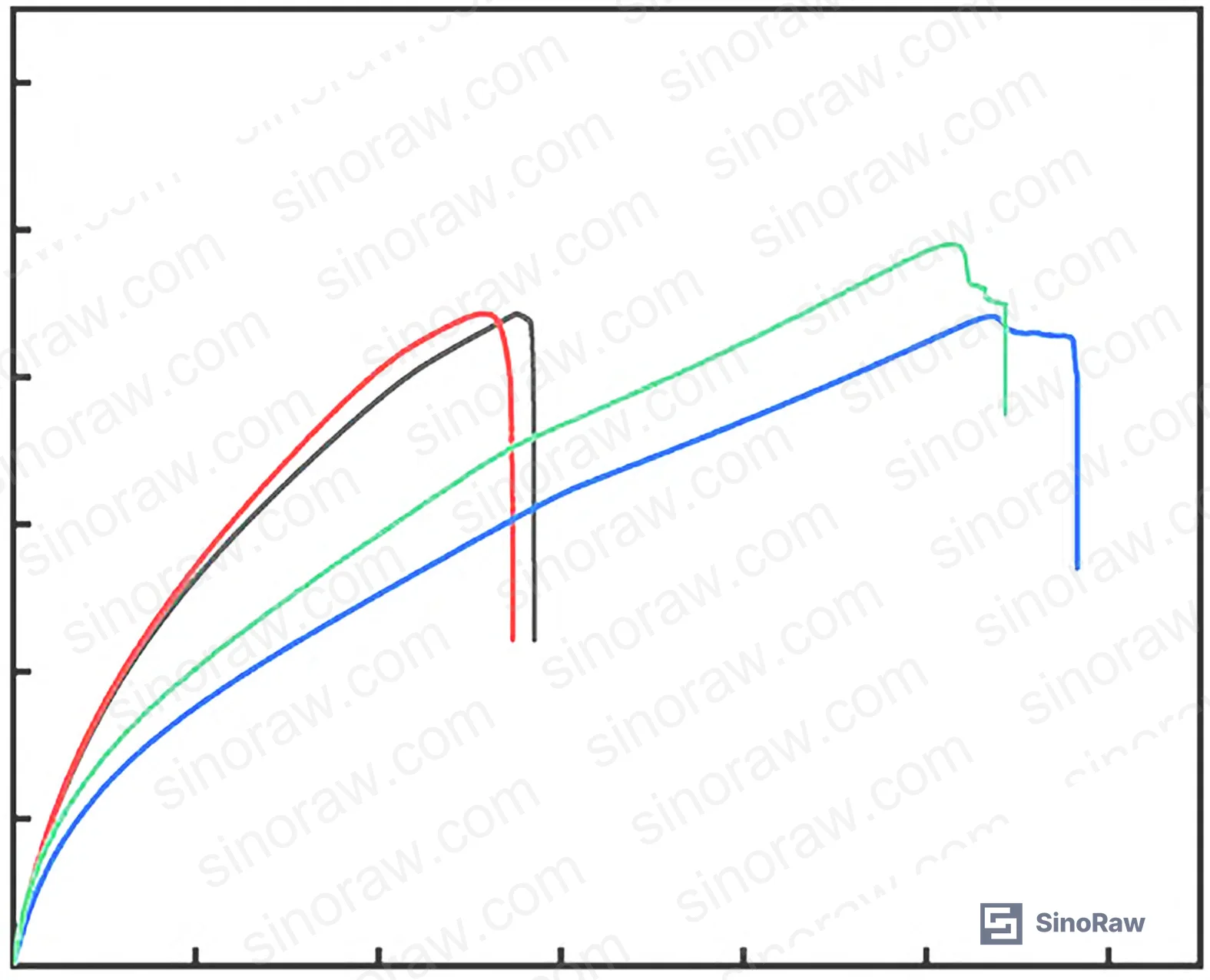
Accelerated aging was conducted at 300 hours UV-water exposure per GB/T 13477.8-2017 on I-type specimens at both 0 and 1.4 parts chain extender. The stress-strain curves before and after aging show minimal divergence — mechanical strength retention is high in both cases, and the chain extender does not introduce any new degradation pathway under UV exposure.
Adhesion performance tested to GB/T 13477.10-2017 on glass and aluminum substrates showed good bonding before and after aging, with no cohesive or adhesive face failure observed at either substrate.
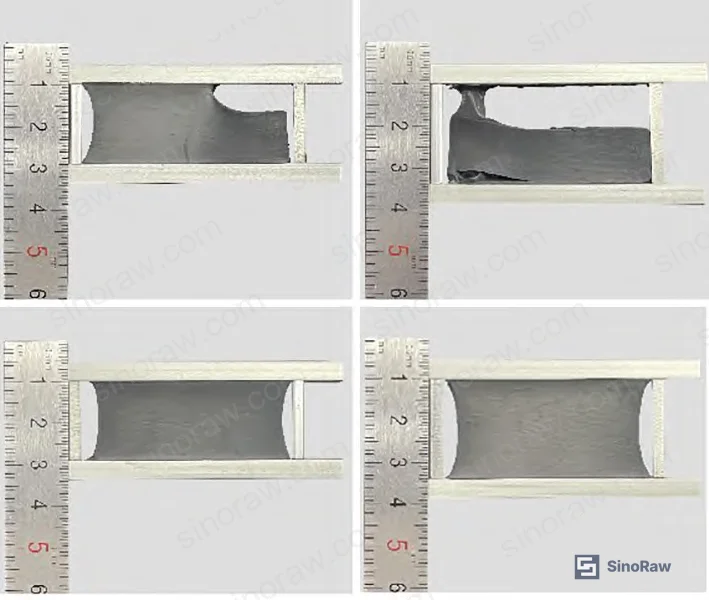
The fixed-elongation (定伸) adhesion test results are where the difference between the two formulations becomes stark:
- Without chain extender: adhesive face failure observed at 60% elongation; severe failure at 100% elongation
- With 1.4 parts chain extender: zero face failure at either 60% or 100% elongation
This is the practical failure mode that kills FV-0 sealants in the field. Formulators hit their flame retardancy target, ship a product that passes the burn test, but the adhesion at the substrate interface fails under joint movement — and nobody finds out until the building inspector or the water ingress does.
Honestly, most procurement teams spec the elongation at break and stop there. The 100% fixed-elongation adhesion test under GB/T 13477.10 is the test that actually predicts in-service behavior at a joint, and most Chinese sealant datasheets I’ve reviewed simply don’t include it. Request it specifically in your IQC documentation.
Practical Guidance for Buyers #
When you’re qualifying a flame-retardant RTV silicone sealant from a Chinese manufacturer, the datasheet rarely tells you how the FV-0 rating was achieved — and that matters. A formulation loaded to 45% inorganic filler may pass the burn test, but if chain extender hasn’t been optimized, your elongation at break could be sitting at 261% and your fixed-elongation adhesion will fail in the field.
At sinoraw.com, we work with overseas procurement teams as a Guangzhou-based sourcing and supplier qualification service, helping buyers cut through unverified datasheet claims and get actual test data before RFQs are issued. For fire-rated silicone sealants specifically, we recommend requiring test reports citing GB/T 2408-2008 for FV-0 verification, plus fixed-elongation adhesion data to GB/T 13477.10 and elastic recovery data per GB/T 13477.17. Shore A hardness should be in the 35–42 range — anything harder is a signal that chain extender hasn’t been used, which means elongation and adhesion under movement are likely compromised.
Cross-reference with our silicone and RTV sealant supplier guides for pre-qualified source options, and see our structural UV adhesive and specialty polymer resources if your application also requires UV-cure or thermally conductive variants. Budget for third-party retesting on the first production batch — it’s a small cost against the liability exposure of a misclassified fire-rated sealant in a high-rise joint.
Frequently Asked Questions #
What is the minimum flame retardant loading needed for FV-0 grade in an inorganic Mg(OH)₂/Al(OH)₃ system?
Based on single-factor test data using a 2:1 Al(OH)₃/Mg(OH)₂ ratio in a PDMS-107 base polymer, 40% total loading (relative to total formulation weight) is the threshold for FV-0. At 35% loading, total afterflame time exceeds 50 seconds, which classifies as FV-1. A 5% reduction in filler loading can shift classification by a full grade — this is worth verifying in supplier process audits, since filler is the primary cost variable in these formulations.
Why does high flame retardant loading reduce elongation at break?
Inorganic fillers like Al(OH)₃ and Mg(OH)₂ increase the crosslink density of the cured silicone network and physically restrict polymer chain mobility. At 40% loading without any chain extender modification, elongation at break peaks at 261% — well below the 400%+ achievable in standard non-FR silicone sealants. Adding a bifunctional chain extender such as methyl vinyl di-butanone oxime silane partially replaces the trifunctional crosslinker, reducing crosslink density and recovering ductility without affecting the flame retardant mechanism.
Does adding chain extender compromise the FV-0 flame retardancy rating?
No. Across the full tested range of 0–2.8 parts chain extender per hundred parts base polymer, the FV-0 classification was maintained consistently. Flame retardancy in this system is controlled by inorganic filler content, not crosslink architecture — the two parameters are effectively independent levers.
What test methods should I require in a supplier qualification package for fire-rated silicone sealant?
At minimum: GB/T 2408-2008 for flame class verification; GB/T 13477.10-2017 for fixed-elongation adhesion at 60% and 100% strain; GB/T 13477.17-2017 for elastic recovery rate; GB/T 528-2009 for elongation at break and tensile strength; and cure depth per GB/T 32369-2015. The fixed-elongation adhesion test is the one most suppliers omit — require it explicitly.
Can organic flame retardants substitute for the inorganic composite system to reduce hardness?
Organic flame retardants like melamine or nitrogen-phosphorus compounds can reduce the total inorganic filler loading needed, but recent industry evaluations show the mechanical improvement is less consistent than expected, and organic FR costs are significantly higher. The all-inorganic Mg(OH)₂/Al(OH)₃ system with chain extender optimization delivers better cost-to-performance for commercial-scale production — which is why most price-competitive Chinese manufacturers are moving toward this approach rather than hybrid organic/inorganic systems.
Published by sinoraw.com Technical Team | Request a sourcing quote
Content reviewed by michael.fang | © sinoraw.com — All rights reserved. Unauthorized reproduction prohibited.


