

TL;DR #
If you’re sourcing RTV silicone sealant for a gasketing application and your supplier can’t give you a compression set value tested at temperature — walk away. Compression set is the single most important number in CIPG (Cured-In-Place Gasket) sealant evaluation, and it’s the spec that most datasheets either omit entirely or test under conditions that bear no resemblance to actual service environments.
CIPG technology — where liquid sealant is dispensed, thermally cured on the mating face, and then assembled — has become the dominant approach in automotive powertrains, EV battery enclosures, and industrial enclosure sealing precisely because it eliminates the dimensional variation and misalignment issues of pre-formed gaskets. The tradeoff is that the cured silicone must maintain its elastic recovery under sustained compression and elevated temperature for the full service life of the assembly. When it doesn’t, you don’t get a warning. You get a field failure.
This article walks through the formulation variables that actually drive compression set performance in addition-cure silicone CIPG systems — base polymer viscosity, crosslinker ratio, reinforcing resin content, and filler surface chemistry — with qualification data that connects each variable to real mechanical outcomes.
CIPG Silicone Sealant Compression Set: Formulation Variables and Performance Data #
The core challenge in CIPG sealant formulation is balancing processability — the sealant needs to dispense cleanly and hold shape before cure — with long-term elastic recovery after cure. These two requirements pull in opposite directions, and the formulation window is narrower than most suppliers will admit.
Base Polymer Viscosity: Where Most Formulations Go Wrong #
The foundation of any addition-cure CIPG system is the vinyl-terminated polydimethylsiloxane (PDMS) base oil. Viscosity selection directly controls both dispensing behavior and final network architecture.
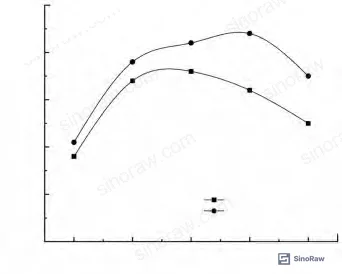
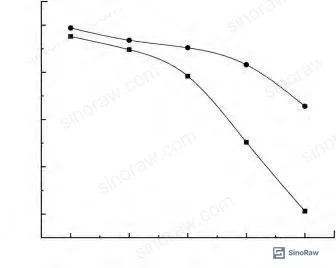
Testing across five viscosity grades — 1,000 / 5,000 / 10,000 / 20,000 / 50,000 mPa·s — under fixed conditions (Si-H/Vi ratio 1.2:1, 15 phr MQ resin, 15 phr fumed silica) produced the following results:
| Vinyl Oil Viscosity (mPa·s) | Tensile Strength (MPa) | Elongation at Break (%) | Compression Set (%) | Shore A Hardness |
|---|---|---|---|---|
| 1,000 | 3.5 | 58 | 57 | 67 |
| 5,000 | 3.9 | 157 | 50 | 62 |
| 10,000 | 4.3 | 264 | 38 | 53 |
| 20,000 | 4.5 | 286 | 26 | 42 |
| 50,000 | 3.9 | 217 | 32 | 36 |
The 20,000 mPa·s grade is clearly the optimum. Compression set drops from 57% at 1,000 mPa·s to 26% at 20,000 mPa·s — more than halved — while tensile strength and elongation both peak at the same viscosity. The 50,000 mPa·s grade actually reverses the trend: bulk viscosity reaches 1,050 Pa·s, fumed silica can no longer disperse uniformly, crosslink density drops, and both tensile and compression set performance deteriorate.
Honestly, most buyers who review sealant datasheets never ask what base oil viscosity was used in the formulation. They look at the final cured hardness and tensile number and assume the formulation is optimized. It rarely is — particularly with lower-cost product lines where base oil selection is driven by raw material price, not application performance.
Crosslinker Ratio and MQ Resin Loading: Dialing In the Network Structure #
Once base oil viscosity is fixed, the two most critical formulation levers are the Si-H/Vi molar ratio (which controls crosslink density) and MQ silicone resin content (which controls network reinforcement).
Si-H/Vi Molar Ratio
The hydrogen-functional silicone crosslinker (side-chain hydride silicone oil, 1.0 wt% H content) reacts with the vinyl end-groups on the base polymer during platinum-catalyzed addition cure. The stoichiometric ratio of Si-H to vinyl groups (Vi) is the primary determinant of network completeness.
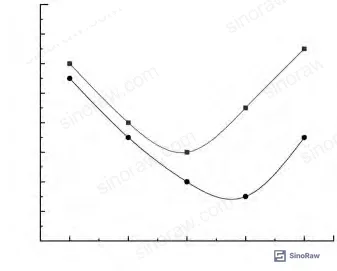
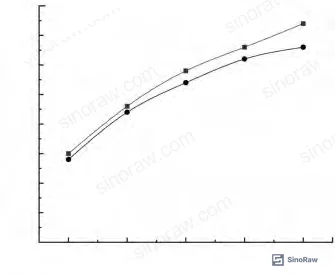
| Si-H/Vi Molar Ratio | Tensile Strength (MPa) | Elongation (%) | Shore A | Compression Set (%) |
|---|---|---|---|---|
| 1.0 : 1 | 3.6 | 264 | 38 | 44 |
| 1.2 : 1 | 4.5 | 286 | 42 | 26 |
| 1.4 : 1 | 5.0 | 324 | 44 | 21 |
| 1.6 : 1 | 4.8 | 318 | 40 | 25 |
| 1.8 : 1 | 4.1 | 259 | 39 | 28 |
At 1.0:1, tensile strength is only 3.6 MPa and compression set is 44% — this material will not hold a seal under sustained load. The optimum is clearly 1.4:1, where tensile strength reaches 5.0 MPa and compression set drops to 21%. Above 1.4:1, excess Si-H groups remain unreacted as free hydride silicone oil. This plasticizes the network and actually worsens compression set despite the higher crosslinker addition.
MQ Silicone Resin Loading
MQ resin (VMQ101, vinyl content 0.0767 mol/100g) functions as both a chain extender and a physical reinforcing agent within the crosslinked network. At 15 phr loading, compression set reaches its minimum value of 18%. Below this level, the network is under-reinforced. Above it, local crosslink density becomes excessive and non-uniform, leading to stress concentration, reduced elongation, increased hardness, and a rise in compression set. The 15 phr loading point is the reliable target for procurement qualification specs.
Fumed Silica Filler: Surface Chemistry Is the Variable Nobody Talks About #
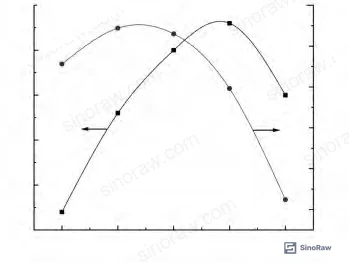
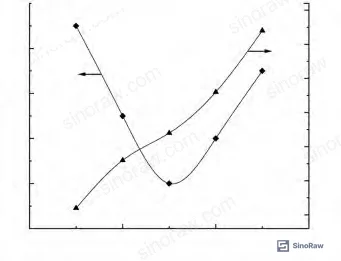
Most procurement teams don’t realize that the surface treatment applied to fumed silica — not the silica grade itself — is what ultimately determines both filler loading capacity and long-term compression set performance. This is one of those areas where the spec sheet tells you nothing useful.
Two surface modifier systems were compared across fumed silica loadings from 10 to 30 phr:
- Hexamethyldisilazane (HMDS) — the conventional choice. Tensile strength and compression set optimize at 20 phr loading. Beyond 20 phr, viscosity rises sharply, dispersion degrades, and agglomeration becomes evident. At 20 phr with HMDS modification, peak tensile strength and compression set are acceptable but limited.
- Tetramethyldivinyldisilazane (TMVDS) — introduces vinyl groups onto the fumed silica surface. These surface vinyl groups participate directly in the hydrosilylation cure reaction, covalently bonding the filler into the crosslinked network rather than relying on physical entanglement alone. The result: at 25 phr loading, tensile strength reaches 6.4 MPa and compression set drops to 13% — both the best values in the entire dataset.
This is the key insight: TMVDS-modified silica extends the usable filler loading window from ~20 phr to ~25 phr while simultaneously improving elastic recovery. The covalent filler-network bonding ensures efficient stress transfer under compression, which is exactly what prevents permanent set under long-term load.
In supplier qualification, we have seen batches where fumed silica surface treatment was switched from TMVDS to HMDS without datasheet revision — compression set shifted from 14% to 22% on otherwise identical formulations. The sealant still passed standard room-temperature cure specs and would have cleared incoming inspection at most facilities.
Thermal Aging Performance of CIPG Silicone Sealant at 150°C #
Long-term thermal aging behavior is where many silicone sealant datasheets become unreliable. Suppliers report initial cured properties; service life depends on what happens after 500, 1,000, or 2,000 hours at operating temperature.
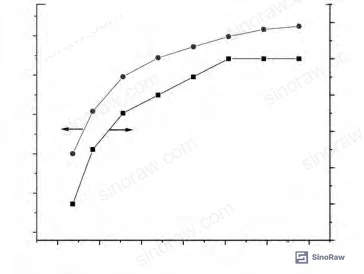
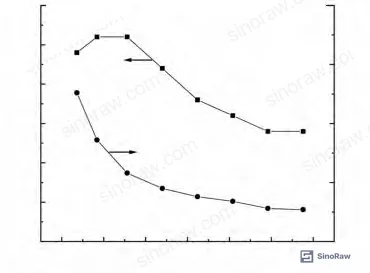
Aging was conducted at 150°C continuously, with test specimens evaluated at intervals through 1,000 hours. Cure conditions: 150°C × 30 min on a compression molder, specimens per GB/T 7759.1—2015 (compression set, 30% compression, 72h at 150°C) and GB/T 528—2009 (tensile properties).
Key findings across the 1,000-hour aging window:
- Initial behavior: Tensile strength shows a slight increase in the first aging phase. This reflects residual addition-cure reaction proceeding to completion during early thermal exposure — an incomplete-cure artifact that is worth flagging on production parts cured at marginal temperatures.
- 1,000 h tensile strength: 5.7 MPa — still above the 5.0 MPa pre-aging baseline for the optimized formulation, confirming structural integrity retention.
- 1,000 h elongation at break: 226% — reduced from the initial 324% but still indicating a material with meaningful elastomeric response, not a brittle aged rubber.
- 1,000 h Shore A hardness: 52 — a 18% increase from the 44 Shore A initial value, driven by continued post-cure crosslinking and chain stiffening.
- 1,000 h compression set: 31.2% — increased from 21% initial, but stabilizing. The rate of change flattens significantly after the first 200–400 hours as the network reaches equilibrium.
The aging curve shape is important: both hardness and compression set increase rapidly in the early aging period and then plateau. This tells you that the predominant mechanism is residual crosslinking and thermal chain scission reaching a new equilibrium — not progressive oxidative degradation. A material that stabilizes at 31.2% compression set after 1,000 hours at 150°C is still a viable sealing material for most automotive and industrial enclosure applications.
For comparison, industry guidance on silicone sealing for automotive applications — referenced in SAE J200 and enclosure sealing specifications under IEC 60529 — typically sets compression set limits in the 25–40% range for long-term sealing reliability. This formulation holds within that window.
Current ISO 11222 and related silicone material standards have tightened their thermal classification criteria in recent revision cycles. Most procurement teams don’t realize that legacy thermal class assignments on silicone sealant TDS documents may reference older, less demanding test regimes. Always request test reports issued under current standard revisions, not archived datasheet figures.
Practical Guidance for Buyers #
When you’re qualifying a CIPG silicone sealant from a Chinese manufacturer, the most actionable question you can ask is: “What is your compression set at 150°C × 72h, and what formulation variables were tested to arrive at that value?” A supplier who can answer that with actual test data — not just a number on a datasheet — is worth continuing the conversation.
At SinoRaw, our role is to help overseas procurement engineers and sourcing managers cut through the noise of Chinese supplier listings and identify manufacturers whose quality systems and technical capabilities actually match the application requirement. We’re not a manufacturer — we’re a qualified intermediary with direct factory access in Guangzhou and the industrial chemistry background to ask the right questions before you issue an RFQ.
For CIPG silicone sealants specifically, insist on documentation for: compression set per GB/T 7759.1—2015 or equivalent, tensile and elongation per GB/T 528, and a heat aging report at your target service temperature with at least a 500-hour endpoint. Target compression set ≤25% for demanding sealing joints; ≤35% for less critical secondary seals. If a supplier cannot provide thermal aging data, assume it hasn’t been tested. That assumption will save you a field failure.
For deeper context on sealing material selection for industrial enclosures and fluid handling systems, see our Pump, Valve & Seals procurement guide and the broader Silicone & RTV Sealant category.
Frequently Asked Questions #
What compression set value should I specify for a CIPG silicone gasket in an automotive powertrain application?
For powertrain and drivetrain cover sealing, target ≤25% compression set tested per GB/T 7759.1 or ASTM D395 Method B at your maximum service temperature with a 72-hour hold. The formulation data here shows that an optimized addition-cure silicone system can achieve 21% initial compression set, rising to 31.2% after 1,000 hours at 150°C — which sits within acceptable limits for most OEM specifications. If your application sees sustained temperatures above 150°C, request aging data at 175°C or 200°C specifically; not all suppliers have this data.
What is the difference between CIPG and FIPG silicone sealants, and does it matter for sourcing?
CIPG (Cured-In-Place Gasket) sealant is dispensed and cured before assembly — the cured gasket is then compressed during joint closure. FIPG (Formed-In-Place Gasket) is dispensed and compressed before or during cure, relying on the assembly pressure as part of the process. CIPG requires higher thixotropy to hold bead shape before cure and demands better elastic recovery post-cure. Sourcing them interchangeably is a common and expensive mistake.
Why does Si-H/Vi molar ratio matter, and what should I ask a supplier about it?
It’s the ratio of hydrogen-functional crosslinker to vinyl reactive sites in the base polymer, and it directly controls network completeness. Under-crosslinking (ratio below 1.2:1) leaves high compression set and low tensile strength. Over-crosslinking above 1.6:1 generates excess free hydride silicone oil that plasticizes the network and worsens elastic recovery. Ask your supplier to confirm their Si-H/Vi ratio and whether they use side-chain or end-chain hydride crosslinker — these are not equivalent.
Can I use room-temperature cure (RTV) silicone for CIPG applications instead of heat-cure?
Not reliably. Room-temperature condensation-cure silicones develop lower crosslink density and substantially worse compression set than addition-cure (platinum-catalyzed) systems cured at 120–150°C. For any joint that sees sustained compression load or elevated temperature, heat-cure addition systems are the correct choice. RTV condensation silicones are adequate for static gap filling and non-loaded sealing only.
How do I evaluate fumed silica surface treatment in a supplier’s product — is it something I can verify in incoming inspection?
You can’t verify modifier type through standard incoming inspection — it requires FTIR spectroscopy or TGA analysis of the uncured compound, which most procurement labs aren’t equipped to run routinely. The practical approach is to require a formulation qualification report from the supplier showing compression set data across filler loadings with the specific modifier system documented. Lot-to-lot consistency is best tracked through viscosity and thixotropy index on the uncured sealant combined with periodic compression set spot checks on cured specimens.
Published by sinoraw.com Technical Team | Request a sourcing quote
Content reviewed by michael.fang | © sinoraw.com — All rights reserved. Unauthorized reproduction prohibited.


