

TL;DR #
If you’re specifying a silicone sealant for fire-rated curtain wall penetrations or floor-to-facade joints, the standard oxime-cure RTV product in your approved vendor list almost certainly won’t survive a real fire scenario. The ignition point of standard polydimethylsiloxane sits around 300°C — and post-flashover compartment temperatures routinely exceed 1000°C. That gap is where buildings fail, and where procurement decisions get scrutinized after the fact.
The category that closes this gap is ceramifiable silicone sealant — a one-component RTV system engineered to transform from a flexible elastomer into a load-bearing ceramic body when exposed to extreme heat. This article breaks down how filler selection drives ceramification performance, what the test data actually shows, and where buyers commonly make specification errors that cost them during fire certification.
Ceramifiable Filler Selection: How Mineral Type Determines Fire Performance #
This is where most specifications go wrong. Buyers see “fire-rated silicone” on a TDS and assume the product will hold structural integrity at 1000°C. The reality depends almost entirely on which mineral filler system the formulator chose — and the performance differences between filler types are not marginal. They’re the difference between a coherent ceramic body and a pile of powder.
The base polymer in this system is α,ω-hydroxyl-terminated polydimethylsiloxane (107 silicone rubber), crosslinked with methyltris(methylethylketoxime)silane, with γ-aminopropyltriethoxysilane as adhesion promoter and dibutyltin dilaurate as catalyst. The filler loading in qualification testing was fixed at 225 g per 180 g of base polymer — a weight ratio of 1.25:1 — to isolate filler-type effects on both mechanical and ceramification performance.
Four filler types were tested head-to-head: mica powder, silicon micropowder (silica fume), glass powder, and nano-calcium carbonate. The mechanical and handling properties varied considerably:
| Filler Type | Tensile Strength (MPa) | Elongation at Break (%) | Sag/Slump (mm) |
|---|---|---|---|
| Mica powder | 0.45 | 86 | 5 |
| Silicon micropowder | 2.15 | 165 | Flow (no body) |
| Glass powder | 0.33 | 105 | Flow (no body) |
| Nano-calcium carbonate | 1.87 | 368 | 0 |
Skin-over time was measured at 25°C per GB/T 13477.5 and ranged between 31–35 minutes across all four systems — so filler choice does not meaningfully affect cure rate in this oxime-cure formulation. That’s a useful procurement data point: if a supplier claims their ceramifiable product has a significantly different worktime vs. standard RTV, the chemistry is different in some other way.
The ceramification test is the critical evaluation: cured specimens (30 mm × 20 mm × 5 mm) were cured for 7 days at 25°C/50% RH per GB/T 528, then fired in a muffle furnace — heated to 1000°C within 1 hour, held for 3 hours, then allowed to cool before visual and structural assessment.
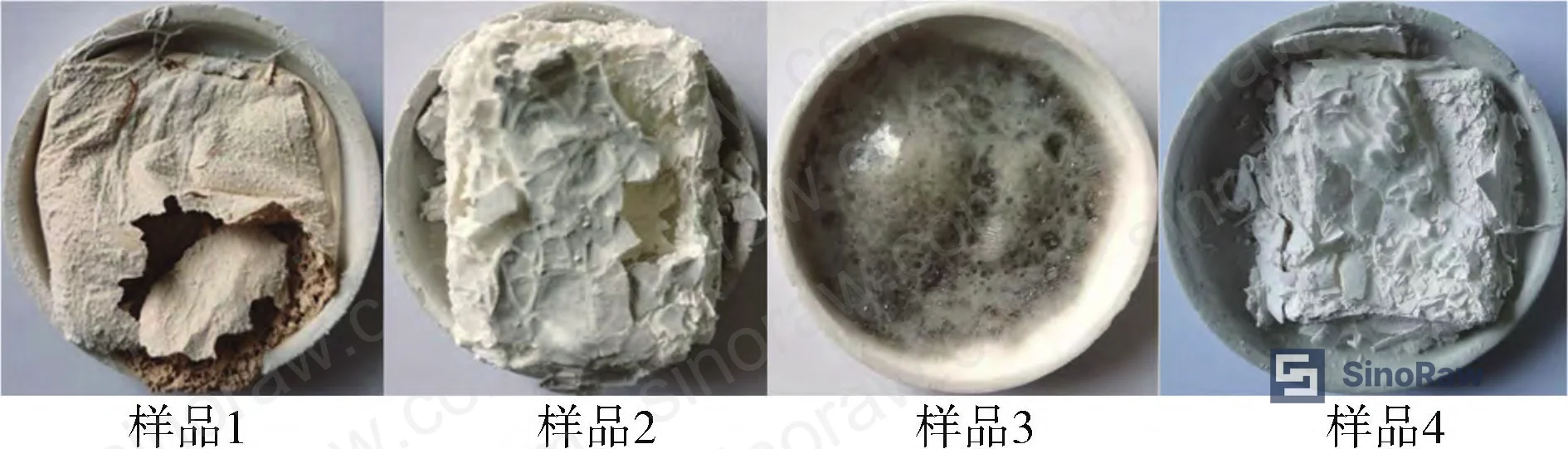
Results were decisive:
- Mica powder (Sample 1): Formed a ceramic body, but with significant internal voids and notable volume expansion. Structural integrity was poor.
- Silicon micropowder (Sample 2): Complete pulverization after high-temperature exposure. No ceramic formation. The melting point of silicon micropowder is approximately 1700°C — it simply cannot participate in liquid-phase sintering at 1000°C.
- Glass powder (Sample 3): Good ceramification — glass softens between 400–800°C and fully melts to form a dense, hard ceramic body. But the shape could not be maintained; severe volume contraction caused geometric collapse.
- Nano-calcium carbonate (Sample 4): Complete pulverization. CaCO₃ decomposes at high temperature, releasing CO₂ gas and causing the greatest mass loss of the four systems.
Honestly, the nano-calcium carbonate result surprises some formulators the first time they see it. It’s the most common filler in standard RTV silicone — gives excellent elasticity (368% elongation) and zero sag — but at fire temperatures it’s actively destructive to the ceramic structure. Any ceramifiable product with high CaCO₃ loading should be viewed with skepticism.
Composite Filler System and Compliance Performance Against GB 23864 #
Single-filler ceramifiable silicones can’t satisfy the competing requirements simultaneously. Glass powder gives the best ceramification but can’t hold shape. Mica gives moderate ceramification with manageable geometry but insufficient structural strength. The solution is blending — specifically, combining a low-melting component (glass, softening at 400–800°C) with a high-melting structural component (mica, which begins surface melting near 1000°C) to widen the effective sintering window.
The optimized formulation uses a glass-to-mica mass ratio of 1:6. The glass fraction provides the liquid phase needed to bind pyrolysis-derived SiO₂ and high-melting mica particles during the intermediate temperature stage. The mica fraction provides the structural scaffold. A small addition of fumed silica — 5% by total filler mass — is included solely as a thixotropic agent to restore the sagless application behavior that pure ceramifiable fillers lack.
This composite system (Sample 5) was scaled to a 1000 L planetary disperser for ton-scale production trials. Production-batch material was then submitted for full GB 23864-2009 Fire Stop Materials type testing. Results:
| Test Item | Standard Requirement | Test Result |
|---|---|---|
| Fire integrity | ≥3 h (no flame penetration, no ignition of cotton pad on unexposed face) | Pass — ≥3 h |
| Fire insulation | ≥3 h (temp rise on unexposed face ≤180°C at any point) | Pass — ≥3 h |
| Apparent density | ≤2.0 × 10³ kg/m³ | 1.45 × 10³ kg/m³ |
| Durability: wet-heat | ≥360 h — no cracking, no powdering | Pass — 360 h |
| Freeze-thaw cycling | ≥15 cycles — no cracking, no powdering | Pass — 15 cycles |
| Combustion class | Not lower than HB per GB/T 2408-2008 | HB achieved |
| Corrosion resistance | ≥7 days — no rust or corrosion on substrate | Pass |
| Water resistance | ≥3 days — no swelling, no cracking | Pass |
| Acid resistance | ≥3 days — no swelling, no cracking | Pass |
| Alkali resistance | ≥3 days — no swelling, no cracking | Pass |
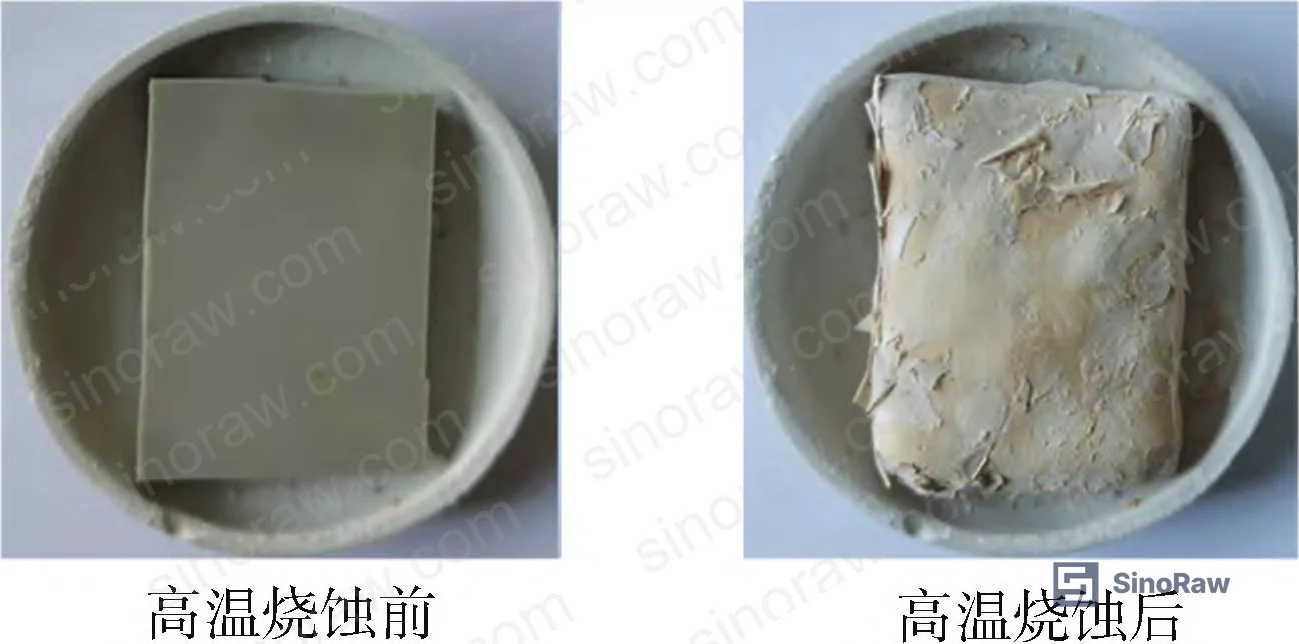
After sintering, Sample 5 showed slight volume expansion — which is actually preferable to contraction for joint-sealing applications. A contracting ceramic body opens gaps; a slightly expanding one maintains contact with the substrate. Appearance was defect-free, no cracking, no spalling.
Most procurement teams don’t realize that GB 23864-2009 was developed specifically to address the failure mode of conventional fire-stop materials that leave open channels after burnout — it tests the post-fire integrity of the sealed assembly, not just the material in isolation. That distinction matters enormously when you’re specifying for curtain wall fire stops where the joint moves during the fire event.
Ceramification Mechanism: What Actually Happens at 1000°C #
Understanding the failure mechanism of non-ceramifiable silicone is straightforward: above ~300°C, the polysiloxane backbone begins to degrade, generating volatile cyclic siloxanes, CO₂, and amorphous SiO₂. The volatiles escape, the SiO₂ remains as loose powder with no mechanical strength. The result is an open, porous plug — which is exactly the fire propagation path you were trying to seal.
The ceramification mechanism in the composite system works in two temperature stages. Below approximately 800°C, the glass powder component softens and melts into a liquid phase that infiltrates the SiO₂ pyrolysis residue and begins binding mica particles. Between 800°C and 1000°C, the surface of the mica particles themselves begin to soften and merge with the glass-phase liquid, forming the ceramic skeleton. On cooling, this solidifies into a porous but structurally coherent ceramic body that maintains geometric integrity at the joint.
The curing sequence for the sealant itself runs at 120°C under –0.08 MPa vacuum for 2 hours during the base polymer/filler mixing stage. After addition of silane crosslinkers (D30 crosslinker at 21 g per 180 g base polymer, KH550 adhesion promoter at 3.5 g) and catalyst (0.5 g dibutyltin dilaurate), mixing continues for 30 minutes. Final cure of applied sealant at ambient conditions takes 7 days at 25°C/50% RH for full mechanical development — this is not a fast-cure system, and applicators who specify early-loading schedules need to account for that.
In supplier qualification work, we’ve seen failures where products were submitted for fire testing before adequate ambient cure — the ceramification performance was compromised because the organic matrix hadn’t fully crosslinked, leaving residual reactive groups that generated excess volatile byproducts during the furnace test. Three of the samples in a recent evaluation batch that showed this pattern all came from the same production run where cure time had been shortened to meet delivery schedules.
Practical Guidance for Buyers #
If you’re sourcing ceramifiable silicone sealant from Chinese manufacturers for fire-stop applications, the filler declaration is the first thing to interrogate. Ask for the TDS to specify filler type — not just “mineral filler” — and request ceramification test data at 1000°C with sintering duration of at least 3 hours. Any supplier who can’t provide this data probably hasn’t done the testing.
Cross-reference claimed performance against GB 23864-2009 test reports from a recognized third-party lab. The apparent density figure (≤2.0 × 10³ kg/m³, with good products around 1.45 × 10³ kg/m³) is an easy check — products loaded with heavy mineral fillers to hit low cost will often exceed this threshold. Check the freeze-thaw cycling performance; 15 cycles without cracking is a minimum, and products used in exterior curtain wall applications in northern climates should be tested beyond that.
At sinoraw.com, we work as a Guangzhou-based industrial sourcing service connecting overseas procurement teams with pre-evaluated Chinese suppliers — our role in this category is helping buyers issue RFQs to manufacturers who have documented GB 23864 compliance, not just claimed it. For silicone and RTV sealant procurement, the qualification step is non-negotiable. Also review material from our structural UV adhesives category if your application involves bonded facade assemblies where both adhesive and fire-stop performance are required.
Skin-over time of 31–35 minutes at 25°C is workable for most joint-sealing applications. If the project is in a high-temperature, low-humidity environment, expect faster skin formation and adjust application procedures accordingly.
Frequently Asked Questions #
What makes ceramifiable silicone different from standard fire-rated RTV silicone?
Standard fire-rated silicone sealants are formulated to resist ignition and slow flame spread — they achieve this primarily through flame-retardant additives and generally comply with HB or V-0 combustion classifications. Ceramifiable silicone goes further: when exposed to temperatures exceeding 800–1000°C, it undergoes a phase transformation into a rigid ceramic body that physically maintains the sealed joint. This prevents smoke, flame, and toxic gases from traveling through construction joints even after the organic component has fully pyrolyzed. For curtain wall and floor-edge fire stops where joint integrity must be maintained throughout a 3-hour fire rating, ceramifiable sealant is the technically appropriate choice.
Which mineral fillers should I avoid in ceramifiable silicone products?
Silicon micropowder and nano-calcium carbonate both fail to support ceramic formation at 1000°C. Silicon micropowder requires approximately 1700°C to melt — it simply pulverizes under fire conditions. Nano-calcium carbonate decomposes and releases CO₂ gas, actively destroying the forming ceramic structure. Products using these fillers as the primary ceramification agent will show complete powdering after burnout testing. Glass powder alone gives good ceramification but causes unacceptable volume contraction. The only formulation approach that meets GB 23864-2009 requirements combines glass powder and mica powder in a controlled ratio (glass:mica approximately 1:6 by mass).
What cure time should I specify before fire testing or structural loading?
Full mechanical development in ambient-cure oxime-type ceramifiable silicone requires 7 days at 25°C and 50% relative humidity. Don’t let anyone tell you 3-day cure is adequate for certification testing — we’ve seen fire test failures traced directly to premature testing of incompletely cured specimens.
Does the ceramifiable sealant expand or contract during the fire event?
The optimized glass/mica composite system shows slight volume expansion after 1000°C sintering — which is the preferred behavior for joint sealing. A contracting ceramic body risks opening gaps at the joint perimeter. Products using glass powder as the sole filler showed significant contraction and shape loss in testing. Confirm expansion behavior with your supplier’s ceramification test data, not just verbal assurance.
What standard governs fire-stop sealant qualification in China, and is it recognized internationally?
GB 23864-2009 is the governing Chinese national standard for fire-stop materials. It specifies fire integrity ≥3 hours, insulation performance limiting unexposed-face temperature rise to ≤180°C, and a full suite of durability tests including wet-heat aging (360 hours), freeze-thaw cycling (15 cycles), and chemical resistance. For export projects, buyers should also confirm whether the equivalent EN 1366-4 (linear joint seals) or ASTM E814 testing has been completed, as these are required for EU and North American project specifications respectively.
Published by sinoraw.com Technical Team | Request a sourcing quote
Content reviewed by michael.fang | © sinoraw.com — All rights reserved. Unauthorized reproduction prohibited.


