

TL;DR #
If you’re specifying a one-component RTV silicone sealant for an application where cure speed, shelf life, and substrate compatibility all matter simultaneously, the crosslinker chemistry is the decision that will make or break your qualification. Most buyers don’t know this — they evaluate finished-product datasheets and miss the formulation variable that controls all three performance parameters at once.
Dealcoholization-type RTV-1 silicones have earned their position across construction, electronics, aerospace, and automotive sealing precisely because the methanol byproduct released during cure is non-corrosive to metals and non-toxic at joint scale. But the dominant formulation route — using methyltrimethoxysilane (MTMS) as crosslinker — carries a hidden process liability that shows up in production and in the field.
This article covers the technical case for α-functional group silane crosslinkers as a direct replacement for MTMS in dealcohol RTV-1 systems, using comparative mechanical data, shelf-life test results, and cure-depth mapping across crosslinker loading rates. If you’re qualifying Chinese suppliers for this product category, the data here will help you write tighter RFQ specifications and ask the right questions during factory audits.
α-Functional Silane vs. MTMS Crosslinker: Mechanical Performance and Storage Stability Data #
This is where the crosslinker comparison gets concrete. Two RTV-1 formulations were built on the same base polymer — α,ω-dihydroxy polydimethylsiloxane (107 rubber, viscosity 20 Pa·s) — with fumed silica reinforcement and titanate catalyst, differing only in crosslinker type. Both were cast into 2 mm test sheets, cured 7 days at 25 °C and 55% RH, then tested against GB/T 7124-2008 for shear strength and GB/T 528-1998 for tensile strength and elongation at break.
The α-functional silane system at 8% crosslinker loading (by mass relative to base compound) delivered tensile strength of 2.26 MPa, shear strength of 2.00 MPa, elongation at break of 210%, and Shore A hardness of 42. The MTMS system came in at 1.77 MPa tensile / 1.70 MPa shear / 200% elongation / Shore A 44 — already a noticeable gap.
The accelerated aging test is where the MTMS system fails to stay qualified. Uncured compound was sealed in cartridges and held at 95 °C for 96 hours, then re-tested after curing under standard conditions.
| Property | α-Functional Silane (fresh) | α-Functional Silane (post-aging) | MTMS (fresh) | MTMS (post-aging) |
|---|---|---|---|---|
| Tack-free time (min) | 2 | 2 (unchanged) | 10 | 60 |
| Tensile strength (MPa) | 2.26 | 2.258 (−0.09%) | 1.77 | 1.00 (−43.5%) |
| Shear strength (MPa) | 2.00 | 1.999 (−0.05%) | 1.70 | 0.80 (−52.9%) |
| Shore A hardness | 42 | 40 | 44 | 30 |
In supplier qualification work we’ve done with Chinese RTV manufacturers, we saw the MTMS degradation pattern appear consistently in samples that had been stored even at ambient temperature for several months — the 95 °C/96 h test is an accelerated proxy, but the trend is real. That 52.9% drop in shear strength from an aged MTMS cartridge is not acceptable for any structural or dynamic sealing application. Buyers sourcing for construction curtain wall, automotive gasket-in-place, or electronics encapsulation need to specify crosslinker type explicitly — not just end-product performance at time of manufacture.
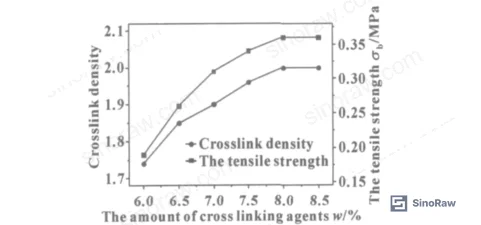
Crosslinker Loading, Cure Depth, and Crosslink Density in RTV-1 Silicone Sealant #
The relationship between crosslinker loading and cure performance is not linear, and getting it wrong costs you in one of two directions: under-loaded joints that skin-cure but stay soft at depth, or over-loaded systems that waste crosslinker and generate unnecessarily tight networks with reduced flexibility.
Test data measured at 28 °C / 55% RH across crosslinker loadings from 5% to 9% by mass:
| Crosslinker loading (wt%) | Tack-free time (min) | Cure depth at 24 h (mm) |
|---|---|---|
| 5 | 8 | 4.5 |
| 6 | 6 | 4.3 |
| 7 | 4 | 4.0 |
| 8 | 2 | 3.5 |
| 9 | 2 | 3.4 |
The pattern is clear: surface cure accelerates with loading, but through-cure depth decreases because the rapid surface crosslinking creates a dense three-dimensional network that restricts moisture diffusion into the bulk. At 8% loading, both tack-free time and cure depth reach a plateau — adding more crosslinker beyond this point provides no meaningful benefit.
Crosslink density, measured by equilibrium swelling method, also peaks at 8% and stabilizes. Tensile strength tracks crosslink density closely through this range, confirming that the mechanical optimum and the cure-speed optimum coincide at the same loading point. This is a convenient formulation target that Chinese manufacturers can and should be hitting.
Honestly, most procurement engineers never ask about cure-depth performance separately from surface dry time, and this is a costly oversight in thick-section or fillet joint applications. A 2-minute tack-free time means nothing if the joint core is still uncured 48 hours after application. Any supplier quoting fast-cure RTV-1 should be required to provide cure depth data at 24 h under defined temperature and humidity — not just surface dry time.
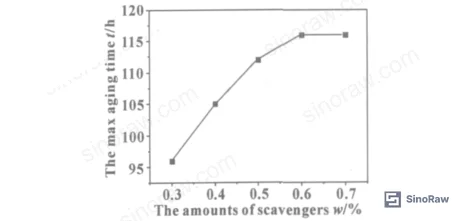
Water Scavenger Function and Long-Term Shelf Life of Dealcohol RTV Sealant #
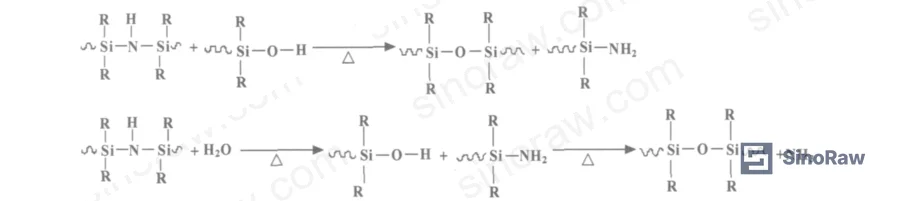
RTV-1 dealcohol systems cure by absorbing atmospheric moisture — which means any residual moisture trapped in the compound during mixing or cartridge filling becomes an internal curing agent that prematurely consumes crosslinker and degrades shelf life. The standard countermeasure is hexamethyldisilazane (HMDS) as a water scavenger.
HMDS reacts with residual silanol groups and trace water in the base polymer, converting them to stable siloxane structures and releasing ammonia — which, in the absence of proton donors, does not cleave the siloxane backbone. The base polymer (polysiloxane) is prone to main-chain degradation above 300 °C when silanol groups or water are present; HMDS scavenges both, improving thermal stability alongside shelf life.
Shelf life testing at 95 °C aging in sealed containers shows that HMDS loading below 0.6 wt% produces a proportional improvement in allowable aging time. Beyond 0.6%, the curve flattens — no additional shelf-life benefit is gained. The recommended working addition level is therefore 0.6% by mass of total compound.
Most procurement teams don’t realize that shelf life claims on RTV sealant datasheets are not standardized across Chinese manufacturers — some use 12-month ambient storage as their reference, others use accelerated aging protocols with varying temperature and humidity. The 95 °C / 96 h protocol used here is a rigorous benchmark, and the α-functional silane system maintains tack-free time and retains mechanical properties within 95% of initial values through this test. Buyers should request accelerated aging data explicitly and confirm the test conditions, not just the stated shelf life number.
The base polymer preparation also matters operationally: 107 rubber was compounded with calcium carbonate filler and fumed silica (5 phr), then vacuum-dried at 140 °C for 4 hours to bring moisture content below 0.5 wt% before crosslinker addition. This step is non-negotiable for shelf life performance — suppliers who skip or shortcut the drying step will produce cartridges with inconsistent shelf life regardless of scavenger addition level.
Practical Guidance for Buyers #
When sourcing dealcohol RTV-1 silicone sealant from Chinese manufacturers, the first thing to verify is crosslinker type — not brand, not price. Suppliers using MTMS as the sole crosslinker should be asked directly about their production viscosity management, because the 1–2 minute viscosity spike that MTMS creates during compounding is a process liability that many smaller producers manage poorly, leading to batch inconsistencies that show up as application failures at your facility.
At SinoRaw, our role is to help overseas procurement engineers identify and evaluate Chinese manufacturers before they issue RFQs — specifically, to translate formulation-level details like crosslinker chemistry into supplier qualification criteria that non-specialist buyers can actually use. For RTV-1 silicone, that means we help clients structure acceptance criteria around tack-free time under defined test conditions, cure depth at 24 h, and post-aging mechanical retention — not just the initial datasheet numbers.
For specification purposes, request mechanical test data to GB/T 7124 and GB/T 528, plus an accelerated shelf-life test report (95 °C / 96 h minimum). Verify that HMDS scavenger addition is confirmed at 0.6% or above, and that base compound moisture content is controlled below 0.5 wt% during production. Cross-reference your application requirements against ISO 11600 if you’re sourcing for construction glazing or curtain wall, as classification requirements there will further constrain acceptable formulation ranges.
For electronics or automotive applications, also confirm compliance posture under RoHS Directive 2011/65/EU and REACH Regulation (EC) No 1907/2006 for any filler or additive packages, particularly if tin-based catalysts are involved (this system uses titanate, which is generally lower concern). Explore our broader silicone and RTV sealant sourcing resources and specialty polymer category guidance for related product qualifications.
Frequently Asked Questions #
What is the difference between dealcohol-type and acetic-type RTV-1 silicone sealant, and which should I specify?
Dealcohol-type RTV-1 releases methanol as the cure byproduct — low odor, non-corrosive to metals and electronics. Acetic-type releases acetic acid, which corrodes copper, brass, and some galvanized substrates and produces a distinctive vinegar smell. For any application involving metal substrates, sensitive electronics, or occupied indoor spaces, specify dealcohol-type explicitly. The acetic type’s only real procurement advantage is lower unit cost, which rarely justifies the application risk.
How do I verify a supplier’s tack-free time claim under my actual application conditions?
Tack-free time is highly sensitive to temperature and relative humidity — the test conditions matter as much as the result. The data in this article was measured at 25 °C / 55% RH for property testing and 28 °C / 55% RH for cure-rate mapping. Request that your supplier provide tack-free time data at conditions matching your application environment. A 2-minute tack-free time at 28 °C / 55% RH can easily extend to 10+ minutes in a cold, dry assembly area. Replicate the test in-house before approving a supplier.
Why does increasing crosslinker loading reduce cure depth even while accelerating surface dry time?
As the surface crosslinks rapidly in the presence of atmospheric moisture, it forms a dense three-dimensional network that physically blocks further moisture diffusion into the bulk sealant. The result is a fast skin cure with a slower or incomplete through-cure. At 8 wt% crosslinker loading, this system achieves a 2-minute surface dry time but only 3.5 mm cure depth at 24 hours. For joint depths beyond 3–4 mm, plan for extended cure schedules regardless of surface dry time, and specify cure depth testing in your acceptance criteria.
What accelerated aging test should I require from Chinese RTV-1 sealant suppliers?
Require sealed-cartridge aging at 95 °C for 96 hours minimum, followed by full mechanical retesting of cured specimens. Key acceptance criteria: tack-free time unchanged post-aging, tensile and shear strength retention above 95% of initial values. The MTMS-crosslinked system tested here failed this benchmark badly — 43.5% tensile strength loss and 52.9% shear strength loss — while the α-functional silane system showed less than 0.1% change in both. Any supplier unable to provide this test data should be treated as unqualified for shelf-life-sensitive applications.
Is hexamethyldisilazane (HMDS) as a water scavenger a health or regulatory concern in the finished sealant?
HMDS reacts completely during compounding, consuming residual moisture and silanol groups to form stable siloxane — it is not present as a free compound in the finished sealant. The reaction byproduct is ammonia, which dissipates during mixing under vacuum. At the 0.6 wt% addition level used here, this is a well-established, low-concern processing aid. That said, verify your specific supply chain’s SDS documentation and confirm REACH compliance for any sealant entering the EU market.
Published by sinoraw.com Technical Team | Request a sourcing quote
Content reviewed by michael.fang | © sinoraw.com — All rights reserved. Unauthorized reproduction prohibited.


