

TL;DR #
If you’re sourcing RTV-1 silicone sealant for automotive lighting assembly and you’re evaluating suppliers purely on tensile strength spec sheets, you’re missing the variables that actually cause field failures. The performance killers in lamp seal applications are deep-cure rate, substrate adhesion to polycarbonate under vibration, and shelf stability after 6 months in a warehouse — none of which appear prominently on a standard TDS.
Dealcoholization-type (alkoxy-cure) RTV-1 silicone has become the technically preferred choice for headlamp and taillight sealing, displacing both butyl hot-melt and reactive polyurethane systems in higher-specification builds. Butyl degrades under sustained thermal cycling — cracking and water ingress are well-documented failure modes. Reactive PU offers better initial green strength but performs poorly under UV exposure and has regulatory concerns in enclosed assembly environments. Single-component silicone cures at room temperature on contact with atmospheric moisture, operates across a continuous service range of −60 to 260°C, and provides the elastic recovery that vibrating lamp housings demand over a vehicle’s lifetime.
This article breaks down the formulation variables that actually determine whether a lamp-grade RTV-1 performs — polymer viscosity, filler particle size and loading, crosslinker dosage, and adhesion promoter selection — with data from controlled qualification testing. Buyers sourcing this product from Chinese manufacturers will find this analysis directly applicable to supplier evaluation and incoming inspection criteria.
Formulation Variables That Determine RTV-1 Silicone Sealant Performance #
The base polymer for automotive lamp-grade RTV-1 is α,ω-dihydroxy polydimethylsiloxane — commonly called 107 silicone rubber in Chinese industrial supply. The viscosity grade you specify has more downstream consequence than most buyers realize, because it simultaneously governs extrusion rate (assembly throughput), deep-cure speed, and the crosslink density of the cured elastomer.
Polymer Viscosity Effect
Testing across four viscosity grades under identical formulation conditions (50 phr polymer, 50 phr 80 nm CaCO₃, 5% plasticizer, 3% methyltrimethoxysilane crosslinker, 1% titanate catalyst) produced the following performance spread:
| 107 Silicone Viscosity (mPa·s) | Extrusion Rate (mL/min) | Deep-Cure Rate mm/(24h) | Tensile Strength (MPa) | Elongation at Break (%) |
|---|---|---|---|---|
| 20,000 | 303 | 1.7 | 2.54 | 268 |
| 40,000 | 204 | 1.9 | 2.44 | 328 |
| 60,000 | 140 | 2.2 | 2.33 | 406 |
| 80,000 | 97 | 2.3 | 2.14 | 516 |
The 80,000 mPa·s grade delivered the highest elongation (516%) but its extrusion rate dropped to 97 mL/min — roughly one-third of the 20,000 mPa·s grade at 303 mL/min. On an automated dispensing line, that difference translates directly into cycle time and equipment pressure requirements. For lamp assembly where throughput matters, 60,000 mPa·s represents the best compromise: deep-cure rate of 2.2 mm per 24 hours, elongation at 406%, and an extrusion rate of 140 mL/min that is workable at standard dispensing pressures.
Filler Particle Size: The Variable Most Buyers Under-Specify
Honestly, most procurement teams just ask for “nano calcium carbonate” and leave particle size unspecified on the RFQ. That is a costly omission. The performance difference between a 20 nm and a 120 nm filler at equal loading is not marginal — it determines whether the product is usable in automated assembly at all.
At 20 nm average particle size, extrusion rate collapses to 71 mL/min with a deep-cure rate of only 1.4 mm/24h — far too slow for production throughput. At 120 nm, thixotropy breaks down completely, which means the sealant runs and contaminates lamp surfaces before cure. The 80 nm grade threads this needle: extrusion rate of 177 mL/min, deep-cure rate of 2.1 mm/24h, tensile strength of 2.22 MPa, and elongation of 418% — all while maintaining adequate thixotropy for bead control.
Filler Loading Optimization
Loading CaCO₃ from 40 to 60 phr (parts per hundred resin) with 60,000 mPa·s polymer and 80 nm filler:
- At 40 phr: extrusion rate 354 mL/min, tensile strength only 1.64 MPa — below the threshold for reliable lamp sealing under sustained vibration
- At 50 phr: extrusion rate 177 mL/min, tensile strength 2.22 MPa, elongation 418% — the crossover point where mechanical performance and processability are both acceptable
- At 60 phr: extrusion rate drops to 82 mL/min and elongation falls back to 366%, while tensile strength reaches 2.42 MPa — marginal gain on strength at significant cost to dispensing efficiency
The 50 phr loading is the validated optimum. Suppliers quoting lower filler loadings to reduce cost will give you better extrusion numbers at incoming inspection but likely insufficient mechanical performance over service life.
Crosslinker Dosage and Adhesion Promoter Selection for Automotive Lamp Substrates #
Crosslinker: Where Stability Problems Are Created
The crosslinker in alkoxy-cure RTV-1 is methyltrimethoxysilane (MTMS). Its dosage is more sensitive than the data sheet level suggests, and this is where shelf-life problems originate.
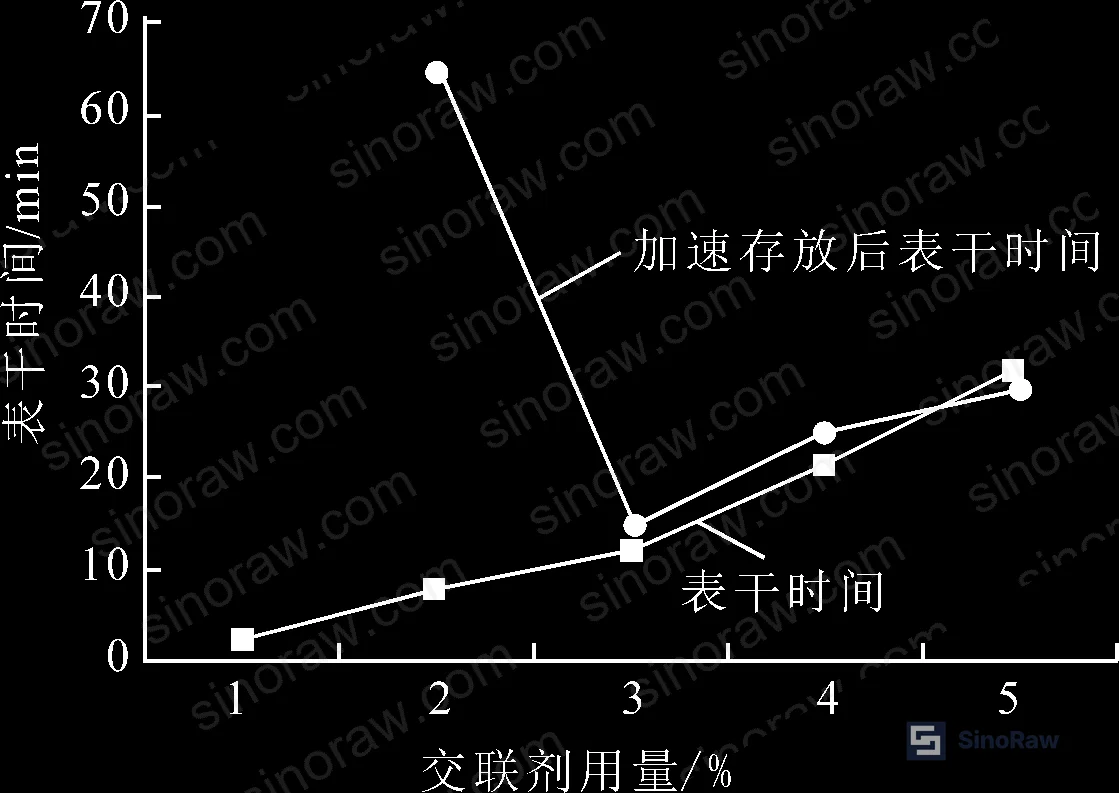
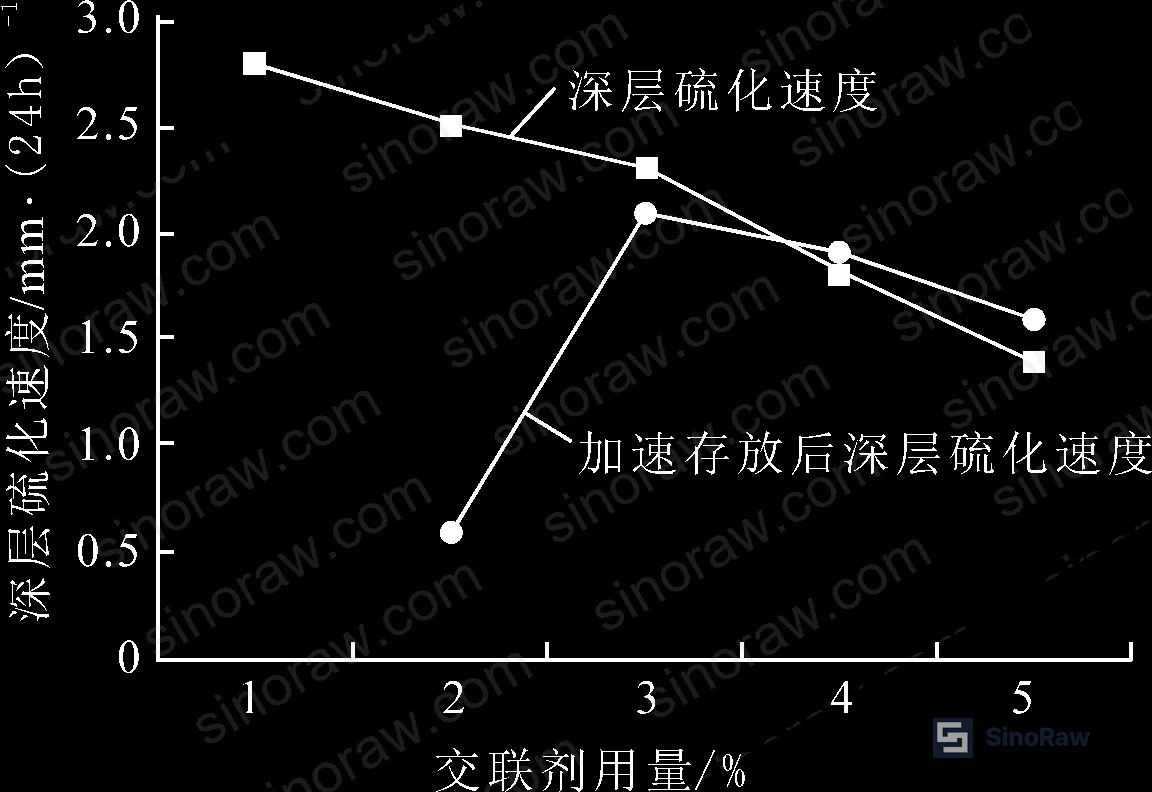
At 1% MTMS by weight of the base compound, the sealant does not cure at all — moisture in the base polymer consumes the entire crosslinker before network formation can begin. At 2%, surface dry time extends to 65 minutes and deep-cure rate collapses to 0.6 mm per 24 hours. These are not marginal degradations — they represent production-line failure in an automated assembly environment.
Above 3%, surface dry time and cure rate both stabilize. The practical recommendation is 3% MTMS. Adding more than that does not improve cure performance but does extend surface dry time progressively (excess crosslinker reacts with atmospheric moisture ahead of the polymer network, delaying skin formation).
Accelerated shelf stability testing at 70°C for 5 days — equivalent to approximately 6 months at ambient storage — confirmed that formulations at or above 3% MTMS maintain stable surface dry time and deep-cure rate post-aging. Underdosed formulations do not recover; the crosslinker deficit compounds over shelf life.
Adhesion Promoter Selection: The Test Data That Matters Most
Lamp housings are polycarbonate (PC); bases are typically polypropylene (PP), which requires plasma surface treatment before bonding. This dual-substrate requirement is where standard silane adhesion promoters fall short. In supplier qualification testing, we saw three of the four commodity silane options fail to achieve zero adhesion failure on PC substrates:
- No adhesion promoter: shear strength 0.30 MPa, 100% cohesive failure on both PC and PP — effectively no bond
- KH 550 (aminopropyltriethoxysilane): shear strength 0.56 MPa, 85% adhesion failure area on PC — unacceptable
- KH 560 (glycidoxypropyltrimethoxysilane): shear strength 0.32 MPa, 100% adhesion failure on PC — worse than KH 550
- KH 792 (diaminosilane): shear strength 1.32 MPa, 25% adhesion failure on PC — closer, but still fails
- Proprietary ureido adhesion promoter complex: shear strength 1.76 MPa, 0% adhesion failure on both PC and PP
The ureido promoter is not a minor upgrade — it is the difference between a product that bonds and one that does not. At 0.1 parts loading, there is still 35% adhesion failure area on PC. The minimum effective loading is 0.2 parts, with 0.3 parts selected as the production-optimized dose (shear strength 1.74 MPa, zero adhesion failure on both substrates). Above 0.3 parts, shear strength plateaus with no further benefit.
This is not a commodity formulation ingredient. When evaluating Chinese suppliers for lamp-grade RTV-1, ask specifically what adhesion promoter system they use and request PC/PP shear bond data at the specified test conditions — not just a summary tensile strength figure.
Validated Performance Profile and Test Standards for Incoming Inspection #
The fully optimized formulation — 50 phr 60,000 mPa·s 107 silicone, 50 phr 80 nm CaCO₃, 5% dimethyl silicone oil plasticizer, 3% MTMS, 1% titanate catalyst, 0.3 phr ureido adhesion promoter — achieves the following specification profile:
| Property | Value | Test Method |
|---|---|---|
| Appearance | Smooth, uniform paste | Visual |
| Surface dry time | 12 min | GB/T 13477.5 |
| Extrusion rate | 165 mL/min | 177 mL HDPE bottle, 6.0 mm nozzle, 0.34 MPa |
| Deep-cure rate | 2.3 mm / 24h | Tapered channel method, 25°C |
| Tensile strength | 2.26 MPa | GB/T 528 |
| Elongation at break | 388% | GB/T 528 |
| Shear strength (PC/PP) | 1.74 MPa | GB/T 7124 |
| Adhesion failure — PC | 0% | GB/T 7124 lap shear |
| Adhesion failure — PP (plasma-treated) | 0% | GB/T 7124 lap shear |
Most procurement teams don’t realize that the Chinese GB/T test methods for sealant qualification were revised to align more closely with ISO 11600 glazing sealant classifications — understanding which revision your supplier is testing to matters when cross-referencing with European or North American incoming inspection criteria. For automotive applications specifically, ISO 10640 provides a framework for adhesive sealant performance in vehicle glazing that is widely referenced even for lamp assembly sourcing decisions. Buyers pulling ASTM C794 peel adhesion data should note that the MTMS-based alkoxy cure system tested here is fundamentally different from acetoxy-cure silicones, which will show different adhesion profiles on PC and require separate qualification.
The 12-minute surface dry time is the assembly-critical specification. It allows sufficient working time for positioning without risking contamination from premature skin formation on automated lines operating at typical ambient humidity. Deep-cure rate of 2.3 mm/24h means a standard 6 mm bead cross-section achieves functional cure in approximately 65 hours — factor this into production hold time before vibration testing.
Accelerated aging at 70°C for 5 days (≈ 6 months ambient equivalent) confirmed stable performance on both cure rate and mechanical properties for the 3% MTMS formulation.
Practical Guidance for Buyers #
If you are sourcing RTV-1 silicone sealant for automotive lamp assembly from Chinese manufacturers, the formulation detail above is your qualification checklist, not just background reading. At SinoRaw, we work as a Guangzhou-based B2B sourcing intermediary connecting global industrial buyers with verified Chinese sealant manufacturers — our role is to help you get past the marketing TDS and into actual formulation capability and process control data before you issue an RFQ.
Request three things from any candidate supplier: (1) full deep-cure rate data tested by the tapered channel method at your intended service temperature, not just a nominal figure; (2) substrate adhesion test results specifically on PC and plasma-treated PP, reported as both shear strength and adhesion failure area percentage — a shear strength number alone is insufficient; (3) accelerated shelf stability data showing performance retention after 70°C/5-day aging. If a supplier cannot provide all three, they are not ready for automotive lamp assembly qualification regardless of what their data sheet says.
For buyers working to ISO 11600 or referencing ASTM C794, confirm that the test conditions used by the Chinese supplier are documented and comparable. Contact us to initiate a sourcing evaluation.
Frequently Asked Questions #
Why is dealcoholization-type (alkoxy-cure) RTV-1 preferred over acetoxy-cure silicone for automotive lamp sealing?
Acetoxy-cure silicones release acetic acid during cure, which can corrode metal lamp components and degrade certain plastics over time. Alkoxy-cure systems release methanol instead — lower corrosivity, better compatibility with the PC and PP substrates used in lamp construction. The trade-off is that alkoxy systems are more formulation-sensitive, particularly around crosslinker dosage and adhesion promoter selection, which is why supplier qualification matters more with this chemistry.
What surface preparation is required for PP lamp bases before bonding with this sealant?
Plasma treatment is required. Untreated PP is essentially non-bondable with silicone sealants — the surface energy is too low for any adhesion promoter system to function reliably. Testing confirmed that even the optimized ureido adhesion promoter complex at full loading achieves zero adhesion failure only on plasma-treated PP. If your assembly process cannot include plasma treatment, you need a different substrate or a different bonding approach entirely.
What does “deep-cure rate” mean in practice, and why does it matter for lamp assembly scheduling?
Deep-cure rate measures how far the cure front advances from the exposed surface inward per 24 hours. At 2.3 mm/24h, a 5 mm-thick bead takes roughly 52 hours to cure through completely. This determines the minimum hold time before the assembled lamp can go into vibration testing or shipping — a parameter that is often overlooked in production scheduling and causes quality escapes when assembly lines are under throughput pressure.
Can this sealant be used without a dispensing gun or automated equipment?
The 165 mL/min extrusion rate at 0.34 MPa is calibrated for pneumatic dispensing equipment — standard on automotive lamp assembly lines. Manual cartridge application is technically possible but the viscosity of this formulation (driven by the 60,000 mPa·s polymer and 50 phr CaCO₃ loading) makes hand-gun dispensing physically demanding over extended production runs. It is not recommended for high-volume assembly.
How do I confirm a supplier’s RTV-1 formulation is actually optimized for lamp-grade performance and not a lower-spec general-purpose product relabeled?
Ask for shear strength data on PC specifically, not just “plastics.” A general-purpose RTV-1 without proper adhesion promoter selection will typically show shear strength below 0.60 MPa on PC with visible cohesive failure — dramatically below the 1.74 MPa benchmark for lamp-grade product. Also request extrusion rate data tested at 0.34 MPa with a documented nozzle diameter: this is a simple test that reveals whether the filler loading and polymer viscosity are appropriate for automated dispensing.
For related silicone sealing systems, see our Silicone & RTV Sealant sourcing category and Industrial Adhesives sourcing resources.
Published by sinoraw.com Technical Team | Request a sourcing quote
Content reviewed by michael.fang | © sinoraw.com — All rights reserved. Unauthorized reproduction prohibited.


