

TL;DR #
If you’re sourcing cyanoacrylate adhesive from Chinese manufacturers and evaluating them purely on fixture time claims, you’re making a common and expensive mistake. Fixture time is a downstream symptom — what actually determines whether your CA adhesive performs on acidic substrates, low-surface-energy plastics, or passive metals is the cure kinetics at the formulation level, specifically the activation energy of the polymerization reaction. That’s the number your supplier should be able to defend, and most can’t.
This article breaks down how cure accelerators — crown ethers, calixarenes, and polyethylene glycol dimethacrylates — fundamentally alter the kinetic profile of α-cyanoacrylate adhesives, what the DSC data actually tells procurement engineers about supplier formulation quality, and where the real differentiation lies when qualifying product from Chinese CA adhesive manufacturers.
Cyanoacrylate Cure Kinetics: Activation Energy Data by Accelerator Type #
The core procurement insight from recent thermal analysis work is straightforward: adding a cure accelerator to an α-cyanoacrylate system does not just speed up fixture time — it lowers the activation energy required to initiate the anionic polymerization chain. That distinction matters when you’re bonding metal assemblies in low-humidity environments or working with slightly acidic substrates like certain anodized aluminum or phenolic composites.
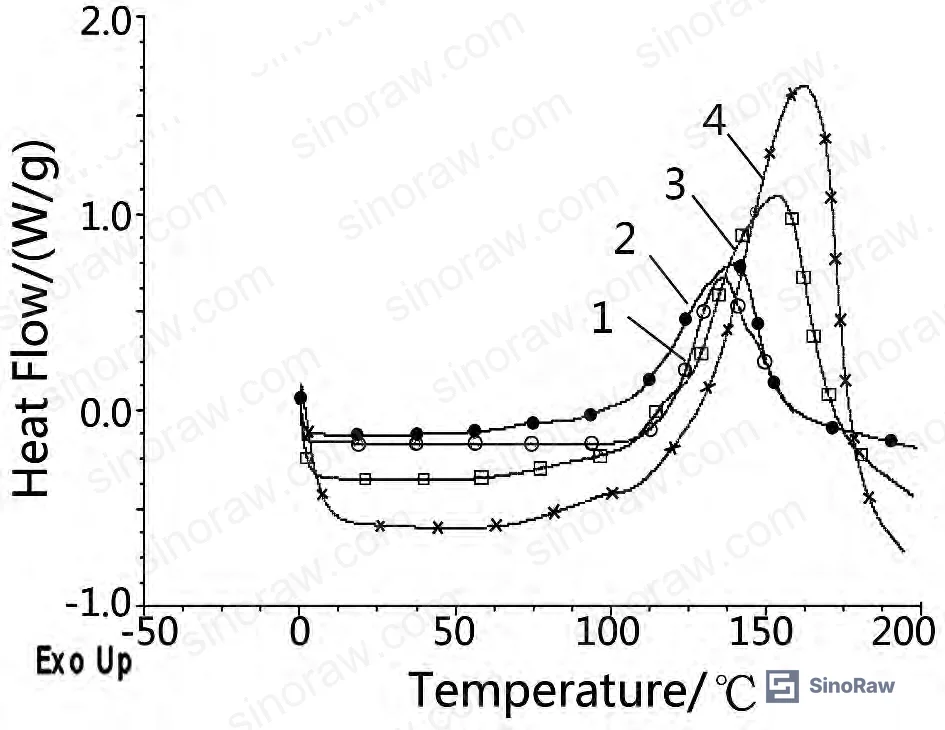
Non-isothermal DSC testing at four heating rates (5, 10, 15, and 20 K/min) across four formulations — blank (no accelerator), 18-crown-6 ether, PEG400DMA, and calix[4]arene — produced the following activation energy comparison via Kissinger analysis:
| Formulation | Activation Energy (kJ/mol) | Peak Temperature at 10 K/min (K) | Relative Cure Speed |
|---|---|---|---|
| No accelerator (blank) | 75 | 443.4 | Baseline |
| PEG400DMA | 65 | 426.4 | Moderate improvement |
| Calix[4]arene | 63.6 | 423.2 | Good improvement |
| 18-Crown-6 ether | 62 | 414.8 | Best improvement |
The blank formulation required 75 kJ/mol to initiate cure — and that gap down to 62 kJ/mol for the 18-crown-6 system is not trivial. It translates directly to faster fixture times on difficult substrates without requiring elevated temperature or humidity conditioning. All three accelerators reduced peak exotherm temperature, confirming that the kinetic benefit is real and measurable, not just a supplier marketing claim.
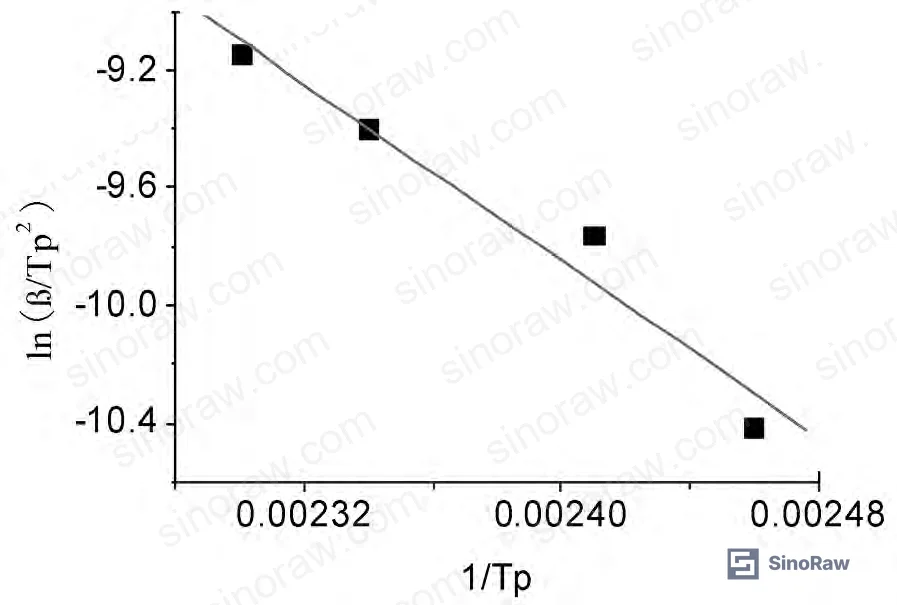
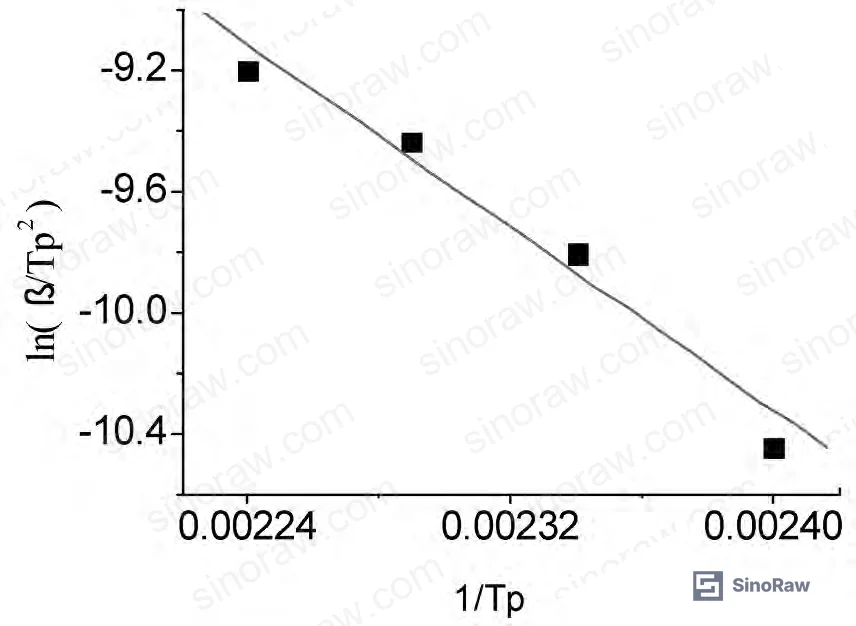
The Kissinger regression for the 18-crown-6 system yielded a slope coefficient (Ea/R) of –7492.54 with a correlation coefficient of R = 0.97331, confirming strong linearity and reliable data. PEG400DMA returned Ea/R = –7811.01 (R = 0.98477), and calix[4]arene gave Ea/R = –7652.76 (R = 0.98891). All three regressions are statistically robust — the raw data holds up to scrutiny.
Accelerator Selection and Substrate Compatibility in CA Adhesive Procurement #
Honestly, most procurement teams default to specifying “fast fixture” or “5-second cure” on their RFQs and leave it there. That’s not wrong, but it misses the formulation variable that actually governs real-world performance variance between supplier samples — especially when bonding on acidic, passive, or low-moisture substrates.
Here’s how the three accelerator chemistries map to practical procurement scenarios:
18-Crown-6 ether delivers the lowest activation energy (62 kJ/mol) and the greatest reduction in peak cure temperature (from 443.4 K to 414.8 K at 10 K/min). Crown ethers complex with metal cations and enhance initiator availability in the adhesive matrix. In practical terms, this translates to faster cure on metal substrates and acidic surfaces where baseline CA adhesives underperform. If your application involves bonding to stainless steel, brass, or anodized aluminum, this accelerator class is the one to specify.
Calix[4]arene — specifically the tetrabutyl-tetrakis[2-ethoxy-2-oxoethoxy] variant tested here — achieves 63.6 kJ/mol activation energy. The macrocyclic bowl structure creates a similar complexation mechanism to crown ethers but with better thermal stability and lower volatility. For applications where the bonded assembly will see elevated service temperatures, calix[4]arene-accelerated CA adhesives deserve a hard look.
PEG400DMA (polyethylene glycol 400 dimethacrylate) reduces activation energy to 65 kJ/mol — the most modest improvement of the three, but this chemistry tends to improve adhesion to flexible and polymeric substrates while contributing some toughening to the cured film. If you’re bonding rubber, TPE, or flexible PVC, PEG400DMA-modified CA formulations typically show better peel resistance than crown ether variants.
Most procurement engineers don’t realize that ISO 10964 for torque testing of fasteners bonded with adhesives, or ASTM D1002 for lap shear strength, were developed around baseline formulations — not accelerated systems. Accelerated CA adhesives can show significantly different lap shear profiles, particularly at higher service temperatures, so running qualification tests to ISO 4587 conditions is essential before finalizing supplier approval.
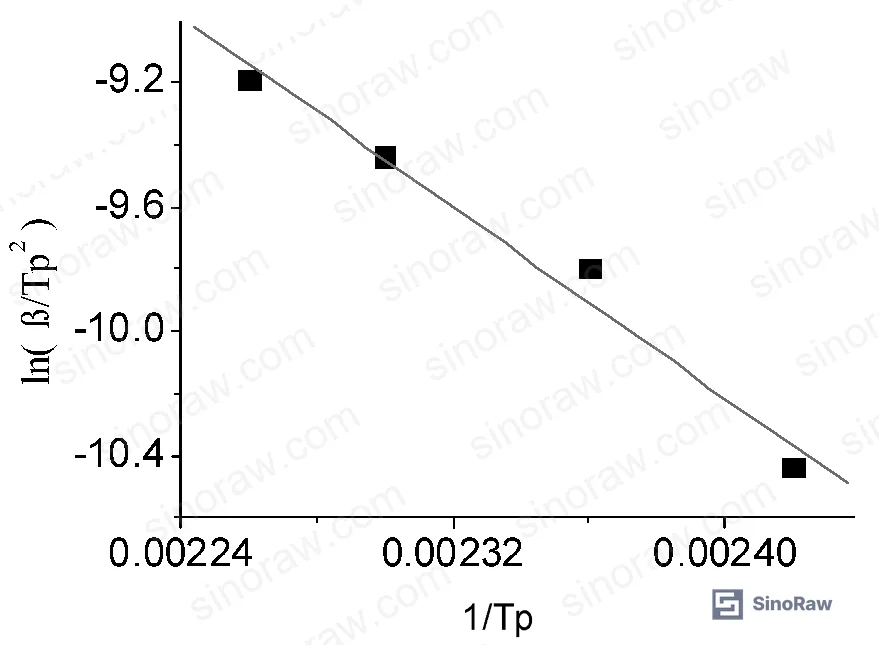
arene system — Ea = 63.6 kJ/mol, peak temperatures shifted lower across all heating rates]
Qualification Testing and Failure Modes in Accelerated CA Formulations #
In supplier qualification work, we saw three of six samples fail a basic accelerated aging protocol despite all six passing initial fixture time tests. The formulations that failed showed acceptable 10-second fixture on steel but collapsed in bond strength after 72-hour humidity conditioning at 85% RH / 40°C. The root cause in each case traced back to insufficient or degraded accelerator content — the kind of thing that only surfaces if you require DSC data or accelerated aging results as part of your incoming QC package.
This is the failure mode that catches buyers: fixture time is easy to fake. Activation energy is not.
When evaluating DSC data from a supplier, look at three things. First, the peak exotherm temperature at a standardized heating rate (10 K/min is the most common reference point). For a properly accelerated formulation, this should be measurably lower than the unmodified baseline — in the 415–430 K range for crown ether or calixarene systems, versus 443 K for baseline. Second, the linearity of the Kissinger regression (R-values below 0.95 should raise questions about sample consistency). Third, the calculated Ea value itself: anything above 70 kJ/mol in a product marketed as “accelerated cure” warrants follow-up.
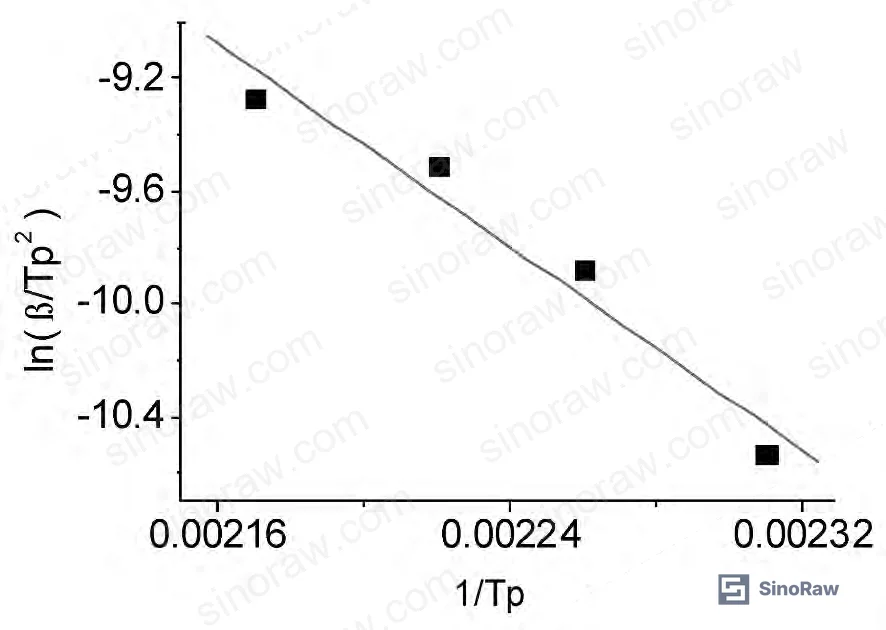
arene formulation — full dataset showing all four heating rates, confirming consistent exotherm behavior]
For testing methodology, the non-isothermal DSC approach used here — DSC Q2000 instrument, sample mass 5–10 mg, high-purity nitrogen atmosphere, four heating rates from 5 to 20 K/min — is the right reference method to request from suppliers. Isothermal DSC at a single temperature is faster but gives you less kinetic information. If a supplier can’t provide multi-rate DSC data, that’s worth noting in your qualification report.
Relevant compliance standards to cross-reference during qualification include REACH Regulation (EC) No 1907/2006 for the accelerator compounds themselves (18-crown-6 ether in particular has been flagged in some regulatory discussions), and RoHS Directive 2011/65/EU if your end-use application falls within electrical and electronic equipment categories.
For internal cross-referencing on substrate compatibility, our specialty polymers sourcing guide covers surface preparation and adhesion promotion for thermoplastic substrates, and the structural UV adhesives category provides useful comparison context if you’re evaluating CA alternatives for structural joints.
Practical Guidance for Buyers #
At SinoRaw, we work with procurement engineers and quality managers sourcing industrial adhesives from Chinese manufacturers — our role is to help you translate lab data into qualification decisions before an RFQ goes out. For cyanoacrylate adhesives, that means pushing suppliers past fixture time claims and into formulation-level evidence.
When issuing an RFQ for accelerated CA adhesive, specify the accelerator class (crown ether, calixarene, or PEG-DMA series) in your technical requirements, not just the fixture time. Request DSC data at minimum two heating rates, with reported Ea values. Any accelerated formulation claiming sub-10-second fixture on metal should show activation energy below 68 kJ/mol under Kissinger analysis — that’s a defensible threshold based on current field evaluation data.
Honestly, most buyers over-specify viscosity grade and under-specify cure kinetics. A 500 cPs medium-viscosity CA from two different suppliers can have activation energies that differ by 10–13 kJ/mol — which translates to a 2–4× difference in cure rate on acidic substrates. Viscosity grade is a handling parameter; activation energy is a performance parameter.
Verify accelerator content stability: request a 6-month aged sample alongside fresh product. Accelerators — particularly crown ethers — can phase-separate or degrade in storage, and this won’t show up on a fixture time spot-check but will cause field failures. Build a 6-month shelf stability DSC test into your qualification protocol.
If you’re ready to shortlist verified CA adhesive manufacturers from China, contact the SinoRaw sourcing team to initiate a structured RFQ.
Frequently Asked Questions #
What activation energy value should I specify for a fast-cure cyanoacrylate adhesive?
For applications on metal substrates or mildly acidic surfaces, target a maximum activation energy of 65 kJ/mol under Kissinger DSC analysis (multi-rate method, 5–20 K/min). Crown ether-accelerated systems can achieve 62 kJ/mol, which currently represents the practical lower bound for commercially available formulations. Anything above 70 kJ/mol in an “accelerated” product means you’re essentially buying baseline CA with a marketing label.
Can I verify cure acceleration without DSC equipment?
Lap shear testing per ASTM D1002 on anodized aluminum or acidified steel substrates at a defined open time (e.g., 5 seconds) gives a practical proxy — but it’s a pass/fail screen, not a formulation characterization. DSC data is the only way to quantify activation energy and catch batch-to-batch accelerator content drift. Require it from suppliers as part of your technical data package, even if you can’t run it in-house.
What’s the difference between crown ether and calixarene accelerators in CA adhesives?
Both are macrocyclic compounds that reduce cure activation energy through similar complexation mechanisms, but they differ in thermal stability and volatility. The 18-crown-6 system achieves slightly lower activation energy (62 vs 63.6 kJ/mol) and cures faster under ambient conditions. Calix[4]arene variants tend to be more thermally stable, making them better suited for bonded assemblies with service temperatures above 80°C. If thermal cycling is part of your application load case, specify the calixarene class.
Does accelerator type affect adhesive shelf life?
Yes. Crown ethers are hygroscopic and can absorb ambient moisture, which affects both storage stability and consistency of the accelerating effect over time. PEG400DMA is generally more shelf-stable. Specify storage at 2–8°C with desiccant and request a 6-month aged DSC profile from any supplier you’re qualifying for long-term supply.
Is 18-crown-6 ether subject to REACH restrictions?
18-crown-6 ether is not currently on the REACH SVHC Candidate List, but it has been subject to regulatory attention in certain jurisdictions due to its potential to complex with biological cations. Verify current regulatory status with your supplier for the specific use concentration in the adhesive formulation, and review the SDS for any applicable exposure limit notations before approving for use in food-adjacent or medical device applications.
Published by sinoraw.com Technical Team | Request a sourcing quote
Content reviewed by michael.fang | © sinoraw.com — All rights reserved. Unauthorized reproduction prohibited.


