

TL;DR #
At cumulative radiation doses up to 3025 kGy, elongation at break in Class 1E heat-shrinkable tubing drops to approximately 20% of baseline — a far steeper mechanical degradation than tensile strength alone would suggest. Procurement teams specifying tubing for nuclear-grade or high-radiation industrial cable assemblies must treat elongation at break, not tensile strength, as the primary acceptance criterion in supplier qualification testing. Before issuing any RFQ, require candidates to submit radiation aging data across at least 9 dose levels using dumbbell specimens, with curve-fit R² values ≥ 0.975 confirming data quality.
Overview #
If you’ve been qualifying heat-shrinkable tubing purely on tensile strength and shrink ratio, you are leaving a significant failure risk on the table. Elongation at break degrades exponentially under cumulative radiation exposure — and tensile strength barely moves until the damage is already severe. That asymmetry is exactly the kind of thing that gets missed in standard incoming inspection, and it’s exactly why radiation aging test protocols for nuclear-grade polymers deserve far more scrutiny than most procurement teams apply.
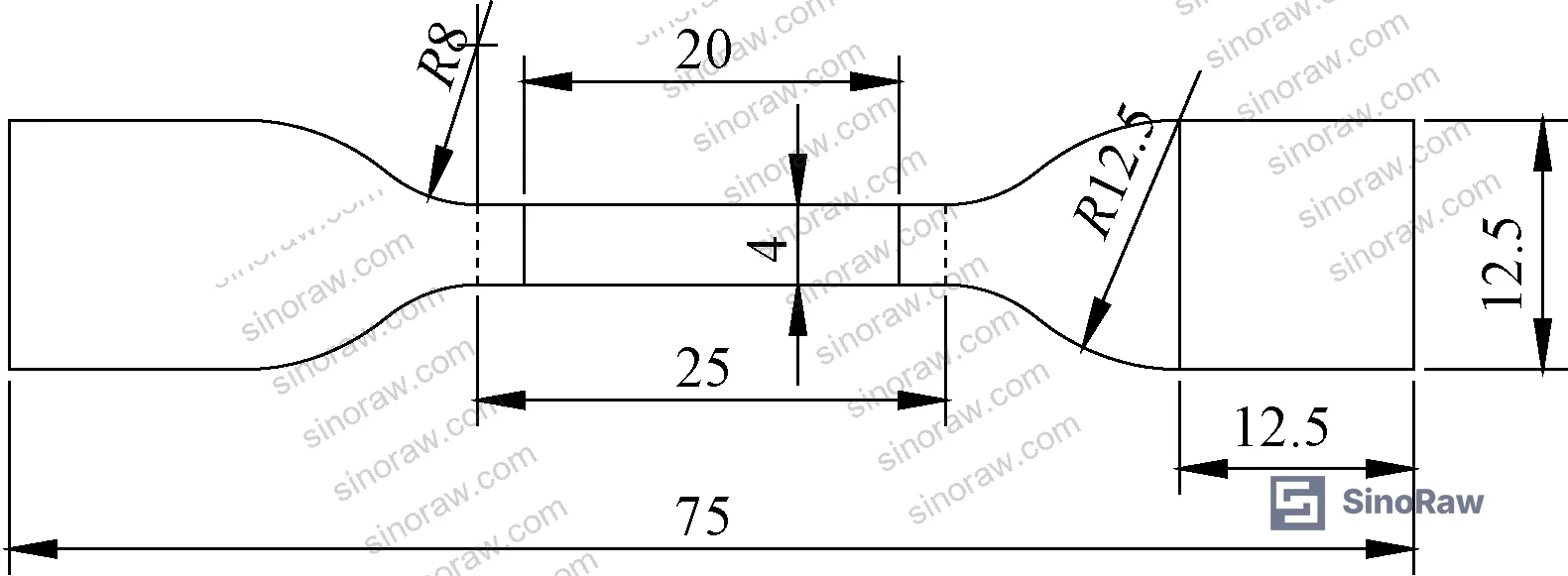
The data underpinning this article comes from a controlled radiation aging study conducted at a Chinese nuclear power equipment research institution, in collaboration with a major engineering university. The program tested 133 dumbbell specimens cut from extruded, electron-beam crosslinked polymer tubing (wall thickness 0.8–2 mm), across 9 cumulative dose levels ranging from 447 kGy to 3025 kGy, under both gamma (Co-60 source, 10 kGy/h dose rate) and beta (electron accelerator, 20 kGy/h dose rate) irradiation conditions. All mechanical testing was performed after a minimum 3-hour conditioning period at (23 ± 5)°C. The experimental design followed GB/T 2951.11 specimen preparation requirements, with a tensile speed of (25 ± 5) mm/min.
ASTM D882 Standard Test Method for Tensile Properties of Thin Plastic Sheeting provides the internationally recognized framework for tensile characterization of thin polymer products. While this research used the Chinese national standard equivalent, buyers sourcing from Chinese manufacturers should verify which test standard was applied and confirm that crosshead speed, specimen geometry, and conditioning conditions are consistent with their own acceptance criteria.
For context on Barrier Films used in cable insulation and jacketing applications, radiation resistance is increasingly a specification category — not just a nice-to-have — as industrial applications push into higher-dose environments.
Radiation-Induced Degradation of Heat-Shrinkable Tubing: Elongation at Break vs. Tensile Strength #
This is where the data gets genuinely important for procurement decisions.
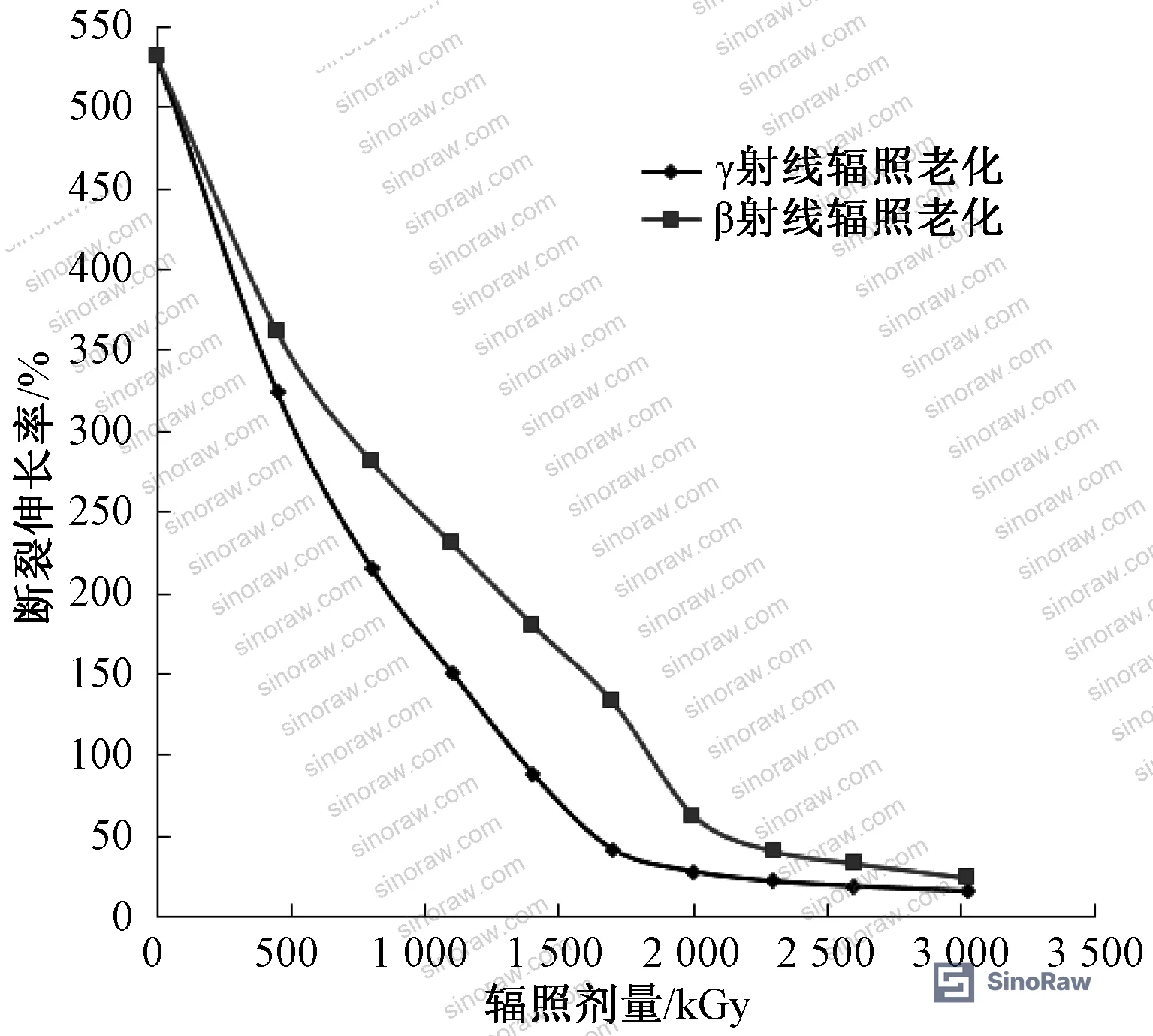
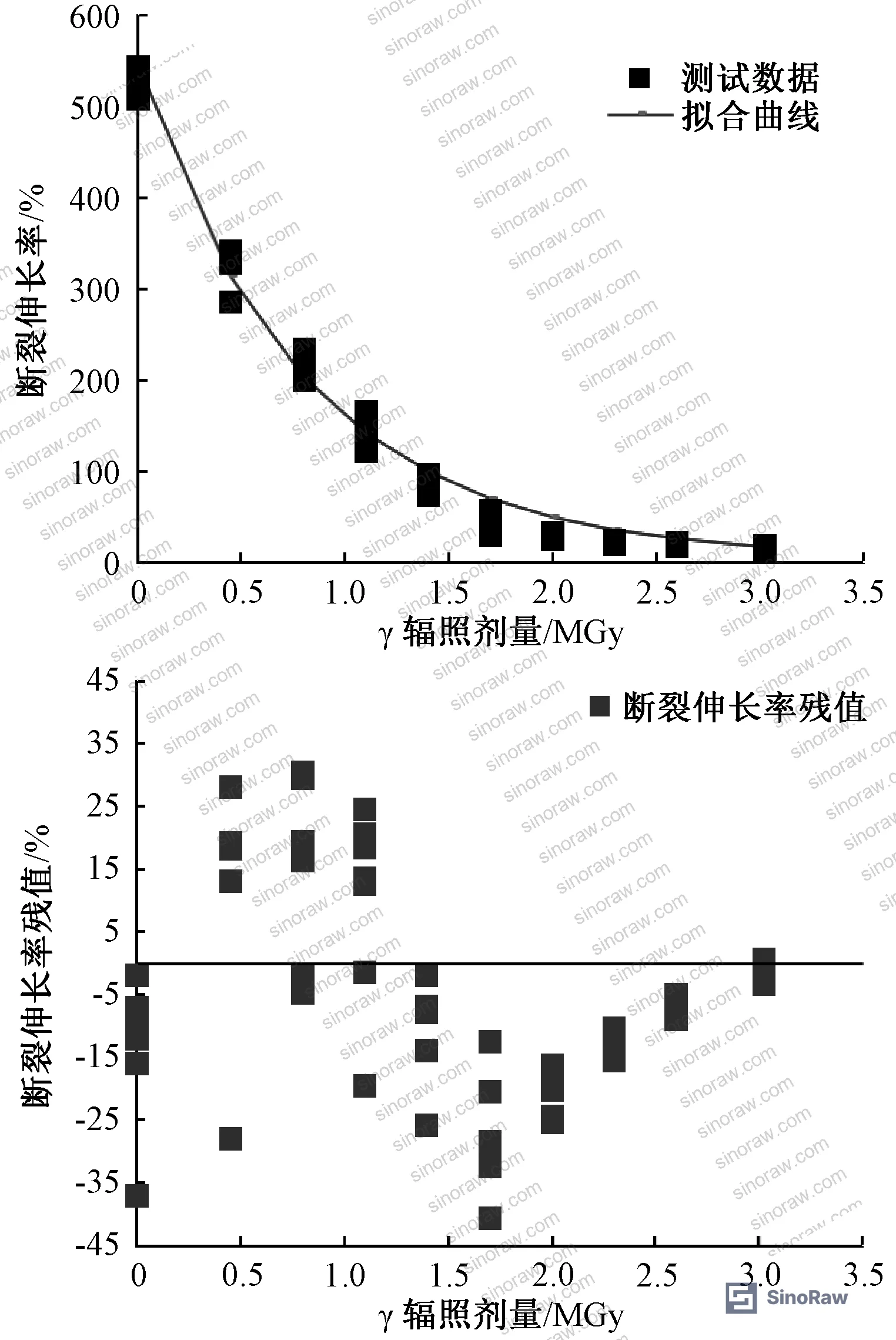
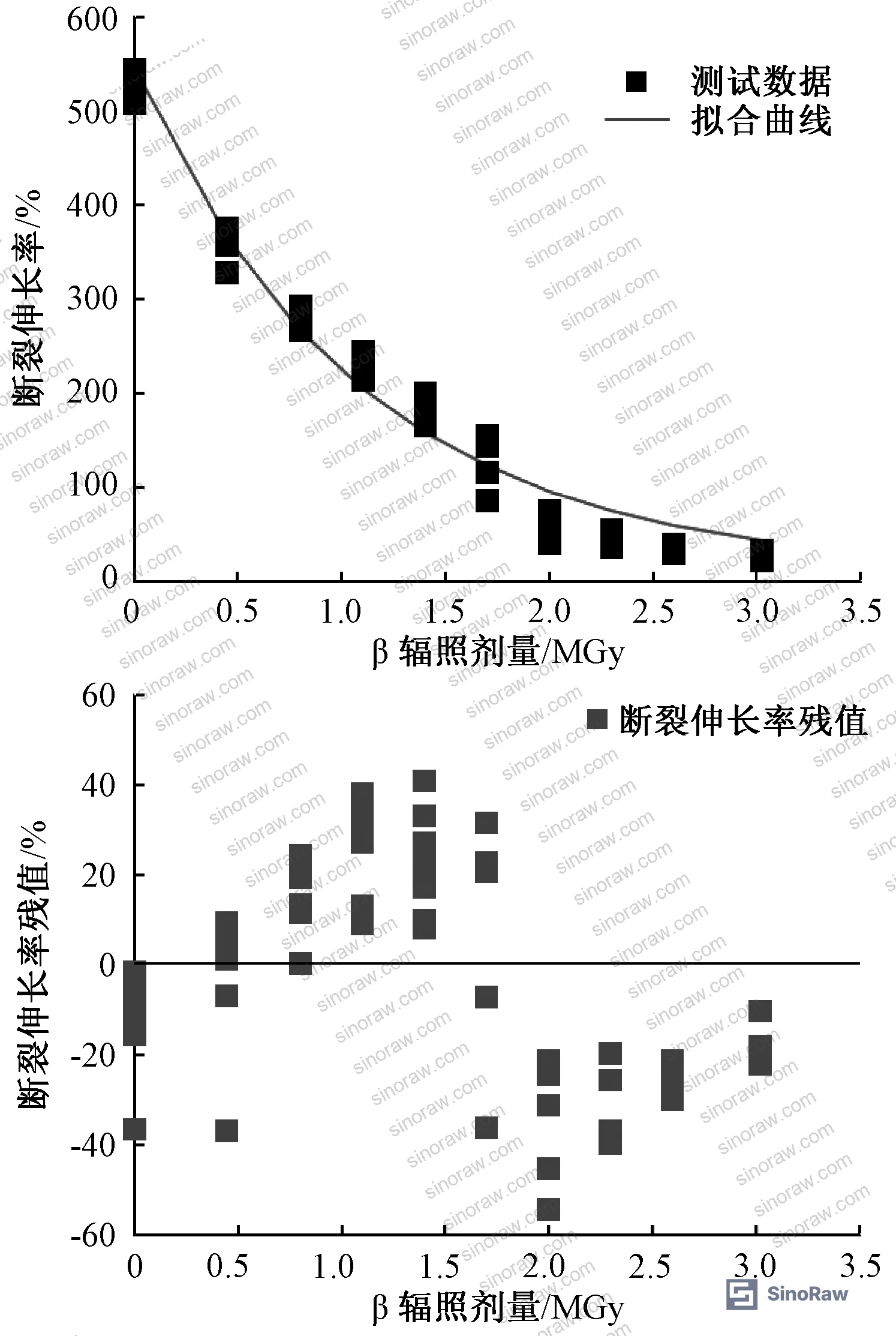
Under both gamma and beta irradiation, elongation at break falls sharply and approximately exponentially with increasing dose. At 3025 kGy cumulative dose, elongation at break retains only about 20% of its original value — regardless of whether the irradiation source is gamma or beta. The degradation curve shows a clear inflection point near 2000 kGy: below that threshold, the decline is steep; above it, the rate of loss slows, but the material is already severely embrittled.
Gamma irradiation consistently degrades elongation at break faster than an equivalent beta dose at the same level — this is a material behavior the curve-fit data confirms, and it has direct implications for how you interpret qualification test reports.
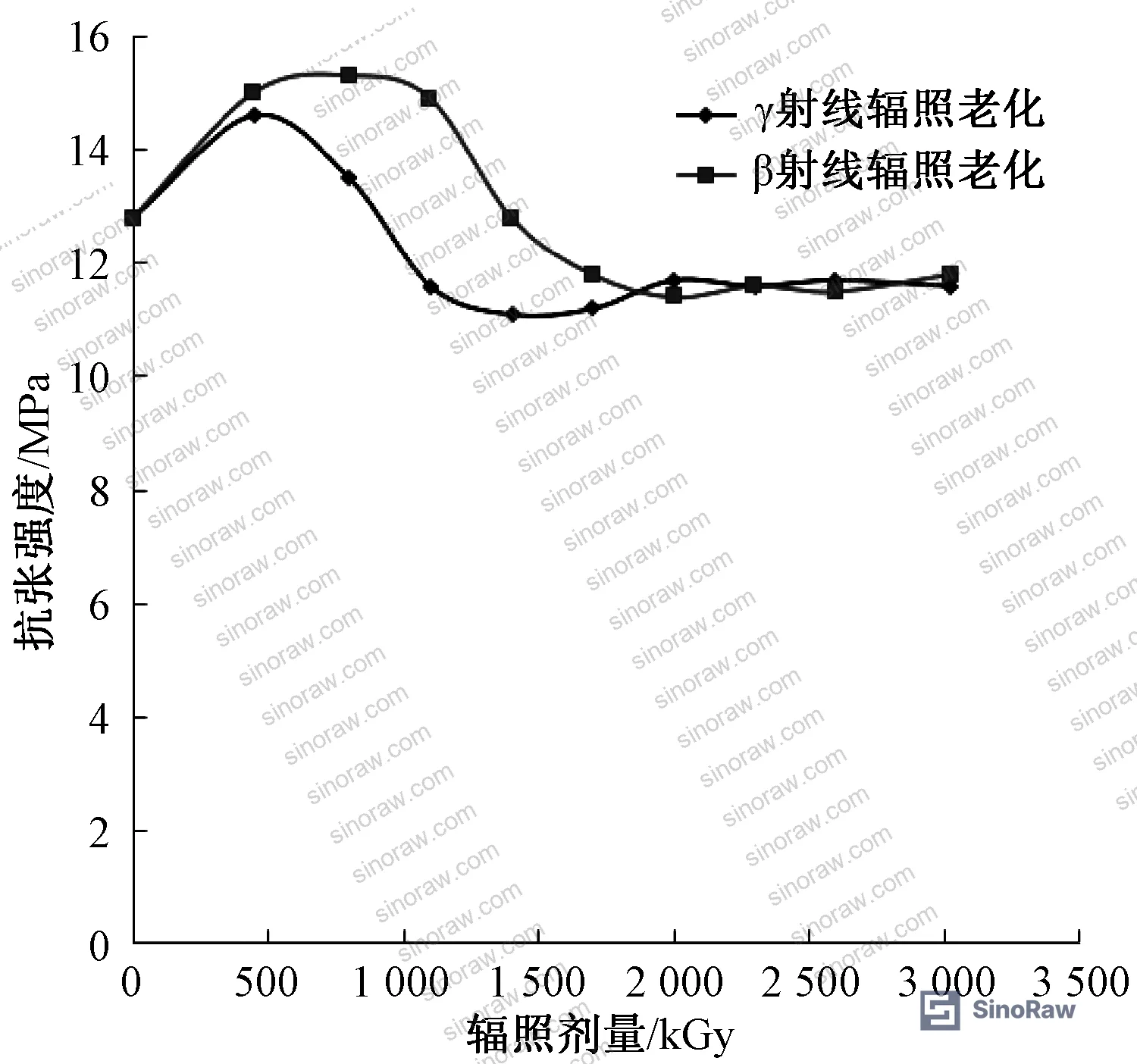
Tensile strength tells a very different story. At 3025 kGy, tensile strength declines only approximately 9% from baseline. There is even a slight increase observed at 447 kGy — consistent with additional crosslink formation at lower doses before chain scission begins to dominate. An inflection point appears near 1700 kGy for tensile strength: before that point, gamma irradiation reduces tensile strength faster than beta; after it, the two converge and both plateau with minimal further change.
The practical consequence: a supplier who measures only tensile strength and reports “stable performance up to 3000 kGy” is technically not lying, but they are giving you a completely misleading picture of the material’s mechanical condition. At that dose level, the material has lost 80% of its flexibility. It will crack under vibration, thermal cycling, or cable flexing.
The curve-fitting results (exponential decay model y = y₀ + Ae^(−x/t)) produced R² values of 0.988 for gamma irradiation and 0.975 for beta irradiation — indicating high confidence in the fitted degradation curves. The gamma fit yielded a decay constant t = 0.80, while the beta fit gave t = 1.09, confirming that gamma radiation causes faster elongation loss per unit dose.
| Radiation Parameter | Gamma (Co-60) | Beta (Electron Beam) |
|---|---|---|
| Dose rate applied | 10 kGy/h | 20 kGy/h |
| Elongation at break @ 3025 kGy | ~20% retained | ~20% retained |
| Tensile strength @ 3025 kGy | ~91% retained | ~91% retained |
| Inflection point — elongation | ~2000 kGy | ~2000 kGy |
| Inflection point — tensile strength | ~1700 kGy | ~1700 kGy |
| Curve-fit R² | 0.988 | 0.975 |
| Decay constant (t) | 0.80 | 1.09 |
Beta–Gamma Equivalency: What It Means for Supplier Qualification Testing #
Most procurement teams don’t realize that the practical challenge in qualifying nuclear-grade Class 1E cable components is not the physics — it’s the test infrastructure. Beta source irradiation of complete cable assemblies (which IEEE 383 requires to be at minimum 3.05 m in total circuit length) is simply not available at most qualified test facilities in China. The only realistic path to full-assembly qualification using beta irradiation does not currently exist domestically for this product category.
This is not a minor administrative gap. It directly determines how qualification tests are designed and what evidence a buyer can accept as equivalent.
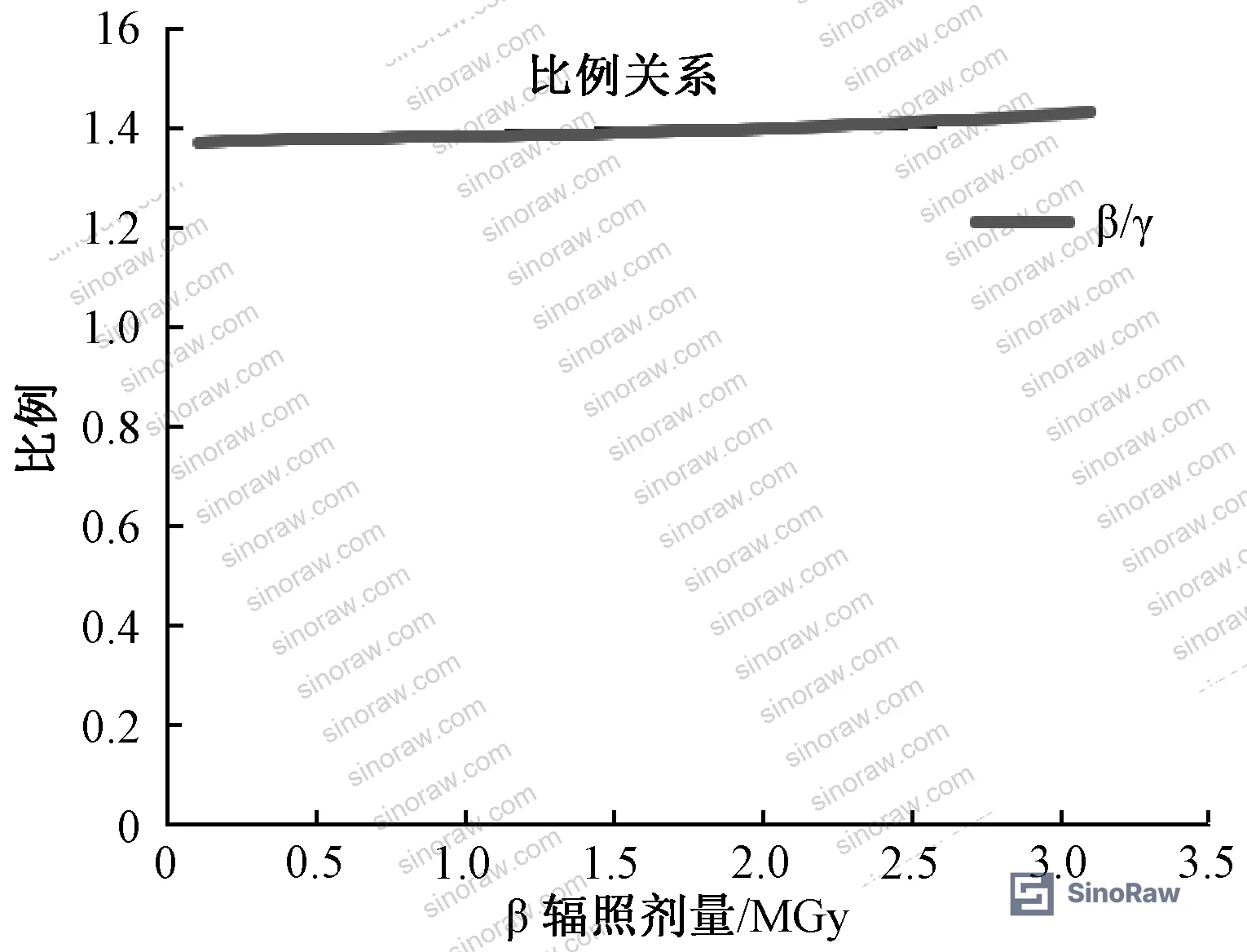
The research establishes a beta-to-gamma equivalency relationship using elongation at break as the damage index. The logic is straightforward: if a given beta dose and a given gamma dose produce identical elongation at break values, those doses are defined as equivalent. By fitting exponential decay curves to both datasets and reading off corresponding dose values that yield the same elongation, an equivalency ratio curve is generated.
This equivalency has immediate procurement value: it means a supplier can conduct gamma irradiation testing (widely available, controllable, well-documented) and translate those results to equivalent beta exposure — provided the equivalency relationship has been experimentally validated for their specific polymer formulation, not just assumed from literature values.
Honestly, most buyers accept gamma-irradiated qualification data without ever asking whether the beta-to-gamma equivalency was derived from actual test data on the specific product or simply borrowed from a generic polymer reference. That’s a meaningful quality gap. For Class 1E applications, the equivalency must be product-specific.
The REACH Regulation (EC) No 1907/2006 is relevant here for buyers sourcing halogen-free, low-smoke formulations — a requirement explicitly called out in the technical specification for third-generation PWR Class 1E containment tubing. Crosslinked polymer formulations must be verified for restricted substance compliance independently of their radiation performance data.
Practical Guidance for Buyers #
When you’re evaluating suppliers of radiation-resistant heat-shrinkable tubing, the single biggest mistake is treating radiation aging test reports as pass/fail documentation rather than as data to interrogate. Ask for the raw elongation-at-break values at each dose level, not just the final result. A supplier who can only provide a pass/fail certificate has tested to a minimum standard. A supplier who provides the full degradation curve — including inflection point data and curve-fit parameters — has actually characterized their material.
The test specimen requirements matter too. Minimum 5 valid data points per group, dumbbell geometry per GB/T 2951.11, and a conditioning period of at least 3 hours at (23 ± 5)°C before testing. Specimens that break at the grips are invalid and must be discarded — any report that doesn’t address this explicitly should be questioned.
For high-dose applications (cumulative exposure beyond 1000 kGy), require elongation retention data, not just baseline mechanical specs. A material that starts at 400% elongation and retains 20% at maximum dose is in a very different condition than one that starts at 150% and retains 20% — both pass the same threshold, but the former has far more degradation margin at intermediate doses.
ISO 9001:2015 Quality management systems certification is a baseline requirement for any supplier in this category, but it tells you nothing about the supplier’s actual radiation testing capability. Verify independently that they have direct relationships with accredited irradiation facilities, and that they can provide dosimetry records traceable to national standards.
At sinoraw.com, our role is to connect overseas procurement engineers with pre-screened Chinese manufacturers of specialty polymer components — not to manufacture them ourselves. Our team can help you identify suppliers who have verifiable radiation aging test infrastructure and Class 1E qualification experience before you commit to sample orders or qualification runs.
Need help identifying qualified suppliers for radiation-resistant heat-shrinkable tubing? Talk to our sourcing team →
Supplier Qualification Questions #
- What is the measured elongation at break retention at 3025 kGy cumulative dose under gamma irradiation, and can you provide the full dose-response dataset across at least 9 dose levels from 447 kGy to 3025 kGy?
- What exponential curve-fit parameters (y₀, A, t) and R² values can you provide for your product’s gamma and beta irradiation elongation-at-break data, and are R² values ≥ 0.975 across both datasets?
- Has your product’s beta-to-gamma dose equivalency relationship been derived from actual tensile testing on your specific polymer formulation, and at what inflection dose (expected near 2000 kGy) does the elongation degradation rate change?
- What is the gamma dose rate used in your radiation aging qualification testing, and is it confirmed at 10 kGy/h using a Co-60 source with dosimetry traceable to a national metrology standard?
- At 447 kGy gamma dose, does your product show an increase in tensile strength relative to baseline (indicating net crosslink formation), and what is the tensile strength retention at 3025 kGy — is it within 9% of baseline?
Sourcing Checklist #
- ☐ Radiation aging test reports cover at least 9 cumulative dose levels from 447 kGy to 3025 kGy for both gamma and beta irradiation
- ☐ Elongation at break data is reported as the primary mechanical degradation indicator, with minimum 5 valid specimens per dose level per GB/T 2951.11
- ☐ Curve-fit R² values for elongation vs. dose are ≥ 0.975 for beta irradiation data and ≥ 0.988 for gamma irradiation data
- ☐ Supplier can demonstrate that beta-to-gamma equivalency relationship is experimentally derived from their specific product formulation, not taken from generic polymer literature
- ☐ Tubing wall thickness is confirmed in the 0.8–2 mm range with specimen conditioning documented at (23 ± 5)°C for ≥ 3 hours prior to tensile testing
- ☐ Product meets low-smoke halogen-free (LSZH) flame retardancy requirements consistent with Class 1E containment specifications, with REACH compliance documentation available
- ☐ Supplier holds ISO 9001:2015 certification and can provide dosimetry records traceable to national standards from their designated irradiation facility
Key Specifications Table #
| Parameter | Recommended Value | Verification Method |
|---|---|---|
| Elongation at break @ 3025 kGy | ≥ 20% retained (absolute minimum) | Tensile test per GB/T 2951.11, (25 ± 5) mm/min, dumbbell specimen, ≥5 valid data points |
| Tensile strength @ 3025 kGy | ≥ 91% of baseline retained | Same tensile test; compare against unconditioned control group mean |
| Gamma dose rate for aging test | 10 kGy/h (Co-60 source) | Dosimetry certificate from accredited irradiation facility |
| Beta dose rate for aging test | 20 kGy/h (electron accelerator) | Accelerator calibration records with traceable dosimetry |
| Curve-fit R² (elongation vs. dose) | ≥ 0.975 (beta), ≥ 0.988 (gamma) | Exponential decay fit: y = y₀ + Ae^(−x/t) applied to full dataset |
| Specimen conditioning before test | ≥ 3 hours at (23 ± 5)°C | Laboratory temperature log; specimens equilibrated before tensile testing |
| Tubing wall thickness | 0.8–2 mm | Micrometer measurement per batch; consistent thickness required across test specimens |
Can’t find a supplier meeting these specs? Submit your requirements and we’ll match you within 48 hours.
References #
Data source: Radiation Aging Characteristics and Beta–Gamma Dose Equivalency of Class 1E Heat-Shrinkable Polymer Tubing for Third-Generation Pressurized Water Reactor Nuclear Power Plants, H. Wei et al., Polymer Testing, 2025
Frequently Asked Questions #
Why is elongation at break used as the primary damage indicator rather than tensile strength for radiation aging evaluation?
Because elongation at break is far more sensitive to radiation-induced chain scission and embrittlement in crosslinked polymers. Tensile strength at 3025 kGy retains approximately 91% of its baseline value — a change so small it would pass most incoming inspection criteria without question. Elongation at break at the same dose retains only about 20%. For a component that must remain flexible and crack-resistant through 60 years of service and severe accident conditions, elongation is the metric that actually captures functional degradation.
What is the difference between gamma and beta radiation aging effects on this type of tubing?
Both cause similar ultimate degradation at high cumulative doses, but gamma radiation degrades elongation at break faster per unit dose than beta at equivalent cumulative levels. The decay constant t from curve fitting is 0.80 for gamma versus 1.09 for beta, confirming the faster rate under gamma. For tensile strength, gamma also degrades faster up to approximately 1700 kGy, after which the two converge. The end-state at 3025 kGy is essentially the same — roughly 20% elongation retention and 91% tensile strength retention — but the path there differs.
Can gamma irradiation test results be used to qualify a product against beta irradiation requirements?
Yes, provided the beta-to-gamma dose equivalency has been experimentally established for the specific product. The method involves matching elongation at break values from beta and gamma dose-response curves: doses that produce identical elongation retention are defined as equivalent. This allows gamma testing — which is more widely available at qualified facilities — to substitute for beta testing in qualification programs. The equivalency ratio is product-specific and must not be assumed from generic polymer data.
How many test specimens are required for a valid radiation aging evaluation?
Each dose level requires a minimum of 7 specimens per the test design used in the reference program. Of those 7, at least 5 must yield valid data (specimens that break at the grips are discarded). If fewer than 5 valid results are obtained at any dose level, that group must be retested. Results are reported as the mean of valid specimens per group.
What additional aging tests are needed beyond radiation aging for full Class 1E qualification?
Radiation aging alone is not sufficient. Thermal aging must also be conducted, and the interaction between thermal and radiation aging — including the effect of test sequence — is a separate qualification requirement. Electrical insulation performance and flame retardancy under post-irradiation conditions are also critical acceptance parameters that this mechanical test program does not address. Buyers should require suppliers to present a complete qualification matrix covering all three aging modes before accepting a product for Class 1E service.
For further technical guidance on polymer-based protective components in cable systems, see our resources on Specialty Polymers and Cables & Connectivity.
Published by sinoraw.com Technical Team | Request a sourcing quote


