跳至内容
无结果
  • Knowledge Base
  • Products
  • About
  • Contact
sinoraw.com
sinoraw.com
  • Knowledge Base
  • Products
  • About
  • Contact
sinoraw.com
sinoraw.com

Electrical & Automation

109
  • 3D Printing Consumables
    • FDM Filament Specification: Tensile Strength, HDT and Dimensional Tolerance for PLA/PETG/ABS/PEEK
    • SLS Nylon PA12 Powder Specification: Particle Size D50, Refresh Rate and Tensile Strength Data
    • SLA DLP Resin Selection Guide: 405nm vs 385nm Wavelength, Shore Hardness and Elongation Data
    • Engineering Filament Selection: PEEK vs PEI vs PC vs Carbon Fiber — Mechanical Property Comparison
    • 3D Printing Material Regulatory Compliance: FDA Biocompatibility, USP Class VI and ISO 10993
    • 3D Print Warping and Layer Adhesion Failure: Root Cause Analysis and Process Parameter Fix Guide
    • 3D Printing Consumable Procurement Guide: Spool Weight Verification, Moisture Testing and COA
    • FDM vs SLA vs SLS vs MJF: Additive Manufacturing Technology Comparison and Material Selection
    • Sample Request & RFQ Guide for 3D Printing Consumables
    • Industry Standards Explained for 3D Printing Consumables
    • 3D Printing Consumables — Comparison & Upgrade Guide
    • 3D Printing Consumables — Procurement & Cost Guide
    • 3D Printing Consumables — Troubleshooting & Failure Guide
    • 3D Printing Consumables — Regulatory & Compliance Guide
    • 3D Printing Consumables — Supplier Qualification Guide
    • 3D Printing Consumables — Application & Performance Guide
    • 3D Printing Consumables — Material Selection Guide
    • 3D Printing Consumables — Technical Specification Overview
  • Cables & Connectivity
    • Automatic Insulated Wire Lug Devices: Procurement Specifications and Supplier Qualification for Substation Secondary Circuit Terminations
    • Connector Terminal Assembly Process Selection: Pull-Off Force, Salt Spray, and High-Temperature Performance Guide
    • Industrial Cable Tray Sizing and Thermal Management: A Technical Procurement Guide
    • Cable Tray Systems: Plate Thickness, Laying Tolerances, and Supplier Qualification Guide
    • Sample Request & RFQ Guide for Cables & Connectivity
    • Industry Standards Explained for Cables & Connectivity
    • Cables & Connectivity — Comparison & Upgrade Guide
    • Cables & Connectivity — Procurement & Cost Guide
    • Cables & Connectivity — Troubleshooting & Failure Guide
    • Cables & Connectivity — Regulatory & Compliance Guide
    • Cables & Connectivity — Supplier Qualification Guide
    • Cables & Connectivity — Application & Performance Guide
    • Cables & Connectivity — Material Selection Guide
    • Cables & Connectivity — Technical Specification Overview
    • PUR vs PVC vs TPE Cable Jacket: Chemical Resistance, Flex Life and Temperature Rating Comparison
    • Industrial Cable Procurement Guide: UL/CSA Certification Verification, Conductor Resistance Testing
    • Drag Chain Cable Fatigue Failure Analysis: Conductor Breakage, Jacket Cracking and Root Cause Data
    • Industrial Cable Regulatory Compliance: RoHS 3, REACH SVHC, UL 508 and CE Marking Requirements
    • Servo Motor Cable Selection Guide: Torsional Flex, EMC Shielding and Connector Termination Specs
    • Shielded Cable EMI Attenuation: Braid Coverage, Shield Type and dB Attenuation Measurement Data
    • PTFE Teflon Wire Specification: AWG Gauge, Dielectric Strength and High-Temperature Rating Data
    • Drag Chain Cable Specification: PUR vs TPE Jacket, Flex Cycle Life and Minimum Bend Radius Data
  • Industrial Electrical Consumables
    • Spring Clamp vs Screw Clamp Terminal: Vibration Resistance, Installation Speed and Cost Comparison
    • Industrial Electrical Procurement Guide: IEC Certification Verification, Lot Testing and COA
    • Circuit Breaker Terminal Pull-Out and Bending Test Equipment: Specification Guide for B2B Buyers
    • SF6 Gas-Insulated Bushings for Converter Transformers: Altitude Correction, Voltage Ratings, and Supplier Qualification
    • Aluminum Electrical Terminal Fatigue Fracture: Specification Guide for Vibration-Exposed Installations
    • Terminal Block Layout Optimization: Technical Procurement Guide for Industrial Electrical Enclosures
    • Brush Electroplating for Electrical Terminal Repair: Contact Resistance, Thermal Performance, and Corrosion Resistance Specifications
    • Bolt-Assembled Perforated Angle Steel Cable Tray Support Systems: Structural Specification Guide for Offshore Procurement
    • Cable Tray Systems: Technical Procurement Guide for Industrial Installations
    • GIS Bushing Grading Ring Specification Guide: Electric Field Distribution and Supplier Qualification for 126–145 kV Applications
    • Ceramic ESD Raised Access Flooring for Industrial Control Rooms: Specification and Supplier Qualification Guide
    • Sample Request & RFQ Guide for Industrial Electrical Consumables
    • Industry Standards Explained for Industrial Electrical Consumables
    • Certification & Documentation Guide for Industrial Electrical Consumables
    • Supplier Qualification Checklist for Industrial Electrical Consumables
    • Industrial Electrical Consumables — Material Selection Guide
    • Industrial Electrical Consumables — Technical Specification Overview
    • Terminal Block Loosening and Arc Flash Troubleshooting: Torque Specification and Creepage Distance
    • Industrial Electrical Regulatory Compliance: IEC 60947, CE Marking, UL 508 and RoHS 3 Standards
    • Heat Shrink Tubing Specification: Shrink Ratio, Dielectric Strength and UL 224 Temperature Rating
    • Miniature Circuit Breaker Specification: IEC 60947-2 Breaking Capacity, Trip Curve and Selectivity
    • Solid State Relay Selection Guide: Zero-Cross vs Random-Fire, On-State Drop and Thermal Resistance
    • DIN Rail Terminal Block Specification: Current Rating, Clamping Range and Cross-Section Compatibility
  • Sensors & Detection
    • Sample Request & RFQ Guide for Sensors & Detection
    • Industry Standards Explained for Sensors & Detection
    • Sensors & Detection — Comparison & Upgrade Guide
    • Sensors & Detection — Procurement & Cost Guide
    • Sensors & Detection — Troubleshooting & Failure Guide
    • Sensors & Detection — Regulatory & Compliance Guide
    • Sensors & Detection — Supplier Qualification Guide
    • Sensors & Detection — Application & Performance Guide
    • Sensors & Detection — Material Selection Guide
    • Sensors & Detection — Technical Specification Overview
    • Inductive vs Capacitive vs Photoelectric vs Ultrasonic Sensor: Technology Comparison and Selection Guide
    • Industrial Sensor Procurement from China: Datasheet Verification, Response Time Testing and COA Guide
    • Proximity Sensor False Triggering Troubleshooting: EMI Interference, Target Material and Mounting Distance
    • Industrial Sensor IP Rating and Regulatory Compliance: IP67/IP68, IEC 60947-5-2 and CE Marking
    • Ultrasonic Sensor Specification: Blind Zone, Detection Range and M12 Connector Wiring Guide
    • Capacitive Sensor Specification: Sensing Range, Dielectric Constant Effect and Sensitivity Adjustment
    • Photoelectric Sensor Selection Guide: Through-Beam vs Retro-Reflective vs Diffuse Mode Comparison
    • Inductive Proximity Sensor Specification: PNP vs NPN, Detection Range and Switching Frequency Data
  • Smart Tracking & Identification
    • Industry Standards Explained for Smart Tracking & Identification
    • Certification & Documentation Guide for Smart Tracking & Identification
    • Smart Tracking & Identification — Troubleshooting & Failure Guide
    • Smart Tracking & Identification — Supplier Qualification Guide
    • Smart Tracking & Identification — Application & Performance Guide
    • Smart Tracking & Identification — Material Selection Guide
    • Smart Tracking & Identification — Technical Specification Overview
    • HF 13.56MHz vs UHF 860-960MHz RFID: Read Range, Tag Cost and Application Selection Guide
    • RFID Tag Procurement from China: Chip Authentication, Read Range Validation and COA Requirements
    • RFID Read Rate Failure Troubleshooting: Tag Orientation, Metal Proximity and Reader Power Setting
    • RFID System Regulatory Compliance: FCC Part 15, ETSI EN 302 208, REACH and RoHS Requirements
    • RFID Inlay Specification: Impinj Monza vs NXP UCODE vs Alien Higgs — Chip Sensitivity Comparison
    • Washable RFID Label Specification: 200-Cycle Laundry Test, Delamination and Read Rate Data
    • Anti-Metal RFID Tag Selection Guide: Foam Spacer vs Ferrite Layer — Read Range and Tag Size Data
    • UHF RFID Tag Specification: ISO 18000-6C EPC Gen2, Read Range and Antenna Geometry Data
  • Industrial Connector & Terminal Block
    • Sample Request & RFQ Guide for Industrial Connector & Terminal Block
    • Industry Standards Explained for Industrial Connector & Terminal Block
    • Certification & Documentation Guide for Industrial Connector & Terminal Block
    • Industrial Connector & Terminal Block — Supplier Qualification Guide
    • Industrial Connector & Terminal Block — Technical Specification Overview
    • Industrial Connector & Terminal Block — Comparison & Upgrade Guide
    • Industrial Connector & Terminal Block Procurement Guide: Cost Drivers, Supplier Tiers and TCO
    • Industrial Connector & Terminal Block Troubleshooting Guide: Common Failure Modes and Root Cause Analysis
    • Industrial Connector & Terminal Block Supplier Qualification: Factory Audit, COA Review and Incoming Inspection
    • Industrial Connector & Terminal Block Regulatory Compliance: ISO, ASTM, GB/T Standards and Import Requirements
    • Industrial Connector & Terminal Block Technical Specification: Grades, Standards and Performance Data
    • Industrial Connector & Terminal Block Comparison: Grades, Standards and Performance Trade-offs
    • Industrial Connector & Terminal Block Selection Guide: How to Specify and Source from China

Electronic & Specialty Materials

98
  • Conductive & Functional Materials
    • Conductive Silver Paste Specification: Resistivity, Solid Content and Solar Cell Application Data
    • Graphene Oxide Specification: C/O Ratio, Lateral Size and Dispersion Concentration Data
    • Conductive Material Selection Guide: Silver Paste vs Carbon Ink vs Copper Paste — Cost vs Performance
    • Carbon Nanotube Specification: SWCNT vs MWCNT — Aspect Ratio, Purity and Conductivity Data
    • Conductive Material Regulatory Compliance: REACH Nano Regulation, RoHS and IEC 62321 Standards
    • Conductive Paste Resistance Increase Failure: Sintering Temperature, Adhesion and Oxidation Cause
    • Conductive Material Procurement from China: Resistivity Testing, Particle Size Verification and COA
    • Silver Paste vs Copper Paste vs Carbon Black Ink: Conductivity and Cost Comparison Guide
    • Sample Request & RFQ Guide for Conductive & Functional Materials
    • Industry Standards Explained for Conductive & Functional Materials
    • Certification & Documentation Guide for Conductive & Functional Materials
    • Supplier Qualification Checklist for Conductive & Functional Materials
    • Conductive & Functional Materials — Procurement & Cost Guide
    • Conductive & Functional Materials — Troubleshooting & Failure Guide
    • Conductive & Functional Materials — Application & Performance Guide
    • Conductive & Functional Materials — Material Selection Guide
    • Conductive & Functional Materials — Technical Specification Overview
  • PCB & Electronic Substrates
    • PCB Electronic Chemical Selection: Electroless Copper, Surface Finish ENIG vs HASL vs OSP Data
    • CCL Copper Clad Laminate Specification: Dk/Df, CAF Resistance and Tg Glass Transition Temperature
    • PCB Chemical Supplier Qualification: Deposition Uniformity, Chemical Analysis and COA Guide
    • CCL Material Application Guide: FR4 vs High-Speed vs PTFE Laminate — Loss Factor and Frequency
    • CCL Delamination and CAF Failure: Humidity, Thermal Cycling and Drilling Parameter Root Cause
    • FR4 vs Rogers vs PTFE High-Frequency Laminate: Dk/Df, Cost and Application Comparison Guide
    • PCB Material Regulatory Compliance: RoHS, REACH, IPC-4101 and Halogen-Free Standards
    • PCB Chemical Procurement from China: Bath Analysis Service, Deposition Testing and COA Guide
    • Sample Request & RFQ Guide for PCB & Electronic Substrates
    • Industry Standards Explained for PCB & Electronic Substrates
    • PCB & Electronic Substrates — Procurement & Cost Guide
    • PCB & Electronic Substrates — Troubleshooting & Failure Guide
    • PCB & Electronic Substrates — Supplier Qualification Guide
    • PCB & Electronic Substrates — Application & Performance Guide
    • PCB & Electronic Substrates — Material Selection Guide
    • PCB & Electronic Substrates — Technical Specification Overview
  • Rare Earth & Specialty Minerals
    • NdFeB Rare Earth Magnet Specification: N35-N52 Grade, Br Remanence and Hci Coercivity Data
    • Titanium Dioxide Specification: Rutile vs Anatase — Tinting Strength, BET Surface Area and Purity
    • Phosphor and Fluorescent Powder Specification: Excitation Wavelength, Emission Peak and QE Data
    • NdFeB Magnet Demagnetisation Failure: Temperature Coefficient, Coercivity and Corrosion Root Cause
    • Rare Earth Material Procurement from China: Composition Verification, Magnetic Testing and COA
    • Rare Earth Material Selection Guide: NdFeB vs SmCo vs Ferrite — Temperature and Cost Comparison
    • NdFeB vs SmCo vs AlNiCo vs Ferrite Magnet: Performance, Temperature and Cost Comparison Guide
    • Rare Earth Material Regulatory Compliance: REACH, RoHS, Conflict Minerals and China Export Rules
    • Sample Request & RFQ Guide for Rare Earth & Specialty Minerals
    • Industry Standards Explained for Rare Earth & Specialty Minerals
    • Rare Earth & Specialty Minerals — Procurement & Cost Guide
    • Rare Earth & Specialty Minerals — Troubleshooting & Failure Guide
    • Rare Earth & Specialty Minerals — Supplier Qualification Guide
    • Rare Earth & Specialty Minerals — Application & Performance Guide
    • Rare Earth & Specialty Minerals — Material Selection Guide
    • Rare Earth & Specialty Minerals — Technical Specification Overview
  • Semiconductor & Display Materials
    • Photoresist Raw Material Specification: Resin Purity, PAC Sensitivity and Resolution Data
    • Semiconductor-Grade Chemical Specification: Purity 5N-7N, Metal Ion Limit and Particle Count
    • Display Material Intermediate Specification: OLED Material Purity, Thermal Stability and Sublimation
    • Photolithography Chemical Selection Guide: Positive vs Negative Resist — Sensitivity and Contrast
    • Photoresist Contamination and Resolution Loss: Particle, Metal Ion and Humidity Root Cause Analysis
    • Semiconductor Chemical Procurement from China: Purity Verification, ICP-MS Testing and COA Guide
    • g-Line vs i-Line vs EUV Photoresist: Wavelength, Resolution Limit and Cost Comparison Guide
    • Semiconductor Material Regulatory Compliance: SEMI Standards, REACH and Restricted Substance Rules
    • Sample Request & RFQ Guide for Semiconductor & Display Materials
    • Industry Standards Explained for Semiconductor & Display Materials
    • Supplier Qualification Checklist for Semiconductor & Display Materials
    • Semiconductor & Display Materials — Procurement & Cost Guide
    • Semiconductor & Display Materials — Troubleshooting & Failure Guide
    • Semiconductor & Display Materials — Application & Performance Guide
    • Semiconductor & Display Materials — Material Selection Guide
    • Semiconductor & Display Materials — Technical Specification Overview
  • EMI Shielding Material
    • Sample Request & RFQ Guide for EMI Shielding Material
    • EMI Shielding Material — Comparison & Upgrade Guide
    • EMI Shielding Material — Procurement & Cost Guide
    • EMI Shielding Material — Troubleshooting & Failure Guide
    • EMI Shielding Material — Regulatory & Compliance Guide
    • EMI Shielding Material — Supplier Qualification Guide
    • EMI Shielding Material — Application & Performance Guide
    • EMI Shielding Material — Material Selection Guide
    • EMI Shielding Material — Technical Specification Overview
    • EMI Shielding Material Troubleshooting Guide: Common Failure Modes and Root Cause Analysis
    • EMI Shielding Material Procurement Guide: Cost Drivers, Supplier Tiers and TCO
    • EMI Shielding Material Regulatory Compliance: ISO, ASTM, GB/T Standards and Import Requirements
    • EMI Shielding Material Supplier Qualification: Factory Audit, COA Review and Incoming Inspection
    • EMI Shielding Material Selection Guide: How to Specify and Source from China
    • EMI Shielding Material Application Guide: Performance Requirements by Use Case
    • EMI Shielding Material Technical Specification: Grades, Standards and Performance Data
    • EMI Shielding Material Comparison: Grades, Standards and Performance Trade-offs
  • Conductive Ink & Functional Paste
    • Sample Request & RFQ Guide for Conductive Ink & Functional Paste
    • Industry Standards Explained for Conductive Ink & Functional Paste
    • Certification & Documentation Guide for Conductive Ink & Functional Paste
    • Conductive Ink & Functional Paste — Procurement & Cost Guide
    • Conductive Ink & Functional Paste — Troubleshooting & Failure Guide
    • Conductive Ink & Functional Paste — Application & Performance Guide
    • Conductive Ink & Functional Paste — Material Selection Guide
    • Conductive Ink & Functional Paste — Technical Specification Overview
    • Conductive Ink & Functional Paste Supplier Qualification: Factory Audit, COA Review and Incoming Inspection
    • Conductive Ink & Functional Paste Troubleshooting Guide: Common Failure Modes and Root Cause Analysis
    • Conductive Ink & Functional Paste Procurement Guide: Cost Drivers, Supplier Tiers and TCO
    • Conductive Ink & Functional Paste Regulatory Compliance: ISO, ASTM, GB/T Standards and Import Requirements
    • Conductive Ink & Functional Paste Application Guide: Performance Requirements by Use Case
    • Conductive Ink & Functional Paste Selection Guide: How to Specify and Source from China
    • Conductive Ink & Functional Paste Technical Specification: Grades, Standards and Performance Data
    • Conductive Ink & Functional Paste Comparison: Grades, Standards and Performance Trade-offs

Industrial Adhesives & Bonding

134
  • Epoxy & Anaerobic Adhesives
    • Epoxy Adhesive Specification: 1K vs 2K, EEW, Hardener Stoichiometry and Lap Shear Strength Data
    • Anaerobic Adhesive Selection Guide: Threadlocker vs Retaining Compound vs Pipe Sealant Comparison
    • Epoxy and Anaerobic Adhesive Supplier Qualification: Gel Time Testing, Strength Verification and COA
    • Epoxy Adhesive Application Guide: Surface Preparation, Mixing Ratio and Cure Schedule Data
    • Industrial Adhesive Regulatory Compliance: REACH SVoC, RoHS, FDA Food Contact and ATEX Standards
    • Epoxy Bond Failure Analysis: Mixed Ratio Error, Surface Contamination and Temperature Root Cause
    • Industrial Adhesive Procurement from China: Grade Verification, Pot Life Testing and COA Guide
    • Epoxy vs Polyurethane vs Acrylic Structural Adhesive: Flexibility, Strength and Cost Comparison
    • Sample Request & RFQ Guide for Epoxy & Anaerobic Adhesives
    • Industry Standards Explained for Epoxy & Anaerobic Adhesives
    • Epoxy & Anaerobic Adhesives — Procurement & Cost Guide
    • Epoxy & Anaerobic Adhesives — Troubleshooting & Failure Guide
    • Epoxy & Anaerobic Adhesives — Regulatory & Compliance Guide
    • Epoxy & Anaerobic Adhesives — Supplier Qualification Guide
    • Epoxy & Anaerobic Adhesives — Application & Performance Guide
    • Epoxy & Anaerobic Adhesives — Material Selection Guide
    • Epoxy & Anaerobic Adhesives — Technical Specification Overview
  • Hot Melt & Pressure Sensitive Adhesives
    • Pressure Sensitive Adhesive Selection: Permanent vs Removable vs Repositionable Peel Force Data
    • Hot Melt Application Guide: Gun Temperature, Bead Size, Open Time and Substrate Compatibility
    • Hot Melt Bond Failure: Charring, Stringing, Cold Weather Brittleness and Substrate Adhesion Fix
    • Hot Melt Adhesive Regulatory Compliance: FDA 21 CFR Food Contact, REACH and Food Packaging Rules
    • Hot Melt vs Solvent Adhesive vs PSA Tape: Bond Strength, Speed and Total Cost Comparison Guide
    • Hot Melt Adhesive Procurement from China: Viscosity Testing, Softening Point Verification and COA
    • Hot Melt Adhesive Specification: EVA vs Polyamide vs Polyolefin — Softening Point and Open Time
    • Hot Melt Adhesive Supplier Qualification: Softening Point, Viscosity at 180°C and COA Verification
    • Certification & Documentation Guide for Hot Melt & Pressure Sensitive Adhesives
    • How to Choose Hot Melt & Pressure Sensitive Adhesives
    • Hot Melt & Pressure Sensitive Adhesives — Supplier Qualification Guide
    • Hot Melt & Pressure Sensitive Adhesives — Procurement & Cost Guide
    • Hot Melt & Pressure Sensitive Adhesives — Application & Performance Guide
    • Hot Melt & Pressure Sensitive Adhesives — Technical Specification Overview
  • Structural & UV Adhesives
    • UV Adhesive Application Guide: Substrate Surface Energy, Corona Treatment and Bond Strength Data
    • UV Adhesive Supplier Qualification: Purity Testing, Cure Speed Validation and COA Requirements
    • UV Adhesive Specification: Optical Grade vs Electronic Grade vs Medical Grade — Viscosity and Cure Data
    • UV Adhesive Regulatory Compliance: EU Ink Regulation, FDA 21 CFR 175.105 and ISO 10993 Biocompat
    • UV Bond Failure Analysis: Oxygen Inhibition, Substrate Outgassing and Shadow Area Root Cause
    • UV Adhesive Procurement from China: Photoinitiator Content Verification, Shelf Life and COA Guide
    • UV Cure vs Thermal Cure vs Moisture Cure Adhesive: Speed, Bond Strength and Cost Comparison Guide
    • UV Adhesive Cure Wavelength Selection: 365nm vs 405nm vs Dual-Cure — Intensity and Depth of Cure
    • UV Curing Adhesive Selection Guide: Viscosity, Cure Wavelength, and Dispensing Parameters for Precision Bonding
    • Fumed Silica Grade Selection for UV Adhesive Viscosity Stability: 12-Month Qualification Data
    • UV Curing Adhesive Selection Guide: Optical Stability, Yellowing Resistance, and Encapsulation Performance
    • UV Curing Adhesive for Optical Sensor Assembly: Pressure Sensitivity, Cure Process, and Supplier Qualification Guide
    • UV Cure Adhesive for TPU Medical Catheter Assembly: Adhesion Force, Cure Speed, and Corrosion Resistance Data
    • UV Adhesive for Flexible Transparent Conductive Film Imprinting: Viscosity, Cure Speed, and Optical Qualification Guide
    • UV Adhesive for PET Substrate: High-MW PUA Oligomer Selection, Cure Performance, and Supplier Qualification Guide
    • Sample Request & RFQ Guide for Structural & UV Adhesives
    • Industry Standards Explained for Structural & UV Adhesives
    • Structural & UV Adhesives — Application & Performance Guide
    • Structural & UV Adhesives — Material Selection Guide
    • Structural & UV Adhesives — Technical Specification Overview
  • Thread Sealants & Pipe Compounds
    • PTFE Thread Seal Tape Specification: Thickness, Density, Width and Pressure Rating Guide
    • Thread Sealant Selection Guide: Gas vs Water vs Oil vs Chemical Service Application Data
    • Anaerobic Pipe Sealant Specification: Pressure Rating, Temperature Range and Gap Fill Capacity
    • Pipe Sealant Supplier Qualification: Pressure Test Verification, Cure Time Testing and COA
    • Thread Sealant Failure Analysis: Incomplete Cure, Gap Excess and Chemical Incompatibility Fix
    • Thread Sealant Procurement from China: Grade Verification, Pressure Rating Testing and COA Guide
    • Anaerobic Sealant vs PTFE Tape vs Hemp Fibre: Sealing Reliability and Disassembly Comparison
    • Thread Sealant Regulatory Compliance: NSF 61 Drinking Water, EN 751 Gas and FDA Standards
    • Sample Request & RFQ Guide for Thread Sealants & Pipe Compounds
    • Industry Standards Explained for Thread Sealants & Pipe Compounds
    • Thread Sealants & Pipe Compounds — Procurement & Cost Guide
    • Thread Sealants & Pipe Compounds — Troubleshooting & Failure Guide
    • Thread Sealants & Pipe Compounds — Supplier Qualification Guide
    • Thread Sealants & Pipe Compounds — Application & Performance Guide
    • Thread Sealants & Pipe Compounds — Technical Specification Overview
  • Cyanoacrylate & Instant Adhesives
    • Cyanoacrylate Instant Adhesive Grade Selection: Ester Types, Fixture Time, and Substrate Compatibility
    • Ethyl Cyanoacrylate Adhesive Performance: Modifier Chemistry, Shear Strength & Substrate Compatibility Guide
    • Cyanoacrylate Cure Accelerators: Activation Energy Data and Procurement Guidance for CA Adhesive Buyers
    • Industry Standards Explained for Cyanoacrylate & Instant Adhesives
    • Cyanoacrylate & Instant Adhesives — Regulatory & Compliance Guide
    • Cyanoacrylate & Instant Adhesives — Material Selection Guide
    • Cyanoacrylate & Instant Adhesives — Technical Specification Overview
    • Cyanoacrylate & Instant Adhesives — Comparison & Upgrade Guide
    • Cyanoacrylate & Instant Adhesives — Procurement & Cost Guide
    • Cyanoacrylate & Instant Adhesives — Troubleshooting & Failure Guide
    • Cyanoacrylate & Instant Adhesives Troubleshooting Guide: Common Failure Modes and Root Cause Analysis
    • Cyanoacrylate & Instant Adhesives Supplier Qualification: Factory Audit, COA Review and Incoming Inspection
    • Cyanoacrylate & Instant Adhesives Application Guide: Performance Requirements by Use Case
    • Cyanoacrylate & Instant Adhesives Selection Guide: How to Specify and Source from China
    • Cyanoacrylate & Instant Adhesives Comparison: Grades, Standards and Performance Trade-offs
  • Silicone & RTV Sealant
    • RTV Silicone Sealant Selection: How Molecular Weight Distribution Controls Cured Performance
    • Acid-Resistant RTV-2 Silicone Sealant: Filler Selection, Crosslinker Loading, and Bonding Durability in Corrosive Environments
    • FV-0 Flame Retardant RTV Silicone Sealant: Formulation Data, Chain Extender Optimization, and Supplier Qualification Guide
    • CIPG Silicone Sealant: Compression Set, Formulation Variables, and Thermal Aging Performance
    • De-Alcoholization RTV-1 Silicone Sealant for Photovoltaic Modules: Formulation, Curing Parameters, and Supplier Qualification Guide
    • DTMS in RTV Silicone Sealant: Curing Parameters, Mechanical Properties, and Waterproof Performance
    • Ceramifiable Silicone Sealant: Filler Selection, Fire Performance, and GB 23864 Qualification Guide
    • MDT vs. PDMS Plasticizer Blends in RTV-1 Silicone Sealant: Cure Data, Mechanical Performance, and Supplier Qualification Criteria
    • RTV-2 Silicone Sealant Coupling Agent Selection: Cure, Adhesion, and Storage Stability for Industrial Buyers
    • Fast-Cure Dealcohol RTV-1 Silicone Sealant: Crosslinker Selection, Cure Parameters, and Supplier Qualification Guide
    • Fast-Cure RTV-1 Silicone Sealant: Formulation Variables, EU Compliance, and PV Assembly Procurement Guide
    • Non-Corrosive Ketoxime RTV-1 Silicone Sealant: Formulation, Cure Performance, and Copper/PC Substrate Qualification
    • Composite-Modified RTV Silicone Sealant: Curing Parameters, Modification Routes, and Supplier Qualification Guide
    • RTV Silicone Sealant Aging Performance: Substrate Compatibility and Bonding Failure Data for Industrial Procurement
    • RTV Silicone Sealant for Prefabricated Building Joints: Durability Mechanisms and Supplier Qualification Guide
    • Nano Calcium Carbonate Resistivity in RTV Silicone Sealant: Ionic Mechanisms, Surface Treatment Selection, and Supplier Qualification
    • Flame-Retardant RTV Silicone Sealant: Modified Zinc Borate + ATH System for FV-0 Performance
    • Precipitated Barium Sulfate in RTV Silicone Sealant: Filler Optimization Guide for Industrial Buyers
    • Silicone RTV Sealant Wet Adhesion Performance: Methyl Silicone Oil Loading, Immersion Testing, and Pavement-Grade Procurement Criteria
    • De-Alcohol RTV-1 Silicone Sealant for Luminaire Assembly: Formulation, Cure Parameters, and Supplier Qualification Guide
    • RTV-1 Silicone Sealant Temperature Resistance: Formulation Selection Guide for Electrical Appliance Applications
    • Nano-Silver RTV Silicone Sealant: Mechanical Performance, Antimicrobial Durability, and Procurement Specification Guide
    • Equal-Ratio 1:1 Condensation RTV-2 Silicone Sealant: Mix Ratio Tolerance, Shelf Stability, and Automated Dispensing Performance
    • De-Alcohol RTV-1 Silicone Sealant Storage Stability: Chelated Titanate Catalyst Selection and Hydroxyl Scavenger Optimization
    • RTV Silicone Sealant Crosslinker Optimization: Aging Performance Data for High-Rise and Industrial Sealing Applications
    • RTV-1 Silicone Sealant for Automotive Lamp Assembly: Formulation Variables, Cure Parameters, and Supplier Qualification Criteria
    • RTV Silicone Sealant Chemical Resistance: Formulation Selection and Oil Compatibility Testing for Automotive Sensor Assemblies
    • Transparent Alkoxy-Terminated RTV-1 Silicone Sealant: Formulation, Cure Parameters, and Supplier Qualification Guide
    • Titanium Complex Catalysts in Dealcoholized RTV-1 Silicone Sealant: Cure Performance, Mechanical Data, and Supplier Qualification Guide
    • Flame-Retardant RTV-1 Silicone Sealant: ATH Loading, Particle Size, and FR Grade Selection Guide
    • 107 PDMS Viscosity and RTV Silicone Sealant Performance: Procurement Guide for Industrial Buyers
    • Dealcoholized RTV-1 Silicone Sealant: Catalyst, Crosslinker & Aging Performance Guide
    • Silicone RTV Sealant for EV Battery Packs: Performance Requirements, Test Methods, and Supplier Qualification
    • High-Temperature RTV-1 Silicone Sealant: Formulation Variables, Thermal Aging Data, and Supplier Qualification Guide
    • C18-QAS Antimicrobial RTV Silicone Sealant: Formulation Optimization and Mechanical Performance Guide
    • Sample Request & RFQ Guide for Silicone & RTV Sealant
    • Industry Standards Explained for Silicone & RTV Sealant
    • Silicone & RTV Sealant — Comparison & Upgrade Guide
    • Silicone & RTV Sealant — Procurement & Cost Guide
    • Silicone & RTV Sealant — Troubleshooting & Failure Guide
    • Silicone & RTV Sealant — Regulatory & Compliance Guide
    • Silicone & RTV Sealant — Supplier Qualification Guide
    • Silicone & RTV Sealant — Application & Performance Guide
    • Silicone & RTV Sealant — Material Selection Guide
    • Silicone & RTV Sealant — Technical Specification Overview
    • Silicone & RTV Sealant Troubleshooting Guide: Common Failure Modes and Root Cause Analysis
    • Silicone & RTV Sealant Supplier Qualification: Factory Audit, COA Review and Incoming Inspection
    • Silicone & RTV Sealant Regulatory Compliance: ISO, ASTM, GB/T Standards and Import Requirements
    • Silicone & RTV Sealant Procurement Guide: Cost Drivers, Supplier Tiers and TCO
    • Silicone & RTV Sealant Selection Guide: How to Specify and Source from China
    • Silicone & RTV Sealant Application Guide: Performance Requirements by Use Case
    • Silicone & RTV Sealant Technical Specification: Grades, Standards and Performance Data
    • Silicone & RTV Sealant Comparison: Grades, Standards and Performance Trade-offs

Industrial Components & MRO

212
  • Cleanroom & Workshop Consumables
    • Cleanroom Wiper Specification: Particle Count LPC, Extractables NVR and ISO Class Compatibility
    • PTFE Conveyor Belt Specification: PTFE Coating Weight, Tensile Strength and Temperature Rating Data
    • Carbide Doctor Blade Specification: Steel vs Ceramic vs Carbon Fiber — Hardness and Wear Rate Data
    • ESD Caster Surface Resistivity Specification: ANSI/ESD S20.20 Compliance and Resistance Range
    • Cleanroom Wiper Fiber Shedding Troubleshooting: Knit Structure, Edge Sealing and Laundering Impact
    • Cleanroom Consumable Regulatory Compliance: ISO 14644, IEST-RP-CC004 and GMP Annex 1 Requirements
    • Cleanroom Consumable Procurement Guide: Vendor Qualification, Lot Traceability and COA Requirements
    • Microfiber vs Polyester vs Knitted Cleanroom Wiper: Absorbency, Particle Release and Cost Comparison
    • Antistatic Cleanroom Flooring: Structural Architecture, ESD Grounding, and Supplier Qualification Guide
    • Antistatic Flooring for Cleanrooms: Epoxy Self-Leveling vs Raised Access — Specification and Qualification Guide
    • Negative-Pressure Ventilated Anti-Static Raised Floor: Specification Guide for Data Center Thermal Management
    • UPW-Saturated Cleanroom Wipes: Dual-Microfiber Construction, Saturation Chemistry, and Contamination Performance for ISO Class 3–7 Environments
    • Cleanroom Glove Metal Contamination: Qualification Data for ISO 5–6 Polysilicon Environments
    • Seven-Layer Calcium Sulfate Raised Floor Panels: Structural Specification Guide for Cleanroom Procurement
    • Cleanroom Wiper Qualification Guide: Particle Release, NVR, and Cutting Method Selection for Semiconductor and IC Applications
    • Spunbond-Spunlace Cleanroom Wipes: Construction, Performance & Supplier Qualification Guide
    • Cuprammonium Fiber Spunbond-Hydroentangled Wipes: Cleanroom Specification and Supplier Qualification Guide
    • Sample Request & RFQ Guide for Cleanroom & Workshop Consumables
    • Certification & Documentation Guide for Cleanroom & Workshop Consumables
    • Cleanroom & Workshop Consumables — Procurement & Cost Guide
    • Cleanroom & Workshop Consumables — Troubleshooting & Failure Guide
    • Cleanroom & Workshop Consumables — Supplier Qualification Guide
    • Cleanroom & Workshop Consumables — Application & Performance Guide
    • Cleanroom & Workshop Consumables — Material Selection Guide
    • Cleanroom & Workshop Consumables — Technical Specification Overview
  • Fluid Control & Filtration
    • Stainless Steel Filter Disc Specification: SUS316L Mesh Count, Micron Rating and Burst Pressure Data
    • Syringe Filter Selection: PES vs PTFE vs Nylon vs MCE — Membrane Chemistry and Chemical Compatibility
    • Dispensing Needle Gauge Selection Guide: ID Tolerance, Flow Rate and Tip Geometry Specification
    • Peristaltic Pump Tubing Material Guide: Silicone vs Tygon vs PharMed — Chemical Resistance Comparison
    • Fluid Control Component Regulatory Compliance: FDA 21 CFR, USP Class VI and EU 10/2011 Standards
    • Luer Lock vs Luer Slip vs Barbed Fitting: Fluid Connector Selection and Pressure Rating Comparison
    • Syringe Filter Procurement from China: COA Requirements, Lot Testing and Extractables Data Guide
    • Dispensing Needle Clogging and Dripping Troubleshooting: Viscosity, Back Pressure and Tip Design Fix
    • Emergency Block Valve Selection Guide: Fire-Safe Certification, Actuator Types, and EBV Specification for Petrochemical Service
    • Gas Automatic Shut-Off Valve Specifications: Safety Requirements, Sealing Force, and Durability Standards for B2B Buyers
    • Y-Type Globe Valve Sealing Surface Grinding: Fixture Design and Dimensional Accuracy Guide
    • LNG Cryogenic Shutoff Valve Packing Temperature: Specification Guide for Industrial Buyers
    • 4500 LB Y-Type Pressure-Seal Globe Valve: Design Verification and Procurement Guide
    • PTFE Seat Design Optimization for Large-Diameter Trunnion-Mounted Ball Valves: Procurement Specification Guide
    • Flareless Roll-Formed Conduit Joint Sealing Performance: Contact Stress, Forming Torque, and Supplier Qualification Criteria
    • Double-Disc Control Butterfly Valve: High Turndown Ratio Design and CFD-Validated Flow Performance
    • Sample Request & RFQ Guide for Fluid Control & Filtration
    • Fluid Control & Filtration — Comparison & Upgrade Guide
    • Fluid Control & Filtration — Procurement & Cost Guide
    • Fluid Control & Filtration — Troubleshooting & Failure Guide
    • Fluid Control & Filtration — Regulatory & Compliance Guide
    • Fluid Control & Filtration — Supplier Qualification Guide
    • Fluid Control & Filtration — Application & Performance Guide
    • Fluid Control & Filtration — Material Selection Guide
    • Fluid Control & Filtration — Technical Specification Overview
  • Industrial Brushes & Cleaning Tools
    • Wire Wheel Brush Specification: Wire Diameter, Twist Density and Surface Finish Ra Value Data
    • Industrial Pipe Cleaning Brush: Bristle Material, OD Range and Chemical Resistance Specification
    • Wire Brush Regulatory Compliance: OSHA Wire Wheel Safety, EN 13743 and Spark Risk Assessment
    • Wire Brush Wire Loss and Projectile Failure: Root Cause Analysis and Safe Operating Speed Data
    • Non-Woven Abrasive Hand Pad: Grit Equivalent, Mineral Type and Substrate Compatibility Guide
    • Carbon Steel vs Stainless Steel Wire Brush: Corrosion Risk, Surface Contamination and Application
    • Cup Brush vs Wheel Brush vs End Brush: Angle Grinder Attachment Comparison and Application Guide
    • Industrial Brush Procurement Guide: Wire Diameter Verification, Twist Count and COA Requirements
    • Sample Request & RFQ Guide for Industrial Brushes & Cleaning Tools
    • Industry Standards Explained for Industrial Brushes & Cleaning Tools
    • Certification & Documentation Guide for Industrial Brushes & Cleaning Tools
    • Supplier Qualification Checklist for Industrial Brushes & Cleaning Tools
    • Industrial Brushes & Cleaning Tools — Application & Performance Guide
    • Industrial Brushes & Cleaning Tools — Material Selection Guide
    • Industrial Brushes & Cleaning Tools — Technical Specification Overview
  • Industrial Hose & Tubing
    • Hydraulic Hose SAE 100R Specification: Working Pressure, Bend Radius and Temperature Rating Data
    • PTFE Lined Chemical Hose Specification: Liner Wall Thickness, Pressure Rating and Chemical Resistance
    • Food Grade Silicone Hose Selection: FDA 21 CFR 177.2600, Platinum Cure vs Peroxide Cure Comparison
    • PFA Semiconductor Tubing Specification: Extractables, Surface Roughness and Ultra-High Purity Rating
    • Industrial Hose Regulatory Compliance: FDA, EU 10/2011, ATEX and EN 12115 Chemical Hose Standards
    • Hose Assembly Failure Investigation: End Fitting Pull-Off, Kinking and Chemical Attack Root Cause
    • Industrial Hose Procurement Guide: Hose Assembly Specification, Pressure Test Certificate and COA
    • Rubber Hose vs PTFE Hose vs Stainless Braided: Chemical Compatibility and Pressure Rating Comparison
    • Sample Request & RFQ Guide for Industrial Hose & Tubing
    • Industry Standards Explained for Industrial Hose & Tubing
    • Industrial Hose & Tubing — Comparison & Upgrade Guide
    • Industrial Hose & Tubing — Procurement & Cost Guide
    • Industrial Hose & Tubing — Troubleshooting & Failure Guide
    • Industrial Hose & Tubing — Regulatory & Compliance Guide
    • Industrial Hose & Tubing — Supplier Qualification Guide
    • Industrial Hose & Tubing — Application & Performance Guide
    • Industrial Hose & Tubing — Material Selection Guide
    • Industrial Hose & Tubing — Technical Specification Overview
  • Pneumatic Components & Consumables
    • Pneumatic PU Tubing Specification: OD/ID Tolerance, Burst Pressure and Minimum Bend Radius Data
    • Push-In Fitting Selection Guide: Cv Flow Coefficient, Pull-Out Force and Material Compatibility
    • Pneumatic Muffler Specification: Noise Reduction dB, Filtration Grade and Back Pressure Data
    • Pneumatic Component Regulatory Compliance: ISO 4414, ATEX Directive and EU Machinery Directive
    • Pneumatic Fitting Leakage Troubleshooting: Fitting Engagement, Tube Cut Quality and Pressure Cycling
    • FRL Filter Element Specification: Filtration Grade, Flow Rate and Bowl Material Compatibility
    • Pneumatic Consumable Procurement Guide: Parker/SMC Compatible Specifications and COA Requirements
    • Metal Push-In vs Plastic Push-In Fitting: Temperature, Pressure and Chemical Resistance Comparison
    • DN550 Class 2500 Ultra-High-Pressure Pneumatic Globe Valve: Pressure-Balanced Disc Design, 0.02 s Opening Time, and Supplier Qualification Guide
    • Industry Standards Explained for Pneumatic Components & Consumables
    • Certification & Documentation Guide for Pneumatic Components & Consumables
    • Supplier Qualification Checklist for Pneumatic Components & Consumables
    • Pneumatic Components & Consumables — Procurement & Cost Guide
    • Pneumatic Components & Consumables — Troubleshooting & Failure Guide
    • Pneumatic Components & Consumables — Application & Performance Guide
    • Pneumatic Components & Consumables — Material Selection Guide
    • Pneumatic Components & Consumables — Technical Specification Overview
  • Power Transmission & Precision Fasteners
    • Neodymium Magnet Grade Selection: N35 to N52, Br Remanence, Hci Coercivity and Temperature Coefficient
    • PU Timing Belt Specification: HTD vs GT vs T-Profile, Pitch Accuracy and Tensile Load Rating
    • Shoulder Screw Dimensional Specification: Shoulder Diameter H6/H7, Length Tolerance and Material Grade
    • Wave Spring vs Coil Spring: Load-Deflection Curve, Spring Rate and Fatigue Life Comparison
    • Miniature Bearing Specification: ABEC Grade, Radial Clearance C2/C3 and Dynamic Load Rating
    • Timing Belt Jumping Teeth Troubleshooting: Tension Loss, Pulley Wear and Pitch Error Root Cause
    • Precision Fastener Procurement Guide: DIN/ISO Standard Verification, Hardness Testing and Batch COA
    • Linear Guide Rail vs Shaft Guide: Accuracy Class, Load Capacity and Preload Comparison Guide
    • Sample Request & RFQ Guide for Power Transmission & Precision Fasteners
    • Industry Standards Explained for Power Transmission & Precision Fasteners
    • Certification & Documentation Guide for Power Transmission & Precision Fasteners
    • How to Choose Power Transmission & Precision Fasteners
    • Power Transmission & Precision Fasteners — Procurement & Cost Guide
    • Power Transmission & Precision Fasteners — Troubleshooting & Failure Guide
    • Power Transmission & Precision Fasteners — Supplier Qualification Guide
    • Power Transmission & Precision Fasteners — Application & Performance Guide
    • Power Transmission & Precision Fasteners — Technical Specification Overview
  • Pump Valve & Mechanical Seals
    • Plate Heat Exchanger Gasket Specification: EPDM vs NBR vs FKM — Temperature, Pressure and Media Guide
    • Spiral Wound Gasket Specification: Winding Material, Filler, ASME B16.20 and Seating Stress Data
    • Diaphragm Pump Membrane Specification: PTFE vs EPDM vs Santoprene — Chemical Resistance Comparison
    • Gasket Regulatory Compliance: ASME PCC-1, EN 13555 and Pharmaceutical GMP Annex 15 Standards
    • Gasket Blowout Failure Analysis: Seating Stress, Bolt Load Loss and Surface Finish Root Cause
    • Pump and Valve Seal Procurement Guide: Elastomer Grade Verification, Hardness Testing and COA
    • Valve Seat Seal Material Selection: PTFE vs PEEK vs Metal Seat — Leakage Class and Pressure Rating
    • Ring Joint vs Spiral Wound vs Flat Gasket: High-Pressure Flange Sealing Comparison Guide
    • Metal-Seated Globe Valve Sealing Performance Under External Pipeline Loads: Procurement Guide for Critical-Service Applications
    • Nitrile O-Ring Compression Set Degradation in Hydraulic Oil: Supplier Qualification Data & Service Life Prediction
    • NBR O-Ring Rod Seal Hardness Selection: Shore A Grade, Pressure Limits, and Friction Tradeoffs for Hydraulic Systems
    • NBR O-Ring Compression Ratio and Sealing Performance Under Low-Pressure Hydraulic Conditions
    • O-Ring Seal Compression Rates and Extrusion Limits for Hydraulic Systems: Technical Procurement Guide
    • High-Pressure Hydraulic O-Ring Seal Geometry: FEA-Validated Groove Design for 28 MPa Valve Applications
    • O-Ring Seal FEA Simulation: Procurement Guide for Pump and Valve Seal Qualification
    • Spiral Spring-Energized PTFE Seals: Technical Procurement Guide for Pumps, Valves, and Harsh-Service Equipment
    • NBR Oil Seal Reinforcement Systems: Why Carbon Black Fails at High Shaft Speeds
    • Hydraulic Cylinder Seal Selection for Heavy-Duty Drilling Rigs: A Technical Procurement Guide
    • Hydraulic Cylinder Seal Selection for Full-Hydraulic Drill Rigs: A Functional Specification Guide
    • Ceramic Seal Ring Friction Noise: Specification Guide for Industrial Buyers
    • Non-Contact Rotary Seal Fault Classification: Acoustic Emission Signal Diagnostics and AI Model Benchmarks for Procurement Engineers
    • Non-Contact Rotary Seal Fault Classification: AE Signal Diagnostics Benchmark for Procurement Engineers
    • Pocket Damper Seal Stiffness and Leakage: A Technical Procurement Guide for Turbomachinery Buyers
    • FKM Crankshaft Oil Seal Specifications: Structural Design, Compound Formulation, and Supplier Qualification Guide
    • V-Pack Plunger Seal Specifications for High-Pressure Fracturing Pumps: Dynamic FEA Qualification Guide
    • V-Shaped NBR Plunger Seal Rings: Interference Fit, Dynamic Stroke Performance, and Supplier Qualification for High-Pressure Reciprocating Pumps
    • Copper Globe Valve Tightening Torque Limits: FEA Validation and Minimum Wall Thickness Specification Guide
    • NBR O-Ring Sealing Performance Under Low-Pressure Dynamic and Static Conditions: A Technical Procurement Guide
    • O-Ring Material Selection for High-Speed Porous Air Bearing Systems: VMQ vs. HNBR vs. SBR Dynamic Stability Testing
    • Sample Request & RFQ Guide for Pump Valve & Mechanical Seals
    • Industry Standards Explained for Pump Valve & Mechanical Seals
    • Certification & Documentation Guide for Pump Valve & Mechanical Seals
    • Pump Valve & Mechanical Seals — Procurement & Cost Guide
    • Pump Valve & Mechanical Seals — Troubleshooting & Failure Guide
    • Pump Valve & Mechanical Seals — Supplier Qualification Guide
    • Pump Valve & Mechanical Seals — Application & Performance Guide
    • Pump Valve & Mechanical Seals — Material Selection Guide
    • Pump Valve & Mechanical Seals — Technical Specification Overview
  • Sealing Thermal & Desiccant
    • Silica Gel Desiccant Specification: Type A vs Type B, Adsorption Capacity and DMF-Free Compliance
    • Molecular Sieve 3A vs 4A vs 5A vs 13X: Pore Size, Water Adsorption and Application Selection Guide
    • Thermal Interface Material Selection: Thermal Pad vs Grease vs Phase Change — Conductivity and Rth
    • Graphite Thermal Sheet Specification: In-Plane vs Through-Plane Conductivity and Compressibility Data
    • Desiccant Regulatory Compliance: REACH DMF Restriction, FDA 21 CFR and Pharmaceutical GMP Guide
    • Desiccant Procurement Guide: DIN 55473 Compliance, Unit Weight Testing and Supplier COA Requirements
    • Aerogel Blanket vs Mineral Wool vs Foam: Thermal Insulation Comparison and Temperature Application
    • Silica Gel Premature Saturation Troubleshooting: Packaging Breach, Adsorption Rate and Storage Conditions
    • O-Ring Sealing Performance: How Dimensional Deviation Drives Contact Pressure Loss and Leakage Risk in Hydraulic Assemblies
    • Statistical Process Control of Fluorosilicone O-Ring Inner Diameter: Supplier Qualification Guide
    • O-Ring Selection and Groove Tolerance Requirements for Sealed Industrial Enclosures: Procurement Guide
    • NBR O-Ring Pneumatic Seal Design: Cross-Section, Compression Rate, and Groove Width Specification Guide
    • O-Ring Dynamic Parameter Identification for High-Speed Spindle Support Systems: Frequency-Dependent Stiffness and Damping Characterization
    • O-Ring Failure Modes in Hydraulic Cylinder Assembly: Installation Damage Prevention and Supplier Qualification Criteria
    • Flexible Graphite Corrugated Metal Gaskets: Compression-Recovery Performance and Supplier Qualification Guide
    • Carbon Fiber Reinforced PTFE Gaskets: Surface Treatment Methods and Sealing Performance
    • Flexible Graphite Metal Corrugated Composite Gaskets: Technical Procurement Guide for Medium- and High-Pressure Steam Service
    • Heat-Shrink Busbar Sleeving: Thermal Performance Data for Copper and Copper-Clad Aluminum
    • Wave-Serrated Metal Gasket Failure Analysis: Skeleton Material Qualification for High-Temperature Flange Service
    • Wave-Serrated Metal Gasket Creep Behavior: High-Temperature Procurement Guide
    • Corrugated Composite Gasket Specifications: Compressibility, Resilience, and Supplier Qualification Guide
    • Corrugated Composite Gasket Sealing Performance: PVRC Test Data Guide for Industrial Buyers
    • Metal-Jacketed Gasket Selection Guide: Corrugated vs Flat Jacket Performance in Refinery and Chemical Flange Service
    • Heat Shrink Tubing vs. Tape Sealing for Embedded Conduit: Technical Procurement Guide
    • PTFE Gasket Creep Under High Temperature and Stress: Procurement Specification Guide
    • CNT-Reinforced NBR Oil Seals: Specification Guide for High-Speed Rotating Equipment
    • Podded Propulsion Rotating Seal Systems: Technical Procurement Guide for Ice-Class Applications
    • High-Speed Magnetic Liquid Rotary Seal Specifications: Cooling, Gap Geometry, and Fluid Selection for Gas Turbine and Industrial Applications
    • High-Speed Magnetic Fluid Rotary Seal Specifications: Procurement Guide for Gas Turbine Applications
    • High-Speed Magnetic Fluid Rotary Seals: Cooling, Gap Geometry, and Pressure Performance for Gas Turbine Applications
    • FKM Valve Stem Seals: High-Temperature Compound Selection, Lip Geometry, and Supplier Qualification Guide
    • Hydraulic O-Ring Seal Performance: Compression Ratio, Wall Thickness, and FSI-Based Qualification Criteria
    • Graphite Thermal Interface Layers in Laminated COB LED Modules: Junction Temperature Data and Supplier Qualification Guide
    • Sample Request & RFQ Guide for Sealing Thermal & Desiccant
    • Industry Standards Explained for Sealing Thermal & Desiccant
    • Sealing Thermal & Desiccant — Procurement & Cost Guide
    • Sealing Thermal & Desiccant — Troubleshooting & Failure Guide
    • Sealing Thermal & Desiccant — Regulatory & Compliance Guide
    • Sealing Thermal & Desiccant — Supplier Qualification Guide
    • Sealing Thermal & Desiccant — Application & Performance Guide
    • Sealing Thermal & Desiccant — Material Selection Guide
    • Sealing Thermal & Desiccant — Technical Specification Overview
  • Thread Repair & Maintenance Kits
    • Helicoil vs Time-Sert vs Key-Locking Insert: Thread Repair Technology Comparison and Selection Guide
    • Spark Plug Thread Repair Specification: M14×1.25 Insert, Seat Angle and Thermal Cycling Resistance
    • Self-Tapping Insert Specification: Installation Torque, Breakaway Torque and Parent Material Hardness
    • Wire Thread Insert Specification: DIN 8140 vs STI Standard, Tensile Pullout and Installation Torque
    • Stripped Thread Root Cause Analysis: Overtorque, Corrosion and Fatigue Failure Investigation Guide
    • Thread Repair Kit Procurement Guide: Kit Contents Verification, Certification and China Supplier COA
    • Solid Insert vs Wire Coil Insert: Load Distribution, Vibration Resistance and Installation Comparison
    • Thread Insert Regulatory Compliance: AS1281 Aerospace, MIL-I-8846 and Automotive OEM Standards
    • Sample Request & RFQ Guide for Thread Repair & Maintenance Kits
    • Industry Standards Explained for Thread Repair & Maintenance Kits
    • Certification & Documentation Guide for Thread Repair & Maintenance Kits
    • Thread Repair & Maintenance Kits — Supplier Qualification Guide
    • Thread Repair & Maintenance Kits — Application & Performance Guide
    • Thread Repair & Maintenance Kits — Material Selection Guide
    • Thread Repair & Maintenance Kits — Technical Specification Overview

Industrial Filtration & Separation

90
  • Activated Carbon & Specialty Adsorbents
    • Activated Carbon Specification: Iodine Number, BET Surface Area, Particle Size and Hardness Data
    • Granular vs Powdered vs Pelletised Activated Carbon: Application Selection and Performance Guide
    • Activated Carbon for Water Treatment: Chlorine Removal, THM Adsorption and Contact Time Data
    • Activated Carbon Supplier Qualification: Iodine Number Testing, CCl4 Activity and COA Guide
    • Activated Carbon Regulatory Compliance: NSF/ANSI 61 Water, EPA and Food Grade Standards
    • Activated Carbon Procurement from China: Activity Testing, Ash Content Verification and COA Guide
    • Activated Carbon Exhaustion and Channelling Failure: Bed Depth, Flow Rate Root Cause Analysis
    • Coal-Based vs Coconut Shell vs Wood Activated Carbon: Pore Structure and Application Comparison
    • Sample Request & RFQ Guide for Activated Carbon & Specialty Adsorbents
    • Industry Standards Explained for Activated Carbon & Specialty Adsorbents
    • How to Choose Activated Carbon & Specialty Adsorbents
    • Activated Carbon & Specialty Adsorbents — Troubleshooting & Failure Guide
    • Activated Carbon & Specialty Adsorbents — Supplier Qualification Guide
    • Activated Carbon & Specialty Adsorbents — Application & Performance Guide
    • Activated Carbon & Specialty Adsorbents — Technical Specification Overview
  • Adsorption & Desiccant Materials
    • Silica Gel Desiccant Specification: Type A vs B, DMF-Free Compliance and Indicating vs Non-Indicating
    • Activated Alumina Specification: Surface Area BET, Crush Strength and Water Adsorption Capacity
    • Molecular Sieve Specification: 3A vs 4A vs 5A vs 13X — Pore Size, Adsorption and Bulk Density
    • Desiccant Selection Guide: Silica Gel vs Molecular Sieve vs Activated Alumina — Application Data
    • Desiccant Regulatory Compliance: REACH DMF Restriction, FDA 21 CFR and Pharmaceutical GMP
    • Molecular Sieve Premature Saturation: Regeneration Temperature, Contamination Root Cause Analysis
    • Desiccant Procurement from China: Adsorption Capacity Testing, DMF Testing and COA Requirements
    • Zeolite Powder vs Molecular Sieve Beads vs Activated Alumina: Application Comparison Guide
    • Sample Request & RFQ Guide for Adsorption & Desiccant Materials
    • Certification & Documentation Guide for Adsorption & Desiccant Materials
    • Adsorption & Desiccant Materials — Troubleshooting & Failure Guide
    • Adsorption & Desiccant Materials — Supplier Qualification Guide
    • Adsorption & Desiccant Materials — Application & Performance Guide
    • Adsorption & Desiccant Materials — Material Selection Guide
    • Adsorption & Desiccant Materials — Technical Specification Overview
  • Dust & Air Filtration Media
    • Dust Filter Bag Specification: Polyester Needle Felt vs PTFE Membrane — Temperature and Efficiency
    • P84 Polyimide Filter Bag Specification: 240°C Rating, Acid Dew Point Resistance and Shrinkage
    • Pulse-Jet Filter Bag Selection Guide: Air-to-Cloth Ratio, Can Velocity and Cleaning Pressure Data
    • Dust Filter Bag Supplier Qualification: Air Permeability Testing, Seam Strength and COA Guide
    • Dust Filtration Regulatory Compliance: EN 1822, ATEX Directive, OSHA Silica Rule and TA-Luft
    • Filter Bag Blinding and Breakage Failure: Cleaning Pressure, Bag Tension and Seam Root Cause
    • Dust Filter Bag Procurement from China: Permeability Verification, Seam Testing and COA Guide
    • Woven vs Needle Felt vs PTFE Membrane Filter Bag: Efficiency and Service Life Comparison Guide
    • Sample Request & RFQ Guide for Dust & Air Filtration Media
    • Industry Standards Explained for Dust & Air Filtration Media
    • Dust & Air Filtration Media — Procurement & Cost Guide
    • Dust & Air Filtration Media — Troubleshooting & Failure Guide
    • Dust & Air Filtration Media — Regulatory & Compliance Guide
    • Dust & Air Filtration Media — Supplier Qualification Guide
    • Dust & Air Filtration Media — Application & Performance Guide
    • Dust & Air Filtration Media — Material Selection Guide
    • Dust & Air Filtration Media — Technical Specification Overview
  • Filter Fabrics & Industrial Textiles
    • Filter Fabric Specification: Woven vs Non-Woven — Air Permeability, Tensile Strength and Retention
    • PTFE Filter Fabric Specification: Chemical Resistance, Temperature Rating and Pore Size Data
    • Fiberglass Filter Fabric Specification: Temperature Rating, Acid Dew Point and Weave Pattern Data
    • Filter Fabric Supplier Qualification: Air Permeability Testing, Tensile Strength and COA Guide
    • Filter Fabric Regulatory Compliance: OSHA Fibre Exposure, ATEX and Food Contact Standards
    • Filter Fabric Blinding and Abrasion Failure: Particle Penetration, Cleaning Cycle Root Cause
    • PTFE vs Fiberglass vs Polyester Filter Fabric: Temperature, Chemical and Cost Comparison Guide
    • Filter Fabric Procurement from China: Weave Verification, Chemical Resistance Testing and COA
    • Sample Request & RFQ Guide for Filter Fabrics & Industrial Textiles
    • Industry Standards Explained for Filter Fabrics & Industrial Textiles
    • How to Choose Filter Fabrics & Industrial Textiles
    • Filter Fabrics & Industrial Textiles — Procurement & Cost Guide
    • Filter Fabrics & Industrial Textiles — Troubleshooting & Failure Guide
    • Filter Fabrics & Industrial Textiles — Supplier Qualification Guide
    • Filter Fabrics & Industrial Textiles — Application & Performance Guide
    • Filter Fabrics & Industrial Textiles — Technical Specification Overview
  • Industrial Tapes & Adhesive Films
    • PTFE Tape Specification: Dielectric Strength, Thickness, Density and Temperature Rating Data
    • Double-Sided Industrial Tape Selection: Foam vs Film vs Tissue — Peel Force and Temperature Rating
    • Kapton Polyimide Tape Specification: Adhesion at 200°C, Dielectric Strength and Dimensional Data
    • Industrial Tape Supplier Qualification: Adhesion Testing PSTC-101, Thickness Verification and COA
    • PTFE Tape vs Kapton Tape vs High-Temp Masking Tape: Temperature Rating and Cost Comparison Guide
    • Industrial Tape Delamination and Adhesive Transfer Failure: Temperature, Surface Energy Root Cause
    • Industrial Tape Regulatory Compliance: RoHS, REACH, UL 510 and FDA Food Contact Standards
    • Industrial Tape Procurement from China: Adhesion Verification, Thickness Testing and COA Guide
    • Sample Request & RFQ Guide for Industrial Tapes & Adhesive Films
    • Industry Standards Explained for Industrial Tapes & Adhesive Films
    • Industrial Tapes & Adhesive Films — Troubleshooting & Failure Guide
    • Industrial Tapes & Adhesive Films — Application & Performance Guide
    • Industrial Tapes & Adhesive Films — Material Selection Guide
    • Industrial Tapes & Adhesive Films — Technical Specification Overview
  • Liquid Filter Elements & Cartridges
    • Filter Cartridge Application Guide: Chemical Compatibility, Temperature and Differential Pressure Data
    • Liquid Filter Cartridge Specification: PP vs PES vs PTFE vs Nylon — Micron Rating and Flow Rate
    • Liquid Filter Cartridge Supplier Qualification: Bubble Point Testing, Integrity Test and COA Guide
    • Filter Cartridge Selection Guide: Absolute vs Nominal Rating, Beta Ratio and Dirt Holding Capacity
    • Filter Cartridge Regulatory Compliance: FDA 21 CFR, EU 10/2011 Food Contact and GMP Standards
    • Filter Cartridge Premature Blinding: Particle Load, Compatibility and Integrity Failure Root Cause
    • Filter Cartridge Procurement from China: Micron Rating Verification, Burst Test and COA Guide
    • Melt Blown vs String Wound vs Membrane Filter Cartridge: Efficiency and Cost Comparison Guide
    • Industry Standards Explained for Liquid Filter Elements & Cartridges
    • Liquid Filter Elements & Cartridges — Procurement & Cost Guide
    • Liquid Filter Elements & Cartridges — Application & Performance Guide
    • Liquid Filter Elements & Cartridges — Material Selection Guide
    • Liquid Filter Elements & Cartridges — Technical Specification Overview

Industrial Sealing & Fluid Power

100
  • Gaskets & Sheet Sealing
    • Non-Asbestos Compressed Fiber Gasket: Seating Stress, m and y Factors and ASME B16.20 Data
    • Rubber Gasket Specification: Shore A Hardness, Compressibility and ASTM F36 Test Method Data
    • PTFE Sheet Gasket Specification: Virgin vs Filled PTFE — Creep Relaxation and Chemical Resistance
    • Spiral Wound Gasket Specification: Winding Material, Filler, Inner Ring and ASME PCC-1 Data
    • Gasket Blowout and Creep Relaxation Failure: Bolt Load, Surface Finish and Temperature Root Cause
    • Gasket Procurement from China: Seating Stress Verification, Dimensional Testing and COA Guide
    • Flat Gasket vs Spiral Wound vs Ring Joint: High-Temperature and High-Pressure Sealing Comparison
    • Gasket Regulatory Compliance: ASME B16.20, EN 13555, TA-Luft and FDA Food Processing Standards
    • Sample Request & RFQ Guide for Gaskets & Sheet Sealing
    • Industry Standards Explained for Gaskets & Sheet Sealing
    • Gaskets & Sheet Sealing — Comparison & Upgrade Guide
    • Gaskets & Sheet Sealing — Procurement & Cost Guide
    • Gaskets & Sheet Sealing — Troubleshooting & Failure Guide
    • Gaskets & Sheet Sealing — Regulatory & Compliance Guide
    • Gaskets & Sheet Sealing — Supplier Qualification Guide
    • Gaskets & Sheet Sealing — Application & Performance Guide
    • Gaskets & Sheet Sealing — Material Selection Guide
    • Gaskets & Sheet Sealing — Technical Specification Overview
  • Hydraulic & Pneumatic Seals
    • Hydraulic Cylinder Piston Seal Specification: PU vs PTFE vs NBR — Pressure Rating and Friction Data
    • Rod Seal and Wiper Seal Selection Guide: Sealing Pressure, Contamination Exclusion and Speed Data
    • Hydraulic Seal Kit Selection: Cylinder Bore Diameter, Rod Diameter and Operating Pressure Guide
    • Hydraulic Seal Regulatory Compliance: ISO 6195, DIN 24960, Parker and Bosch Rexroth Standards
    • Pneumatic Cylinder Seal Specification: NBR vs PU vs PTFE — Friction, Speed and Lubrication Data
    • Hydraulic Seal Leakage and Stick-Slip Failure: Surface Finish, Contamination and Seal Design Fix
    • Hydraulic and Pneumatic Seal Procurement: Dimensional Verification, Friction Testing and COA Guide
    • Polyurethane vs NBR vs PTFE Hydraulic Seal: Pressure Rating, Wear Life and Cost Comparison Guide
    • Sample Request & RFQ Guide for Hydraulic & Pneumatic Seals
    • Industry Standards Explained for Hydraulic & Pneumatic Seals
    • Hydraulic & Pneumatic Seals — Regulatory & Compliance Guide
    • Hydraulic & Pneumatic Seals — Supplier Qualification Guide
    • Hydraulic & Pneumatic Seals — Application & Performance Guide
    • Hydraulic & Pneumatic Seals — Material Selection Guide
    • Hydraulic & Pneumatic Seals — Technical Specification Overview
  • Mechanical Seals & Packing
    • Mechanical Seal Face Material Selection: Silicon Carbide vs Tungsten Carbide vs Carbon — PV Limit
    • Gland Packing Specification: PTFE vs Graphite vs Aramid — Pressure, Temperature and Shaft Speed
    • Single vs Double vs Tandem Mechanical Seal: API 682 Configuration and Application Selection Guide
    • Mechanical Seal Flush Plan Selection: API Plan 11 vs 23 vs 53 — Temperature and Pressure Data
    • Mechanical Seal Premature Failure: Face Flatness, Vibration, Dry-Running and Cavitation Root Cause
    • Mechanical Seal Procurement from China: Face Flatness Verification, Leakage Testing and COA Guide
    • Mechanical Seal vs Gland Packing vs Lip Seal: Leakage Rate, Maintenance and Cost Comparison Guide
    • Mechanical Seal Regulatory Compliance: API 682, ISO 21049, ATEX and Pharmaceutical GMP Standards
    • Sample Request & RFQ Guide for Mechanical Seals & Packing
    • Industry Standards Explained for Mechanical Seals & Packing
    • Mechanical Seals & Packing — Supplier Qualification Guide
    • Mechanical Seals & Packing — Application & Performance Guide
    • Mechanical Seals & Packing — Material Selection Guide
    • Mechanical Seals & Packing — Technical Specification Overview
  • O-rings & Static Seals
    • Backup Ring Selection Guide: PTFE vs Nylon vs Leather — Extrusion Prevention and Groove Dimension
    • O-ring Dimensional Specification: AS568 vs Metric vs JIS — Tolerance, Groove Design and Gland Data
    • O-ring Material Selection Guide: NBR vs FKM vs EPDM vs Silicone vs PTFE — Full Comparison Table
    • X-ring and Quad Ring Specification: Friction Reduction, Sealing Lip Geometry and AS568 Equivalence
    • O-ring Regulatory Compliance: FDA 21 CFR 177.2600 Food Contact, USP Class VI and ATEX Standards
    • Standard O-ring vs Encapsulated PTFE O-ring vs X-ring: Sealing Performance Comparison Guide
    • O-ring Extrusion, Compression Set and Chemical Swell Failure: Root Cause and Corrective Action
    • O-ring Procurement from China: ISO 3601 Dimensional Verification, Hardness Testing and COA Guide
    • Sample Request & RFQ Guide for O-rings & Static Seals
    • Industry Standards Explained for O-rings & Static Seals
    • O-rings & Static Seals — Comparison & Upgrade Guide
    • O-rings & Static Seals — Procurement & Cost Guide
    • O-rings & Static Seals — Troubleshooting & Failure Guide
    • O-rings & Static Seals — Regulatory & Compliance Guide
    • O-rings & Static Seals — Supplier Qualification Guide
    • O-rings & Static Seals — Application & Performance Guide
    • O-rings & Static Seals — Material Selection Guide
    • O-rings & Static Seals — Technical Specification Overview
  • Oil Seals & Rotary Seals
    • TC Oil Seal Specification: NBR vs FKM — Shaft Speed RPM, Temperature Range and DIN 3760 Data
    • SC Oil Seal vs TC Oil Seal: Single Lip vs Double Lip — Dust Exclusion and Application Guide
    • Hydraulic Oil Seal Specification: Cylinder Rod and Piston Seal — Pressure Rating and Speed Data
    • Rotary Shaft Seal Material Guide: NBR vs FKM vs PTFE Lip — Chemical and Temperature Resistance
    • Oil Seal Regulatory Compliance: DIN 3760, ISO 6194, FDA Food Grade and ATEX Explosive Atmosphere
    • Oil Seal Lip Wear and Shaft Damage: Surface Finish Ra, Hardness HRC and Runout Root Cause
    • Oil Seal Procurement from China: DIN 3760 Dimensional Check, Spring Force Testing and COA Guide
    • Rubber Lip vs PTFE Lip Oil Seal: Friction, Temperature Range and Dry-Running Comparison Guide
    • Sample Request & RFQ Guide for Oil Seals & Rotary Seals
    • Industry Standards Explained for Oil Seals & Rotary Seals
    • Oil Seals & Rotary Seals — Comparison & Upgrade Guide
    • Oil Seals & Rotary Seals — Procurement & Cost Guide
    • Oil Seals & Rotary Seals — Troubleshooting & Failure Guide
    • Oil Seals & Rotary Seals — Regulatory & Compliance Guide
    • Oil Seals & Rotary Seals — Supplier Qualification Guide
    • Oil Seals & Rotary Seals — Application & Performance Guide
    • Oil Seals & Rotary Seals — Material Selection Guide
    • Oil Seals & Rotary Seals — Technical Specification Overview
  • Hydraulic Fitting & Adapter
    • Sample Request & RFQ Guide for Hydraulic Fitting & Adapter
    • Industry Standards Explained for Hydraulic Fitting & Adapter
    • Hydraulic Fitting & Adapter — Procurement & Cost Guide
    • Hydraulic Fitting & Adapter — Troubleshooting & Failure Guide
    • Hydraulic Fitting & Adapter — Regulatory & Compliance Guide
    • Hydraulic Fitting & Adapter — Supplier Qualification Guide
    • Hydraulic Fitting & Adapter — Application & Performance Guide
    • Hydraulic Fitting & Adapter — Material Selection Guide
    • Hydraulic Fitting & Adapter — Technical Specification Overview
    • Hydraulic Fitting & Adapter Regulatory Compliance: ISO, ASTM, GB/T Standards and Import Requirements
    • Hydraulic Fitting & Adapter Supplier Qualification: Factory Audit, COA Review and Incoming Inspection
    • Hydraulic Fitting & Adapter Troubleshooting Guide: Common Failure Modes and Root Cause Analysis
    • Hydraulic Fitting & Adapter Procurement Guide: Cost Drivers, Supplier Tiers and TCO
    • Hydraulic Fitting & Adapter Application Guide: Performance Requirements by Use Case
    • Hydraulic Fitting & Adapter Selection Guide: How to Specify and Source from China
    • Hydraulic Fitting & Adapter Technical Specification: Grades, Standards and Performance Data
    • Hydraulic Fitting & Adapter Comparison: Grades, Standards and Performance Trade-offs

Materials & Chemical Consumables

196
  • Adhesives UV Curing & Surface Chemicals
    • Epoxy Resin Specification: EEW Equivalent Weight, Viscosity and Amine Hardener Stoichiometry Data
    • Waterborne Polyurethane Dispersion: Particle Size, MFFT and Crosslinker Efficiency Data
    • UV Photoinitiator Selection: Type I vs Type II, Excitation Wavelength and Cure Speed Comparison
    • Electroplating Additive Specification: Brightener, Leveler and Carrier — Concentration and Bath Data
    • UV Coating Yellowing and Oxygen Inhibition: Root Cause, Photoinitiator Selection and Process Fix
    • Solvent-Based vs Waterborne vs UV-Cure Adhesive: VOC, Performance and Cost Comparison Guide
    • UV Curing Material Procurement Guide: Photoinitiator Purity, Cure Speed Testing and COA Requirements
    • UV Adhesive and Coating Regulatory Compliance: EU Ink Regulation, REACH and FDA 21 CFR 175.105
    • Oxime Urethane UV-Cure Adhesive: Formulation Specifications and Thermal Debond Performance Guide
    • High-Torque Anaerobic Threadlocking Adhesives: Resin System Selection and Formulation Qualification Guide
    • Sample Request & RFQ Guide for Adhesives UV Curing & Surface Chemicals
    • Certification & Documentation Guide for Adhesives UV Curing & Surface Chemicals
    • How to Choose Adhesives UV Curing & Surface Chemicals
    • Adhesives UV Curing & Surface Chemicals — Troubleshooting & Failure Guide
    • Adhesives UV Curing & Surface Chemicals — Supplier Qualification Guide
    • Adhesives UV Curing & Surface Chemicals — Application & Performance Guide
    • Adhesives UV Curing & Surface Chemicals — Technical Specification Overview
  • Advanced Materials & Composites
    • Carbon Fiber Prepreg Specification: Fiber Volume Fraction, ILSS and Cure Cycle Parameter Data
    • Nano TiO2 Specification: Anatase vs Rutile, BET Surface Area, Particle Size and Photocatalytic Data
    • EVA Solar Encapsulant Film: Transmittance, Crosslink Degree, PID Resistance and IEC 61215 Data
    • Advanced Material Regulatory Compliance: EU Nano Regulation, REACH and Solar PV IEC Standards
    • Carbon Fiber Delamination and Void Analysis: Cure Pressure, Layup Sequence and NDT Detection
    • Advanced Material Procurement from China: Fiber COA Verification, Prepreg Testing and Qualification
    • PLA vs PBAT Biodegradable Material: Compostability EN 13432, Mechanical Properties Comparison
    • CCL Copper Clad Laminate Specification: Dk/Df, CAF Resistance and Thermal Performance Comparison
    • High-Frequency PCB Substrate Selection: Five-Supplier Insertion Loss Evaluation for Server Board Applications
    • Thermally Conductive Epoxy Composites with Surface-Modified BN and GNP: Supplier Qualification Guide
    • PP/GNS/CF Thermal Conductivity Composites: Dual-Filler Architecture for Industrial Heat Management
    • Graphite Nanoplatelet/Epoxy Composites: Thermal Conductivity Performance and Supplier Qualification Guide
    • Cu/Graphite Flake Composites: Thermal Conductivity, CTE Control, and Supplier Qualification for High-Power Electronics
    • Sample Request & RFQ Guide for Advanced Materials & Composites
    • Industry Standards Explained for Advanced Materials & Composites
    • Certification & Documentation Guide for Advanced Materials & Composites
    • Supplier Qualification Checklist for Advanced Materials & Composites
    • Advanced Materials & Composites — Troubleshooting & Failure Guide
    • Advanced Materials & Composites — Application & Performance Guide
    • Advanced Materials & Composites — Material Selection Guide
    • Advanced Materials & Composites — Technical Specification Overview
  • Construction & Water Treatment Chemicals
    • PCE Superplasticizer Specification: Water Reduction Rate, Slump Retention and Molecular Weight Data
    • HPMC Viscosity Grade Selection: 400 vs 15000 vs 200000 mPas — Application and Dissolution Rate
    • PAM Flocculant Specification: Molecular Weight, Ionic Degree and Dosage for Water Treatment
    • Construction Chemical Regulatory Compliance: EN 934, REACH, Drinking Water Approval and GMP
    • RDP Redispersible Polymer Powder: Tg Glass Transition, Film Formation and Cement Compatibility
    • Concrete Admixture Incompatibility Troubleshooting: Set Retardation, Air Entrainment Root Cause
    • Construction Chemical Procurement Guide: EN Standard Verification, Dosage Testing and COA
    • PCE vs Naphthalene vs Lignosulfonate Superplasticizer: Performance and Cost Comparison Guide
    • Calcium Chloride Dihydrate Desiccant: Particle Size, Hardness and Spray Granulation Specifications for B2B Buyers
    • Sample Request & RFQ Guide for Construction & Water Treatment Chemicals
    • Certification & Documentation Guide for Construction & Water Treatment Chemicals
    • How to Choose Construction & Water Treatment Chemicals
    • Construction & Water Treatment Chemicals — Procurement & Cost Guide
    • Construction & Water Treatment Chemicals — Troubleshooting & Failure Guide
    • Construction & Water Treatment Chemicals — Supplier Qualification Guide
    • Construction & Water Treatment Chemicals — Application & Performance Guide
    • Construction & Water Treatment Chemicals — Technical Specification Overview
  • Engineering Plastic Stock Shapes
    • PEEK vs PEI vs PPSU Engineering Plastic: Temperature Resistance, Strength and Chemical Compatibility
    • UHMWPE Sheet Specification: Molecular Weight, Abrasion Resistance and Impact Strength Data
    • PTFE Rod and Sheet Specification: Density, Tensile Strength, Elongation and Chemical Resistance Data
    • POM Acetal Rod Specification: Tensile Modulus, Fatigue Resistance and Machining Tolerance Data
    • Engineering Plastic Regulatory Compliance: FDA 21 CFR, EU 10/2011, USP Class VI and RoHS
    • PTFE Cold Flow and Creep Failure: Compressive Load Limit, Glass-Filled Grade and Design Fix
    • Nylon PA6 vs PA66 vs PA12: Moisture Absorption, Strength Retention and Application Comparison
    • Engineering Plastic Stock Shape Procurement: Dimensional Tolerance, Property Testing and COA
    • Sample Request & RFQ Guide for Engineering Plastic Stock Shapes
    • Industry Standards Explained for Engineering Plastic Stock Shapes
    • Certification & Documentation Guide for Engineering Plastic Stock Shapes
    • Engineering Plastic Stock Shapes — Procurement & Cost Guide
    • Engineering Plastic Stock Shapes — Troubleshooting & Failure Guide
    • Engineering Plastic Stock Shapes — Supplier Qualification Guide
    • Engineering Plastic Stock Shapes — Application & Performance Guide
    • Engineering Plastic Stock Shapes — Material Selection Guide
    • Engineering Plastic Stock Shapes — Technical Specification Overview
  • Industrial Coatings & Functional Chemicals
    • Surfactant SLES vs SLS vs APG: HLB Value, Foaming, Mildness and Biodegradability Comparison
    • Phenoxyethanol Preservative Specification: pH Stability Range, MIC Value and EU Cosmetics Limit
    • Biosurfactant Specification: Rhamnolipid vs Sophorolipid — CMC, Surface Tension and Biodegradability
    • Enzyme Specification for Industrial Cleaning: Protease vs Amylase vs Lipase — Activity and pH Range
    • Industrial Surfactant Procurement Guide: Active Content Assay, pH Testing and Supplier COA
    • Surfactant Foam Excess Troubleshooting: HLB Mismatch, Defoamer Selection and Process Conditions
    • Industrial Coating and Surfactant Regulatory Compliance: REACH, EU Detergents Regulation 648/2004
    • Anionic vs Nonionic vs Amphoteric Surfactant: Cleaning Efficiency and Formulation Comparison Guide
    • Industry Standards Explained for Industrial Coatings & Functional Chemicals
    • Certification & Documentation Guide for Industrial Coatings & Functional Chemicals
    • How to Choose Industrial Coatings & Functional Chemicals
    • Industrial Coatings & Functional Chemicals — Supplier Qualification Guide
    • Industrial Coatings & Functional Chemicals — Application & Performance Guide
    • Industrial Coatings & Functional Chemicals — Technical Specification Overview
  • Rubber & Plastic Additives
    • PVC Stabilizer Ca/Zn vs Ba/Zn vs Organotin: Heat Stability, Transparency and REACH Compliance
    • Flame Retardant DOPO vs ATH vs DBDPE: LOI Value, UL94 Rating and Halogen-Free Compliance Guide
    • Plastic Antioxidant 1010 vs 168 vs 1076: Molecular Weight, Volatility and Thermal Stability Data
    • Rubber and Plastic Additive Regulatory Compliance: REACH SVHC, RoHS 3 and EU Food Contact Rules
    • Rubber Accelerator CBS vs MBTS vs TMTD: Cure Rate, Scorch Safety and Application Selection Guide
    • Rubber Scorch and Reversion Failure Analysis: Cure System Selection and Process Temperature Data
    • Carbon Black N330 vs N550 vs N660: DBP Absorption, Surface Area and Rubber Reinforcement Comparison
    • Rubber and Plastic Additive Procurement Guide: Purity Verification, COA Requirements and Testing
    • GNP-Filled PBT Thermal Conductivity: Loading Thresholds, Rheological Network Formation, and Supplier Qualification
    • Sample Request & RFQ Guide for Rubber & Plastic Additives
    • Industry Standards Explained for Rubber & Plastic Additives
    • Supplier Qualification Checklist for Rubber & Plastic Additives
    • Rubber & Plastic Additives — Procurement & Cost Guide
    • Rubber & Plastic Additives — Troubleshooting & Failure Guide
    • Rubber & Plastic Additives — Regulatory & Compliance Guide
    • Rubber & Plastic Additives — Application & Performance Guide
    • Rubber & Plastic Additives — Material Selection Guide
    • Rubber & Plastic Additives — Technical Specification Overview
  • Specialty Chemical Additives
    • Defoamer Selection Guide: Silicone vs Non-Silicone vs Mineral Oil — Foam Knockdown and Compatibility
    • Dispersant Specification: Particle Size Reduction, Zeta Potential and Pigment Wetting Efficiency
    • Specialty Additive Regulatory Compliance: REACH, EU Biocidal Products Regulation and FDA Rules
    • Defoamer Reactivation Failure: Dosage Rate, Addition Point and Emulsion Stability Root Cause
    • Specialty Additive Procurement Guide: Active Content Verification, Compatibility Testing and COA
    • Rheology Modifier Selection: Yield Point, Thixotropy and Viscosity-Shear Rate Profile Comparison
    • Leveling Agent vs Flow Agent vs Wetting Agent: Coating Surface Defect Solution Comparison Guide
    • Wetting Agent Selection: Surface Tension Reduction, Dynamic vs Static Wetting and Substrate Data
    • Sample Request & RFQ Guide for Specialty Chemical Additives
    • Industry Standards Explained for Specialty Chemical Additives
    • Supplier Qualification Checklist for Specialty Chemical Additives
    • Specialty Chemical Additives — Procurement & Cost Guide
    • Specialty Chemical Additives — Troubleshooting & Failure Guide
    • Specialty Chemical Additives — Regulatory & Compliance Guide
    • Specialty Chemical Additives — Application & Performance Guide
    • Specialty Chemical Additives — Material Selection Guide
    • Specialty Chemical Additives — Technical Specification Overview
  • Specialty Polymers & Silicones
    • PVP K-Value Selection Guide: K15 vs K30 vs K90 — Molecular Weight, Solubility and Application Data
    • PVA Specification: Degree of Hydrolysis 88% vs 98%, Viscosity Grade and Film-Forming Properties
    • Carbomer vs Polyacrylate Thickener: Viscosity Build, pH Sensitivity and Neutralizer Requirement
    • Silicone Oil Viscosity Grade: 50 cSt vs 1000 cSt vs 100000 cSt — Thermal Stability and Application
    • PVA Film Dissolution Failure: Hydrolysis Degree Effect, Temperature Sensitivity and Storage Issues
    • Specialty Polymer Regulatory Compliance: REACH, FDA 21 CFR, EU Cosmetics Regulation and USP
    • Specialty Polymer Procurement Guide: Molecular Weight Verification, Viscosity Testing and COA
    • PEG 400 vs PEG 4000 vs PEG 20000: Molecular Weight, Melting Point and Industrial Application Guide
    • Macromolecule Alloy Cable Trays: Technical Procurement Guide for Flame-Resistant Polymer Composite Systems
    • Epoxy Resin Insulating Bushing Specifications: Electric Field Distribution and Ablation Failure Criteria for 10 kV Switchgear
    • Sample Request & RFQ Guide for Specialty Polymers & Silicones
    • Certification & Documentation Guide for Specialty Polymers & Silicones
    • Specialty Polymers & Silicones — Supplier Qualification Guide
    • Specialty Polymers & Silicones — Application & Performance Guide
    • Specialty Polymers & Silicones — Material Selection Guide
    • Specialty Polymers & Silicones — Technical Specification Overview
  • Surface Treatment & Plating Chemicals
    • Anodizing Chemical Specification: Sulfuric Acid Concentration, Oxide Layer Hardness and Thickness
    • Chromium-Free Conversion Coating: Trivalent Chrome vs Rare Earth — Corrosion Resistance Comparison
    • Electroplating Brightener and Leveler Specification: Concentration Range, Bath Analysis and Hull Cell
    • Scale Inhibitor Selection for Water Treatment: Threshold Inhibition, Calcium Carbonate and Dosage
    • Electroplating Burn and Pitting Failure: Current Density, Bath Temperature and Additive Root Cause
    • Surface Treatment Chemical Regulatory Compliance: REACH Chrome VI Restriction, EU BREF and RoHS
    • Surface Treatment Chemical Procurement Guide: Bath Analysis Service, Titration Testing and COA
    • Zinc Phosphate vs Iron Phosphate vs Zirconium Pretreatment: Coating Weight and Adhesion Comparison
    • Sample Request & RFQ Guide for Surface Treatment & Plating Chemicals
    • Industry Standards Explained for Surface Treatment & Plating Chemicals
    • Certification & Documentation Guide for Surface Treatment & Plating Chemicals
    • How to Choose Surface Treatment & Plating Chemicals
    • Surface Treatment & Plating Chemicals — Supplier Qualification Guide
    • Surface Treatment & Plating Chemicals — Application & Performance Guide
    • Surface Treatment & Plating Chemicals — Technical Specification Overview
  • Textile & Fiber Functional Chemicals
    • Flame Retardant for Textiles: Phosphorus-Based vs Nitrogen-Based — LOI, Char Length and Durability
    • Antimicrobial Textile Agent: Silver-Based vs Quaternary Ammonium — MIC, Log Reduction and Durability
    • Textile Waterproofing Agent Specification: C6 PFAS-Free DWR, Contact Angle and Wash Durability
    • Functional Fiber Specification: Moisture-Wicking, Phase-Change and Conductive Fiber Performance Data
    • Textile Chemical Regulatory Compliance: OEKO-TEX Standard 100, REACH SVHC and PFAS Restriction
    • Textile DWR Wash-Out Failure: Fluorocarbon vs Hydrocarbon, Application Method and Curing Conditions
    • Silicone Softener vs Polyethylene Softener vs Amino Silicone: Hand Feel and Durability Comparison
    • Textile Functional Chemical Procurement Guide: Active Content Testing, Wash Test and COA Requirements
    • Sample Request & RFQ Guide for Textile & Fiber Functional Chemicals
    • Industry Standards Explained for Textile & Fiber Functional Chemicals
    • How to Choose Textile & Fiber Functional Chemicals
    • Textile & Fiber Functional Chemicals — Troubleshooting & Failure Guide
    • Textile & Fiber Functional Chemicals — Supplier Qualification Guide
    • Textile & Fiber Functional Chemicals — Application & Performance Guide
    • Textile & Fiber Functional Chemicals — Technical Specification Overview
  • Thermal Interface Material
    • Sample Request & RFQ Guide for Thermal Interface Material
    • Industry Standards Explained for Thermal Interface Material
    • Thermal Interface Material — Procurement & Cost Guide
    • Thermal Interface Material — Troubleshooting & Failure Guide
    • Thermal Interface Material — Regulatory & Compliance Guide
    • Thermal Interface Material — Supplier Qualification Guide
    • Thermal Interface Material — Application & Performance Guide
    • Thermal Interface Material — Material Selection Guide
    • Thermal Interface Material Troubleshooting Guide: Common Failure Modes and Root Cause Analysis
    • Thermal Interface Material Regulatory Compliance: ISO, ASTM, GB/T Standards and Import Requirements
    • Thermal Interface Material Supplier Qualification: Factory Audit, COA Review and Incoming Inspection
    • Thermal Interface Material Procurement Guide: Cost Drivers, Supplier Tiers and TCO
    • Thermal Interface Material Application Guide: Performance Requirements by Use Case
    • Thermal Interface Material Selection Guide: How to Specify and Source from China
    • Thermal Interface Material Technical Specification: Grades, Standards and Performance Data
    • Thermal Interface Material Comparison: Grades, Standards and Performance Trade-offs
    • Thermal Interface Material Selection Guide: Conductivity, Thickness, and Supplier Qualification for Industrial and EV Applications
  • Surface Treatment & Conversion Coating
    • Sample Request & RFQ Guide for Surface Treatment & Conversion Coating
    • Industry Standards Explained for Surface Treatment & Conversion Coating
    • Certification & Documentation Guide for Surface Treatment & Conversion Coating
    • Surface Treatment & Conversion Coating — Technical Specification Overview
    • Surface Treatment & Conversion Coating Troubleshooting Guide: Common Failure Modes and Root Cause Analysis
    • Surface Treatment & Conversion Coating Supplier Qualification: Factory Audit, COA Review and Incoming Inspection
    • Surface Treatment & Conversion Coating Procurement Guide: Cost Drivers, Supplier Tiers and TCO
    • Surface Treatment & Conversion Coating Regulatory Compliance: ISO, ASTM, GB/T Standards and Import Requirements
    • Surface Treatment & Conversion Coating Application Guide: Performance Requirements by Use Case
    • Surface Treatment & Conversion Coating Comparison: Grades, Standards and Performance Trade-offs
    • Surface Treatment & Conversion Coating Selection Guide: How to Specify and Source from China
    • Surface Treatment & Conversion Coating Technical Specification: Grades, Standards and Performance Data

Metalworking & Fabrication Consumables

101
  • Abrasives & Cutting Tools
    • Coated Abrasive Sandpaper Specification: Grit P36-P2000, Mineral Type and Backing Material Guide
    • Grinding Wheel Specification: Bond Type, Hardness Grade, Grit Size and EN 12413 Safety Compliance
    • Diamond vs CBN Grinding Wheel: Concentration, Bond System and Application Selection Guide
    • Flap Disc Selection Guide: Zirconia vs Alumina vs Ceramic — Removal Rate and Surface Finish Data
    • Abrasive Regulatory Compliance: EN 12413 Grinding Wheel Safety, OSHA 1910.215 and REACH Data
    • Cut-Off Wheel vs Grinding Wheel vs Flap Disc: Material Removal Rate and Cost-Per-Cut Comparison
    • Abrasive Procurement from China: Grade Verification, Hardness Testing and Supplier COA Guide
    • Grinding Burn and Loading Troubleshooting: Wheel Hardness, Coolant Flow and Dressing Frequency
    • PCBN Cutting Tool Composites: Sintering Temperature, Phase Composition, and Mechanical Performance
    • Sample Request & RFQ Guide for Abrasives & Cutting Tools
    • Industry Standards Explained for Abrasives & Cutting Tools
    • Abrasives & Cutting Tools — Comparison & Upgrade Guide
    • Abrasives & Cutting Tools — Procurement & Cost Guide
    • Abrasives & Cutting Tools — Troubleshooting & Failure Guide
    • Abrasives & Cutting Tools — Regulatory & Compliance Guide
    • Abrasives & Cutting Tools — Supplier Qualification Guide
    • Abrasives & Cutting Tools — Application & Performance Guide
    • Abrasives & Cutting Tools — Material Selection Guide
    • Abrasives & Cutting Tools — Technical Specification Overview
  • Anti-Corrosion & Pipeline Consumables
    • Zinc Sacrificial Anode Specification: Current Capacity, Electrochemical Potential and Shape Guide
    • MMO Titanium Impressed Current Anode: Current Density, Coating Life and ASTM B265 Specification
    • Pipeline Anti-Corrosion Tape Specification: PE Tape vs Petrolatum Tape — Peel Strength and AWWA
    • Anti-Corrosion Regulatory Compliance: NACE SP0169, ISO 15589 and DNV Pipeline Protection Standards
    • Magnesium vs Aluminum vs Zinc Anode: Driving Voltage, Efficiency and Soil/Seawater Application
    • Anode Premature Depletion Failure: Current Drain, Coating Holiday and Soil Resistivity Root Cause
    • Sacrificial Anode Procurement from China: Composition Testing, Weight Verification and COA Guide
    • Cathodic Protection vs Protective Coating vs Corrosion Inhibitor: Cost and Effectiveness Comparison
    • Steel Cable Tray Surface Coatings: Technical Procurement Guide for Corrosion Protection Specifications
    • Zinc Phosphate Conversion Coating with Sodium Silicate Sealing: Technical Procurement Guide for Steel Cable Trays
    • Power Compounded Grease for Damaged Wiring Terminals: Contact Resistance, Corrosion Performance, and Supplier Qualification
    • Sample Request & RFQ Guide for Anti-Corrosion & Pipeline Consumables
    • Industry Standards Explained for Anti-Corrosion & Pipeline Consumables
    • How to Choose Anti-Corrosion & Pipeline Consumables
    • Anti-Corrosion & Pipeline Consumables — Procurement & Cost Guide
    • Anti-Corrosion & Pipeline Consumables — Troubleshooting & Failure Guide
    • Anti-Corrosion & Pipeline Consumables — Supplier Qualification Guide
    • Anti-Corrosion & Pipeline Consumables — Application & Performance Guide
    • Anti-Corrosion & Pipeline Consumables — Technical Specification Overview
  • Industrial Lubricants & Metalworking Fluids
    • Cutting Fluid Specification: Water-Soluble vs Semi-Synthetic vs Neat Oil — Concentration and pH Data
    • Industrial Grease Selection Guide: NLGI Grade, Base Oil Viscosity and Drop Point Specification
    • High-Temperature Grease Specification: Drop Point, Oxidation Stability and Operating Range Data
    • Food Grade Grease NSF H1 Specification: NLGI 2, Base Oil Type and Incidental Contact Compliance
    • Metalworking Fluid Regulatory Compliance: REACH Biocide Regulation, OSHA Mist Exposure Limits
    • Cutting Fluid Bacterial Contamination: pH Drop, Tramp Oil, Concentration Control Root Cause
    • Metalworking Fluid Procurement Guide: Refractometer Verification, Biocide Testing and COA
    • Soluble Oil vs Semi-Synthetic vs Synthetic Cutting Fluid: Performance and Cost Comparison Guide
    • Sample Request & RFQ Guide for Industrial Lubricants & Metalworking Fluids
    • Industry Standards Explained for Industrial Lubricants & Metalworking Fluids
    • Certification & Documentation Guide for Industrial Lubricants & Metalworking Fluids
    • Supplier Qualification Checklist for Industrial Lubricants & Metalworking Fluids
    • Industrial Lubricants & Metalworking Fluids — Procurement & Cost Guide
    • Industrial Lubricants & Metalworking Fluids — Troubleshooting & Failure Guide
    • Industrial Lubricants & Metalworking Fluids — Application & Performance Guide
    • Industrial Lubricants & Metalworking Fluids — Technical Specification Overview
  • Plasma Waterjet & CNC Cutting Consumables
    • Plasma Electrode and Nozzle Specification: Hypertherm Powermax vs HPR vs XPR Compatibility Data
    • Waterjet Focusing Tube Selection: Roctec100 vs Roctec500 vs Standard Carbide — Service Life Data
    • Garnet Abrasive Specification: 80 Mesh GMA vs BARTON — Hardness, Angularity and Cut Rate Data
    • Plasma Nozzle Orifice Diameter Selection: Amperage, Kerf Width and Standoff Distance Guide
    • Plasma and Waterjet Regulatory Compliance: OSHA 1926.351, Noise Exposure Limits and Fume Data
    • Plasma Double-Arc and Nozzle Burnout: Gas Flow, Torch Height and Shield Cap Root Cause Analysis
    • Plasma and Waterjet Consumable Procurement: OEM vs Aftermarket Specification and COA Guide
    • Plasma vs Laser vs Waterjet Cutting: Kerf Width, HAZ, Precision and Operating Cost Comparison
    • Sample Request & RFQ Guide for Plasma Waterjet & CNC Cutting Consumables
    • Industry Standards Explained for Plasma Waterjet & CNC Cutting Consumables
    • How to Choose Plasma Waterjet & CNC Cutting Consumables
    • Plasma Waterjet & CNC Cutting Consumables — Supplier Qualification Guide
    • Plasma Waterjet & CNC Cutting Consumables — Application & Performance Guide
    • Plasma Waterjet & CNC Cutting Consumables — Technical Specification Overview
  • Surface Treatment & Blasting Media
    • Steel Grit vs Steel Shot: SAE J444 Specification, Hardness HRC and Surface Profile Rz Data
    • Garnet Blasting Abrasive Specification: Mesh Size, Silica-Free Safety and SSPC Surface Profile
    • Blasting Media Selection Guide: Brown Fused Alumina vs Garnet vs Glass Beads — Application Data
    • White Fused Alumina vs Brown Fused Alumina: Purity, Friability and Surface Finish Comparison
    • Blasting Media Regulatory Compliance: OSHA Silica Rule 1910.1053, SSPC and NACE Standards
    • Blasting Media Breakdown and Dust Generation: Friability Index, Reclaim Rate Root Cause Analysis
    • Blasting Media Procurement from China: Sieve Analysis, Hardness Testing and Supplier COA Guide
    • Wet Blasting vs Dry Blasting vs Vacuum Blasting: Surface Profile, Dust Control and Cost Comparison
    • Sample Request & RFQ Guide for Surface Treatment & Blasting Media
    • Industry Standards Explained for Surface Treatment & Blasting Media
    • Supplier Qualification Checklist for Surface Treatment & Blasting Media
    • Surface Treatment & Blasting Media — Procurement & Cost Guide
    • Surface Treatment & Blasting Media — Troubleshooting & Failure Guide
    • Surface Treatment & Blasting Media — Application & Performance Guide
    • Surface Treatment & Blasting Media — Material Selection Guide
    • Surface Treatment & Blasting Media — Technical Specification Overview
  • Welding Consumables
    • Stick Electrode Specification: E7018 vs E6013 — Tensile Strength, Impact Toughness and AWS Class
    • Flux-Cored Wire Specification: E71T-1C vs E71T-8 — Gas-Shielded vs Self-Shielded Performance Data
    • MIG Wire Selection Guide: ER70S-6 vs ER308L vs ER4043 — Deposition Rate and Spatter Comparison
    • TIG Tungsten Electrode Specification: EWTh-2 vs EWCe-2 vs EWLa-2 — Arc Start and Burn-Off Rate
    • Welding Consumable Regulatory Compliance: AWS A5 Classification, EN ISO 2560 and REACH SVHC
    • Weld Porosity and Cracking Root Cause: Moisture, Travel Speed and Preheat Temperature Analysis
    • Welding Consumable Procurement from China: AWS/EN Certification, Chemical Analysis and COA Guide
    • Solid MIG Wire vs Flux-Cored Wire vs Metal-Cored Wire: Deposition Efficiency and Cost Comparison
    • AWS A5.1 and AWS A5.4 Welding Electrode Standards: Impact Toughness, Hydrogen Control, and Stainless Steel Classification Guide
    • ER316L MIG Wire for Ductile Iron Roller Core Repair: Process Specs, Cost Data, and Supplier Qualification
    • Sample Request & RFQ Guide for Welding Consumables
    • Industry Standards Explained for Welding Consumables
    • Welding Consumables — Regulatory & Compliance Guide
    • Welding Consumables — Supplier Qualification Guide
    • Welding Consumables — Application & Performance Guide
    • Welding Consumables — Material Selection Guide
    • Welding Consumables — Technical Specification Overview

Safety Lab & Filtration Consumables

103
  • Industrial Filtration Media
    • Dust Collector Cartridge Specification: MERV 15 vs MERV 16, Filtration Efficiency and Pressure Drop
    • PTFE Membrane Filter Bag Selection: Temperature Rating, Air Permeability and Pulse-Jet Life Data
    • HEPA Filter Specification: H13 vs H14 — EN 1822 Efficiency, Pressure Drop and Leak Test Data
    • P84 Polyimide Filter Bag Specification: 240°C Continuous Rating, Acid Dew Point and Dimensional
    • Filter Bag Blinding and Pressure Drop Failure: Hygroscopic Dust, Condensation and Root Cause
    • Industrial Filtration Regulatory Compliance: EN 1822, ASHRAE 52.2, ISO 16890 and ATEX Directive
    • Industrial Filtration Procurement from China: Efficiency Testing, Dimensional Verification and COA
    • Cartridge Filter vs Bag Filter vs HEPA Panel: Filtration Efficiency and Total Cost Comparison
    • Manganese Sand Filter Media: Iron Concentration Effects on Maturation Performance and Supplier Qualification
    • Ceramsite-Manganese Sand Dual-Media Filtration: Technical Procurement Guide for Iron and Manganese Removal from Groundwater
    • Manganese Sand Filter Media for Phenol Removal: Technical Procurement Guide
    • Filter Bag Failure Analysis: Hydrolytic Degradation and Pulse-Jet Fatigue in Blast Furnace Gas Cleaning
    • Sample Request & RFQ Guide for Industrial Filtration Media
    • Industry Standards Explained for Industrial Filtration Media
    • Industrial Filtration Media — Procurement & Cost Guide
    • Industrial Filtration Media — Troubleshooting & Failure Guide
    • Industrial Filtration Media — Regulatory & Compliance Guide
    • Industrial Filtration Media — Supplier Qualification Guide
    • Industrial Filtration Media — Application & Performance Guide
    • Industrial Filtration Media — Material Selection Guide
    • Industrial Filtration Media — Technical Specification Overview
  • Industrial Safety Consumables
    • Nitrile Glove Selection Guide: AQL 1.5 vs 2.5, Thickness and Chemical Resistance Comparison
    • Safety Glasses Specification: ANSI Z87.1 vs EN 166 — Impact Rating, UV Protection and Optical Class
    • Cut-Resistant Glove Specification: ANSI/ISEA 105 A4/A6 vs EN 388 — HPPE, Steel Fibre and Nitrile
    • N95 vs FFP2 vs P100 Respirator: Filtration Efficiency, Assigned Protection Factor and Fit Test
    • Glove Breakthrough and Pinhole Failure: Chemical Permeation, AQL Testing and Storage Root Cause
    • Industrial PPE Regulatory Compliance: EU PPE Regulation 2016/425, OSHA 1910.132 and CE Marking
    • Industrial PPE Procurement from China: CE Certification Verification, Lot Testing and COA Guide
    • Disposable vs Reusable Glove: Chemical Resistance, Cost-Per-Use and Waste Compliance Comparison
    • Anti-Static Raised Floor Systems for Seismic-Classified Facilities: AP1000 Nuclear Plant Specification Guide
    • Antistatic Flooring Impact Resistance Standards: Five Products, Five Different Tests
    • Sample Request & RFQ Guide for Industrial Safety Consumables
    • Industry Standards Explained for Industrial Safety Consumables
    • Industrial Safety Consumables — Procurement & Cost Guide
    • Industrial Safety Consumables — Troubleshooting & Failure Guide
    • Industrial Safety Consumables — Supplier Qualification Guide
    • Industrial Safety Consumables — Application & Performance Guide
    • Industrial Safety Consumables — Material Selection Guide
    • Industrial Safety Consumables — Technical Specification Overview
  • Laboratory Consumables
    • HPLC Column Specification: C18 Particle Size 1.8um vs 5um, Carbon Load and Column Efficiency
    • SPE Cartridge Selection Guide: C18 vs SAX vs SCX vs Mixed Mode — Sorbent and Breakthrough Volume
    • Pipette Tip Specification: Low-Retention vs Standard, Volume Accuracy and Filter Barrier Data
    • PCR Plate Specification: 96-Well Optical Clarity, Skirt Type and qPCR Compatibility Data
    • Laboratory Consumable Regulatory Compliance: ISO 8655, USP, FDA 21 CFR Part 11 and GMP
    • HPLC Column Pressure Build-Up and Peak Tailing: Frit Blockage, Column Void and pH Root Cause
    • Laboratory Consumable Procurement from China: ISO Certification, Volume Calibration and COA
    • Polypropylene vs Polystyrene vs Glass Lab Consumable: Chemical Resistance and Application Guide
    • Sample Request & RFQ Guide for Laboratory Consumables
    • Industry Standards Explained for Laboratory Consumables
    • Certification & Documentation Guide for Laboratory Consumables
    • Supplier Qualification Checklist for Laboratory Consumables
    • Laboratory Consumables — Application & Performance Guide
    • Laboratory Consumables — Material Selection Guide
    • Laboratory Consumables — Technical Specification Overview
  • NDT & Non-Destructive Testing Consumables
    • Magnetic Particle Powder Specification: Dry vs Wet, Fluorescent vs Visible and ASTM E709 Data
    • Fluorescent Penetrant Specification: Level 2 vs Level 3, UV Brightness and EN ISO 3452 Sensitivity
    • Ultrasonic Couplant Specification: Viscosity, Acoustic Impedance and Temperature Range Data
    • Dye Penetrant Selection Guide: Visible Red vs Fluorescent — Sensitivity Level and Application
    • NDT Consumable Regulatory Compliance: EN ISO 3452, ASTM E165, NAS 410 and NADCAP Requirements
    • Fluorescent Penetrant False Indications: Background Fluorescence, UV Lamp Intensity Root Cause
    • NDT Consumable Procurement from China: Sensitivity Verification, Lot Testing and COA Requirements
    • Liquid Penetrant vs Magnetic Particle vs Ultrasonic: Defect Type Detection Comparison Guide
    • Fluorescent Magnetic Particle Inspection Media: Contamination Criteria and Supplier Qualification Guide
    • Fluorescent Penetrant Inspection for Cast Iron Dryer Cylinders: Process Parameters, Sensitivity Grade Selection, and Supplier Qualification
    • Fluorescent Magnetic Particle Testing Under Non-Standard Illuminance: UV Lamp Selection and Suspension Concentration Guide for Pressure Vessel Inspection
    • Sample Request & RFQ Guide for NDT & Non-Destructive Testing Consumables
    • NDT & Non-Destructive Testing Consumables — Procurement & Cost Guide
    • NDT & Non-Destructive Testing Consumables — Troubleshooting & Failure Guide
    • NDT & Non-Destructive Testing Consumables — Supplier Qualification Guide
    • NDT & Non-Destructive Testing Consumables — Application & Performance Guide
    • NDT & Non-Destructive Testing Consumables — Technical Specification Overview
  • Protective Equipment Consumable Parts
    • Auto-Darkening Welding Filter Specification: Switching Speed, Shade Range and EN 379 Compliance
    • P100 Respirator Cartridge Specification: OV Capacity, Service Life and NIOSH 42 CFR 84 Data
    • Welding Filter Lens Shade Selection: Shade 9-14, Optical Density and Arc Current Range Guide
    • OV/P100 Combination Cartridge: Organic Vapour Capacity, Particulate Efficiency and Change Schedule
    • PPE Consumable Part Regulatory Compliance: EN 379, ANSI Z87.1, NIOSH 42 CFR 84 and CE Marking
    • Auto-Darkening Filter Delayed Switching Failure: Sensor Blockage, Battery and Temperature Root Cause
    • PPE Consumable Part Procurement from China: NIOSH/CE Certification, Optical Testing and COA Guide
    • Passive Welding Lens vs Auto-Darkening Filter: Arc Strike Safety, Productivity and Cost Comparison
    • Sample Request & RFQ Guide for Protective Equipment Consumable Parts
    • Industry Standards Explained for Protective Equipment Consumable Parts
    • How to Choose Protective Equipment Consumable Parts
    • Protective Equipment Consumable Parts — Procurement & Cost Guide
    • Protective Equipment Consumable Parts — Troubleshooting & Failure Guide
    • Protective Equipment Consumable Parts — Supplier Qualification Guide
    • Protective Equipment Consumable Parts — Application & Performance Guide
    • Protective Equipment Consumable Parts — Technical Specification Overview
  • Cleanroom Consumables
    • Sample Request & RFQ Guide for Cleanroom Consumables
    • Industry Standards Explained for Cleanroom Consumables
    • Cleanroom Consumables — Troubleshooting & Failure Guide
    • Cleanroom Consumables — Regulatory & Compliance Guide
    • Cleanroom Consumables — Supplier Qualification Guide
    • Cleanroom Consumables — Application & Performance Guide
    • Cleanroom Consumables — Material Selection Guide
    • Cleanroom Consumables — Technical Specification Overview
    • Cleanroom Consumables — Comparison & Upgrade Guide
    • Cleanroom Consumables — Procurement & Cost Guide
    • Cleanroom Consumables Troubleshooting Guide: Common Failure Modes and Root Cause Analysis
    • Cleanroom Consumables Regulatory Compliance: ISO, ASTM, GB/T Standards and Import Requirements
    • Cleanroom Consumables Application Guide: Performance Requirements by Use Case
    • Cleanroom Consumables Selection Guide: How to Specify and Source from China
    • Cleanroom Consumables Technical Specification: Grades, Standards and Performance Data
    • Cleanroom Consumables Comparison: Grades, Standards and Performance Trade-offs

Packaging & Printing Technology

216
  • Adhesion Science & Compliance Labels
    • UL 969 Marking and Labeling System Specification: Substrate, Adhesive and Durability Test Protocol
    • Tamper-Evident VOID Label Mechanism: Adhesive Transfer Pattern and Security Level Specification
    • Direct Thermal Paper BPA-Free Specification: Coating Chemistry, Print Density and Chemical Resistance
    • Cryogenic Label Adhesive Performance: -80°C Bond Strength, Substrate Compatibility and Test Method
    • Pressure-Sensitive Label Peel Adhesion: PSTC-101 Test Method, Tack and Shear Resistance Data
    • Woven Label OEKO-TEX Certification: Material Requirements, Density and Colorfastness Specification
    • Label Material Failure in Cold Chain: Condensation, Low-Temperature Adhesion and Corrective Action
    • Thermal Transfer Ribbon Selection Guide: Wax vs Wax-Resin vs Resin Grade and Printer Compatibility
    • Sample Request & RFQ Guide for Adhesion Science & Compliance Labels
    • Industry Standards Explained for Adhesion Science & Compliance Labels
    • Adhesion Science & Compliance Labels — Comparison & Upgrade Guide
    • Adhesion Science & Compliance Labels — Procurement & Cost Guide
    • Adhesion Science & Compliance Labels — Troubleshooting & Failure Guide
    • Adhesion Science & Compliance Labels — Regulatory & Compliance Guide
    • Adhesion Science & Compliance Labels — Supplier Qualification Guide
    • Adhesion Science & Compliance Labels — Technical Specification Overview
  • Industrial Coding & Marking Consumables
    • CIJ Inkjet Ink Viscosity and Conductivity Specification: Domino, Videojet and Markem Compatibility
    • Thermal Transfer Overprint Ribbon: TTO Ribbon Grade, Resin Content and Print Speed Data
    • TIJ Thermal Inkjet Cartridge Specification: Nozzle Plate Material, Ink Chemistry and Shelf Life
    • Coding Ink Adhesion Failure Troubleshooting: Substrate Surface Energy, Corona Treatment and Primer
    • Laser Marking Additive for Plastics: Pigment Loading, Contrast Ratio and Laser Wavelength Data
    • CIJ vs TIJ vs TTO vs Laser: Industrial Coding Technology Selection and Cost Comparison Guide
    • CIJ Ink Regulatory Compliance: EU Food Contact, FDA 21 CFR 175.105 and Migration Test Data
    • Coding Ink Procurement Guide: MOQ, Shelf Life, Storage Conditions and Supplier Qualification
    • Sample Request & RFQ Guide for Industrial Coding & Marking Consumables
    • Industry Standards Explained for Industrial Coding & Marking Consumables
    • Certification & Documentation Guide for Industrial Coding & Marking Consumables
    • How to Choose Industrial Coding & Marking Consumables
    • Industrial Coding & Marking Consumables — Procurement & Cost Guide
    • Industrial Coding & Marking Consumables — Troubleshooting & Failure Guide
    • Industrial Coding & Marking Consumables — Supplier Qualification Guide
    • Industrial Coding & Marking Consumables — Application & Performance Guide
    • Industrial Coding & Marking Consumables — Technical Specification Overview
  • Material Substrates & Barrier Films
    • VCI Anti-Rust Packaging Film: Emission Rate, Corrosion Protection and Military Spec MIL-P-3420
    • PVDC Coating vs EVOH vs Metallized Film: High-Barrier Packaging Material Selection Guide
    • Nylon Co-Extrusion Vacuum Film: PA/PE Layer Ratio, Puncture Resistance and Seal Strength Data
    • ESD Shielding Bag Surface Resistivity: Material Grades and ANSI/ESD S20.20 Compliance Guide
    • High-Barrier Composite Film Delamination: Root Cause Analysis and Supplier Qualification Protocol
    • Metallized Film vs Foil Laminate: Cost, Barrier Performance and Recyclability Comparison
    • Linerless Label Face Stock: Adhesive Release Coating and Thermal Printability Specification
    • Broadband Dielectric Response Testing for Oil-Paper Insulation Moisture Qualification: A Buyer’s Guide
    • Halogen-Free Flame-Retardant PP BCF: Specification Guide for Industrial Fiber Procurement
    • Prefabricated Free-Flip Cable Tray Systems: Technical Procurement Guide for Multi-Story Electrical Shaft Installations
    • Flexible Graphite Corrugated Composite Gasket Specifications: Metal Skeleton Geometry and Sealing Performance
    • Infrared Defect Detection Algorithm Benchmarks for Barrier Film Inspection Systems
    • Ultra-Low Resistance ePTFE Laminated Filter Bags: Specification Guide for Industrial Dust Collectors
    • Thermal Printhead Temperature Control: ADC Calibration, Strobe Architecture, and Barrier Film Compatibility
    • Thermal Transfer Ribbon Specifications: Ink Formulation, Substrate Thickness, and Supplier Qualification Guide
    • PTFE vs EPDM vs FKM Gaskets in HCl Service: 90-Day Compression-Resilience Test Data and Material Selection Guide
    • 40.5 kV C-GIS Insulating Bushing Field Optimization: Shield Grounding, Geometry Parameters, and Discharge Prevention
    • FDS Diagnosis of Radial Partial Moisture in Oil-Paper Insulation: Procurement Specification Guide
    • RIP Bushing FDS Testing: Voltage & Temperature Effects — Procurement Guide
    • PTFE-Coated Polyester Filter Felt: Technical Procurement Guide for Industrial Barrier Film Specifications
    • PTFE vs. PVA Binder in Zinc Electrode Manufacturing: Cycle Performance, Uniformity, and Supplier Qualification Guide
    • TPU/NBR Thermoplastic Elastomer Anti-Slip Compounds: Technical Procurement Guide for Industrial Buyers
    • Thermal Barrier Film Specifications for Electrical Terminal Enclosures: Temperature-Rise Data and Procurement Criteria
    • PTFE vs EPDM vs FKM Gaskets in HCl Service: Compression-Resilience Degradation Data and Supplier Qualification Criteria
    • PTFE Gasket Sealing Performance: Forming Methods, Filler Modifications, and JB/T 10688—2020 Qualification Criteria
    • ePTFE Gasket Thickness Specification Guide: Creep Relaxation, Tensile Performance, and Sealing Behavior in Bolted Flange Applications
    • Silver-Plated Aluminum Terminal Corrosion: Failure Mechanisms and Supplier Qualification for HGIS Applications
    • Heat-Shrink Tubing Wall Thickness and Electric Field Distribution in 12 kV Switchgear Busbars: A Procurement Engineering Guide
    • PTFE Barrier Film Coatings on NBR5080 Rubber Seals: High-Temperature Fuel Resistance Qualification Guide
    • Robotic Spot Welding for DIN Rail Mounting: Process Parameters, Qualification Criteria, and Supplier Evaluation
    • Cable Tray Installation Tolerances and Supplier Qualification Guide for Power Distribution Rooms
    • Thermal Transfer Ribbon Film: Tension Mechanics, PET Substrate Specs, and Supplier Qualification
    • Metal Cable Tray Surface Protection: Corrosion Resistance, Coating Specifications, and Supplier Qualification Guide
    • 6063-T6 Aluminum Cable Tray: Structural Specifications and Supplier Qualification Guide
    • Wind Turbine Blade-Hub Lightning Protection Downleads: Conductor Geometry, Bolt Specification, and Impulse Current Qualification
    • Thermal Transfer Ribbon Tension Control: ARMA-DMC vs. PID Performance Guide for Industrial Buyers
    • Snap-Fit Insulating Sleeve Cutting: Automated PLC vs. Manual Process — Procurement Guide
    • Barrier Film Supplier Qualification: Electrical Infrastructure Audits and Process Consistency
    • Resin-Cured EPDM Gasket Extrusion: Process Specifications and Supplier Qualification Guide for Plate Heat Exchanger Applications
    • FDS Moisture Characterization of Oil-Paper Capacitive Bushings: Procurement Specification Guide
    • High-Temperature Gasket Sealing Performance: Compression, Creep, and Leakage Specification Guide for Industrial Buyers
    • Cable Tray Material Selection and Specification Guide: FRP, Galvanized Steel, and Composite Systems
    • EPDM/BR/EBDM Ternary Rubber Composite for Cold-Climate Rail Vibration Damping: Formulation Specification Guide
    • OIP Bushing FDS Temperature Correction: Procurement Guide for High-Voltage Insulation Components
    • Silicone Rubber vs. Heat-Shrinkable Sleeve Busbar Insulation: Breakdown Voltage, Leakage Current, and Contamination Performance for 35 kV Applications
    • Steel Cable Tray Coating Compliance: Why 65 µm Hot-Dip Galvanized Requirements Fail in Chinese Market Supply
    • Radiation Aging of Class 1E Heat-Shrinkable Tubing: Elongation at Break, Tensile Strength, and Beta–Gamma Dose Equivalency
    • Cable Tray Fire Performance in Utility Tunnels: Thermal Specification Guide for Procurement Engineers
    • Nano-Silica and Glass Fiber Reinforced Barrier Films: Filler System Selection Guide for Industrial Composite Procurement
    • Barrier Film Specification Guide: OTR, Seal Integrity, and Layer Architecture for Industrial Procurement
    • Carbon Fiber Reinforced PTFE Gaskets: Surface Treatment Methods and Performance Specifications for Industrial Buyers
    • Ultrasonic-Ozone Demulsification and Polyferric Sulfate Flocculation for Emulsified Oil Wastewater Treatment: Procurement Specification Guide
    • Wollastonite-Filled PTFE Seals: Filler Ratio, Wear Rate, and Creep Performance — Procurement Specification Guide
    • Manganese Sand vs. Zeolite Filter Media: Biological Iron and Manganese Removal Performance Guide
    • nZVI-Loaded Manganese Sand Filter Media: Technical Procurement Guide for Antimony Removal Systems
    • Ceramic Seal Ring Squeal: Frequency Characteristics, Contact Pressure Mechanics, and Procurement Specifications for Si₃N₄/Al₂O₃ Friction Pairs
    • Acoustic Emission Fault Classification for Non-Contact Rotary Seals: Procurement Specification Guide
    • Rotary Shaft Seal Performance Under Polar Operating Conditions: Test Data Analysis for Ice-Class Marine Propulsion
    • Rotating Shaft Seal Specifications for Ice-Class Pod Propulsion: Performance Data and Supplier Qualification Guide
    • Food-Grade PTFE Seal Compounds: Dual-Filler Barium Sulfate + Titanium Chromium Yellow Specification Guide
    • Antistatic Raised Flooring: Resistance Specifications, Grounding Requirements, and Supplier Qualification for ESD-Sensitive Facilities
    • Food-Grade PTFE Seal Specification Guide: Barium Sulfate and Titanium Chromium Yellow Filler Optimization
    • Automotive Oil Seal Rubber Materials: Performance Boundaries and Selection Criteria
    • NBR Oil Seal Grease Aging: Why Closed-Bottle Test Data Is Misleading Buyers
    • V-Shaped NBR Plunger Seal Interference Fit Specification: Why0.1 mm Is the Critical Threshold for140 MPa Fracturing Pump Service
    • PPS/MoS₂/PTFE Composite Sealing Materials: Filler Composition Guide for Industrial Gasket Procurement
    • CNT Antistatic Release PET Film: Sheet Resistance, Durability, and Supplier Qualification Guide
    • PA6 Nylon Co-Extrusion Barrier Film Compound: Additive Loading, OTR, and MFR Specification Guide
    • Casting vs Biaxial Stretching: Thermal Conductivity Polyimide Film Procurement Guide
    • PTFE Membrane Filter Bags for Flour Mill Dust Collection: Technical Procurement Guide
    • Coconut Shell Activated Carbon and Pd/C Catalyst Specifications — KOH Activation and Nano-Palladium Dispersion for Industrial Procurement
    • PI vs PI/PET Insulation Batting: Thermal Stability Specifications for Thermal Protection Garment Liners
    • RTV vs. Superhydrophobic Coatings for SMC Insulating Components: Procurement Guide for High-Humidity Power Installations
    • High-Barrier Co-Extruded PVOH/PP Films: Technical Procurement Guide for Biaxially Oriented Barrier Film Specifications
    • High-Frequency Induction Brazing of Composite Dielectric Substrate Assemblies: Process Parameters, Failure Modes, and Supplier Qualification
    • High-Temperature Zinc Phosphating Solution: Composition Analysis and Supplier Qualification Guide
    • Anodic Oxide Film Specifications for Al-Zn-Mn-Si-Mg Die-Cast Aluminum: Mixed Acid Anodizing Performance Guide
    • EDTA Complexometric Titration for Polysulfide Silane Coupling Agents: Sulfur Content Specification and Supplier Qualification Guide
    • Polysulfide Silane Coupling Agent Sulfur Content Testing: EDTA vs. BaCl₂ Method Qualification Guide
    • FeCoNC Composite Phase Change Materials: Thermal Conductivity, Latent Heat, and Supplier Qualification Guide
    • PEEK/PTFE Composite Seals: Mechanical and Tribological Specifications for Industrial Procurement
    • Modified PEEK Composites: Specification Guide for Industrial Procurement Engineers
    • PcBN Cutting Insert Qualification: Ti Coating, Nanodiamond Binder Phase, and Bridging Effect Control
    • Thermal Conductive Silicone Application: Stencil vs. Manual Process for Power Transistor Assemblies
    • Epoxy Zinc-Rich Primer Formulation: Zinc Morphology, Curing Agents, and 1000-Hour Corrosion Performance
    • Polyurea Grease Noise Retention: Thickener Microstructure, Thermal Degradation, and Bearing Application Specifications
    • Polyether-Modified Silicone Defoamer for Hydraulic Fracturing Flowback: Specification Guide for Industrial Buyers
    • Polyether-Modified Silicone Defoamers: Synthesis Specifications and Supplier Qualification Guide
    • Sample Request & RFQ Guide for Material Substrates & Barrier Films
    • Industry Standards Explained for Material Substrates & Barrier Films
    • Material Substrates & Barrier Films — Procurement & Cost Guide
    • Material Substrates & Barrier Films — Troubleshooting & Failure Guide
    • Material Substrates & Barrier Films — Application & Performance Guide
    • Material Substrates & Barrier Films — Material Selection Guide
    • Material Substrates & Barrier Films — Technical Specification Overview
    • EVOH Barrier Film OTR Specification: Layer Structure, Thickness and Oxygen Transmission Rate Data
  • Printing Plates & Cylinder Technology
    • Flexographic Photopolymer Plate Specification: Shore Hardness, Resolution and Print Run Life Data
    • Gravure Cylinder Engraving: Cell Geometry, Screen Angle, Chrome Plating Thickness and Durability
    • Ceramic Anilox Roller Cell Volume: BCM Measurement, Line Screen and Ink Transfer Efficiency
    • Photopolymer Plate vs Laser-Engraved Plate: Flexo Plate Technology Comparison and Selection Guide
    • Gravure Cylinder Compliance: Solvent Ink VOC Regulation, Chrome Plating REACH and EU Standards
    • Anilox Roller Plugging Troubleshooting: Cell Contamination, Cleaning Method and Recovery Protocol
    • Printing Plate Procurement from China: Plate Specification, COA Requirements and Quality Control
    • Digital Flexo Plate vs Conventional Plate: CTP Workflow, Dot Gain and Total Cost Comparison
    • Sample Request & RFQ Guide for Printing Plates & Cylinder Technology
    • Industry Standards Explained for Printing Plates & Cylinder Technology
    • Certification & Documentation Guide for Printing Plates & Cylinder Technology
    • Printing Plates & Cylinder Technology — Procurement & Cost Guide
    • Printing Plates & Cylinder Technology — Troubleshooting & Failure Guide
    • Printing Plates & Cylinder Technology — Supplier Qualification Guide
    • Printing Plates & Cylinder Technology — Application & Performance Guide
    • Printing Plates & Cylinder Technology — Technical Specification Overview
  • Protective & Functional Packaging
    • ShockWatch Impact Indicator G-Value Selection: Threshold Calibration and Fragility Assessment Guide
    • Oxygen Scavenger Active Packaging: Absorption Rate, Headspace Oxygen Reduction and Shelf-Life Data
    • Desiccant Packaging Unit Specification: Silica Gel vs Molecular Sieve vs Clay and Moisture Adsorption
    • Protective Packaging Compression Strength: ISTA 2A Drop Test Protocol and Cushion Curve Data
    • TiltWatch Tilt Indicator: Angle Threshold, Activation Force and Transit Monitoring Application Guide
    • Protective Packaging Failure Investigation: Shock Pulse Analysis and Impact Indicator Interpretation
    • Active Packaging Material Regulatory Compliance: EU Regulation 450/2009 and FDA Food Contact Rules
    • ESD Protective Packaging Cost Optimization: Surface Resistivity Grades and Application-Based Selection
    • Sample Request & RFQ Guide for Protective & Functional Packaging
    • Industry Standards Explained for Protective & Functional Packaging
    • Certification & Documentation Guide for Protective & Functional Packaging
    • Supplier Qualification Checklist for Protective & Functional Packaging
    • Protective & Functional Packaging — Troubleshooting & Failure Guide
    • Protective & Functional Packaging — Application & Performance Guide
    • Protective & Functional Packaging — Material Selection Guide
    • Protective & Functional Packaging — Technical Specification Overview
  • Specialty Coating & Release Materials
    • Silicone Release Coating Release Force Specification: Liner Weight, Coat Weight and Anchoring Data
    • Water-Based Barrier Coating OTR Performance: Coat Weight, Substrate Porosity and Drying Conditions
    • Anti-Grease Coating for Food Packaging: Kit Value, Mineral Oil Barrier and FDA Compliance Data
    • Specialty Coating Regulatory Compliance: EU Regulation 10/2011 Food Contact and REACH Limits
    • UV Coating Gloss and Rub Resistance: Cure Energy, Gloss Level and Taber Abrasion Test Data
    • UV Coating Delamination and Orange Peel Troubleshooting: Root Cause and Process Parameter Fix
    • Specialty Coating Procurement Guide: Coat Weight Specification, Supplier Audit and COA Checklist
    • Thermal Release Coating vs Silicone Release: Temperature Sensitivity and Application Comparison
    • Industry Standards Explained for Specialty Coating & Release Materials
    • Certification & Documentation Guide for Specialty Coating & Release Materials
    • Supplier Qualification Checklist for Specialty Coating & Release Materials
    • How to Choose Specialty Coating & Release Materials
    • Specialty Coating & Release Materials — Technical Specification Overview
  • Surface Finishing & Security Inks
    • Thermochromic Ink Activation Temperature: Color-Change Mechanism and Formulation Variables
    • Cold Stamping Foil vs Hot Stamping Foil: Adhesive System, Press Compatibility and Cost Comparison
    • Holographic Transfer Film Diffraction Efficiency: Optical Parameters and Substrate Compatibility
    • UV Fluorescent Security Ink Excitation Wavelength: 365nm vs 254nm Detection and Ink Specification
    • Gravure Cylinder Chrome Plating: Cell Depth, Screen Angle and Surface Hardness Specification
    • Anti-Counterfeiting Paper Security Thread: Embedding Process, Width Tolerance and Authentication Features
    • Holographic Foil Delamination Troubleshooting: Bond Failure Root Cause and Substrate Surface Energy
    • Functional Printing Ink Regulatory Compliance: EU Ink Regulation, FDA 21 CFR and Migration Limits
    • Industry Standards Explained for Surface Finishing & Security Inks
    • Certification & Documentation Guide for Surface Finishing & Security Inks
    • Supplier Qualification Checklist for Surface Finishing & Security Inks
    • Surface Finishing & Security Inks — Procurement & Cost Guide
    • Surface Finishing & Security Inks — Troubleshooting & Failure Guide
    • Surface Finishing & Security Inks — Application & Performance Guide
    • Surface Finishing & Security Inks — Material Selection Guide
    • Surface Finishing & Security Inks — Technical Specification Overview
  • Thermal Transfer Ribbon & Barcode Media
    • Thermal Transfer Ribbon & Barcode Media — Lifecycle & Maintenance Guide
    • Sample Request & RFQ Guide for Thermal Transfer Ribbon & Barcode Media
    • Industry Standards Explained for Thermal Transfer Ribbon & Barcode Media
    • Certification & Documentation Guide for Thermal Transfer Ribbon & Barcode Media
    • Thermal Transfer Ribbon & Barcode Media — Technical Specification Overview
    • Thermal Transfer Ribbon & Barcode Media — Procurement & Cost Guide
    • Thermal Transfer Ribbon & Barcode Media Troubleshooting Guide: Common Failure Modes and Root Cause Analysis
    • Thermal Transfer Ribbon & Barcode Media Supplier Qualification: Factory Audit, COA Review and Incoming Inspection
    • Thermal Transfer Ribbon & Barcode Media Procurement Guide: Cost Drivers, Supplier Tiers and TCO
    • Thermal Transfer Ribbon & Barcode Media Technical Specification: Grades, Standards and Performance Data
    • Thermal Transfer Ribbon & Barcode Media Selection Guide: How to Specify and Source from China
    • Thermal Transfer Ribbon & Barcode Media Comparison: Grades, Standards and Performance Trade-offs
  • Release Liner & Silicone Coating Materials
    • Sample Request & RFQ Guide for Release Liner & Silicone Coating Materials
    • Industry Standards Explained for Release Liner & Silicone Coating Materials
    • Release Liner & Silicone Coating Materials — Troubleshooting & Failure Guide
    • Release Liner & Silicone Coating Materials — Regulatory & Compliance Guide
    • Release Liner & Silicone Coating Materials — Supplier Qualification Guide
    • Release Liner & Silicone Coating Materials — Technical Specification Overview
    • Release Liner & Silicone Coating Materials — Comparison & Upgrade Guide
    • Release Liner & Silicone Coating Materials Procurement Guide: Cost Drivers, Supplier Tiers and TCO
    • Release Liner & Silicone Coating Materials Troubleshooting Guide: Common Failure Modes and Root Cause Analysis
    • Release Liner & Silicone Coating Materials Supplier Qualification: Factory Audit, COA Review and Incoming Inspection
    • Release Liner & Silicone Coating Materials Selection Guide: How to Specify and Source from China
    • Release Liner & Silicone Coating Materials Technical Specification: Grades, Standards and Performance Data
    • Release Liner & Silicone Coating Materials Application Guide: Performance Requirements by Use Case
    • Release Liner & Silicone Coating Materials Comparison: Grades, Standards and Performance Trade-offs
View Categories
  • 首页
  • 文档
  • Industrial Adhesives & Bonding
  • Silicone & RTV Sealant
  • RTV Silicone Sealant Aging Performance: Substrate Compatibility and Bonding Failure Data for Industrial Procurement

RTV Silicone Sealant Aging Performance: Substrate Compatibility and Bonding Failure Data for Industrial Procurement

Dr. Michael Fang
更新 2026年6月20日

7 min read

TL;DR #

If you’re specifying an RTV silicone sealant for a multi-material assembly and your selection criteria stop at “passes shear test under standard conditions,” you’re leaving serious field risk on the table. The substrate combination matters. The bondline thickness matters. And the aging environment matters more than most procurement specs acknowledge.

This article draws on structured qualification testing of a two-component RTV silicone sealant across four substrate pairings — aluminum alloy/aluminum alloy, aluminum alloy/carbon fiber, carbon fiber/PMMA (acrylic), and carbon fiber/carbon fiber — evaluated under three accelerated aging regimes: salt spray, elevated temperature, and damp heat. The data tells a clear story about where silicone sealants hold and where they don’t.
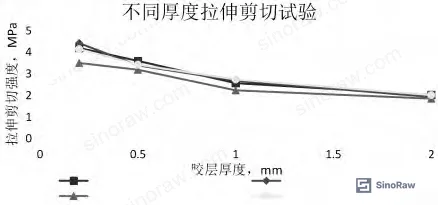
Figure 1: Two-component RTV silicone sealant test materials — carbon fiber composite, aluminum alloy 2024T-3, and PMMA substrates prepared for shear specimen assembly

Two-Component RTV Silicone Sealant Performance Across Substrate Combinations #

Bondline geometry is the first variable most buyers underestimate. Test specimens were prepared per GB/T 7124—2008 (tensile shear strength of adhesives), with adhesive layer thicknesses of 0.2, 0.5, 1.0, and 2.0 mm. Substrate thickness was held at 2.0 ± 0.05 mm throughout. All specimens were cured under standard conditions (23 ± 2 °C, 50 ± 5% RH) for a minimum of 7 days before any mechanical testing.

Honestly, most buyers over-specify adhesive layer thickness assuming more material means more strength. The data shows the opposite. Across all four substrate combinations, tensile shear strength is negatively correlated with bondline thickness throughout the tested range. A thicker bondline shifts internal stress away from the centerline, generating peel forces at the interface — and it accumulates more internal voids, both of which drive cohesive strength down. Keep your bondline tight.
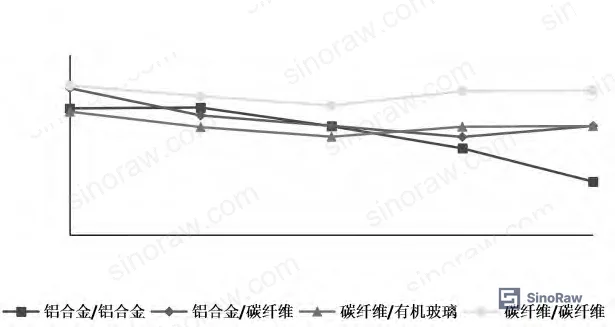
Figure 2: Shear test specimen geometry showing adhesive layer thickness, substrate width, and overlap length per GB/T 7124-2008

Under standard conditions, all four substrate pairings failed cohesively — meaning the sealant body fractured before the substrate interface separated. That’s the result you want to see, and it confirms baseline compatibility across all tested materials.

Aging Performance Comparison Table #

Aging Condition Test Standard Duration Most Affected Substrate Strength Retention (worst case) Failure Mode
Salt Spray GJB 150.11A—2009 960 h Aluminum alloy/aluminum alloy 42% Interfacial (adhesive) failure
Damp Heat (60 °C / 95% RH) GJB 150.9A—2009 960 h Carbon fiber/PMMA, CF/CF, Al/CF 68–69% Cohesive failure retained
High Temperature (70 °C) GJB 150.3A—2009 1,000 h Aluminum alloy/aluminum alloy ~72–73% Cohesive failure retained
Figure 3: Tensile shear strength results under standard conditions across all four substrate combinations and bondline thicknesses

The ranking of aging severity — damp heat > salt spray > high temperature, when no interfacial failure occurs — is a direct result of moisture participation. Water at elevated humidity simultaneously drives additional crosslinking and hydrolytic chain scission in the silicone network. At 60 °C and 95% RH, the degradation reaction outpaces the crosslinking, and net strength falls. High temperature alone (dry, 70 °C) produces comparatively minor and often reversible property shifts.


Salt Spray Aging and Substrate-Dependent Bonding Failure in Industrial Sealing #

This is where the qualification data gets procurement-relevant fast.

After 960 hours of salt spray aging per GJB 150.11A, tensile shear strength retention across the four pairings broke down as follows:

  • Aluminum alloy / aluminum alloy: 42% retention — significant interfacial failure
  • Aluminum alloy / carbon fiber: 67% retention — partial interfacial failure
  • Carbon fiber / PMMA: 80% retention — cohesive failure maintained
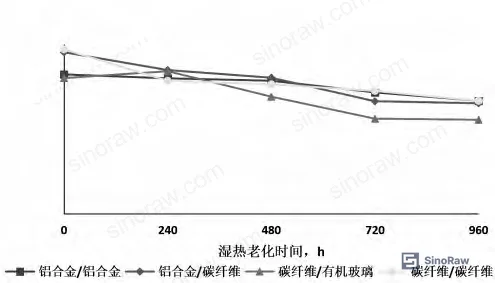
  • Carbon fiber / carbon fiber: 97% retention — cohesive failure maintained
Figure 4: Tensile shear strength vs. salt spray aging time (0–960 h) for all four substrate combinations, showing divergence onset at 480 h

The aluminum-containing assemblies started showing measurable interfacial failure at 480 hours. By 720 hours, adhesive failure area on the aluminum/aluminum specimens had reached 25%, climbing to 45% at 960 hours. The aluminum/carbon fiber pairing showed 15% interfacial failure area at 960 hours.

In supplier qualification, we saw the same failure pattern repeat across multiple sample sets: the sealant itself remained intact, but the aluminum oxide passive layer was penetrated by chloride ions, corroding the alloy surface beneath the bondline. Once the substrate corrodes, the interface fails regardless of the sealant’s bulk properties. The fix is not a better sealant — it’s anodizing or other surface pretreatment on the aluminum before bonding.

Carbon fiber substrates showed no interfacial failure under any aging condition tested. The sealant bonds well to the CFRP surface and the interface is not susceptible to the same electrochemical attack as aluminum.
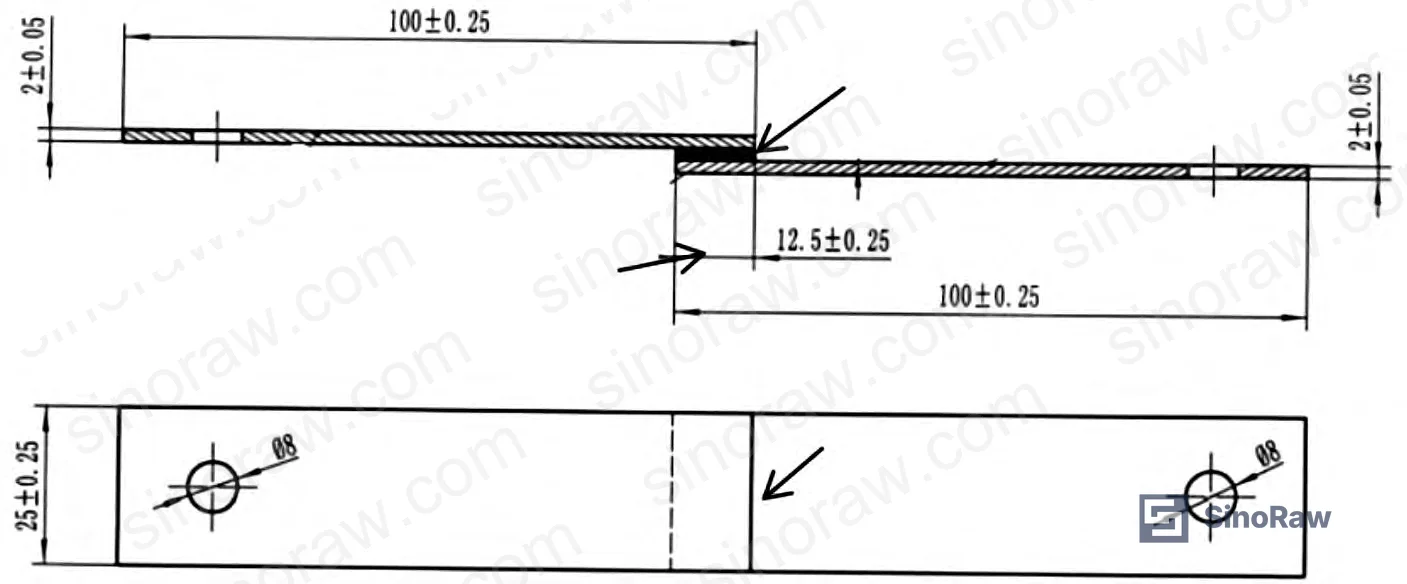
Figure 5: Shear test specimen preparation setup per GB/T 7124-2008, showing parallel substrate alignment and adhesive application method

Damp Heat and High-Temperature Aging: Mechanical Property Retention Data #

Most procurement teams don’t realize that damp heat aging — not high-temperature exposure — is typically the governing degradation mechanism for silicone sealants in real service. Dry heat at 70 °C for 1,000 hours produced only modest property changes across all substrate combinations:

  • Aluminum/aluminum: strength variation of 8.3% to 27.2%
  • Aluminum/carbon fiber: 9.2% to 9.8% variation
  • Carbon fiber/PMMA: 3.1% to 15.1% variation
  • Carbon fiber/carbon fiber: -9.3% to +8.9% (slight increase at some intervals, then stabilization)

All high-temperature specimens retained cohesive failure mode through 1,000 hours at 70 °C. The sealant’s Si–O–Si backbone gives it genuine thermal stability that organic polymer sealants simply can’t match at this exposure duration.

Damp heat (60 °C / 95% RH) is a different story. At 960 hours, strength retention was:

  • Aluminum/aluminum: 81.1% — still cohesive failure, best performer under damp heat
  • Aluminum/carbon fiber: 68.4% — cohesive failure
  • Carbon fiber/PMMA: 69.3% — cohesive failure
  • Carbon fiber/carbon fiber: 68.7% — cohesive failure, strength retention 73.5% at peak aging
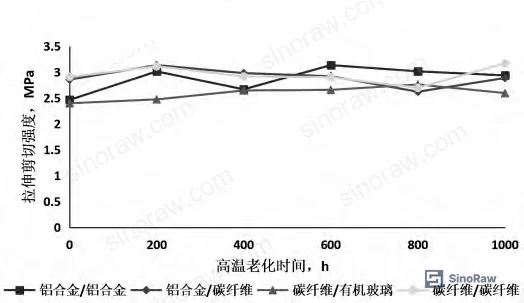
Figure 6: Shear strength vs. aging time for carbon fiber/PMMA substrate combination under salt spray, high temperature, and damp heat conditions

The degradation mechanism under damp heat is dual-pathway: moisture promotes additional crosslink formation initially, but sustained high humidity drives hydrolysis of the siloxane network. The net effect at 960 hours is a 19–32% strength reduction depending on substrate pairing. Critically, all tested specimens maintained cohesive failure — the adhesion to every substrate remained intact. That’s a meaningful distinction for structural sealing applications: the material is weakening uniformly, not delaminating.

For applications governed by ISO 11431 (weathering and adhesion of sealants) or ASTM C793 (effects of laboratory accelerated weathering), the damp heat threshold is the design-limiting condition. Spec it accordingly.

Internal crosslinks to support your sourcing process: Silicone & RTV Sealant category | Structural UV Adhesives category


Practical Guidance for Buyers #

If you’re sourcing two-component RTV silicone sealants for mixed-substrate assemblies — particularly anything combining aluminum alloy with composite structures — the aging environment must drive your qualification test matrix, not just your application temperature.

For salt spray environments, do not rely on sealant performance alone to protect aluminum bondlines. Specify anodized or chemically conversion-coated aluminum substrates as a procurement requirement. The sealant will outlast the substrate surface if you don’t. Request supplier qualification data at minimum 720-hour salt spray exposure with interfacial failure area reported, not just bulk shear strength.

For damp heat environments (tropical enclosures, marine interiors, HVAC-adjacent assemblies), specify shear strength retention ≥ 65% at 960 hours under 60 °C / 95% RH as a minimum acceptance threshold. Carbon fiber and PMMA bondlines hold cohesive failure well past this point.

Keep your bondline between 0.2 and 0.5 mm wherever geometry allows. Thicker bondlines don’t improve load transfer — they reduce it and introduce void defect risk.

At sinoraw.com, we work directly with verified Chinese manufacturers of two-component silicone sealants and help overseas procurement engineers structure their technical requirements before issuing RFQs to Chinese suppliers. If you’re qualifying a new sealant source for aerospace, rail, or industrial enclosure applications, we can help you benchmark supplier test data against the acceptance criteria outlined here. Request a sourcing consultation.


Frequently Asked Questions #

Q: What is the minimum cure time before aging or mechanical testing of two-component RTV silicone sealants?

All test specimens in this evaluation were cured at standard conditions (23 ± 2 °C, 50 ± 5% RH) for a minimum of 7 days before any aging exposure or mechanical testing. Many buyers test at 3–4 days and wonder why results are inconsistent. Seven days is the floor for two-component silicone systems; some high-crosslink-density formulations benefit from 10–14 days full cure before qualification testing.

Q: Why does salt spray aging affect aluminum-bonded joints so much more severely than carbon fiber joints?

The mechanism is electrochemical, not chemical adhesion failure. Chloride ions from the salt solution penetrate aluminum’s passive oxide layer and attack the alloy surface beneath the bondline. The sealant-to-aluminum interface breaks down as the substrate corrodes, not because the sealant lost adhesion. Carbon fiber substrates don’t undergo this electrochemical attack, which is why CF/CF specimens retained 97% shear strength at 960 hours while Al/Al dropped to 42%.

Q: Should I always minimize adhesive layer thickness for maximum shear strength?

Yes, within the range tested (0.2–2.0 mm), thinner is stronger. The negative correlation between bondline thickness and tensile shear strength is consistent across all substrate combinations. However, practical joint design also needs to account for gap tolerance, thermal expansion differential, and assembly process control. A 0.2 mm bondline is mechanically optimal but may be difficult to hold in production. Balance mechanical performance against manufacturing capability.

Q: Which aging condition should govern my qualification test specification?

Damp heat. When no interfacial failure occurs, damp heat at 60 °C / 95% RH produces the greatest strength reduction — consistently worse than dry heat at 70 °C or salt spray on non-aluminum substrates. If your application sees any combination of elevated temperature and humidity, damp heat aging per GJB 150.9A or equivalent ISO 9142 conditioning should be your primary qualification driver.

Q: Can this sealant be used to bond PMMA (acrylic/organic glass) without damaging the substrate?

Yes. Post-cure and after all three aging regimes (salt spray 960 h, high temperature 1,000 h at 70 °C, damp heat 960 h at 60 °C/95% RH), the carbon fiber/PMMA specimens all showed cohesive failure with no visible effect on the PMMA substrate surface or bulk properties. The sealant is compatible with PMMA and does not cause stress cracking or surface degradation under the tested conditions.


Published by sinoraw.com Technical Team | Request a sourcing quote

Content reviewed by michael.fang | © sinoraw.com — All rights reserved. Unauthorized reproduction prohibited.

Source: https://sinoraw.com/docs/rtv-silicone-sealant-aging-performance-substrate-compatibility/
© 2026 sinoraw.com. All rights reserved. Unauthorized reproduction or distribution is prohibited.
更新 2026年6月20日

您的感觉是什么

  • Happy
  • 常规
  • Sad

分享这篇文章 :

  • Facebook
  • X
  • LinkedIn
  • Pinterest
Composite-Modified RTV Silicone Sealant: Curing Parameters, Modification Routes, and Supplier Qualification GuideRTV Silicone Sealant for Prefabricated Building Joints: Durability Mechanisms and Supplier Qualification Guide

发表回复取消回复

您的邮箱地址不会被公开。 必填项已用 * 标注

内容目录
  • TL;DR
  • Two-Component RTV Silicone Sealant Performance Across Substrate Combinations
    • Aging Performance Comparison Table
  • Salt Spray Aging and Substrate-Dependent Bonding Failure in Industrial Sealing
  • Damp Heat and High-Temperature Aging: Mechanical Property Retention Data
  • Practical Guidance for Buyers
  • Frequently Asked Questions
Sinoraw · Industrial Raw Material & MRO Sourcing Intelligence
Knowledge BaseAboutContactPrivacy Policy
© 2007 - 2026 Sinoraw. All rights reserved.