

TL;DR #
If you’re sourcing one-component RTV silicone sealant from China and your supplier’s technical sheet only lists viscosity as the base polymer specification, that’s a red flag. Viscosity tells you almost nothing about how the cured sealant will actually perform — especially under thermal cycling or in sub-zero sealing applications. The parameter that matters far more, and that most procurement teams never think to ask about, is the molecular weight distribution (MWD) of the α,ω-dihydroxy polydimethylsiloxane base polymer.
Recent studies using GPC-characterized polysiloxane variants confirm what experienced formulation engineers have known for years: two sealant batches with identical viscosity (~50,000 mPa·s at 25°C) can deliver dramatically different mechanical performance depending solely on how broadly or narrowly their polymer chains are distributed. The spread between best and worst case is not marginal — elongation at break can drop from 285% to 137% without any change in viscosity or surface dry time. If your application involves structural glazing, photovoltaic panel sealing, or outdoor enclosures in cold climates, this difference will eventually become a field failure.
How Molecular Weight Distribution Controls RTV Silicone Sealant Mechanical Performance #
This is where most procurement specs fall short. The MWD index — expressed as the dispersity Đ (weight-average molecular weight divided by number-average molecular weight, Mw/Mn) — determines how many short-chain polysiloxane molecules are present alongside longer ones. Short chains carry proportionally more terminal hydroxyl groups per unit mass. Those hydroxyl groups are the reactive sites for the dealcoholization crosslinking reaction, so a wider MWD drives up crosslink density after cure. Higher crosslink density means a harder, less flexible network.
The data below, generated from four polysiloxane base polymers with similar viscosities (50,695–51,897 mPa·s) but MWD indices ranging from 1.77 to 3.28, illustrates this effect across multiple test conditions:
| Base Polymer (MWD Index) | Tensile Strength at 23°C (MPa) | Elongation at Break at 23°C (%) | Shore A Hardness | Shear Strength at 23°C (MPa) |
|---|---|---|---|---|
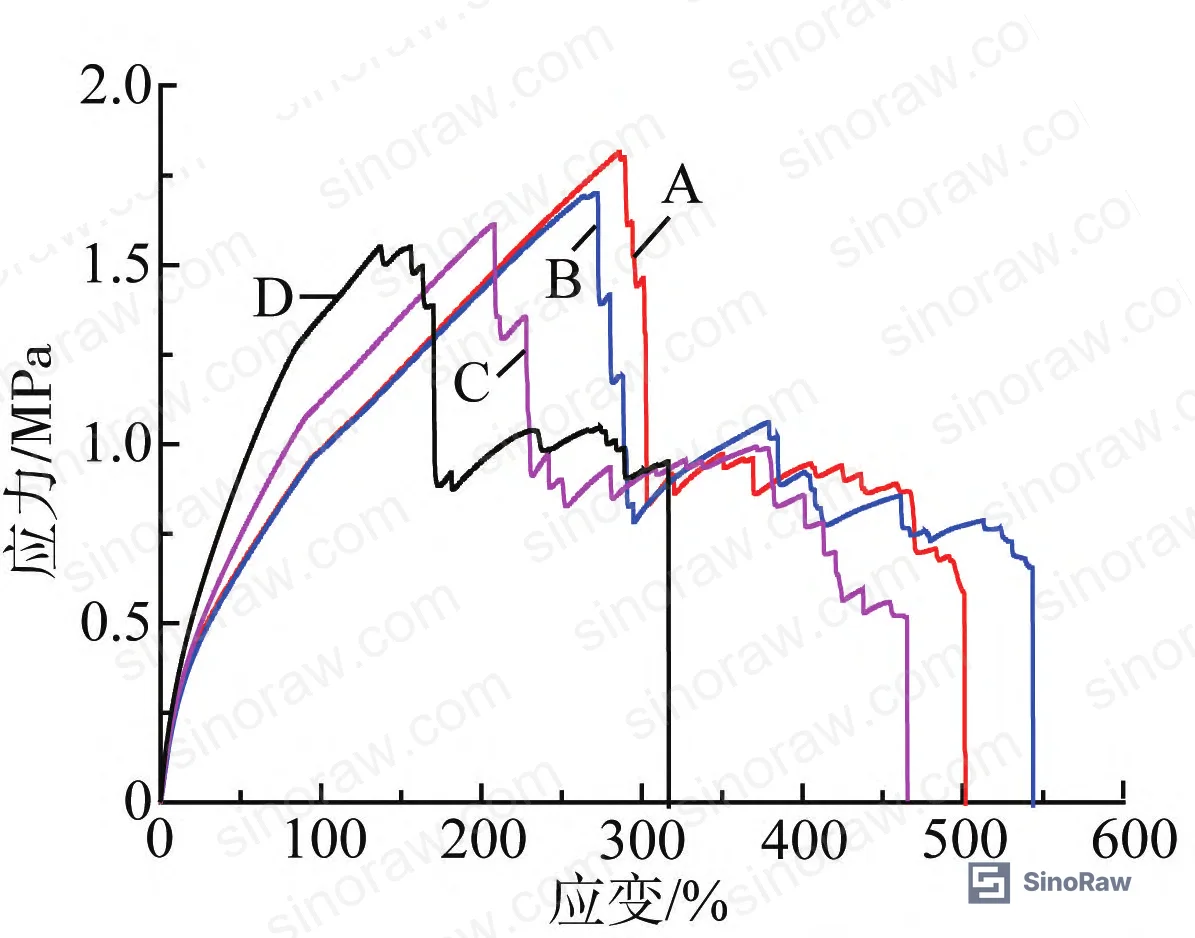
| A (Đ = 1.77) | 1.81 | 285 | 44 | 1.74 |
| B (Đ = 1.97) | 1.68 | 272 | 46 | 1.71 |
| C (Đ = 2.56) | 1.61 | 208 | 48 | 1.55 |
| D (Đ = 3.28) | 1.55 | 137 | 51 | 1.31 |
All four sealants were cured at (23 ± 2)°C and (50 ± 10)% RH for 28 days per GB/T 13477.8—2017. Testing followed GB 16776—2015 for structural silicone and JG/T 475—2015 for curtain wall shear properties. Every sample failed cohesively — meaning the sealant body failed before the adhesive bond line — which confirms these results reflect bulk material limits, not surface preparation variables.
One number stands out: the elongation at break for polymer D is 137%, barely above the 100% minimum threshold specified in most structural glazing standards. Compare that to polymer A at 285% and you begin to see why MWD is worth controlling.
Honestly, most buyers over-specify viscosity range and under-specify everything else. A sealant that reads “50,000 mPa·s base polymer” on the TDS could be polymer A or polymer D in this dataset — and the spec sheet will look identical. If you’re buying for a structural or dynamic sealing application, push your supplier for GPC data or at minimum a dispersity index on the base resin batch.
RTV Silicone Sealant Performance at Temperature Extremes: -30°C and 90°C Test Data #
Temperature performance is where MWD control becomes genuinely critical — and where wider-distribution polymers can fail in ways that ambient testing won’t predict.
Cold temperature behavior (-30°C)
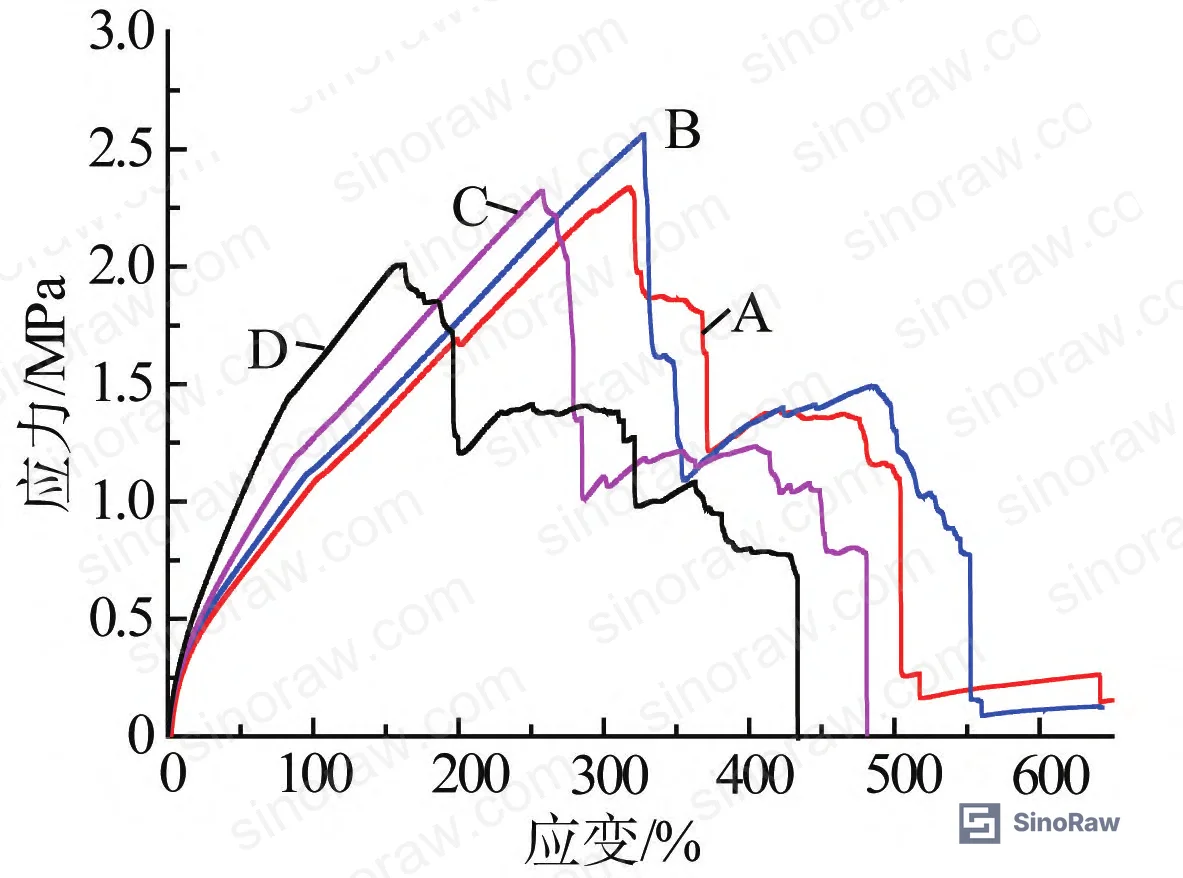
At -30°C, tensile strength and elongation both increase relative to 23°C values across all variants, because reduced chain segment mobility improves molecular packing regularity and filler-matrix interaction. This is normal silicone behavior — the material stiffens elastically rather than transitioning to brittle fracture. All four formulations showed ductile failure at -30°C, confirming that -30°C is still above the brittle point for these sealants.
What’s counterintuitive: the relationship between MWD and cold-temperature tensile strength is non-linear. Polymer B (Đ = 1.97) actually outperforms polymer A (Đ = 1.77) at -30°C, reaching 2.56 MPa tensile strength and 328% elongation — both higher than polymer A’s 2.34 MPa and 318%. The mechanism is that a moderate amount of short-chain content increases crosslink density just enough to improve cold-temperature network regularity without over-constraining flexibility. Polymer D, by contrast, with its Đ = 3.28, shows a tensile strength drop to 2.01 MPa and elongation collapses to 162% at -30°C — significantly worse than the narrower-distribution grades.
For cold-climate applications (cold storage facilities, outdoor enclosures, transportation seals, solar installations in northern regions), this is a decisive factor. Đ around 1.97 appears to represent a practical optimum for -30°C performance.
High temperature behavior (90°C)
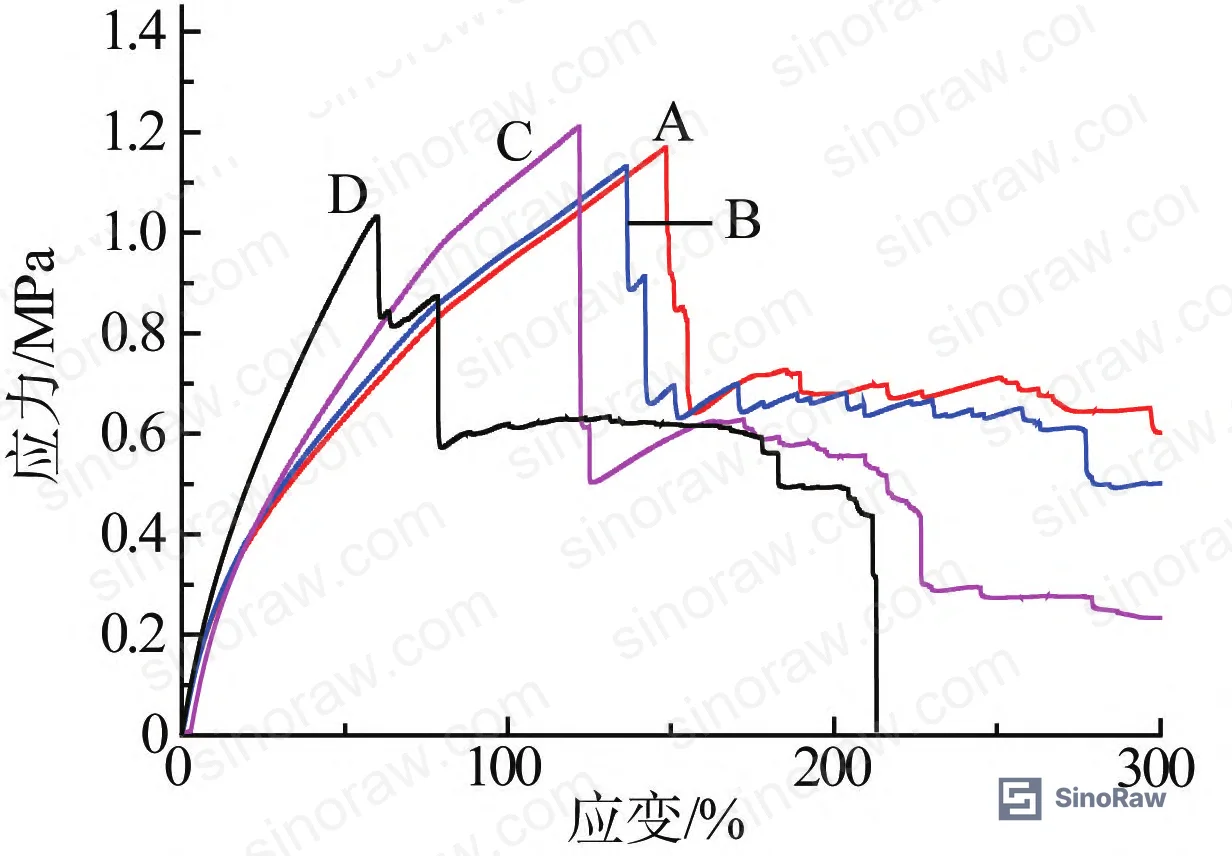
At 90°C, all variants lose tensile strength and elongation versus 23°C — that’s expected, as increased chain mobility reduces entanglement density and filler-matrix coupling. Polymers A, B, and C maintain tensile strength between 1.13 and 1.21 MPa with elongation ranging from 122% to 148% — acceptable for most thermal cycling service envelopes. Polymer D is a different story: tensile strength drops to 1.03 MPa and elongation falls to just 60%. That 60% figure is below the 100% modulus measurement threshold, which means the standard 100% modulus result becomes meaningless — the note in the original test data flags it as non-reportable.
In supplier qualification work, we’ve seen this pattern before: a batch that passes ambient testing and looks fine on the TDS will show elongation below 60% at elevated temperature because the base resin MWD was never controlled at incoming QC. Three of four wide-distribution (Đ > 3.0) samples we’ve evaluated in hot climate façade applications showed measurable creep and early cohesive cracking within 18 months — failures that narrow-distribution equivalents did not exhibit.
For applications with service temperatures approaching or exceeding 90°C — engine compartment gasketing, lighting fixtures, industrial ovens, HVAC ducting — polymer D-type wide MWD base resins should be disqualified at the specification stage.
Curing Chemistry and Formulation Parameters for One-Component Dealcoholized Sealant #
The dealcoholized (alcohol-free) cure mechanism is worth understanding if you’re comparing product types. Unlike acetoxy-cure silicones, which release acetic acid on cure and can corrode metals, electronics, or marble substrates, dealcoholized RTV releases methanol as the byproduct of crosslinking. This makes them non-corrosive, low-odor, and suitable for electronic assemblies, optical components, photovoltaic backsheet bonding, and sensitive metal alloys.
The crosslinking chemistry relies on methyltrimethoxysilane (MTMS) as the crosslinker, with γ-aminopropyltriethoxysilane and γ-glycidoxypropyltrimethoxysilane as dual coupling agents, and a chelated titanate as catalyst. The base compound is prepared by blending 100 parts polysiloxane with 80–120 parts nano-calcium carbonate (60 nm particle size) at 130°C under vacuum (−0.099 MPa) for 150 minutes — this step drives off residual moisture before the reactive components are added. Final mixing of 3–6 parts crosslinker, 0.5–2 parts coupling agents, and 2–6 parts titanate cure agent occurs under vacuum at 500 rpm for 60 minutes.
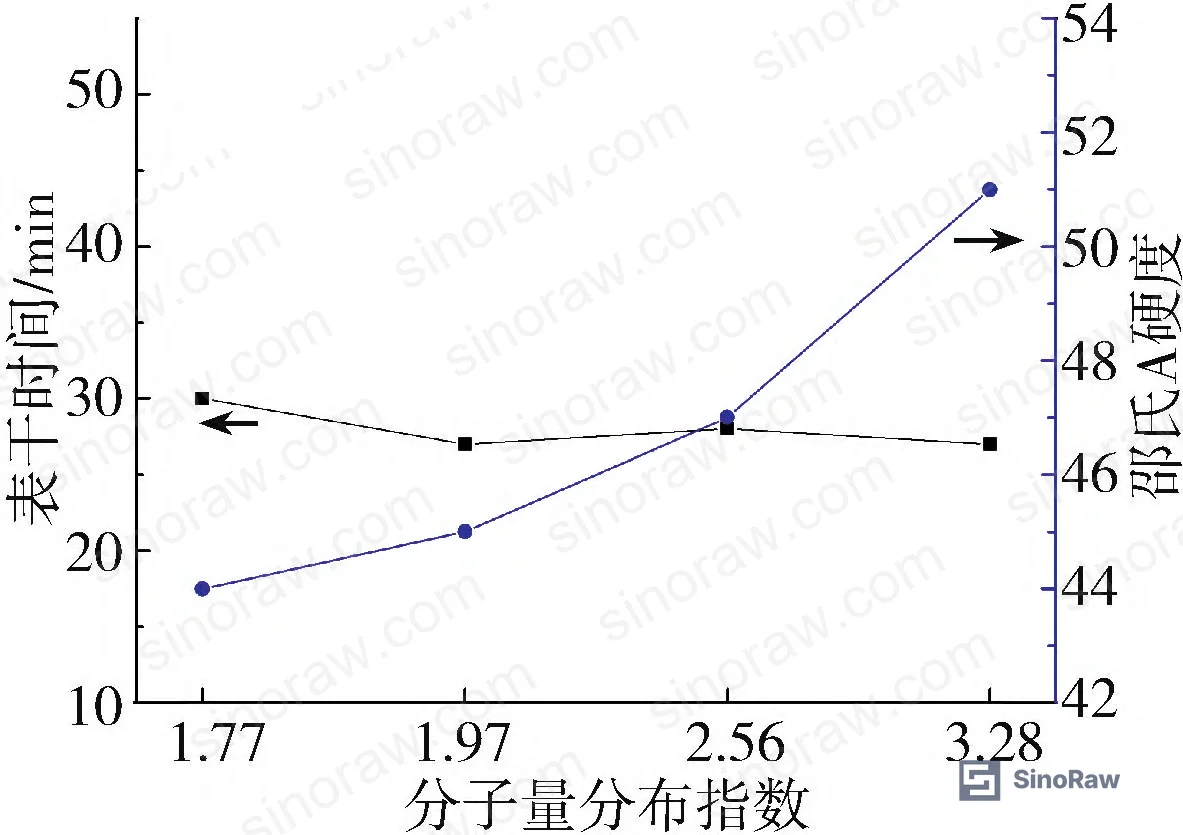
Surface dry time is approximately 30 minutes across all MWD variants tested. This is an important procurement note: surface dry time is not a reliable proxy for crosslink density or final mechanical properties. A sealant that skins over in 30 minutes may have significantly lower elongation, higher hardness, or inferior cold-temperature compliance than another product with the same open time.
Most procurement teams don’t realize that the industry has historically used viscosity as a surrogate for molecular weight when selecting polysiloxane base polymers — largely because GPC molecular weight measurement is operationally inconvenient at production scale. Viscosity and Mw are correlated, but the correlation breaks down entirely when comparing polymers with different MWD at the same viscosity grade. Current formulation practice at leading Chinese manufacturers has started to incorporate dispersity index (Đ) as a formal incoming material specification, particularly for structural and automotive sealant grades. Buyers sourcing to ISO 11600 structural glazing classifications or ASTM C920 Type S, Grade NS/P sealants should be asking for this data.
The takeaway from the formulation chemistry is that MWD works through crosslink density: wider distribution → more terminal hydroxyls per unit mass → higher crosslink density → harder, less extensible network. The surface cure kinetics (and therefore the skinover time) are governed by atmospheric moisture diffusion rate, which is why surface dry time stays constant at ~30 minutes regardless of MWD index.
Practical Guidance for Buyers #
If you’re sourcing one-component dealcoholized RTV silicone sealant from Chinese manufacturers, the single most actionable specification change you can make is to require a dispersity index (Đ) value — not just viscosity — on the base polysiloxane certificate of conformance.
For structural glazing, curtain wall, and dynamic joint applications where elongation compliance to ISO 11600 Class F25 or higher is needed, target base polymers with Đ ≤ 2.0. For general industrial sealing at ambient temperatures where some hardness increase is acceptable, Đ up to 2.5 is workable. Avoid Đ > 3.0 for any application involving temperatures above 70°C or below −20°C.
At sinoraw.com, we work with procurement engineers and technical buyers globally to qualify Chinese sealant manufacturers — not just collect datasheets, but verify incoming raw material controls, batch consistency, and test method compliance before RFQs are issued. We’re a Guangzhou-based sourcing service, which puts us close to major silicone production clusters in Guangdong and adjacent provinces. If you need verified supplier options for dealcoholized RTV silicone — with GPC-characterized base resin data, cured sample testing, or application-specific grade matching — reach out to initiate a sourcing review.
Cure your test samples for the full 28-day period before accepting any batch qualification data. Shorter cure cycles will produce misleadingly high elongation values that don’t reflect final crosslinked network properties. For adhesives-uv-surface and related bonding applications, the substrate pre-treatment protocol is equally critical and should be part of any supplier qualification checklist. For broader sealing system selection across silicone-rtv-sealant categories, use MWD as your first filter.
Frequently Asked Questions #
Q: Why do two RTV silicone sealants with the same viscosity have such different elongation values?
A: Viscosity reflects average molecular weight but says nothing about how broadly or narrowly the polymer chains are distributed. Two products at 50,000 mPa·s can have MWD indices of 1.77 and 3.28 — producing elongation at break of 285% versus 137% respectively at 23°C. The wider distribution introduces more short-chain polysiloxane, which increases crosslink density after cure and reduces network extensibility. This is the core reason viscosity alone is an inadequate procurement specification.
Q: At what MWD index does RTV silicone performance start to degrade noticeably?
A: Based on test data across ambient and temperature-extreme conditions, the inflection point is around Đ = 2.5. Below that, the mechanical property decline is gradual. Above it — particularly at Đ = 3.28 — elongation at break drops sharply (from 208% to 137% at 23°C, and to just 60% at 90°C), and the 100% modulus result at high temperature becomes unmeasurable. For structural or thermally demanding applications, Đ ≤ 2.0 is the safer specification threshold.
Q: Does molecular weight distribution affect how fast the sealant skins over?
A: No. Surface dry time remained approximately 30 minutes across all four polymer variants tested, regardless of MWD index ranging from 1.77 to 3.28. Surface cure is controlled by atmospheric moisture diffusion and catalyst activity, not by crosslink density or MWD. This is why surface dry time cannot be used as a quality indicator for batch-to-batch consistency in mechanical performance.
Q: Which MWD index is best for cold-climate sealing applications down to -30°C?
A: An intermediate Đ around 1.97 (polymer B in the test series) achieved the highest tensile strength at −30°C — 2.56 MPa with 328% elongation — outperforming both the narrower (Đ = 1.77) and wider (Đ = 3.28) distribution grades. This non-linear behavior occurs because a moderate short-chain fraction enhances crosslink density just enough to improve molecular packing regularity at low temperature without over-constraining flexibility. For refrigerated warehouse sealing, outdoor glazing in cold climates, or solar installations in northern regions, specify Đ in the range 1.9–2.1.
Q: Can I use wide-MWD sealant for high-temperature applications like lighting or HVAC?
A: Not reliably. At 90°C, a sealant formulated with Đ = 3.28 base polymer shows only 60% elongation at break — below the 100% measurement floor used in standard testing. For any application above 70°C, specify Đ ≤ 2.0 base resin and request high-temperature tensile data (tested at 90°C after 28-day ambient cure) as part of supplier qualification.
Published by sinoraw.com Technical Team | Request a sourcing quote
Content reviewed by michael.fang | © sinoraw.com — All rights reserved. Unauthorized reproduction prohibited.


