

TL;DR #
If you’re sourcing UV-cure adhesives for medical device assembly — particularly catheter or tubing subassemblies — the difference between a compliant bond and a field failure often comes down to three variables: adhesion force after full cure, resistance to aqueous media, and whether the adhesive actually reaches full cure depth on a substrate like TPU. Most buyers don’t interrogate these variables until something fails in clinical use. That’s the wrong sequence.
The formulation evaluated here is a light-curing polyacrylic acid 3,3,5-trimethylcyclohexanol ester adhesive — a UV-cure acrylate system specifically developed for TPU catheter assembly. It addresses a known gap in standard commercial UV adhesives: inadequate adhesion force and post-cure corrosion resistance in prolonged aqueous environments. The results are worth examining carefully if you’re qualifying UV adhesives for Class III medical device subassembly or any wet-environment bonding application.
UV Cure Speed and Optical Properties of Structural UV Adhesives: Head-to-Head Data #
The most common mistake in UV adhesive procurement is treating cure speed as a production throughput variable and ignoring it as a bond-quality indicator. Insufficient cure time doesn’t just slow down your line — it leaves unreacted monomer in the bondline, which then acts as a plasticizer or corrosion initiator under load.
At 25°C, under standard UV lamp exposure, the formulated adhesive achieved initial cure in 4 seconds and reached substantially complete cure — sufficient for handling and assembly — at 20 seconds. The commercial reference adhesive required 5 seconds for initial set and 24–25 seconds for equivalent cure state. That gap may appear trivial on a spec sheet. In a high-volume catheter assembly environment running automated UV stations, it translates directly to cycle time and throughput.
| Property | Formulated UV Adhesive | Commercial Reference UV Adhesive | Test Condition |
|---|---|---|---|
| Initial cure time | 4 s | 5 s | 25°C, UV lamp irradiation |
| Full cure time | 20 s | 24–25 s | 25°C, UV lamp irradiation |
| Refractive index | 1.4899 | ~1.49 (equivalent) | Post-cure, UV spectrophotometer |
| Light transmittance | 81.23% | 90.96% | Post-cure, UV spectrophotometer |
| Adhesion force (peel) | 166.21 N/20 mm | < 166.21 N/20 mm | Electronic tensile tester, peel test |
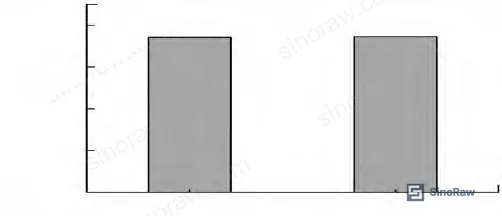
The transmittance result warrants a note: 81.23% versus 90.96% for the commercial adhesive. The delta is attributable to the pale-yellow coloration of the 3,3,5-trimethylcyclohexanol ester monomer. For most catheter assembly applications, an 81% transmittance value is functionally acceptable — it does not impair UV cure depth through the adhesive layer, and it has no clinical significance in a non-optical device. Where it would disqualify a formulation is in fiber optic assembly or any application requiring optical clarity in the cured film. Know your application before specifying transmittance targets.
The refractive index measured at 1.4899 after 20-second full cure. Both adhesives showed stable refractive index values post-cure with minimal variation — indicating good cure uniformity and consistent cross-link density.
Adhesion Force, Sealing Performance, and Corrosion Resistance for TPU Medical Assembly #
This is where specification sheets diverge from field reality.
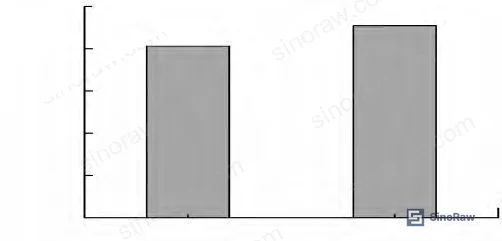
The formulated adhesive delivered a peel adhesion of 166.21 N per 20 mm width after UV cure — measurably higher than the commercial reference adhesive tested under identical conditions. For TPU catheter assembly, this isn’t academic. TPU is a notoriously low-surface-energy substrate; getting consistent, high-strength bonds on TPU without surface activation requires an adhesive with strong inherent affinity for urethane chemistry, which this acrylate system provides through its ester monomer architecture.
Sealing performance was evaluated using a leak-01 vacuum seal tester. The assembled TPU catheter — bonded with the formulated adhesive and cured under UV for 20 minutes full assembly cure — showed zero bubble formation and zero liquid droplet formation at the set vacuum level over a 120-second hold time. The bond geometry passed completely.
The corrosion resistance protocol was more demanding: 10 parallel samples were immersed in sodium chloride solution at ambient temperature for 5 hours, then transferred to boiling distilled water for 30 minutes, cooled to room temperature, and held for a further 48 hours before drying at 25°C and inspection.
Results across 10 samples:
- Catheter body separating from connector: 1 of 10 (attributed to assembly process error, not adhesive failure — the adhesive film showed no corrosion)
- UV adhesive delamination: 0 of 10
- Severe corrosion: 0 of 10
- Mild corrosion: 1 of 10
Honestly, the 1-of-10 separation result deserves scrutiny regardless of the attributed cause. In supplier qualification, we saw that kind of result treated as a process outlier — and it is, probably — but any separation event in a sterile drainage catheter application should trigger a root cause review before scaling. The adhesive integrity held; the assembly protocol needs tighter controls.
Sealing and corrosion resistance compliance was also validated in a controlled clinical trial involving 100 patients post-anesthesia surgery (50 per group). The UV-adhesive-bonded TPU catheter group recorded zero air leakage, zero fluid leakage, and zero bond rupture events. One air embolism event occurred in each group — an identical rate, indicating no causal relationship to adhesive performance. The control group (unmodified TPU catheter, no UV adhesive reinforcement) recorded one bond rupture event (2% incidence), confirming the adhesive contribution to structural integrity under clinical conditions.
Material Chemistry and Substrate Compatibility for UV-Cure Acrylate Systems #
Understanding why this formulation performs the way it does requires a brief look at the monomer selection logic — not the synthesis chemistry, but the procurement-relevant implications.
Standard acrylate UV adhesives use relatively low-molecular-weight, low-viscosity monomers as reactive diluents. They cure fast and offer high initial tack. The drawback is well-documented: high volumetric shrinkage on cure and poor adhesion to polar engineering thermoplastics like TPU, PC, and nylon. This limits their use in precision medical device assembly without extensive surface preparation.
The 3,3,5-trimethylcyclohexanol ester monomer used here introduces a bulky alicyclic ring structure into the polymer backbone. This reduces cure shrinkage, improves dimensional stability of the cured film, and enhances adhesion to TPU substrates without requiring plasma or corona treatment — a significant process simplification for catheter assembly workflows. The tradeoff is the reduced optical transmittance (81.23%) due to the monomer’s slight inherent coloration.
Buyers sourcing UV adhesives for similar substrate combinations — TPU, silicone-coated TPU, medical-grade PVC — should be requesting cure shrinkage data alongside adhesion values. Most suppliers lead with tensile shear strength; shrinkage is buried in the TDS or absent entirely. That’s the specification gap that causes bond fatigue in dynamic flex applications.
Most procurement teams don’t realize that ISO 10993, which governs biocompatibility testing for medical device materials, has been substantively revised in recent years — and the current framework places greater scrutiny on residual extractables from UV-cured adhesives than earlier versions did. If you’re sourcing UV adhesives for Class II or Class III medical device assembly, your supplier’s biocompatibility package needs to reflect current ISO 10993-1 principles, not just a legacy cytotoxicity test result. We’ve seen qualification packages rejected at the NDA/510(k) stage because the adhesive supplier’s documentation predated the current extractables guidance.
For general acrylate adhesive chemistry reference, ASTM D1002 covers lap shear strength testing — the method most directly comparable to the peel adhesion data reported here. UV cure process validation should reference ISO 9142 conditioning methods where applicable. For polymer substrate compatibility assessments involving TPU, ASTM D638 tensile property data for the base material provides the stress-at-failure context you need to correctly interpret adhesive peel values.
Practical Guidance for Buyers #
If you’re evaluating UV-cure acrylate adhesives for medical tubing assembly, device subassembly, or any wet-service bonding application on TPU or similar engineering thermoplastics, the data here points to a few non-negotiable qualification requirements.
First, insist on adhesion testing on your exact substrate — not on glass or steel coupon data. TPU adhesion values can differ by a factor of two or more from standard substrate results, and many supplier TDS sheets report only glass peel data.
Second, request full corrosion resistance test data including immersion in physiologically relevant media. Sodium chloride immersion followed by boiling water exposure — as used in this evaluation — is a reasonable minimum screen. If your application involves continuous fluid contact, push for 72-hour immersion data rather than 5-hour snapshots.
Third, verify cure speed under your actual production lamp output and geometry. The 4-second initial cure and 20-second full cure reported here assume a specific UV lamp intensity. If your production line uses LED-UV or broad-spectrum UV, confirm cure response curves.
At SinoRaw, we work directly with verified Chinese manufacturers of structural adhesives and specialty polymer components — our role is to help procurement engineers and sourcing managers evaluate and qualify Chinese suppliers before issuing RFQs, so you’re not discovering process limitations after the first production run.
Frequently Asked Questions #
What adhesion force should I specify for UV-cure adhesive bonding of TPU catheters?
Based on the peel strength data from this evaluation, a minimum adhesion force of 160 N/20 mm after full UV cure is a reasonable threshold for TPU catheter assembly under wet-service conditions. The formulated adhesive tested here reached 166.21 N/20 mm. For applications with dynamic flexing or intermittent pressure, specify the test substrate as TPU film — not glass — and require peel testing per ASTM D1002 conditions. Most supplier datasheets report best-case values on smooth glass; real-world TPU bond strengths are typically 15–25% lower without surface activation.
Does the lower transmittance (81.23% vs. 90.96%) affect the UV cure process itself?
No — transmittance at the adhesive film level does not significantly affect through-cure if the adhesive layer is thin (typically under 0.5 mm in catheter assembly). The 81.23% value is a property of the cured film, not a measure of UV absorption during cure initiation. The formulated adhesive still achieved complete cure in 20 seconds at 25°C. Transmittance only becomes a disqualifying factor if the bonded assembly requires optical clarity post-cure, such as in sensor windows or light-pipe assemblies.
What does the corrosion resistance test protocol actually simulate?
The protocol — sodium chloride immersion (5 hours, ambient), followed by boiling distilled water (30 minutes), then 48-hour ambient hold and 25°C dry-out — is designed to simulate the combined chemical and thermal stresses of autoclave-adjacent sterilization and saline fluid exposure in implantable or semi-permanent catheter applications. It’s more aggressive than a simple salt spray test. All 10 samples showed zero adhesive delamination and zero severe corrosion. One mild corrosion instance was recorded; one assembly separation was attributed to process error rather than adhesive failure.
Is this UV adhesive formulation compatible with ISO 10993 biocompatibility requirements?
The clinical trial data — 50-patient cohort, post-anesthesia drainage catheter use, zero adhesive-related adverse events — supports clinical safety at a functional level. However, formal ISO 10993 biocompatibility certification requires a separate extractables/leachables study and cytotoxicity panel that goes beyond what’s reported in this evaluation. Buyers sourcing for regulated medical device applications must require a full ISO 10993-compliant biocompatibility dossier from the adhesive supplier — clinical performance data is supporting evidence, not a substitute.
How do I decide between UV-cure acrylate adhesives and two-part urethane adhesives for catheter assembly?
UV-cure acrylates win on cycle time, process cleanliness, and bondline consistency in automated assembly — the 4-second initial set demonstrated here is difficult to match with any moisture- or heat-cure system. Two-part urethanes typically offer superior elongation-at-break and peel performance on flexible substrates under dynamic load, but require precise mix ratios and have pot-life constraints that complicate high-volume production. For sterile drainage catheter assembly where bond integrity rather than flexibility is the primary failure mode, UV-cure acrylate is generally the right architecture. The decision changes if your catheter design involves large-radius flex cycles or exposure to aggressive solvents.
Published by sinoraw.com Technical Team | Request a sourcing quote
Content reviewed by michael.fang | © sinoraw.com — All rights reserved. Unauthorized reproduction prohibited.


