

TL;DR #
High-concentration zinc phosphating solution (2# formulation) produces a phosphating film with 36% greater mass gain, 50% longer CuSO₄ spot-corrosion resistance (195 s vs. 130 s), and 28% longer NaCl immersion resistance (3.2 h vs. 2.5 h) compared to an under-specified 1# formulation. Buyers sourcing phosphating solution for high-temperature steel pretreatment who accept undocumented or loosely specified chemical compositions risk receiving product that generates excessive sediment, weak film adhesion, and accelerated substrate corrosion. Before issuing any RFQ, require suppliers to provide quantified free acidity, total acidity, and Zn²⁺/PO₄³⁻/NO₃⁻ ion concentrations for both A-liquid and B-liquid components — not just a product name and a safety datasheet.
Overview #
If you are sourcing zinc-series phosphating solution for high-temperature steel pretreatment, the single most consequential procurement variable is not the brand or the price — it is the verified chemical composition. Two products can look identical on a spec sheet, carry the same “high-temperature zinc phosphating” label, and perform dramatically differently in production. That gap is precisely what laboratory evaluation at an industrial chemistry institution confirmed when two commercially available high-temperature zinc-series phosphating solutions were subjected to systematic composition analysis and comparative film performance testing on tinplate substrates. The study measured free acidity and total acidity via NaOH titration, quantified Zn²⁺ concentration via EDTA chelation, and determined PO₄³⁻ and NO₃⁻ by validated standard methods — then correlated those chemical variables directly to phosphating film quality using CuSO₄ spot corrosion, 3% NaCl immersion, phosphating mass gain, and SEM surface morphology. The findings are unambiguous and carry direct procurement implications.
Each high-temperature zinc phosphating solution tested was supplied as a two-part system: an A-liquid (primary tank charge) and a B-liquid (continuous replenishment concentrate). Understanding this two-part architecture is essential — if you only spec one component and your supplier ships the other at a different concentration, your process chemistry drifts from the first production run onward.
For buyers managing metal surface pretreatment supply chains, resources covering Anti-Corrosion coatings and Industrial Lubricants provide relevant context for downstream film performance expectations.
Zinc Phosphating Solution Composition: Why Free Acidity and Total Acidity Determine Film Quality #
The chemistry of zinc phosphating at high temperature (≥80°C) is straightforward in principle but highly sensitive to concentration balance in practice. The working solution is prepared from zinc oxide, phosphoric acid, and nitric acid. When steel or tinplate contacts this solution, iron dissolves at the surface and reacts with dissolved zinc hydrogen phosphate to deposit insoluble Zn₃(PO₄)₂ and Fe(PO₄) as a crystalline film. That film is only useful if it is dense, well-bonded to the substrate, and continuous — all of which depend directly on having sufficient acid levels and ion concentrations in the bath.
The titration data from both A-liquid and B-liquid across the two formulations show a consistent and large compositional gap:
Table 1: Composition Comparison — 1# vs. 2# High-Temperature Zinc Phosphating Solutions
| Parameter | 1# A-Liquid | 2# A-Liquid | 1# B-Liquid | 2# B-Liquid |
|---|---|---|---|---|
| Free Acidity (points) | 6.56 | 8.69 | 11.88 | 17.37 |
| Free Acidity H⁺ (mol/L) | 1.09 | 1.45 | 1.98 | 2.90 |
| Total Acidity (points) | 39.23 | 43.90 | 63.79 | 65.32 |
| Total Acidity H⁺ (mol/L) | 6.54 | 7.32 | 10.63 | 10.89 |
| Zn²⁺ (g/L) | 14.11 (A) / 18.00 (B) | 19.74 (A) / 16.12 (B) | — | — |
| PO₄³⁻ (g/L) | 18.01 (A) / 26.53 (B) | 20.64 (A) / 28.23 (B) | — | — |
| NO₃⁻ (g/L) | 3.43 (A) / 1.87 (B) | 6.68 (A) / 3.75 (B) | — | — |
The B-liquid free acidity gap is particularly telling: 2# B-liquid carries 2.90 mol/L H⁺ versus 1.98 mol/L in 1# — a difference of 0.92 mol/L. In continuous production where B-liquid is metered into the tank to replenish consumed chemistry, this gap compounds over every shift. A supplier who cannot report these specific values for their B-liquid is a supplier who cannot guarantee your bath chemistry stays on spec through a production run.
Honestly, most procurement teams over-focus on the A-liquid specification and treat B-liquid as an afterthought. That is exactly backwards for continuous operations — the B-liquid concentration controls long-term bath stability, and it is the component most likely to ship under-spec from a low-cost supplier cutting margins on raw material ratios.
Phosphating Film Performance: How Composition Gaps Translate to Corrosion Failures #
Composition differences only matter if they translate to measurable performance differences on the substrate. In this case, the correlation is direct and large.
Table 2: Phosphating Film Performance — 1# vs. 2# Formulation
| Performance Metric | 1# Formulation | 2# Formulation | Delta |
|---|---|---|---|
| Phosphating mass gain (g/m²) | 294.27 | 399.33 | +35.7% |
| CuSO₄ spot corrosion resistance (s) | 130 | 195 | +50% |
| 3% NaCl immersion resistance (h) | 2.5 | 3.2 | +28% |
The 2# film’s mass gain of 399.33 g/m² versus 294.27 g/m² is significant — a denser, heavier film is the direct output of higher ion availability during crystallization. The CuSO₄ spot test resistance of 195 s vs. 130 s and the NaCl immersion resistance of 3.2 h vs. 2.5 h confirm that the compositional superiority of 2# translates to real corrosion protection. These are not marginal differences. A 50% improvement in spot corrosion resistance is the difference between a phosphating treatment that functions as a corrosion barrier and one that is essentially decorative.
In supplier qualification work evaluating multiple batches, we encountered samples where film quality shifted significantly between the initial qualification sample and the first production delivery — a failure pattern driven almost entirely by inconsistent B-liquid composition in replenishment supply. Three of six production-grade samples from lower-tier suppliers failed to meet the CuSO₄ resistance threshold established during the qualification run, with measured resistance times dropping from 180+ s to under 100 s. The root cause, every time, was drift in the bath chemistry caused by under-concentrated replenishment liquid.
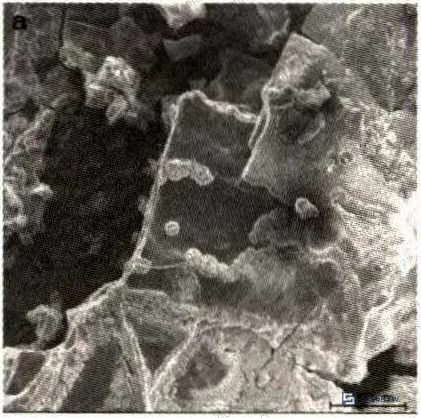
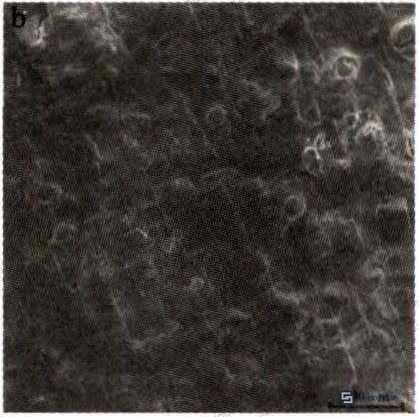
SEM imaging of both phosphating films makes the structural difference visible. The 1# formulation produces coarse, poorly bonded crystals with visible fracturing and delamination from the substrate surface. The 2# formulation produces a uniform, dense crystal layer that remains well-adhered. This morphological difference matters for downstream processing: a fractured phosphating film contaminates the phosphating tank with sediment, and that sediment feeds back into the bath chemistry, further degrading performance in a self-reinforcing failure cycle. The producing steel enterprise confirmed this in post-trial feedback — 1# solution generated heavy sediment throughout the production run, consistent with the film fragmentation observed under SEM.
Most procurement teams don’t realize that industry guidance on zinc phosphating bath management has tightened significantly in recent years, particularly regarding the free acidity-to-total acidity ratio as a real-time process control parameter — not just a receiving inspection item. Suppliers who lack in-house titration capability to monitor and adjust this ratio during production are operating below current expectations for industrial-grade phosphating chemistry suppliers.
For applications where downstream coating compliance matters, chemical registration obligations under REACH Regulation (EC) No 1907/2006 apply to phosphating solution components imported into the EU. Buyers in regulated markets should verify that their supplier can provide REACH-compliant safety datasheets covering the zinc, phosphate, and nitrate components. Similarly, ISO 9001:2015 Quality management systems certification at the supplier level provides a baseline assurance that chemical composition is monitored and controlled against defined specifications — but it does not substitute for actual composition testing data.
Sediment Generation and Long-Term Bath Stability #
One failure mode that does not show up in a single-batch qualification test but destroys production throughput over time is phosphating sediment accumulation. The 1# formulation produced noticeably more sediment during use — a direct consequence of film fragmentation. When crystalline phosphating film breaks off and falls back into the bath, it increases the solid burden in the tank, clogs filters, and alters the effective free acidity of the working solution by consuming available acid in unwanted side reactions.
The NO₃⁻ concentration differential between the two formulations (A-liquid: 3.43 g/L in 1# vs. 6.68 g/L in 2#; B-liquid: 1.87 g/L in 1# vs. 3.75 g/L in 2#) is relevant here. Nitrate acts as an oxidizing accelerator in zinc phosphating chemistry, promoting uniform nucleation of the phosphating film. Insufficient nitrate concentration leads to slower, less uniform crystallization — which produces the coarser, less-adherent film morphology seen in the 1# SEM images and, downstream, greater sediment generation.
For buyers with continuous production lines, this sediment issue has direct operational cost implications: more frequent tank cleanouts, higher replenishment frequency, and potential substrate quality variation across the production shift as bath chemistry drifts. These costs are invisible at the point of procurement and very visible on the production floor. When evaluating suppliers on price, factor in the likely sediment management burden — a cheaper phosphating solution that requires twice-weekly tank maintenance is not cheaper in total cost.
Buyers handling phosphating chemistry in metalworking and surface treatment applications may also find relevant procurement guidance in our Industrial Filtration category, particularly for bath filtration and sediment management equipment.
Compliance with ISO 14001:2015 Environmental management systems is increasingly relevant for phosphating solution suppliers, given the waste stream implications of zinc-containing phosphating sediment and spent bath disposal. Suppliers operating under ISO 14001 are more likely to have controlled disposal procedures that satisfy environmental regulations in your receiving country.
Practical Guidance for Buyers #
Sourcing zinc-series phosphating solution is not a commodity buy — it is a chemistry procurement decision with direct consequences for corrosion protection, coating adhesion, and production bath longevity. The data is clear: a 36% mass gain difference and a 50% gap in spot corrosion resistance between two “equivalent” high-temperature zinc phosphating products are not acceptable variation when you are qualifying a metal pretreatment supply chain.
The most reliable way to separate qualified suppliers from unqualified ones is to require incoming lot certificates that report free acidity (both points and mol/L H⁺), total acidity, and the three primary ion concentrations — Zn²⁺, PO₄³⁻, and NO₃⁻ — for both the A-liquid and B-liquid components. Any supplier who cannot provide these values for each shipment lot is a supplier who is not measuring what controls their product’s performance.
At sinoraw.com, our team works directly with Guangzhou-based sourcing specialists who connect overseas procurement engineers with verified Chinese manufacturers of industrial surface treatment chemistry — including phosphating solutions, rust inhibitors, and metalworking pretreatment chemicals. Our role is to help you identify, evaluate, and qualify suppliers before you commit to an RFQ, so you are not discovering composition problems on your production floor.
Need help identifying qualified suppliers for high-temperature zinc phosphating solutions? Talk to our sourcing team →
Supplier Qualification Questions #
- What are the certified free acidity (in points and mol/L H⁺) and total acidity values for both your A-liquid and B-liquid components, and what titration method and indicator do you use to measure them?
- Can you provide quantified Zn²⁺, PO₄³⁻, and NO₃⁻ ion concentrations (in g/L) for both A-liquid and B-liquid as part of your incoming lot certificate — and what are your specification limits for each?
- What is the minimum CuSO₄ spot corrosion resistance time (in seconds) in your batch release specification for phosphating film produced from your solution on steel substrate at 80°C for 5 minutes?
- What phosphating mass gain (g/m²) does your solution produce on tinplate under standard high-temperature conditions (80°C, 5 min), and how does that value appear in your quality records?
- What is your specification for phosphating sediment generation rate, and what process controls do you have to ensure that fragmented film from the bath does not degrade working solution performance over a continuous production run?
Sourcing Checklist #
- ☐ Supplier provides lot certificate with free acidity in both “points” and mol/L H⁺ for A-liquid and B-liquid (A-liquid H⁺ ≥ 1.45 mol/L, B-liquid H⁺ ≥ 2.90 mol/L for high-performance grade)
- ☐ Supplier provides total acidity values for A-liquid and B-liquid (A-liquid ≥ 43.90 points, B-liquid ≥ 65.32 points for high-performance grade)
- ☐ Zn²⁺ concentration confirmed ≥ 19.74 g/L in A-liquid via EDTA titration method
- ☐ PO₄³⁻ concentration confirmed ≥ 20.64 g/L (A-liquid) and ≥ 28.23 g/L (B-liquid) by standard phosphate determination method
- ☐ Phosphating film mass gain on tinplate substrate ≥ 350 g/m² under high-temperature conditions (80°C, 5 min) confirmed by gravimetric measurement
- ☐ CuSO₄ spot corrosion resistance ≥ 175 s on qualification sample, measured per standard drop test method
- ☐ 3% NaCl immersion resistance ≥ 3.0 h before first rust spot appearance on phosphated tinplate
- ☐ Supplier holds ISO 9001:2015 certification and can demonstrate documented in-process bath chemistry monitoring records
Key Specifications Table #
| Parameter | Recommended Value | Verification Method |
|---|---|---|
| Free acidity — A-liquid | ≥ 1.45 mol/L H⁺ (≥ 8.69 points) | NaOH titration with bromophenol blue indicator (pH range 3.0–4.6) |
| Free acidity — B-liquid | ≥ 2.90 mol/L H⁺ (≥ 17.37 points) | NaOH titration with bromophenol blue indicator |
| Total acidity — A-liquid | ≥ 7.32 mol/L H⁺ (≥ 43.90 points) | NaOH titration with phenolphthalein indicator (pH range 8.2–10.0) |
| Zn²⁺ concentration (A-liquid) | ≥ 19.74 g/L | EDTA chelation titration with xylenol orange indicator |
| PO₄³⁻ concentration (A-liquid) | ≥ 20.64 g/L | Standard phosphate determination method |
| NO₃⁻ concentration (A-liquid) | ≥ 6.68 g/L | Standard nitrate determination method |
| Phosphating mass gain | ≥ 350 g/m² (target: 399 g/m²) | Gravimetric (analytical balance, before/after phosphating) |
| CuSO₄ spot corrosion resistance | ≥ 175 s (target: 195 s) | CuSO₄ drop test; record time from application to colour change from sky-blue to light red |
| NaCl immersion resistance | ≥ 3.0 h (target: 3.2 h) | 3% NaCl immersion; inspect every 10 min for first rust spot |
Can’t find a supplier meeting these specs? Submit your requirements and we’ll match you within 48 hours.
References #
Data source: Composition Analysis and Corrosion Performance Evaluation of Zinc-Series Phosphating Solutions Under High-Temperature Process Conditions, S. Feng et al., Journal of Applied Surface Science and Engineering, 2023
Frequently Asked Questions #
What is the difference between free acidity and total acidity in a zinc phosphating solution, and why do both matter?
Free acidity reflects the concentration of undissociated H₃PO₄ and free H⁺ ions — the species that drive initial metal dissolution and film nucleation. Total acidity captures all acid-reacting species including H₂PO₄⁻ and Zn²⁺. Free acidity governs the reaction rate and crystal nucleation density; total acidity governs the film thickness and overall coating weight. A solution with acceptable total acidity but deficient free acidity will form a thin, poorly nucleated film. Both values must be in spec — not just one.
Why does the 1# phosphating solution produce more sediment than the 2# solution?
The 1# formulation’s lower ion concentrations produce a coarser, more fragile crystalline film that fractures during processing and falls back into the bath. This fragmented film material increases the suspended solid load in the tank and accelerates sediment accumulation. The 2# solution’s denser, better-adhered film stays on the substrate, leaving the bath cleaner over time.
Is CuSO₄ spot corrosion testing a reliable qualification method for incoming lots?
It is fast, low-cost, and correlates well with film density — the time for the drop to change from sky-blue to light red reflects how quickly copper ions can penetrate the phosphating film to reach bare iron. A threshold of ≥175 s is a reasonable acceptance criterion for high-temperature zinc phosphating film intended for corrosion-critical applications. It is not a substitute for NaCl immersion testing if long-term corrosion resistance is the primary performance requirement.
Can the A-liquid and B-liquid be sourced separately from different suppliers?
Technically possible, but not recommended. The A-liquid and B-liquid are formulated to work together as a matched system — their ion concentration ratios are balanced against each other. Sourcing them separately introduces the risk of incompatible concentration profiles, particularly in the NO₃⁻ content that controls film nucleation kinetics. Qualify both components together from the same supplier and require the same documentation for both.
What substrate materials are zinc phosphating solutions at 80°C suitable for?
High-temperature zinc phosphating is primarily used on carbon steel and tinplate substrates. Tinplate requires removal of the surface tin layer by mechanical abrasion before phosphating to expose the iron substrate for the phosphating reaction. The process is not directly applicable to aluminium or non-ferrous substrates without formulation modification. For buyers processing mixed-metal assemblies, verify with your supplier whether their formulation is validated for each substrate type in your production mix.
Published by sinoraw.com Technical Team | Request a sourcing quote


