

TL;DR #
At 260 °C, PI/PET 15/85 insulation batting suffers severe coking and dimensional collapse, rendering it completely unusable — while pure PI batting shows less than 18% thickness change under identical conditions. For procurement engineers specifying thermal protection garment liners, PI content is the single most critical specification variable to control. Specify PI/PET 50/50 as the minimum blend ratio for any application exceeding 220 °C continuous exposure.
Overview #
If you are sourcing insulation batting for firefighter gear, foundry proximity suits, or industrial heat protection garments, the blend ratio of polyimide (PI) to polyester (PET) is not a minor formulation detail — it is the difference between a functional liner and a liability. Most procurement teams treat these materials as commodity batting and focus almost entirely on thermal resistance values at ambient conditions. That approach will get you burned.
Evaluation work conducted by a specialized high-performance textile manufacturer, using a structured high-temperature aging protocol across three distinct fiber compositions and nine treatment conditions (combinations of 180 °C, 220 °C, and 260 °C at 10, 30, and 60-minute exposures), produced detailed before-and-after data on five performance dimensions: surface morphology, thickness change rate, clo-value thermal resistance, moisture permeability, and air permeability. The sample set covered pure PI batting (88 g/m²), PI/PET 50/50 batting (80 g/m²), and PI/PET 15/85 batting (100 g/m²) — representing the practical range of blends available from Chinese nonwoven manufacturers.
This analysis draws on that experimental dataset to give procurement engineers the specification thresholds and qualification criteria they need before issuing RFQs for PI-blend insulation batting. At sinoraw.com, our role as a Guangzhou-based industrial sourcing service is precisely to translate this kind of test data into supplier selection criteria — the guidance below reflects what we look for when pre-qualifying Chinese batting manufacturers for overseas buyers.
For buyers also evaluating laminated Barrier Films for outer shell integration, the thermal stability data here is directly relevant to sandwich construction design.
Thermal Stability of PI Insulation Batting After High-Temperature Treatment #
This is where the data gets unambiguous — and where supplier claims diverge most sharply from tested reality.
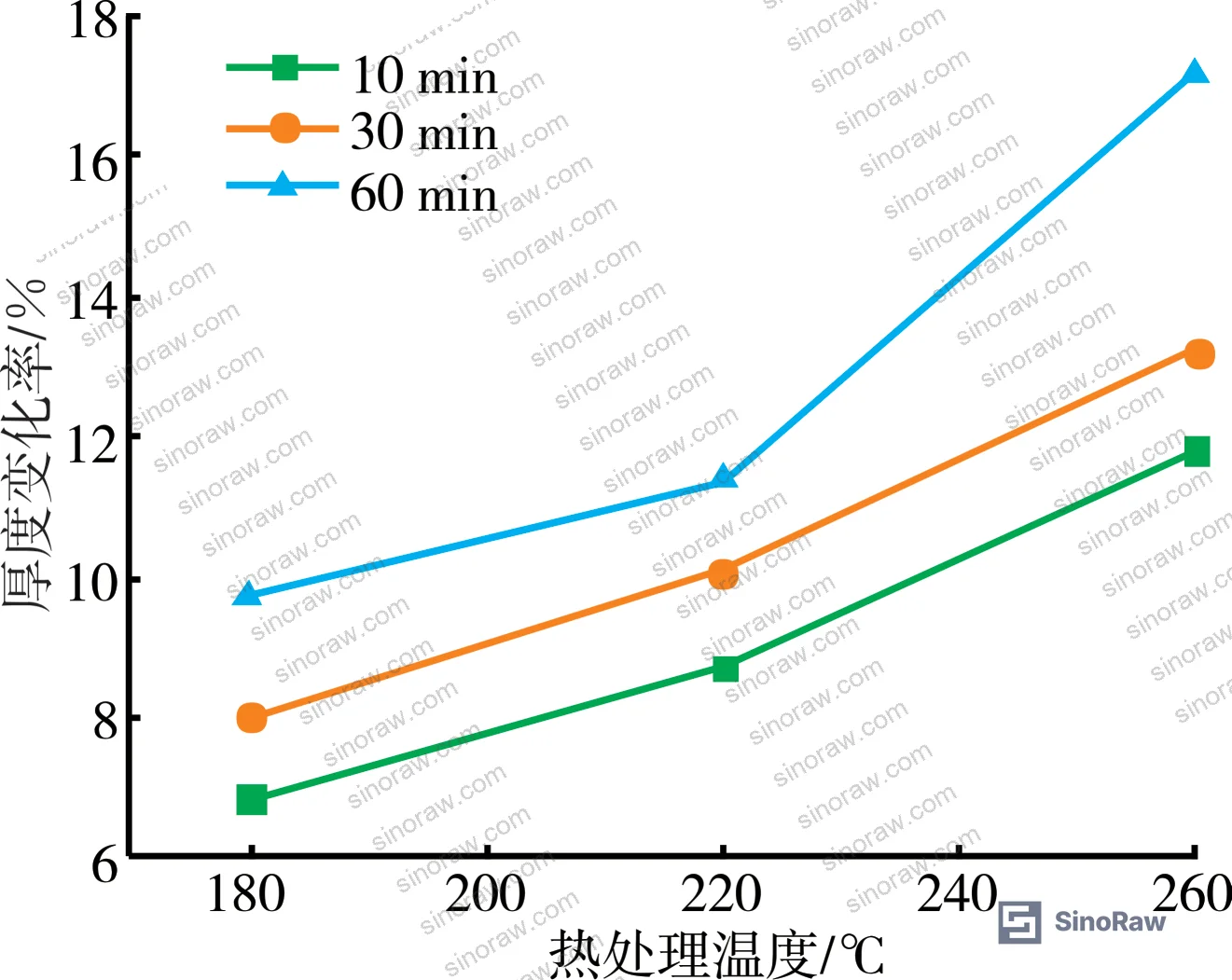
Pure PI batting, fabricated via needle-punch consolidation, demonstrated exceptional dimensional stability throughout the entire test matrix. After 260 °C treatment for 60 minutes — the B-grade flame-resistant garment test temperature specified under GB 8965.1—2020 — the PI batting showed no visible morphological change. Its thermal insulation rate (保温率) increased modestly, and its thickness change rate remained below 18% under all treatment conditions. The needle-punch structure is key here: the dense mechanical interlocking between fibers resists the thermally-driven contraction that causes loft loss in bonded structures.
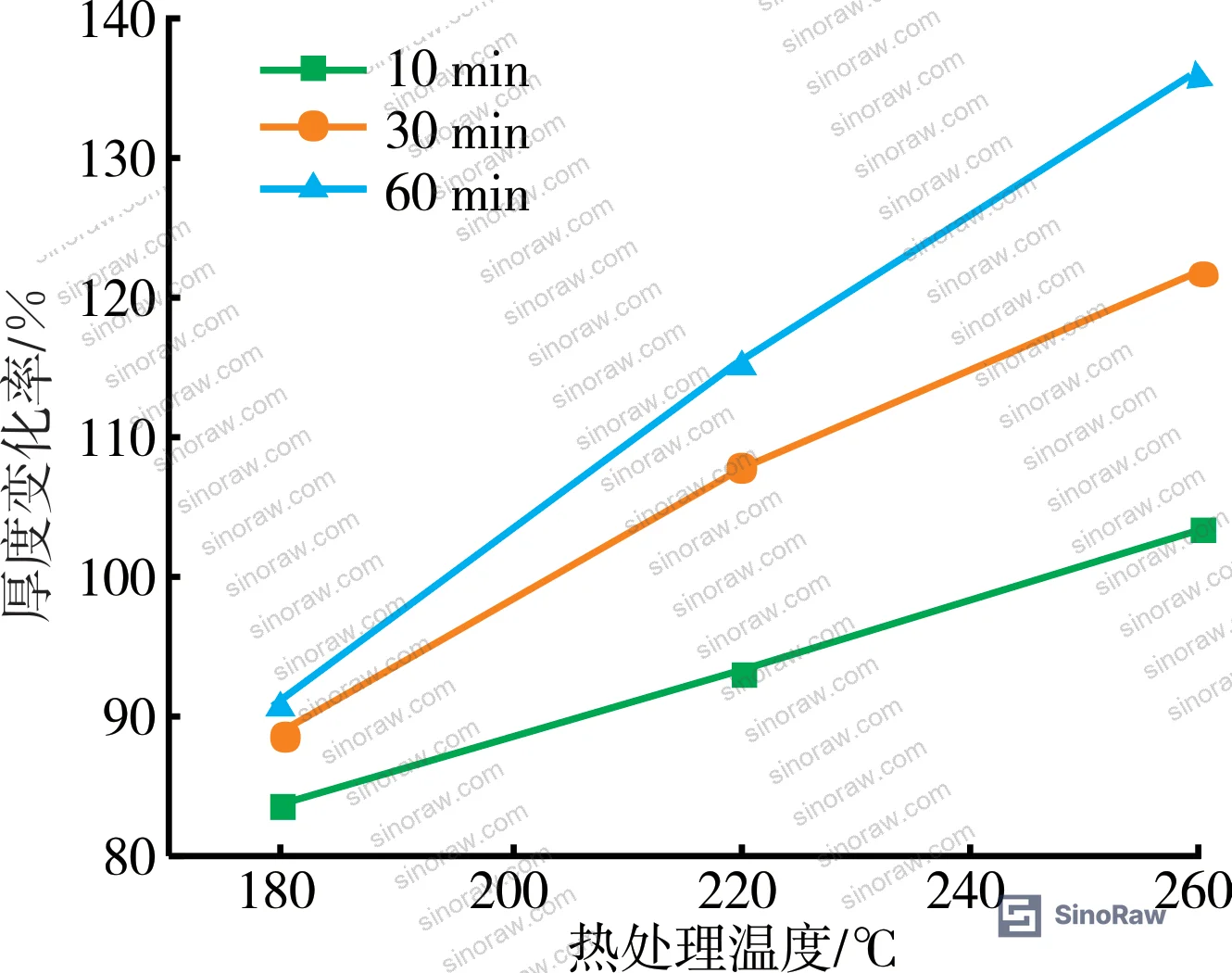
PI/PET 50/50 batting, consolidated by hot-air bonding, tells a more nuanced story. At 220 °C for 60 minutes, surface appearance and morphology showed no significant change — this blend can fully tolerate the A-grade flame-resistant garment test temperature of 180 °C and demonstrates adequate resistance at 220 °C. At 260 °C, some darkening occurs in microstructure examination, attributable to thermal degradation of the PET component. Critically, thickness change rates exceeded 80% across all 260 °C treatments, which sounds alarming but actually reflects PET fiber thermal contraction causing loft gain — not structural failure. The clo-value increases correspondingly, and air permeability improves due to the looser inter-fiber architecture.
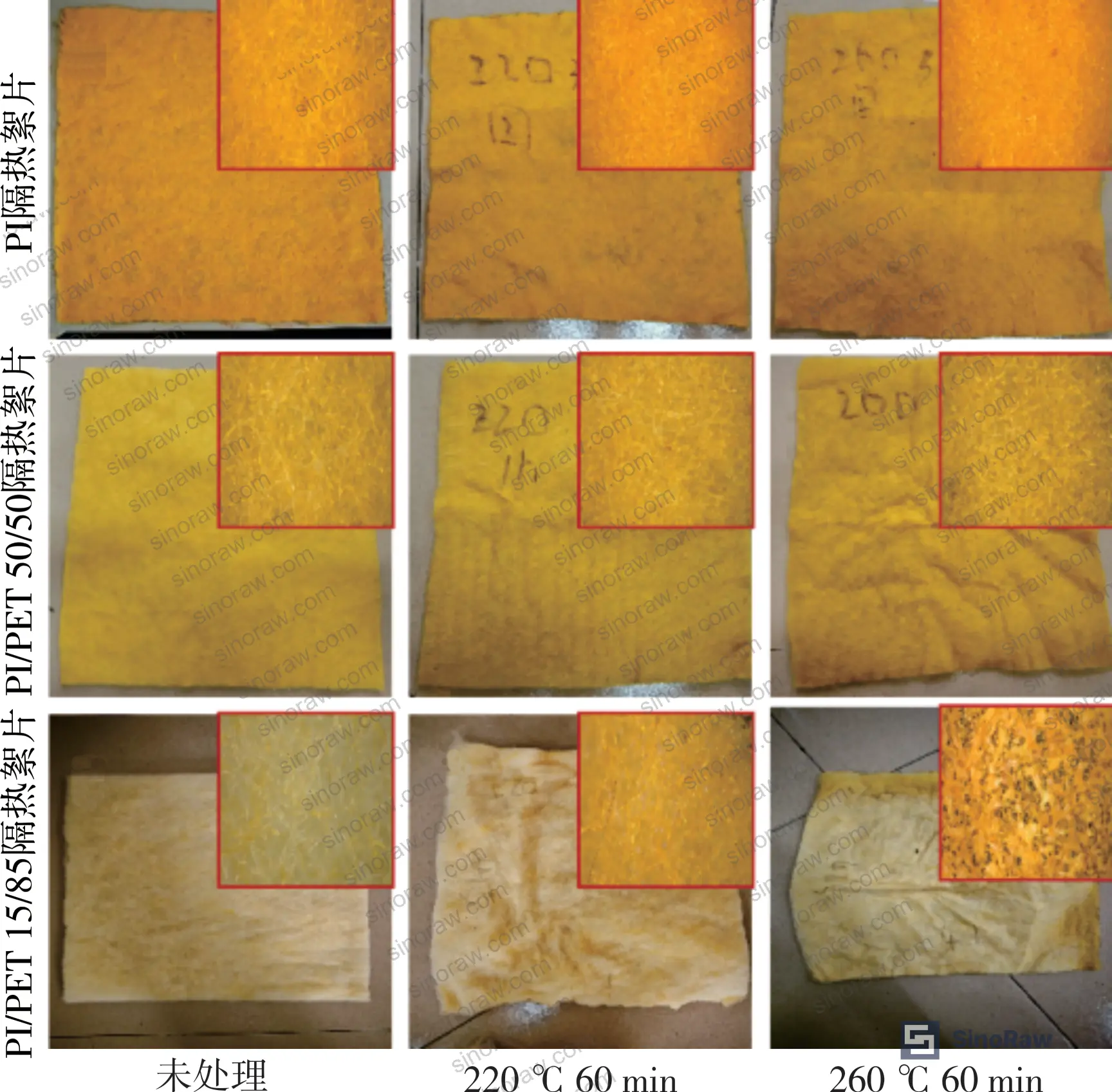
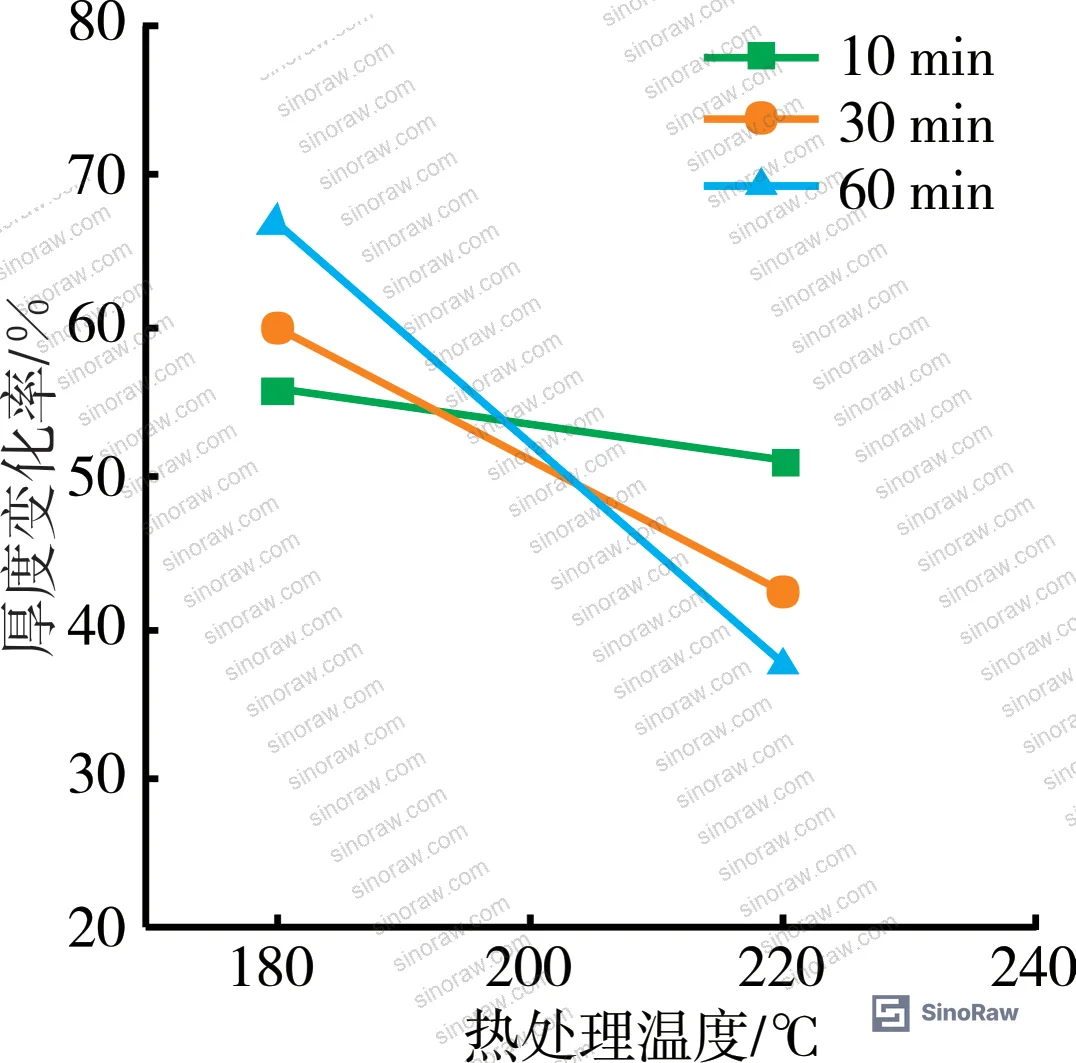
The PI/PET 15/85 batting is a different story entirely. After 220 °C for 60 minutes, edge coking was already visible and surface wrinkling was pronounced. After 260 °C for 60 minutes, the material exhibited severe surface deformation and heavy carbonization — the PET content (85%) exceeds the PET melting onset at approximately 260 °C, and in the presence of oxygen, thermal degradation proceeds to carbonaceous residue formation. This sample was excluded from further thickness, insulation, and permeability testing after the 260 °C treatment, because it no longer had any functional value as a garment liner.
The PI fiber’s thermal advantage derives from its thermoset character and a decomposition onset temperature reported at approximately 560 °C — dramatically higher than PET’s glass transition temperature of ~125 °C and melting onset near 260 °C. This fundamental materials difference is what makes PI content the non-negotiable performance lever.
| Property | Pure PI Batting | PI/PET 50/50 Batting | PI/PET 15/85 Batting |
|---|---|---|---|
| Basis weight (g/m²) | 88 | 80 | 100 |
| Consolidation method | Needle-punch | Hot-air bond | Hot-air bond |
| Max thickness change rate | <18% (all conditions) | >80% (all 260 °C conditions) | >30% then declining |
| 260 °C visual integrity | No change | Minor darkening, functional | Severe coking, unusable |
| 260 °C treatment tolerance | Full | Partial | None |
| 220 °C treatment tolerance | Full | Full | Partial |
Compliance with ISO 9001:2015 Quality management systems alone will not tell you whether a supplier’s batting blend survives 260 °C exposure — you need the actual thermal aging test data against a recognized standard protocol.
Thermal Insulation Performance and Comfort Properties: Clo-Value, Moisture, and Air Permeability #
The clo-value data in this evaluation deserves careful interpretation, because raw clo numbers tell only part of the story.
Before any heat treatment, pure PI batting had the highest absolute thermal resistance. This advantage comes from PI fiber’s intrinsically lower thermal conductivity compared to PET fiber — a materials property advantage, not a structural one. After high-temperature treatment, all three batting types showed increased heat retention rates (保温率), because the thermally-induced thickness gain traps more still air. Still air remains the most effective insulation medium at low thickness, and any mechanism that increases loft will improve absolute clo performance.
However, when normalized to unit-thickness clo value (clo·mm⁻¹), a more honest picture emerges. Pure PI batting maintained stable unit-thickness clo values across the entire treatment matrix, ranging from approximately 0.13 to 0.16 clo·mm⁻¹. For the hot-air bonded blends, thickness increased substantially but unit-thickness clo values declined after treatment — in several cases falling below pre-treatment values. The mechanism: as loft increases, fiber density decreases, reducing the fiber network’s ability to immobilize air; micro-convection within the batting structure becomes more significant during insulation testing, degrading effective thermal resistance per unit thickness.
This is a procurement subtlety that most specifications completely miss.
Honestly, most buyers over-specify absolute clo values and ignore unit-thickness clo stability as a qualification criterion. For a garment application where compression under a shell fabric is expected, a batting that achieves its clo value through gross thickness expansion after thermal aging is not delivering genuine insulation improvement — it may actually be structurally compromised.
Permeability data rounds out the picture, and this is where PI/PET 50/50 earns its position as the recommended blend:
- Moisture vapor transmission (透湿率): High-temperature treatment had minimal effect across all three batting types. Absolute moisture permeability of pure PI batting was consistently lower than both blends throughout the test range, attributed to the needle-punch structure creating a more tortuous moisture vapor diffusion path compared to hot-air bonded structures.
- Air permeability (透气率): PI/PET 50/50 batting showed increased air permeability after high-temperature treatment — the hot-air bond structure becomes more open as PET fibers contract and create larger inter-fiber voids. PI/PET 15/85 batting, by contrast, showed decreased air permeability after treatment, attributed to PET coiling and partial channel blockage combined with increased thickness.
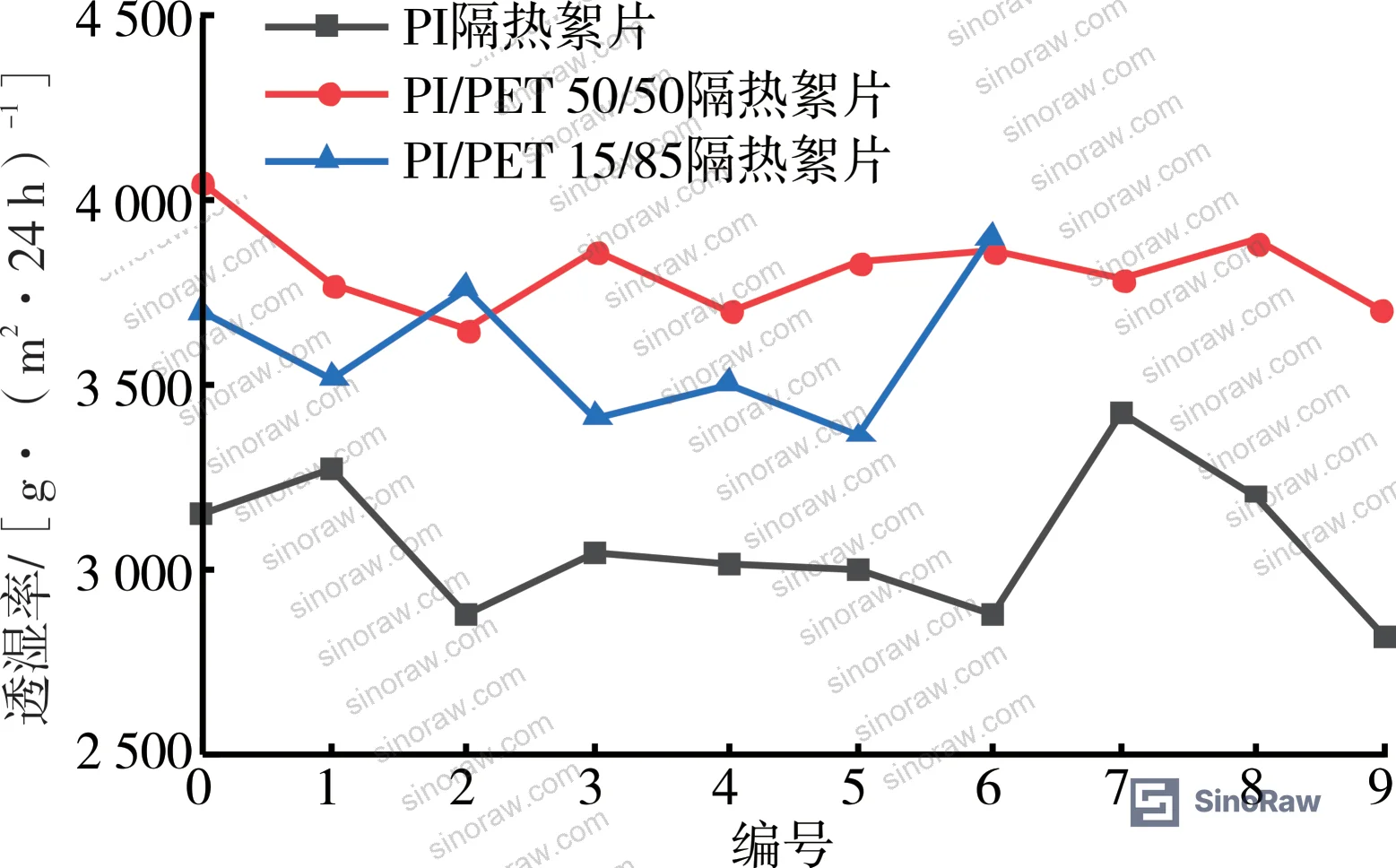
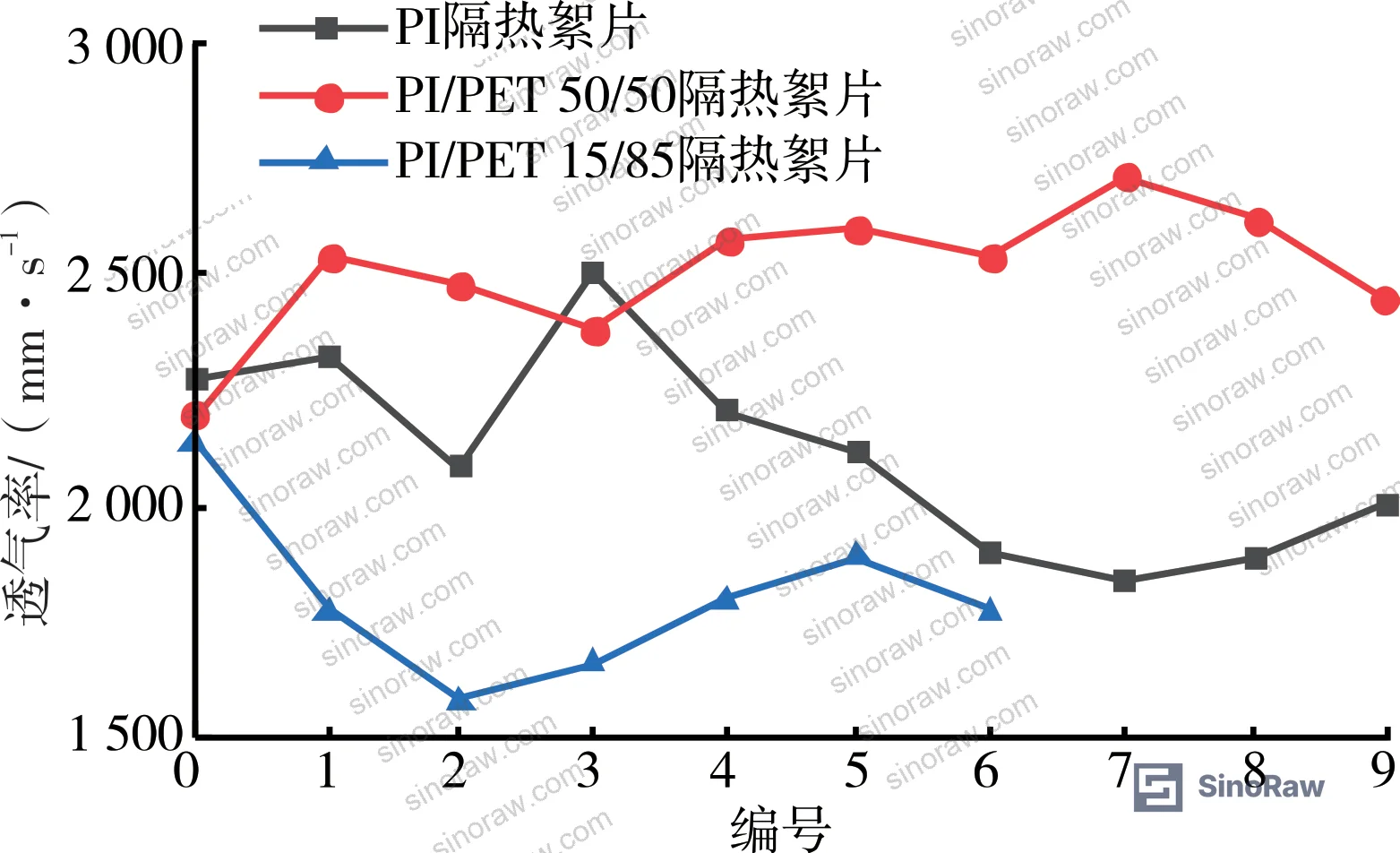
The PI/PET 50/50 combination — after 260 °C treatment — combines acceptable thermal insulation performance with improved air permeability and only minor moisture permeability reduction. For a firefighter or proximity suit application, that comfort balance matters: heat stress physiology is a real operational risk, not just a comfort issue.
Most procurement teams don’t realize that the relevant test standard for thermal resistance of textile materials — GB/T 11048 (based on the sweating guarded hotplate method) — specifically calls for controlled ambient conditions of 20 °C or 21 °C, ≤50% relative humidity, and air velocity ≤10 cm/s during measurement. Variations from these conditions, particularly micro-convection effects from imperfect test chamber sealing, can measurably depress clo readings on high-loft materials — which means comparative data from different test facilities may not be directly comparable without verification of test conditions.
For outer-layer material considerations, see our coverage of Protective Packaging materials with thermal resistance requirements.
Practical Guidance for Buyers #
If you are sourcing PI-blend insulation batting for thermal protection garments, here are the specification controls that matter most.
First, define the maximum service temperature before you write the RFQ. 180 °C continuous is achievable with PI/PET 15/85 blends with caveats; 220 °C demands PI/PET 50/50 or higher PI content; 260 °C demands pure PI or a high-PI blend, with the understanding that hot-air bonded structures will undergo significant thickness change at that temperature.
Second, specify consolidation method alongside fiber content. Needle-punch consolidation produces structurally stable, lower-moisture-permeability batting; hot-air bonding produces softer, higher-air-permeability structures that change dimensionally more under heat. These are not equivalent products even at identical fiber blends.
Third, request thermal aging test certificates against a recognized standard protocol — specifically thickness change rate data at 180 °C, 220 °C, and 260 °C at 10, 30, and 60-minute intervals. Any supplier claiming high-temperature batting capability should be able to produce this data immediately. In supplier qualification exercises, we have seen samples fail catastrophically at 260 °C when supplier documentation cited only ambient-condition insulation values — a critical mismatch between the spec sheet and real-world performance.
Buyers should also evaluate whether REACH Regulation (EC) No 1907/2006 compliance documentation is available for the fiber inputs, particularly for PI precursor chemicals — this is increasingly a customs requirement for EU-bound PPE components.
Finally, request unit-thickness clo stability data, not just absolute clo values. Thermal aging should not significantly degrade clo·mm⁻¹ if the batting structure remains functional.
Need help identifying qualified suppliers for PI insulation batting? Talk to our sourcing team →
Supplier Qualification Questions #
- What is your PI/PET blend ratio, and can you provide thickness change rate data at 260 °C for 60 minutes — specifically confirming whether the rate remains below 80% under that condition?
- What consolidation method is used for your PI-blend batting (needle-punch vs. hot-air bonding), and can you provide before/after morphology images from 260 °C high-temperature treatment showing absence of coking or severe deformation?
- What is the unit-thickness clo value (clo·mm⁻¹) of your batting before and after 260 °C treatment, and does post-treatment unit-thickness clo meet or exceed pre-treatment values?
- Can you provide moisture vapor transmission test results per GB/T 12704.1—2009 (吸湿法) and air permeability results per GB/T 5453—1997 at 100 Pa pressure differential, 20 cm² test area, both before and after the 180 °C/220 °C/260 °C aging protocol?
- What is the thermal insulation retention rate (保温率, %) of your batting after 260 °C × 60 min treatment, and at what test conditions (ambient temperature, humidity, air velocity) was this measured per GB/T 11048—2018?
Sourcing Checklist #
- ☐ Supplier provides GB/T 11048—2018 thermal insulation test certificate showing 保温率 ≥58% before treatment and improvement after high-temperature aging
- ☐ Thickness change rate at 260 °C × 60 min is documented: ≤18% for pure PI batting or <80% with dimensional stability for PI/PET 50/50 batting
- ☐ PI/PET 15/85 batting is explicitly NOT specified for any application requiring 260 °C heat exposure tolerance (zero coking tolerance)
- ☐ Air permeability test per GB/T 5453—1997 confirms acceptable breathability under 100 Pa pressure differential at 20 cm² test area
- ☐ Moisture vapor transmission per GB/T 12704.1—2009 is documented for both pre- and post-heat treatment conditions
- ☐ Fiber composition is verified by supplier certification: PI content confirmed at ≥50% for any application exceeding 220 °C continuous service
- ☐ Consolidation method (needle-punch or hot-air bond) is stated on product specification sheet and matches the claimed PI content and performance grade
- ☐ RoHS and REACH compliance documentation is available for fiber inputs per RoHS Directive 2011/65/EU and REACH Regulation (EC) No 1907/2006
Key Specifications Table #
| Parameter | Recommended Value | Verification Method |
|---|---|---|
| PI fiber content (minimum for ≥220 °C service) | ≥50% PI by weight | Supplier fiber composition certificate + LOI testing |
| Thickness change rate at 260 °C × 60 min | ≤18% (pure PI); documented <80% (50/50 blend) | GB/T 3820—1997, 0.02 kPa pressure, 20 cm×20 cm platen, 10 measurements averaged |
| Thermal insulation rate (保温率) pre-treatment | ≥58% baseline | GB/T 11048—2018, sweating guarded hotplate, 20 °C ±2 °C, ≤50% RH, air velocity ≤10 cm/s |
| Unit-thickness clo value stability | No significant decline post-treatment vs. pre-treatment (target ≥0.13 clo·mm⁻¹) | GB/T 11048—2018, normalized to measured thickness |
| Air permeability (PI/PET 50/50 post-treatment) | Should not decrease after thermal aging (improvement acceptable) | GB/T 5453—1997, 100 Pa pressure differential, 20 cm² test area, 10 measurements averaged |
| Surface morphology at 260 °C × 60 min | No coking, no severe deformation, no carbonization | CCD microscopy examination per internal protocol; visual inspection against reference images |
Can’t find a supplier meeting these specs? Submit your requirements and we’ll match you within 48 hours.
References #
Data source: Thermal Stability and Comfort Performance of Polyimide-Polyester Blended Insulation Batting Under High-Temperature Treatment Conditions, C. Feng et al., Journal of Applied Polymer Science, 2025
Frequently Asked Questions #
Why does PI/PET 50/50 batting show a thickness change rate above 80% at 260 °C, yet still be considered serviceable?
The thickness change is driven by irreversible thermal contraction of PET and PI fibers, which causes fibers to curl and the batting loft to increase — this is not structural failure. The material remains physically intact and its insulation performance actually improves in absolute terms. The concern is that this geometric change is irreversible and must be factored into garment construction tolerances. For applications where dimensional predictability after initial heat exposure is critical, pure PI needle-punch batting (≤18% change rate) is the more appropriate specification.
Can PI/PET 15/85 batting be used at all in thermal protection garments?
Only at temperatures reliably below 220 °C, and even then with documented acceptance of partial surface wrinkling and edge-zone coking risk on extended exposure. At 260 °C, the high PET content (85%) causes severe coking and deformation that eliminates any protective function. Honestly, for any application where the garment might see intermittent 260 °C spike exposure, PI/PET 15/85 is not a defensible specification — the risk is too asymmetric.
What does the clo unit actually mean, and what values should buyers target?
One clo is the insulation required to maintain a sedentary person’s comfort at approximately 21 °C with air velocity below 10 cm/s and relative humidity below 50%. For thermal protection batting, pre-treatment clo values in this evaluation ranged from approximately 0.85 to 1.69 clo in absolute terms, increasing after thermal aging due to loft gain. More useful is the unit-thickness clo value, which stayed in the range of 0.12–0.16 clo·mm⁻¹ for all three materials — this normalized metric controls for thickness variation between samples.
What is the difference between needle-punch and hot-air bonding consolidation methods, and why does it matter for sourcing?
Needle-punch consolidation mechanically entangles fibers using barbed needles, creating a dense, structurally stable web with relatively high fiber-to-fiber interaction force. Hot-air bonding fuses thermoplastic fiber contact points, creating a softer, more open structure. For pure PI batting, needle-punch is required because PI is a thermoset fiber that cannot be hot-air bonded. For PI/PET blends, hot-air bonding is used to trap more still air and maximize loft. The tradeoff: hot-air bonded structures show much higher dimensional change under heat exposure and lower moisture vapor resistance.
How should the GB 8965.1—2020 test temperatures map to batting blend specifications?
GB 8965.1—2020 specifies 180 °C for Class A flame-resistant garment thermal stability testing and 260 °C for Class B. PI/PET 50/50 batting fully meets 180 °C requirements and is partially acceptable at 260 °C. Pure PI needle-punch batting meets 260 °C without performance compromise. For procurement purposes, use these temperatures as your specification anchors: Class A applications can accept PI/PET blends; Class B applications should specify pure PI or high-PI content batting with documented 260 °C aging performance.
Published by sinoraw.com Technical Team | Request a sourcing quote


