

TL;DR #
Emergency block valves (EBVs) must withstand fire exposure at 1,093 °C for a minimum of 30 minutes — a requirement that disqualifies most standard shutoff valves and most actuator assemblies sold into petrochemical service. Buyers who spec a generic emergency shutoff valve without verifying fire-safe actuator type, internal leakage class, and solenoid configuration will likely receive a product that fails the API 607 or API 6FA certification threshold. Require fire-test certification documentation, actuator fire-protection method, and SIL-compatible control logic before issuing an RFQ.
Overview #
If you’re sourcing isolation valves for petrochemical, refinery, or LNG storage service, the distinction between an emergency shutoff valve and an emergency block valve is not semantic — it is the difference between a valve that closes during a fire and one that fails open or leaks through. Engineering analysis from a major Sinopec subsidiary, drawing on both domestic GB/API design codes and field installation experience across multiple refinery-scale projects, provides the most detailed Chinese-language treatment of EBV design criteria currently available. The scope covers valve body selection, actuator fire-protection classification, accessory requirements, control system integration, and installation siting — with specific numeric thresholds throughout.
The core procurement problem is this: the international and Chinese regulatory landscape has tightened considerably in recent years. China’s emergency management authority now mandates EBVs on all process piping directly connected to atmospheric storage tanks with nominal diameter ≥30 m or nominal volume ≥10,000 m³ (excluding cryogenic tanks). GB 50160-2022 requires isolation valves on liquefied hydrocarbon equipment where vessel volume exceeds 50 m³ and pump spacing is less than 15 m. These aren’t aspirational guidelines — they are enforceable design code requirements on new builds and retrofits. Buyers sourcing into these projects need to understand what an EBV actually is before evaluating suppliers.
For readers unfamiliar with the category: EBVs are remotely operable, fire-rated isolation valves designed to fail-closed on loss of instrument air or power, survive hydrocarbon fire conditions for at least 30 minutes, and operate within SIS or DCS safety interlock logic. Standard shutoff valves — even those with pneumatic actuators — do not meet this definition unless they carry explicit fire-safe certification and actuator fire-protection documentation.
Emergency Block Valve Selection Criteria: Valve Type, Size, and Leakage Classification #
Valve type selection for EBV service follows a fairly consistent industry logic once you understand the pressure and size boundaries. For medium and low pressure applications:
- DN ≤ 200 mm: ball valve or gate valve
- DN > 200 mm: gate valve, triple-eccentric butterfly valve, or double-eccentric high-performance butterfly valve
For high-pressure applications:
- DN ≤ 200 mm: ball valve or gate valve
- DN > 200 mm: gate valve (butterfly valve not recommended at high pressure)
Ball valves dominate smaller-bore, lower-pressure service because of their fast quarter-turn closure and compact actuator envelope. Gate valves become cost-competitive above DN200 mm — the price differential at large bore is significant enough to influence specification decisions on multi-valve projects.
One thing that catches buyers off guard: EBVs do not require bore sizing calculations or noise calculations. Nominal diameter must match the process pipe. That simplifies one part of the specification, but it shifts the engineering burden entirely to leakage classification and fire rating.
Internal leakage (seat leakage at closed position) must comply with API 598 or GB/T 13927. API 598 requires zero leakage for elastomeric-seated valves. For metal-seated valves, allowable leakage is set by bore diameter. Seat material selection matters here: metal hard seats are the default recommendation for EBV service. If soft-seat construction is selected, anti-static design is mandatory — a specification that many suppliers do not include unless explicitly called out.
External leakage (fugitive emissions through stem packing) must comply with ISO 15848 or GB/T 26481. Packing and gland construction must be fire-resistant, high-temperature rated. This is where a surprising number of supplier samples fall short — the valve body passes fire test but the stem packing fails fugitive emission requirements under thermal stress.
When an EBV also serves as a combined inlet/outlet block on a header, bidirectional seat sealing is required. Single-direction seats are not acceptable in that configuration.
Fire-Safe Certification Standards: API 607, API 6FA, and ISO 10497 Compared #
This is the section where procurement teams most often get confused — and where suppliers sometimes exploit that confusion.
Three standards govern fire-safe valve testing for EBV applications: API 6FA, API 607 (pre-2005 editions), and API 607 fifth edition (which is essentially equivalent to ISO 10497). Most industry buyers recognize “API 607 certified” as a single benchmark, but the version matters.
The original API 607 covered only soft-seated, quarter-turn valves — ball valves and butterfly valves. API 6FA was broader, encompassing gate valves and other configurations. In 2005, the API 607 fifth edition expanded its scope to include straight-stroke valves and metal-seated valves, making it functionally comparable to API 6FA. Since that revision, ISO 10497 and API 607 fifth edition are treated as equivalent in most international project specifications.
The practical differences between the two current standards are narrow but important:
| Test Parameter | API 6FA / API 607 (≤4th ed.) / BS 6755 Pt.2 | API 607 5th Edition (ISO 10497) |
|---|---|---|
| Test medium | Water | Water |
| Test pressure | 75% of maximum working pressure | 75% of maximum working pressure |
| Flame temperature | ≥761 °C within 2 min; avg 761–980 °C; minimum 704 °C | ≥750 °C within 2 min; avg 750–1,000 °C; minimum 700 °C |
| Burn duration | 30 min | 30 min |
| Cooling method | Natural or forced | Forced — valve must reach ≤100 °C within 10 min of flame extinguishment |
| Post-cool low-pressure test | Required for PN100 and below | Required for PN100 and below |
| Post-extinguishment operation | Full open × 1 | Full open × 1 |
| Allowable leakage | 16 mL·mm⁻¹·min⁻¹ | 16 mL·mm⁻¹·min⁻¹ (≤DN200); 128 mL·mm⁻¹·min⁻¹ (>DN200) |
The leakage allowance split at DN200 mm in the newer standard is something most procurement teams don’t catch until they’re in supplier qualification. For large-bore EBVs above DN200 mm, the permissible leakage under ISO 10497 is eight times higher than for smaller bores. That is not necessarily a safety gap — it reflects the physical reality of large metal-seated gates under thermal stress — but buyers specifying API 6FA equivalence for large-bore applications should verify which leakage class they are actually contracting.
Any of the three certifications — API 6FA, API 607, or ISO 10497 — is internationally recognized. The key requirement is that the supplier holds actual fire-test documentation, not just a datasheet claim.
Separately, the API RP 553 Refinery Control Valves framework classifies EBVs into four types: A and B (manual field isolation), C (power-operated), and D (remotely operable). For the applications covered in this guide, Type D remote-operation valves are the relevant category.
Actuator Fire-Protection Design: Fire-Safe vs. Fire-Resistant Types #
Actuator selection is where the real engineering complexity lives in EBV procurement — and honestly, it’s where most buyers under-specify because they focus on the valve body and treat the actuator as a commodity add-on. That’s a mistake that can cost significantly more than the price difference between actuator grades.
Pneumatic actuators are the default choice for petrochemical EBV service. Instrument air systems are standard infrastructure across refinery units, and pneumatic actuators offer fast closure response and inherent fail-safe capability through spring-return single-acting cylinders. The actuator is configured fail-closed (FC) — loss of instrument air causes spring return to the closed position.
For fire conditions specifically, there are two distinct actuator protection philosophies:
Fire-safe type (fusible mechanism): The actuator does not need to survive the fire — it only needs to close the valve during the fire. Two implementation methods are used:
- A fusible instrument air supply line — the air line to the open-valve port melts under fire conditions, venting the opening pressure and allowing spring return to close.
- A fusible plug on the actuator cylinder — fire melts the plug, releasing cylinder pressure, triggering spring return.
Both methods are passive and reliable, but both require careful consideration of ambient temperature and solar radiation. Fusible elements calibrated for a refinery in northern China may trigger prematurely in a Middle East installation. This is a detail that suppliers often do not flag.
Fire-resistant type (thermal protection): The actuator and its air supply are protected to remain functional through the fire event — not just to close once, but to potentially reopen. Two protection approaches:
- Intumescent fire-resistant coating on the actuator housing — expands under rapid temperature rise to form an insulating carbon char layer that absorbs heat and reduces thermal transfer.
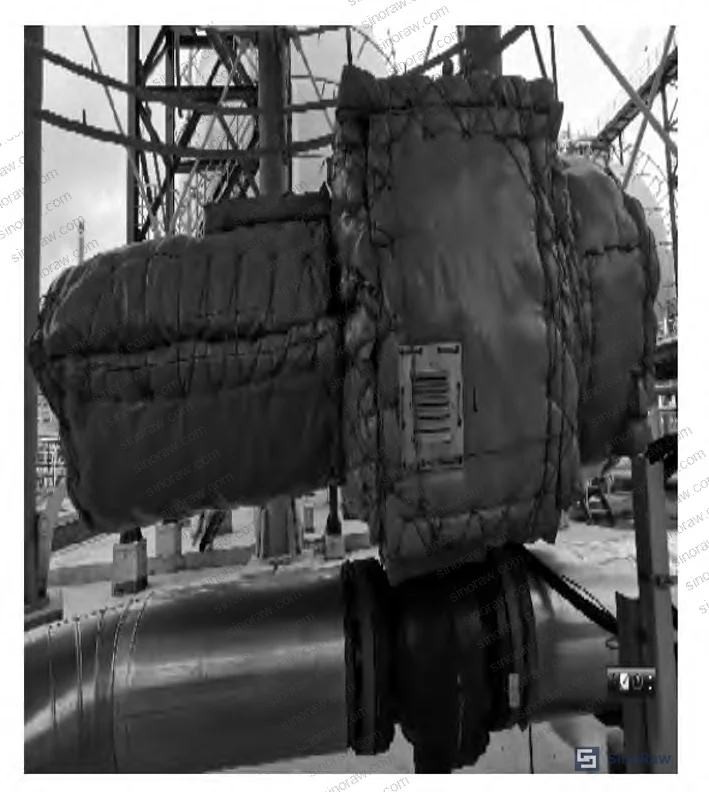
- Fire protection enclosure (fire box or fire cover) — either flexible or rigid construction.
Flexible fire covers consist of a weatherproof outer layer, stainless steel wire mesh, plastic braid, aluminum foil, and insulating fiber, stitched with stainless steel wire. Asbestos materials are explicitly prohibited. Installation is straightforward and the design avoids galvanic corrosion issues.
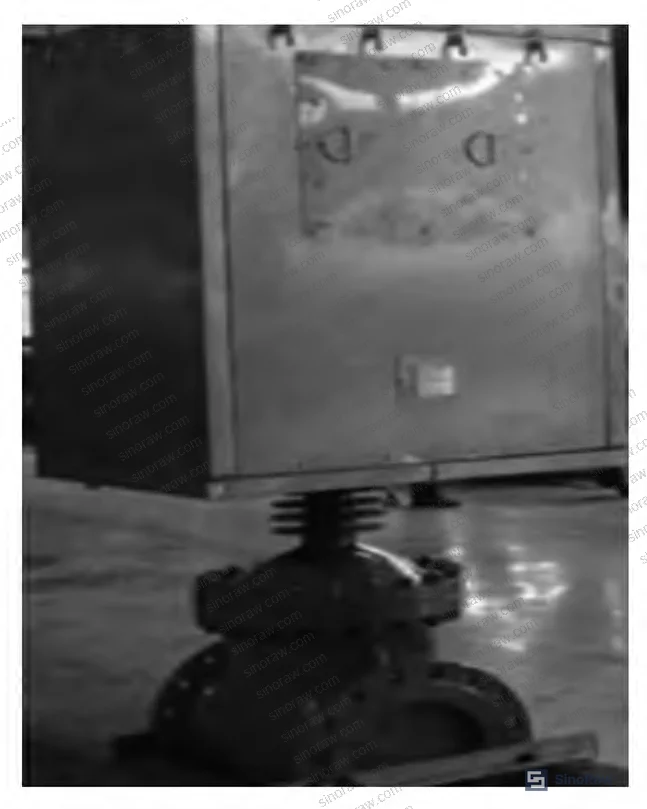
Rigid fire enclosures use stainless steel panels packed with insulating mineral fiber. They can be fabricated with access windows for observation and maintenance — which is why rigid enclosures are the preferred choice in most petrochemical EBV applications. Both enclosure types must be weatherproof and UV-resistant.
Per the UL 1709 rapid-rise fire test standard for structural steel fireproofing, both actuator fire-protection types must demonstrate resistance to hydrocarbon fire conditions at 1,093 °C for more than 30 minutes. Instrument air lines serving fire-resistant actuators should be stainless steel for maximum fire survivability.
Instrument air supply to the actuator must be managed through a solenoid valve. Specification requirements: direct-acting type, 316 stainless steel body, low power consumption. For spring-return single-acting cylinders: 2-port/3-way, universal type, de-energize-to-exhaust. For double-acting cylinders: 2-port/4-way or 2-port/5-way. Coil insulation must be rated for high-temperature service.
A reserve air tank (accumulator) is required. Minimum material: carbon steel with pressure vessel certification. Minimum volume: sufficient to complete one full open cycle plus one full close cycle at normal instrument air pressure. This ensures the valve can be operated at least once during an instrument air supply interruption — critical for manual override during emergency response.
Where pneumatic actuators are not feasible — tank farm installations, areas with no instrument air infrastructure — electric actuators are permitted. Per API RP 553, gate valves in large-bore service are actually better suited to electric actuators because pneumatic actuators for large straight-stroke gates are physically large, expensive, and awkward to install in confined spaces. Electric actuators for EBV service must also be fire-resistant type, using the same coating or enclosure methods as pneumatic units. Power and control cables must be fire-rated throughout.
Need help identifying qualified suppliers for fire-safe EBV actuator assemblies? Talk to our sourcing team →
Practical Guidance for Buyers #
Most procurement teams sourcing EBVs for the first time treat them as upgraded ball valves. They are not. The fire-safe certification, actuator protection class, solenoid specification, and control system integration requirements create a product that has more in common with a safety instrumented system component than a standard isolation valve.
A few things worth knowing before you send an RFQ:
Installation siting matters for certification validity. EBVs should ideally be located outside the fire hazard zone, but when that’s not possible — which is most of the time given process layout constraints — they must be installed as close as possible to the vessel nozzle or equipment connection. Emergency close pushbuttons must be installed both in the field and in the control room. Field pushbuttons must be located upwind of potential fire sources, at least 15 m from pump casings, away from ground-level liquid drains, and along primary evacuation routes.
Control system integration is not optional. EBVs on pump suction lines must be interlocked with pump motor controls — closing the EBV must simultaneously stop the pump to prevent dry-run damage. The control logic should also prevent pump start unless the EBV position feedback confirms full open. Whether this interlock runs through SIS or DCS depends on the SIL analysis for the specific installation.
At sinoraw.com, our role is to help overseas procurement engineers identify and pre-qualify Chinese manufacturers before they issue RFQs — connecting technical buyers with verified suppliers of industrial fluid control components including EBVs, actuators, and associated instrumentation. Standards compliance verification across IEC 61960-3 Secondary lithium cells and batteries for portable applications parallel frameworks and domestic GB equivalents is part of our standard supplier evaluation process.
For related fluid control components and system accessories, explore our Fluid Control and Industrial Electrical sourcing categories.
Supplier Qualification Questions #
- Can you provide fire-test certification under API 607 fifth edition (or ISO 10497) or API 6FA, including the specific leakage measurement result in mL·mm⁻¹·min⁻¹ for the tested bore size — and does your result meet the ≤16 mL·mm⁻¹·min⁻¹ threshold for DN ≤200 mm?
- For your pneumatic actuator assembly, what is the fire-protection method — fusible supply line, fusible plug, intumescent coating, or fire enclosure — and can you provide UL 1709 test documentation showing 1,093 °C resistance for greater than 30 minutes?
- What is the internal leakage class of your EBV seat, and does it conform to API 598 (zero leakage for elastomeric seats, or specific bore-rated leakage for metal seats) or GB/T 13927, with test records available?
- What is the external (fugitive) emission leakage class of the stem packing under your standard EBV configuration, and does it comply with ISO 15848 or GB/T 26481 — including performance under thermal cycling conditions representative of fire exposure?
- For your reserve air accumulator, what is the certified minimum volume, and can you confirm it meets the one-full-open plus one-full-close cycle requirement at rated instrument air pressure, with pressure vessel certification documentation?
Sourcing Checklist #
- ☐ Valve body fire-safe certification is API 607 (5th edition / ISO 10497) or API 6FA — not an earlier edition — with original test report available, not just a datasheet claim.
- ☐ Internal leakage conforms to API 598 or GB/T 13927: zero leakage for elastomeric seats; bore-rated leakage values documented for metal seats.
- ☐ External (fugitive) leakage meets ISO 15848 or GB/T 26481 requirements, with packing and gland specified as fire-resistant, high-temperature rated construction.
- ☐ Actuator fire-protection type is documented — either fire-safe (fusible mechanism, passive close-only) or fire-resistant (UL 1709 rated at 1,093 °C for ≥30 min) — and matches the project’s operational requirement.
- ☐ Solenoid valve is direct-acting, 316 SS body, low-power coil, high-temperature insulation rated; configuration matches actuator type (2/3-way for single-acting spring return; 2/4-way or 2/5-way for double-acting).
- ☐ Reserve air accumulator carries pressure vessel certification and documented minimum volume sufficient for one open + one close full-stroke cycle at instrument air pressure.
- ☐ Valve bore selection follows the DN threshold: ball valve or gate valve for DN ≤200 mm; gate valve (or triple/double-eccentric butterfly for low-medium pressure) for DN >200 mm.
- ☐ Metal hard seat specified as default; if soft seat is supplied, anti-static construction is explicitly confirmed in the valve datasheet.
Key Specifications Table #
| Parameter | Recommended Value | Verification Method |
|---|---|---|
| Fire-test flame temperature (burn period) | 750–1,000 °C average; ≥700 °C minimum at all probes | API 607 5th ed. / ISO 10497 test report with thermocouple log |
| Fire test burn duration | ≥30 min continuous | Certified test report; duration confirmed in test narrative |
| Actuator fire resistance (fire-resistant type) | ≥30 min at 1,093 °C hydrocarbon fire | UL 1709 rapid-rise fire test documentation |
| Internal leakage (metal seat, post-fire) | ≤16 mL·mm⁻¹·min⁻¹ for DN ≤200 mm; ≤128 mL·mm⁻¹·min⁻¹ for DN >200 mm | API 607 5th ed. post-fire leakage measurement |
| External leakage (fugitive, stem packing) | Per ISO 15848 Class B or better | ISO 15848 test certificate or GB/T 26481 equivalent |
| Post-fire cooling requirement (API 607 5th ed.) | Valve temperature ≤100 °C within 10 min of flame extinguishment | Forced cooling + temperature log in test report |
| Liquefied hydrocarbon equipment volume threshold for mandatory EBV | >50 m³ | GB 50160-2022 clause 7.2.15 compliance documentation |
| Atmospheric storage tank threshold for mandatory EBV | Nominal diameter ≥30 m or nominal volume ≥10,000 m³ | China MEM 2022 EBV system requirements compliance check |
Can’t find a supplier meeting these specs? Submit your requirements and we’ll match you within 48 hours.
References #
Data source: Design and Selection Criteria for Emergency Block Valves in Petrochemical Facility Fire Protection Systems, X.-L. Qian et al., Journal of Loss Prevention in the Process Industries, 2024
Frequently Asked Questions #
What is the difference between an emergency block valve and an emergency shutoff valve?
An emergency shutoff valve is a general term for any valve that can be closed to stop flow in an emergency — it may be manual, pneumatic, or electric, and may or may not have fire-safe certification. An emergency block valve (EBV) is a specific engineering category defined in standards such as API RP 553: it is remotely operable, fire-tested to API 607 or API 6FA, fail-closed on loss of instrument air or power, and integrated into SIS or DCS safety interlock logic. Every EBV is an emergency shutoff valve, but most emergency shutoff valves do not qualify as EBVs.
What valve types are acceptable for EBV service above DN200 mm?
For low-to-medium pressure service above DN200 mm, gate valves, triple-eccentric butterfly valves, and double-eccentric high-performance butterfly valves are all acceptable. For high-pressure applications above DN200 mm, gate valves are the standard selection — butterfly valves are generally not specified at high pressure in this service. Ball valves dominate the sub-DN200 mm range at all pressure classes.
Does an EBV need to be sized differently from a standard isolation valve?
No. EBV nominal diameter must match the process pipe bore exactly. There is no Cv calculation or noise calculation required. This differs from control valve selection and simplifies the engineering specification — though it also means there is no flow-based selection filter to catch undersized or oversized submittals.
How does control system integration affect EBV specification?
EBVs on pump suction lines must be interlocked with pump motor control: closing the EBV triggers immediate pump stop to prevent dry-run damage, and pump start is inhibited unless the EBV position feedback confirms full open. Whether this logic runs through a Safety Instrumented System (SIS) or Distributed Control System (DCS) depends on the SIL rating determined by project hazard analysis. Buyers should confirm SIL compatibility with the supplier before ordering — this affects solenoid coil specification, cable routing, and diagnostic requirements.
What fire protection standards apply to EBV actuators?
Pneumatic actuator fire protection follows two distinct performance paths. Fire-safe (passive) actuators use fusible elements — either a meltable air supply line or a fusible plug — that trigger spring-return closure when exposed to fire. Fire-resistant (active protection) actuators use intumescent coatings or enclosed fire boxes, tested per UL 9540A Test Method for Evaluating Thermal Runaway Fire Propagation in Battery Energy Storage Systems and UL 1709 rapid-rise fire test methodology, to remain fully functional through a 30-minute hydrocarbon fire at 1,093 °C. The choice between the two types depends on whether the process requires the valve to cycle during or after a fire event — fire-resistant actuators are required when re-opening capability must be preserved. For additional context on related industrial safety standards, see NFPA 855 Standard for the Installation of Stationary Energy Storage Systems as a reference framework for fire-rated equipment installation requirements.
Published by sinoraw.com Technical Team | Request a sourcing quote


