

TL;DR #
Across 191 combined days of biological filtration testing, manganese sand media achieved iron removal rates of 85–99% and sustained average manganese removal of 90% under stable operating conditions — outperforming zeolite on both parameters in every seasonal trial. For buyers specifying filter media for groundwater treatment systems, this performance differential is large enough to determine compliance with discharge or potable standards, and it matters at the supplier selection stage. Specify manganese sand media with verified MnO₂ coating activity and require seasonal performance data — not just rated removal efficiency — before issuing a purchase order.
Overview #
If you’re evaluating filter media suppliers and the only data they’re providing is a rated removal percentage at a single operating condition, you’re working with incomplete qualification data. That should concern any procurement engineer specifying media for groundwater systems with co-occurring iron and manganese contamination — which, as current industry data confirms, is far more common than single-element exceedance.
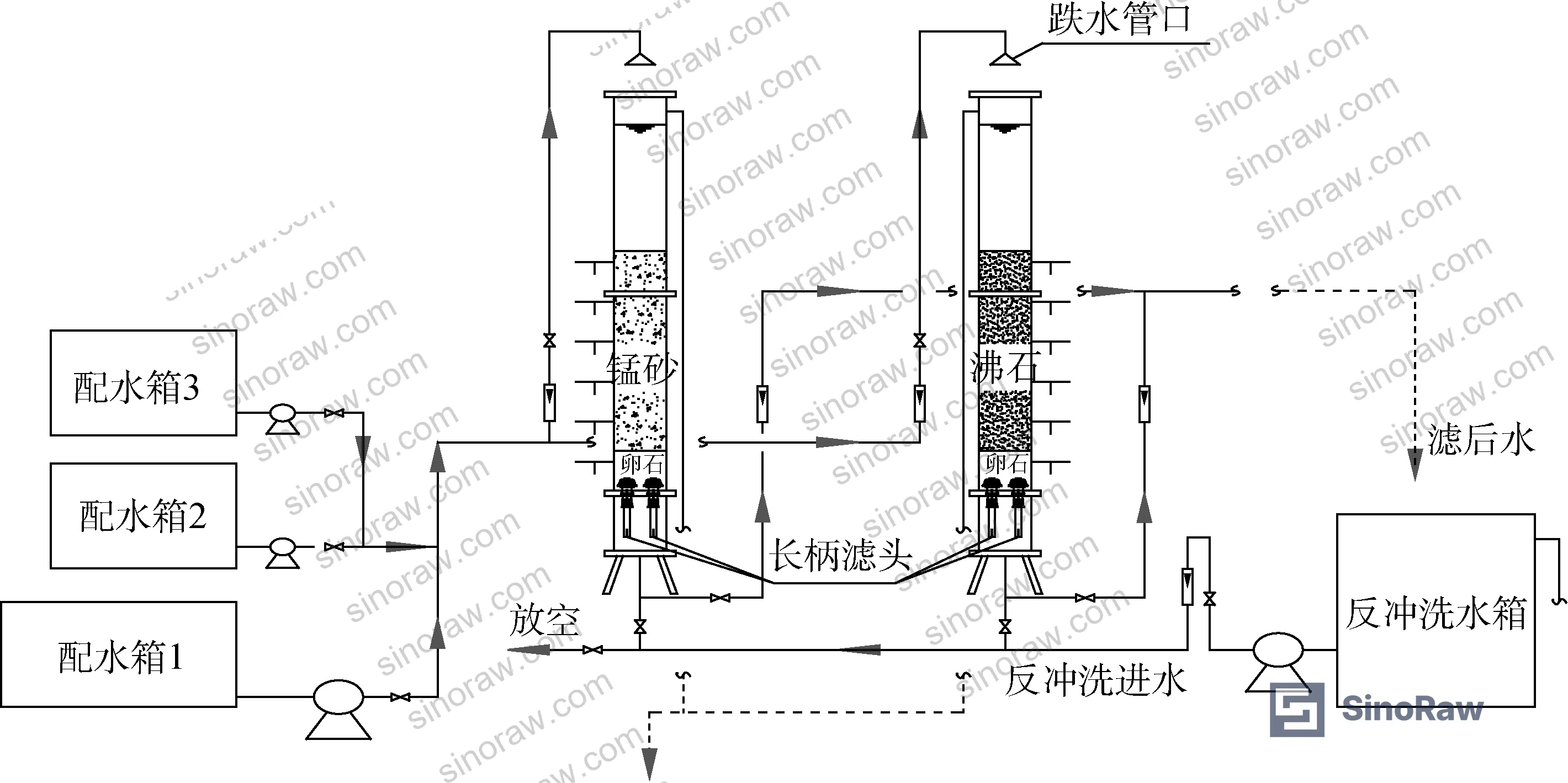
The performance data used as the basis for this article comes from a controlled dual-season study conducted at a civil engineering research institution, running a parallel column test rig over two extended periods: 81 days through autumn and winter, and 110 days through spring and summer. The experimental system used simulated groundwater dosed with FeSO₄ and MnSO₄ to replicate real contamination profiles, with iron inlet concentrations ranging from 1.34 to 6.29 mg·L⁻¹ and manganese inlets from 0.48 to 2.49 mg·L⁻¹. Media tested were commercial manganese sand (Gongyi origin) and natural zeolite (Chifeng origin), both run as biological filter columns with mixed bacterial inoculation. The test matrix covered startup behavior, steady-state performance, load stress, and low-temperature suppression — a more realistic qualification regime than most supplier data sheets reflect.
For context on relevant compliance thresholds, the Chinese national potable water standard (GB5749–2006) sets TFe < 0.3 mg·L⁻¹ and Mn < 0.1 mg·L⁻¹. Both of those limits are used as pass/fail markers throughout this analysis.
Manganese Sand vs. Zeolite Barrier Performance: Seasonal Removal Data #
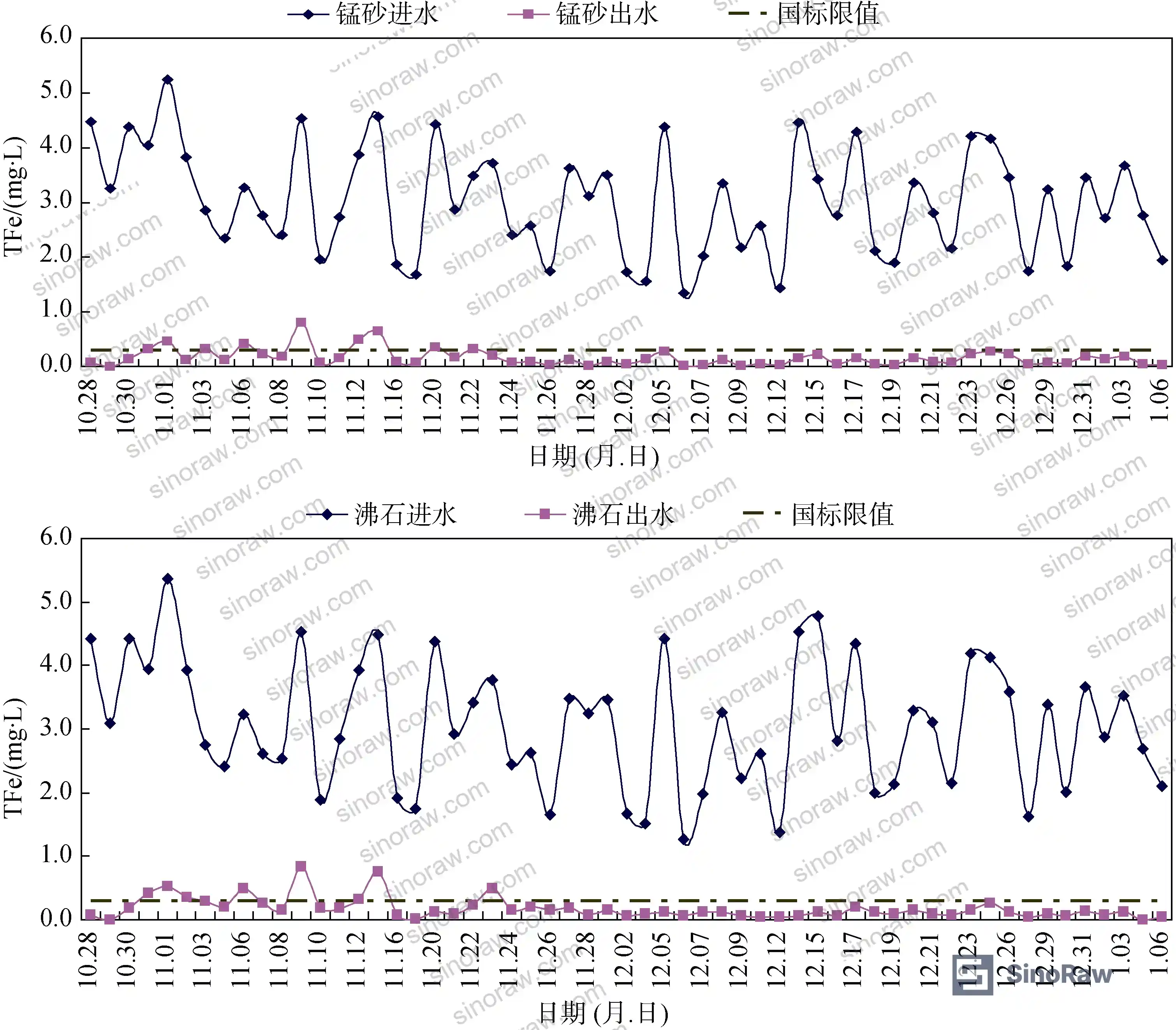
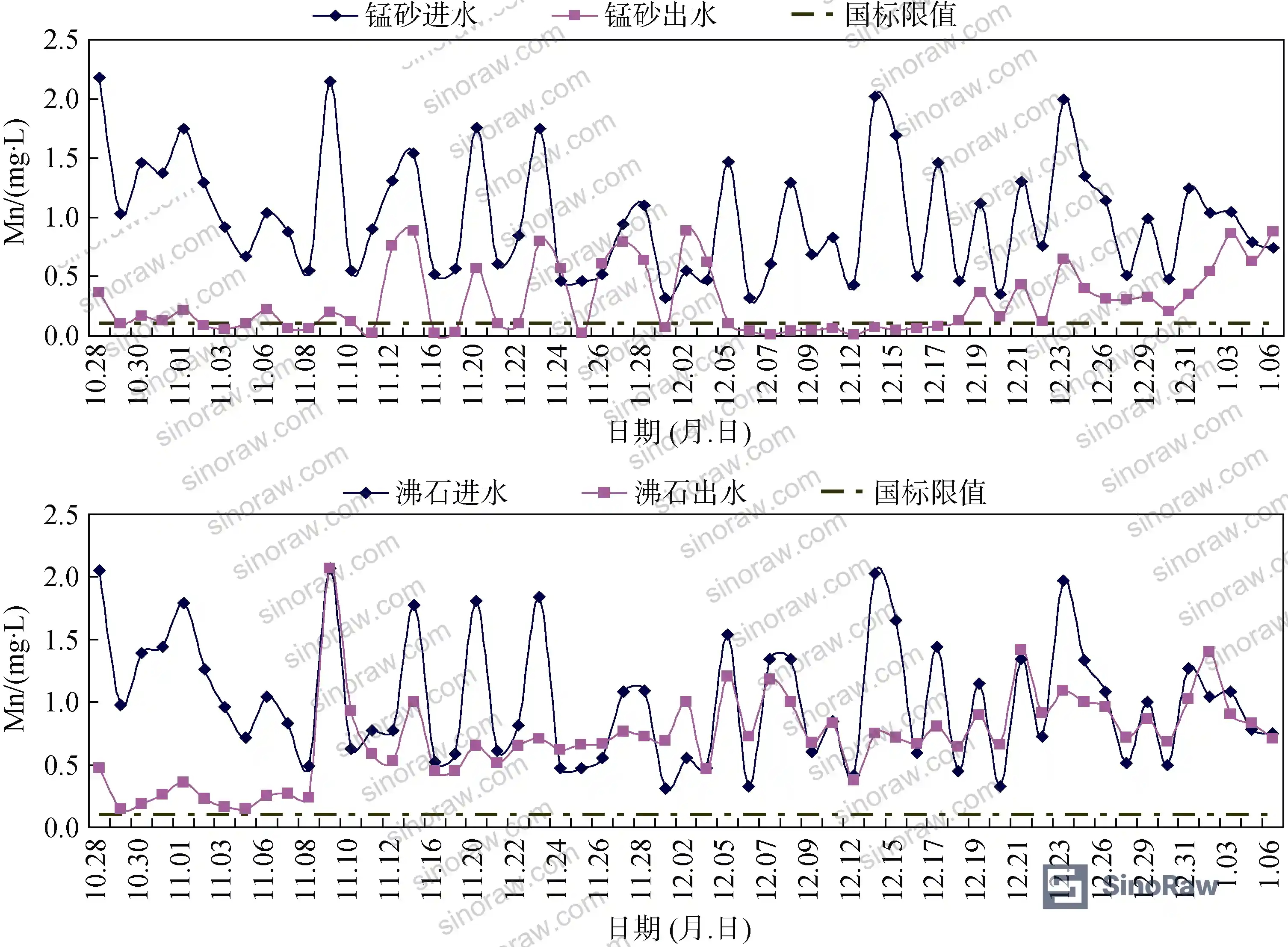
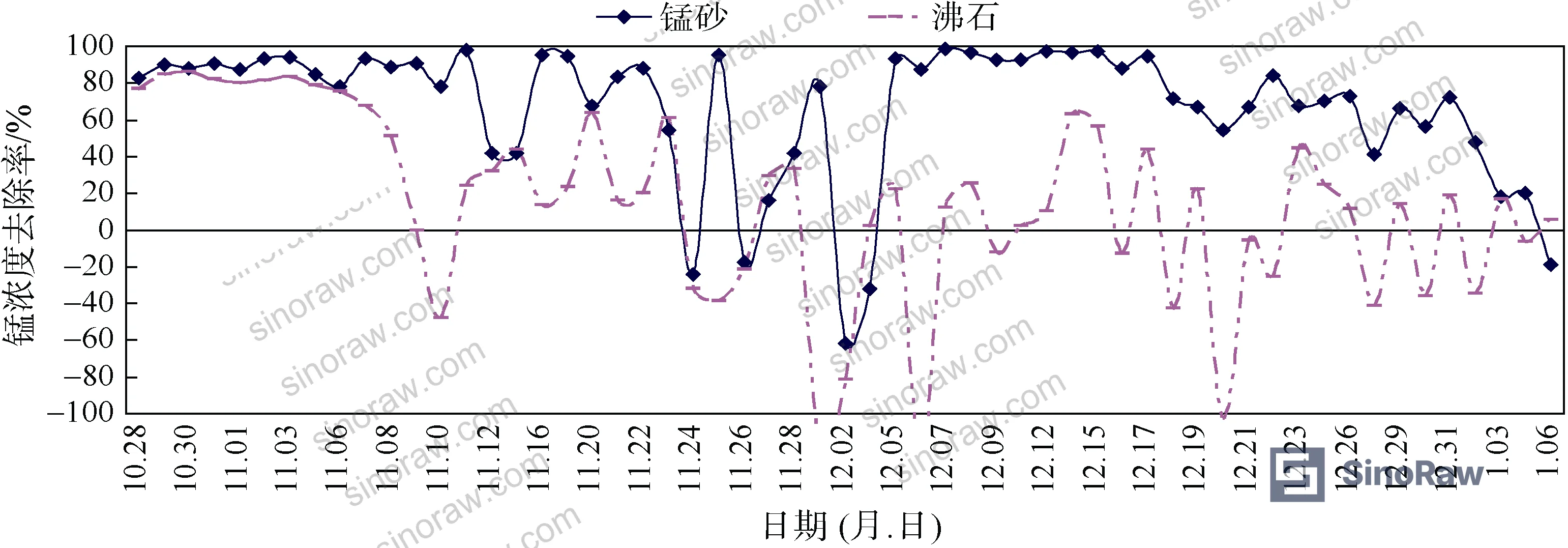
The most practically useful comparison from this dataset is how the two media diverge on manganese — not iron. Both materials performed well on iron removal; the separation happens on the harder-to-remove element.
Autumn-Winter Performance (81-day trial)
| Parameter | Manganese Sand | Zeolite | Pass Threshold |
|---|---|---|---|
| Iron removal rate (overall) | 85–96% | 85–99% | TFe < 0.3 mg·L⁻¹ |
| Manganese removal (peak period) | High; log-phase bacteria active | Near zero after initial days | Mn < 0.1 mg·L⁻¹ |
| Manganese removal at T < 10°C | Declined to non-compliant | Non-compliant | Mn < 0.1 mg·L⁻¹ |
| Biological mechanism active | Adsorption + catalytic oxidation | Adsorption only (short-lived) | — |
Iron inlet peaked at 5.37 mg·L⁻¹ during this period. On October 28th, with inlet iron at 4.47 mg·L⁻¹, manganese sand outlet measured 0.08 mg·L⁻¹ and zeolite outlet measured 0.07 mg·L⁻¹ — both compliant. On November 13th with inlet at 4.56 mg·L⁻¹, outlets were 0.65 mg·L⁻¹ (manganese sand) and 0.76 mg·L⁻¹ (zeolite) — both temporarily exceeding the 0.3 mg·L⁻¹ threshold, attributed to increased filtration velocity flushing fine Fe³⁺ floc through the media bed.
Zeolite’s manganese removal story is blunt: useful for roughly the first ten days via physical adsorption, then essentially zero contribution. Once adsorption sites saturate without biological backup, zeolite stops removing manganese.
When temperature dropped below 10°C, manganese sand’s biological removal also degraded — even with dissolved oxygen at 6–9 mg·L⁻¹, which exceeds the typical minimum requirement for biological iron-manganese oxidation. This is an important operational limit that many spec sheets omit entirely.
Spring-Summer Performance (110-day trial)
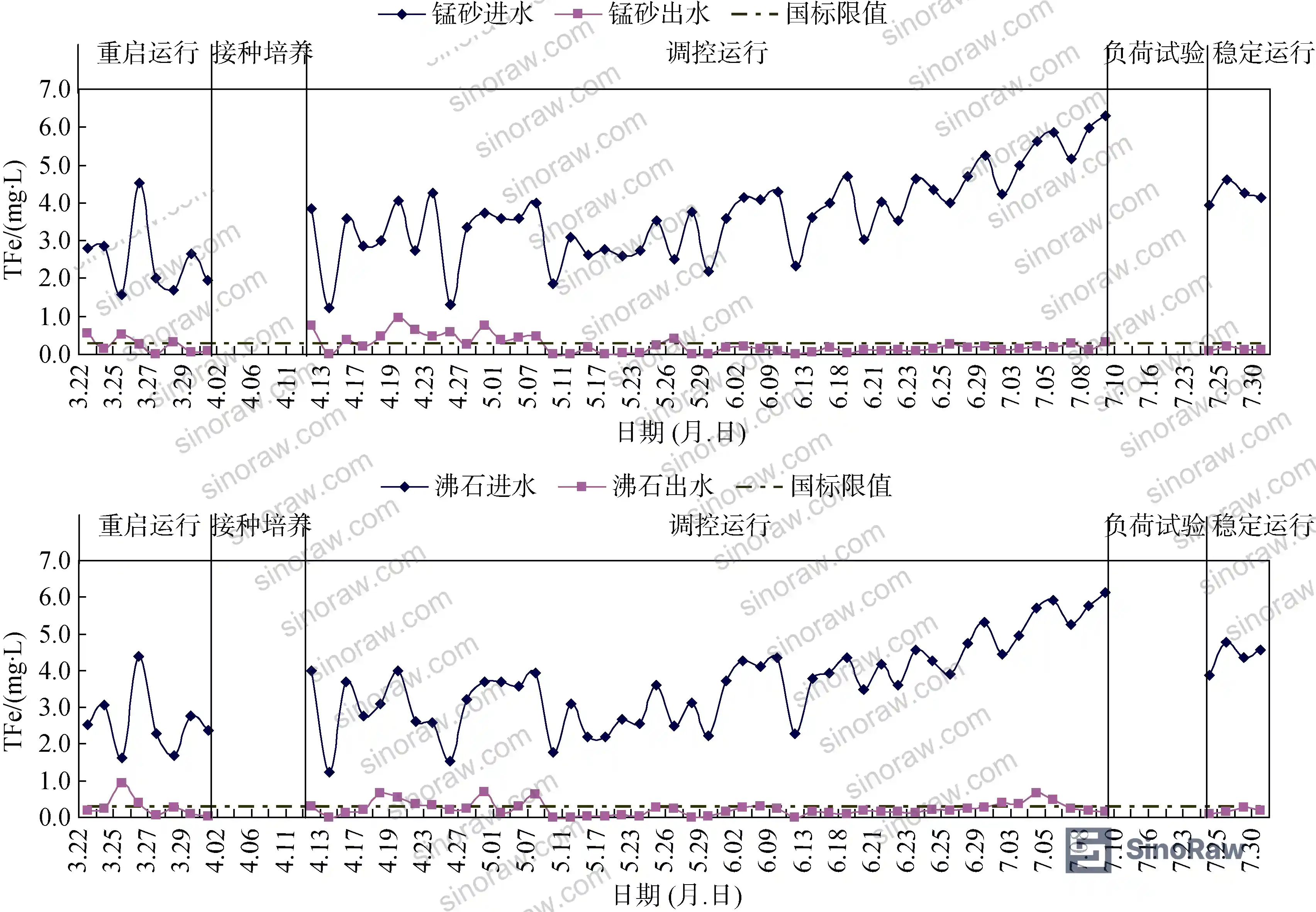
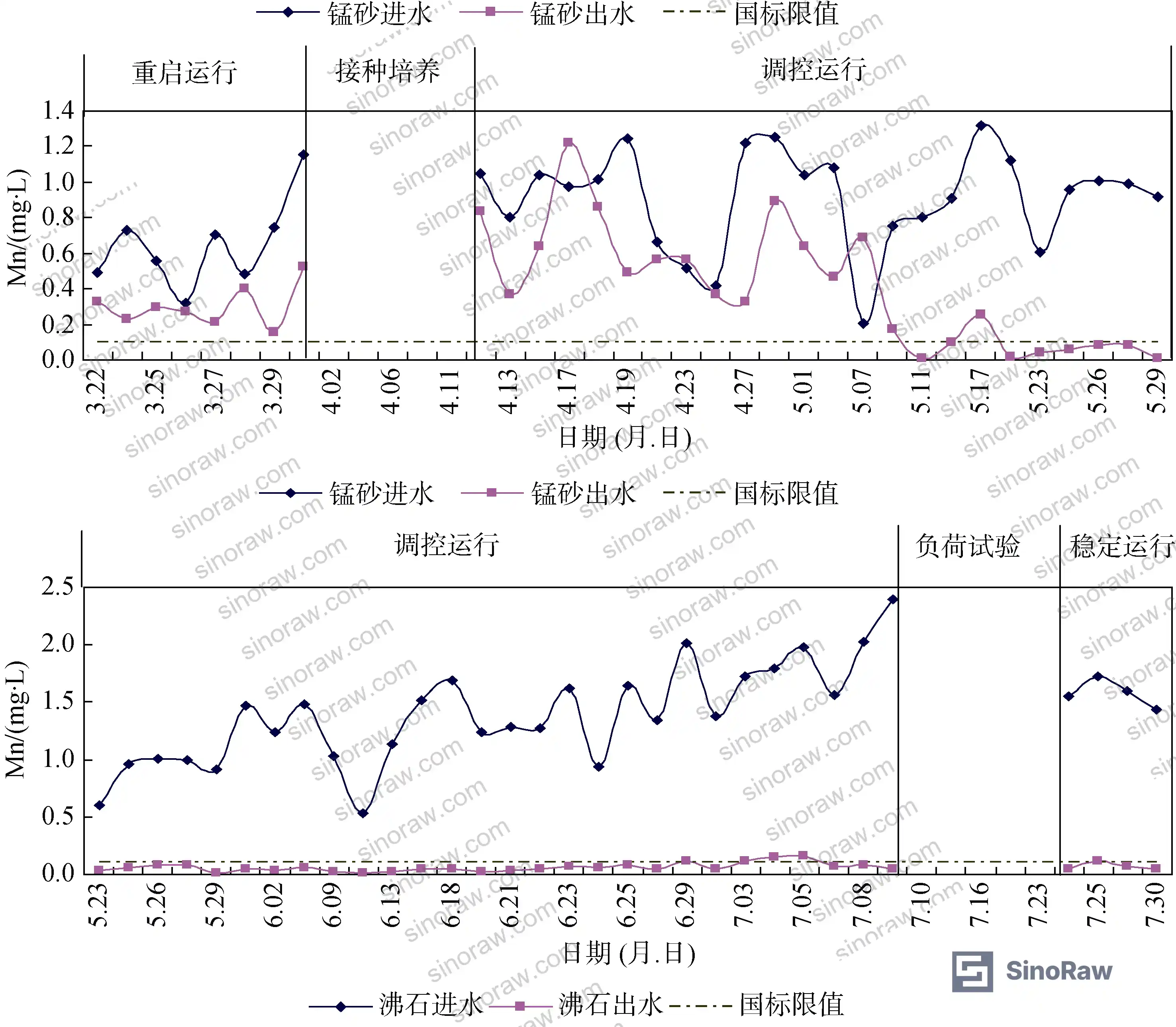
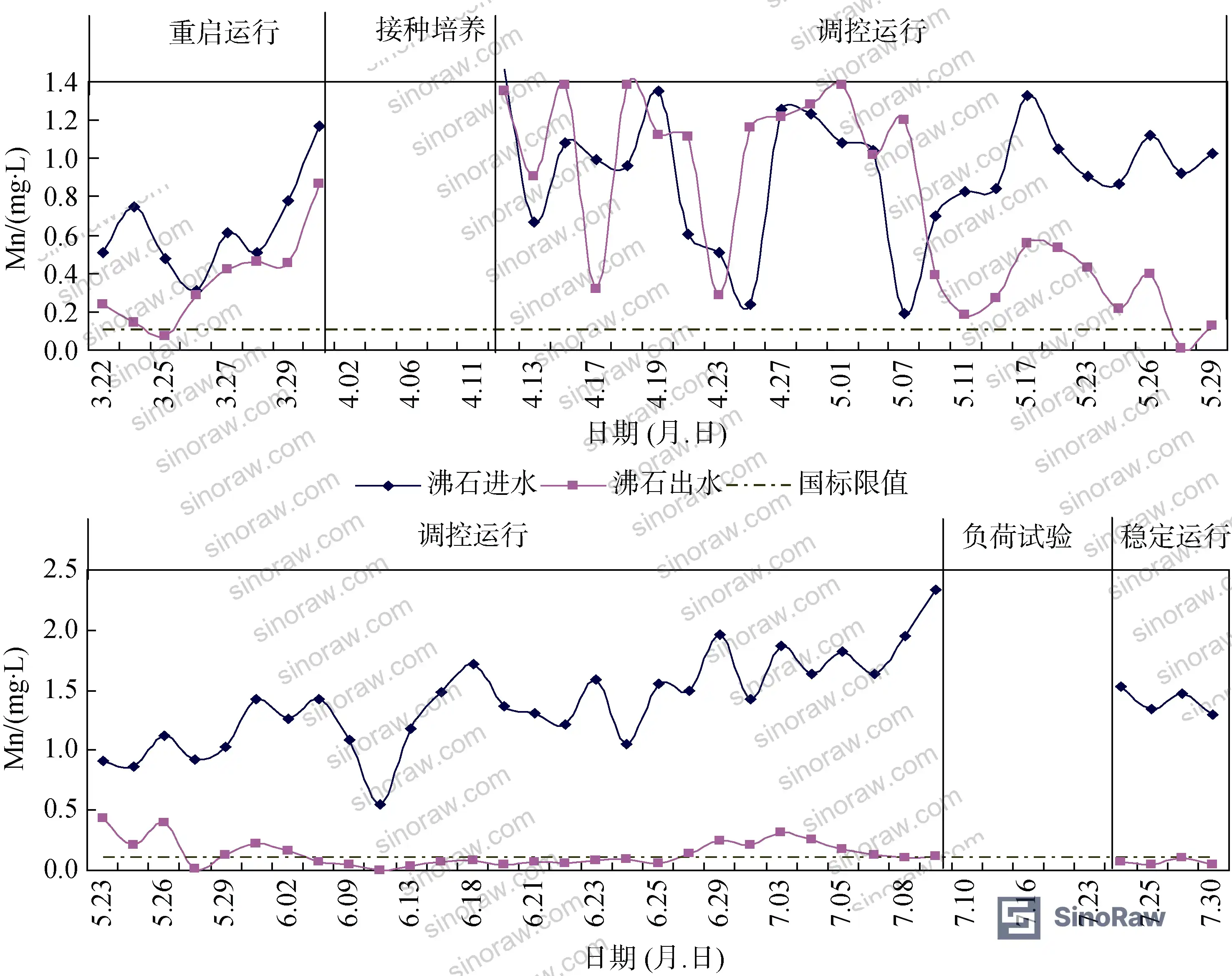
After a shutdown period of approximately 75 days, both columns required biological restart. At startup, with inlet iron at 1.61 mg·L⁻¹, manganese sand outlet was 0.52 mg·L⁻¹ and zeolite outlet was 0.92 mg·L⁻¹ — both non-compliant, indicating near-complete loss of biological activity during dormancy.
Once re-established, load testing pushed filtration velocity to 6.5 m·h⁻¹ with inlet iron up to 6.29 mg·L⁻¹. Manganese sand handled this and maintained compliant effluent. Zeolite reached its operational limit at a filtration velocity of 6.5 m·h⁻¹ with inlet TFe of 4.97 mg·L⁻¹ — beyond that, it could not maintain effluent quality. The system was then dropped to 4 m·h⁻¹ for stable operation.
On manganese removal during spring-summer: inlet Mn ranged from 0.48 to 1.15 mg·L⁻¹ in the early phase, with maximum removal below 0.6 mg·L⁻¹ from either media. In the controlled later phase, inlet Mn was stepped up to 2.49 mg·L⁻¹. By this stage, both media achieved average removal rates above 90%, with stable operation at 4 m·h⁻¹ for 5 consecutive days without effluent exceedance.
Biological Activation Mechanism and Filter Media Barrier Properties #
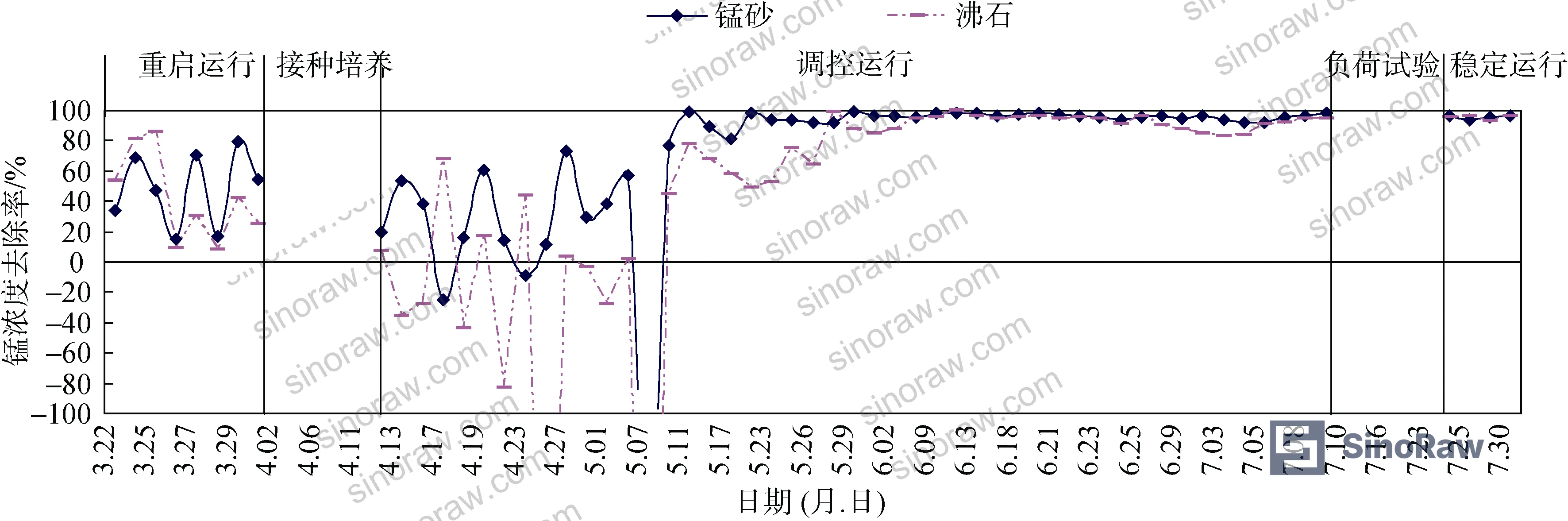
Understanding why manganese sand outperforms zeolite requires understanding the three-layer removal mechanism at work. Pure physical adsorption — what zeolite relies on — has finite capacity and degrades once sites are saturated. Manganese sand adds two more layers: contact catalytic oxidation via MnO₂ surface coating, and biological oxidation by iron-manganese oxidizing bacteria in the biofilm.
Iron bacteria counts in mixed iron-manganese media culture support this: growth in iron-only media reaches 2.0 × 10⁴ cells·mL⁻¹, in manganese-only media drops to 0.1 × 10⁴ cells·mL⁻¹, and in co-present iron-manganese media rises to 3.0 × 10⁴ cells·mL⁻¹. The co-presence of iron actually promotes bacterial growth — which is mechanistically why groundwater with both contaminants can reach stable biological treatment once the biofilm matures.
The problem is startup and temperature sensitivity. Bacterial adaptation takes time. During that window, neither media reliably meets compliance limits on manganese. Most procurement engineers specify filter media based on steady-state rated performance — but it’s the startup curve and the low-temperature floor that determine whether the installed system actually passes inspection. Honestly, the failure to specify minimum temperature operating range is one of the most consistent gaps I see in supplier qualification packages for biological filter media.
Most procurement teams are also unaware that dissolved oxygen concentration is a necessary but not sufficient condition for biological manganese removal — the trial data at sub-10°C conditions with DO at 6–9 mg·L⁻¹ confirms this clearly. Adequate DO does not compensate for thermal suppression of bacterial metabolism. This has implications for winter operation specs and media selection in cold-climate applications.
For buyers sourcing filter media as part of packaged treatment systems, the Specialty Polymers and Advanced Materials categories on this site cover complementary structural and functional materials used in filter housing and media support systems.
For compliance framing, filter media used in water treatment systems may fall under REACH Regulation (EC) No 1907/2006 if media contains regulated substances, and supplier documentation should address this. Separately, for broader quality management verification, ISO 9001:2015 certification should be treated as a baseline — not a differentiator — when evaluating filter media manufacturers.
Practical Guidance for Buyers #
The data from this study resolves a common procurement debate: manganese sand costs more than zeolite per unit volume, and buyers frequently ask whether zeolite is an acceptable substitute. The short answer is no, for any application requiring sustained manganese removal. Zeolite’s adsorption-only mechanism exhausts quickly, and the biological backup that would sustain removal never develops in the same way it does with manganese sand’s catalytic surface.
That said, even manganese sand isn’t a simple specification. At our sourcing operation — we work with procurement engineers globally to identify and qualify Chinese industrial suppliers, and handle RFQs across filtration and treatment materials — the most common gap in supplier documentation is the absence of low-temperature performance data. Suppliers will provide removal efficiency numbers at ambient or elevated conditions and omit the below-10°C behavior entirely. Require that data explicitly.
Practically, the operating window for reliable biological manganese removal appears to be above 10°C water temperature, with dissolved oxygen sustained above 3.42 mg·L⁻¹ (the lower bound observed during stable spring-summer operation). Below that temperature threshold, expect degraded performance regardless of what the media specification sheet claims.
Sampling procedure rigor also matters. Biological filter media performance is not uniform lot-to-lot, because MnO₂ coating activity and inoculation history affect real-world removal capacity. For incoming inspection, ISO 2859-1:1999 provides attribute sampling procedures that give a defensible statistical basis for lot acceptance decisions — use it.
Need help identifying qualified suppliers for biological filter media or groundwater treatment components? Talk to our sourcing team →
Supplier Qualification Questions #
- What is your manganese sand’s MnO₂ content by mass percentage, and what test method do you use to verify it — can you provide batch certificates showing consistent values across at least three production lots?
- At what minimum water temperature does your filter media maintain manganese removal efficiency above 90%, and do you have continuous monitoring data from a column test run at temperatures below 10°C to support that claim?
- What is the maximum rated filtration velocity (m·h⁻¹) at which your manganese sand column maintains effluent iron below 0.3 mg·L⁻¹, and at what inlet TFe concentration was that rating established — can you confirm performance at inlet iron concentrations up to 6.29 mg·L⁻¹?
- How long does biological startup take in your media from a cold-restart condition (i.e., after a 60+ day shutdown), and what is the expected effluent iron and manganese concentration during that startup period before compliance is achieved?
- What is the dissolved oxygen requirement range (mg·L⁻¹) for stable biological manganese oxidation in your media specification, and do you have test data showing what happens to effluent Mn when DO drops below 3.4 mg·L⁻¹?
Sourcing Checklist #
- ☐ Supplier provides iron removal rate data showing ≥85% across variable inlet concentrations from 1.34 to 6.29 mg·L⁻¹ under column test conditions
- ☐ Manganese removal efficiency data demonstrates ≥90% average in sustained biological operation phase (not just peak values)
- ☐ Low-temperature performance data provided — column test results at water temperature below 10°C with measured effluent Mn values
- ☐ Filtration velocity rating confirmed for maximum load condition — supplier specifies the inlet TFe concentration at which velocity limit (6.5 m·h⁻¹) was tested
- ☐ Supplier documents biological startup time and startup-phase effluent quality after a cold restart following extended shutdown (≥60 days)
- ☐ Effluent compliance with TFe < 0.3 mg·L⁻¹ and Mn < 0.1 mg·L⁻¹ confirmed against national potable water standard (GB5749–2006 or equivalent)
- ☐ Supplier provides dissolved oxygen operating range specification (confirmed minimum ≥3.4 mg·L⁻¹ for biological activity)
- ☐ ISO 9001:2015 certification in scope covering filter media production, with valid certificate date
Key Specifications Table #
| Parameter | Recommended Value | Verification Method |
|---|---|---|
| Iron removal rate (steady-state) | 85–99% | Column test at inlet TFe 1.34–6.29 mg·L⁻¹; orthophenanthroline spectrophotometry on effluent samples |
| Manganese removal rate (matured biological operation) | ≥90% average | Column test at inlet Mn up to 2.49 mg·L⁻¹; formaldoxime spectrophotometry; Hach DR/2500 or equivalent |
| Maximum filtration velocity (manganese sand, compliant effluent) | 6.5 m·h⁻¹ at TFe ≤ 6.29 mg·L⁻¹ | Load test — measure outlet TFe during step-up velocity trials |
| Operating temperature minimum for biological removal | > 10°C water temperature | Monitor effluent Mn during temperature ramp-down; DO simultaneously confirmed ≥ 3.4 mg·L⁻¹ |
| Dissolved oxygen operating range | 3.42–5.71 mg·L⁻¹ | In-line DO sensor calibrated against Winkler titration; record DO and effluent Mn simultaneously |
| Effluent iron limit (potable standard) | < 0.3 mg·L⁻¹ | Spectrophotometry per GB5749–2006; sampling at steady-state and during load stress |
| Effluent manganese limit (potable standard) | < 0.1 mg·L⁻¹ | Same method; critical check during first 30 days of biological startup |
| Iron bacteria count (co-presence condition) | ≥ 3.0 × 10⁴ cells·mL⁻¹ | Culture medium growth assay; co-present Fe²⁺ and Mn²⁺ in growth medium |
Can’t find a supplier meeting these specs? Submit your requirements and we’ll match you within 48 hours.
References #
Data source: Biological Filter Media Performance for Simultaneous Iron and Manganese Removal from Groundwater: A Comparative Column Study of Manganese Sand and Zeolite, P.-K. Peng et al., Journal of Environmental Chemical Engineering, 2023
Frequently Asked Questions #
Can zeolite be used as a drop-in replacement for manganese sand in biological iron-manganese removal systems?
No. While zeolite shows comparable iron removal in the short term — both media achieved 85–99% iron removal in autumn-winter trials — zeolite’s manganese removal relies entirely on physical adsorption, which saturates within approximately 10 days. Manganese sand maintains removal through both catalytic oxidation and biological mechanisms, which is why its long-term manganese removal averages ≥90% while zeolite’s approaches zero.
Why does biological filter media performance degrade in winter, even with adequate dissolved oxygen?
Water temperature below 10°C suppresses the metabolic activity of iron-manganese oxidizing bacteria. The trial data showed effluent manganese rising to non-compliant levels during cold periods even when DO was at 6–9 mg·L⁻¹ — well above the biological activity threshold. Dissolved oxygen is a necessary but not sufficient condition; thermal suppression overrides it. Buyers specifying media for cold-climate or winter operation need to require explicit low-temperature test data.
How long does it take for biological filter media to reach stable performance after installation or restart?
Based on the spring-summer restart data, after a 75-day shutdown, both media columns were non-compliant at startup and required a controlled re-inoculation and ramp-up period before reaching stable performance. Manganese sand reached effluent Mn < 0.1 mg·L⁻¹ ahead of zeolite during the spring-summer startup. Buyers should budget for a commissioning period and should not evaluate media performance against compliance standards during the initial startup phase.
What inlet iron and manganese concentrations should I use to stress-test a supplier’s performance claims?
Use inlet TFe at 6.29 mg·L⁻¹ and inlet Mn at 2.49 mg·L⁻¹ as upper-bound test conditions — these are the peak values from the study’s controlled load phase. At those concentrations, manganese sand maintained compliant effluent at 4 m·h⁻¹ filtration velocity. These are reasonable incoming inspection challenge conditions for any supplier claiming high-performance biological filter media.
Does co-presence of iron and manganese help or hurt overall removal efficiency?
Counterintuitively, it helps biological performance. Iron bacteria growth is highest in co-present iron-manganese media, reaching 3.0 × 10⁴ cells·mL⁻¹ versus 2.0 × 10⁴ in iron-only and 0.1 × 10⁴ in manganese-only conditions. This means real-world groundwater with both contaminants — which is the common case — supports a more robust biofilm than single-contaminant water.
Published by sinoraw.com Technical Team | Request a sourcing quote


