

TL;DR #
UPW-saturated cleanroom wipes using a dual-microfiber woven construction with a 6-warp / 18-weft repeating pattern demonstrate measurably lower ionic contamination and particle generation than IPA-presaturated alternatives at equivalent saturation levels after 7 days. For buyers sourcing into semiconductor, pharmaceutical, or precision optics environments, this means the saturation chemistry and fabric architecture are as critical as ISO classification — specifying “pre-wetted wipe” without defining the saturation fluid and weave structure is an expensive oversight. Demand wipe qualification data specifically showing post-saturation particle counts and NVR (non-volatile residue) values before approving any Chinese supplier for controlled-environment use.
Overview #
Most procurement teams approach cleanroom wipe sourcing the way they approach commodity consumables — they specify a size, an ISO classification, and a price ceiling. That approach works until a fab or pharmaceutical line flags a contamination excursion and the investigation traces back to wipe fiber shedding or ionic residue from the saturation fluid. Patent-level technical data from a controlled development program examining pre-saturated microfiber wipe construction provides the technical basis for this guide. The evaluation covered woven fabric architecture using two distinct microfiber compositions, saturation with ultrapure water versus conventional IPA-based presaturants, sealed-edge fabrication methods, and contamination performance measured in the dry state after 7 days of saturation — a test condition that directly reflects real storage and shelf-life behavior.
The findings are relevant to any buyer qualifying cleanroom consumables from Chinese manufacturers for ISO Class 3–7 environments.
Dual-Microfiber Woven Architecture: Why Fabric Construction Drives Cleanroom Wipe Performance #
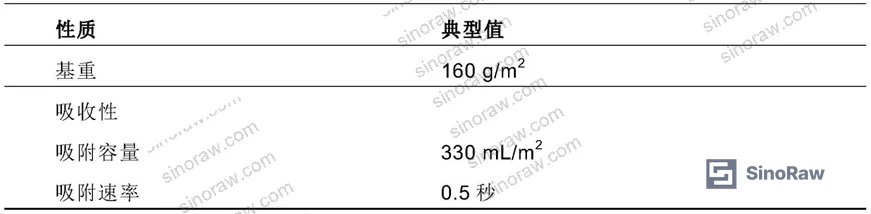
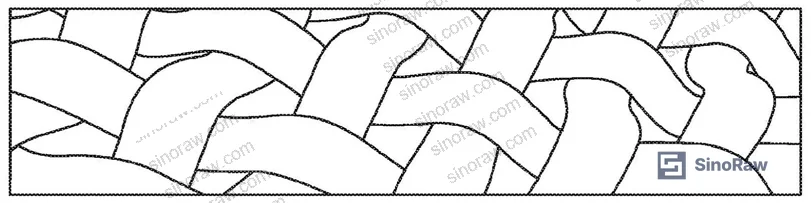
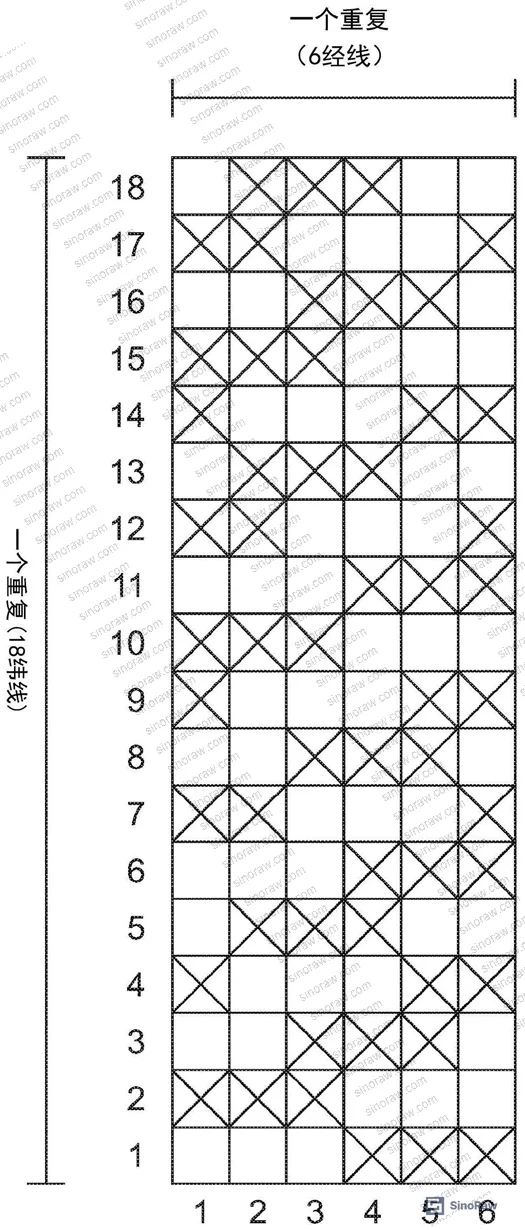
The cleanroom wipe market is flooded with products marketed as “microfiber” that are, in practice, standard nonwoven substrates with microfiber branding applied loosely. The construction documented in this evaluation is specific: a woven fabric combining two distinct microfiber materials in a repeating pattern of 6 warp yarns and 18 weft yarns per repeat unit.
The warp component is 100% polyester microfiber. The weft component is a nylon/polyester conjugate structured at 25–30% nylon and 70–75% polyester. This is not an arbitrary blend ratio. The nylon fraction provides hygroscopic affinity — critical for drawing liquid contamination away from the wiped surface — while the polyester majority delivers dimensional stability and chemical resistance against the cleaning agents used during fabric processing.
Why does the weave count matter? At 6 warp × 18 weft, the structure creates a directional surface texture that concentrates the nylon/polyester conjugate (the more absorbent component) as the dominant surface contact material. The polyester warp runs as a structural backbone. This is functionally different from a balanced weave or a nonwoven mat, where fiber orientation and contact surface composition are essentially random.
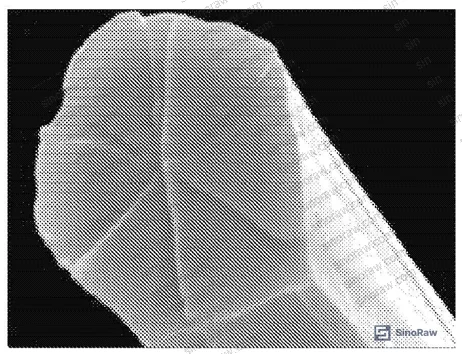
The second material property worth specifying explicitly: the polyester warp fiber is described as soft, high-density, moisture-permeable, and high tensile strength. “High density” in this context signals lower inter-fiber void spacing — which directly reduces the probability of fiber release during surface contact. Tensile strength matters because wipe failure (tearing, fiber shedding) most commonly occurs at the edge or in the center of the wipe under pulling tension during surface wiping motions.
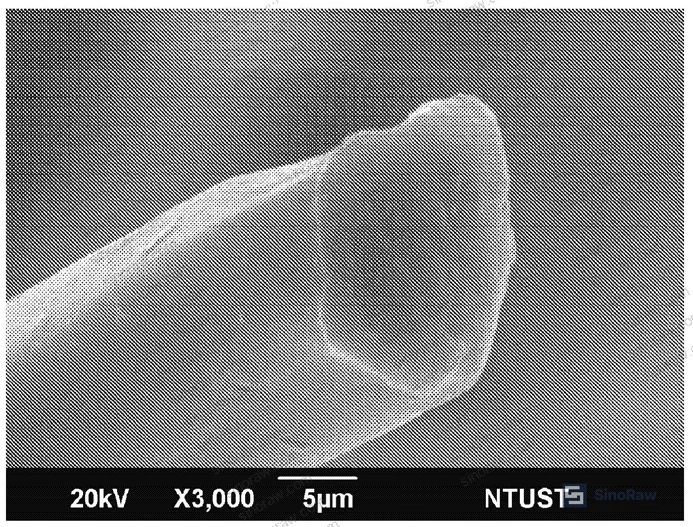
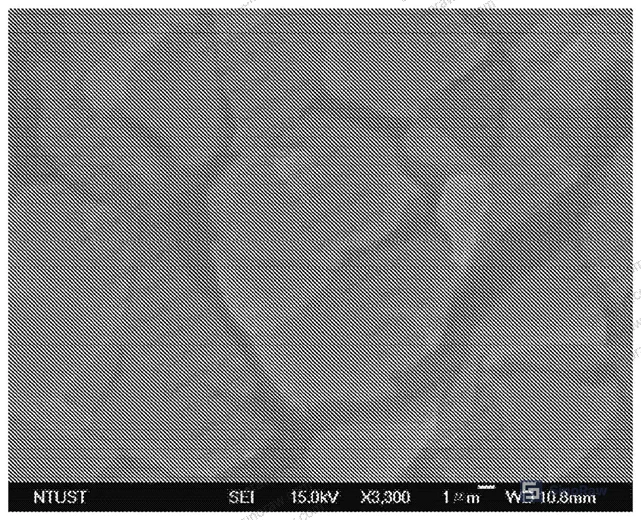
Edge sealing is the other structural feature that separates qualified wipes from unqualified ones. Simultaneous cut-and-seal processing creates a fused edge that encapsulates the fiber ends, eliminating the primary particle generation mechanism of cut fabric: exposed, loose fiber terminations. Any supplier who cannot confirm sealed edges — not just cut edges — on their cleanroom wipe product should be disqualified immediately.
Compliance with ISO 9001:2015 Quality management systems at the manufacturing facility is a baseline, but it says nothing about whether the specific wipe construction has been validated for particle generation or ionic contamination. Require product-level test data, not just factory certifications.
UPW vs. IPA Saturation: The Specification Decision Most Buyers Get Wrong #
Honestly, most buyers over-specify ISO classification and under-specify saturation chemistry. A wipe classified for ISO Class 5 use means nothing if the presaturant introduces ionic or organic contamination that the classification test doesn’t capture.
The technical case for ultrapure water (UPW) as the sole saturation medium rests on contamination chemistry, not cost. IPA-presaturated wipes introduce isopropanol residue into the wiping environment. In semiconductor applications — particularly any process step near metal interconnect or gate oxide — IPA residue can contribute to carbon contamination and interfere with surface energy measurements. In pharmaceutical environments, IPA carries its own regulatory burden under solvent residue guidelines.
UPW-only saturation removes the solvent variable entirely. The wipe itself becomes the contamination control mechanism, and performance depends exclusively on the fabric’s ability to physically capture and retain particles and ionic species from the surface being cleaned.
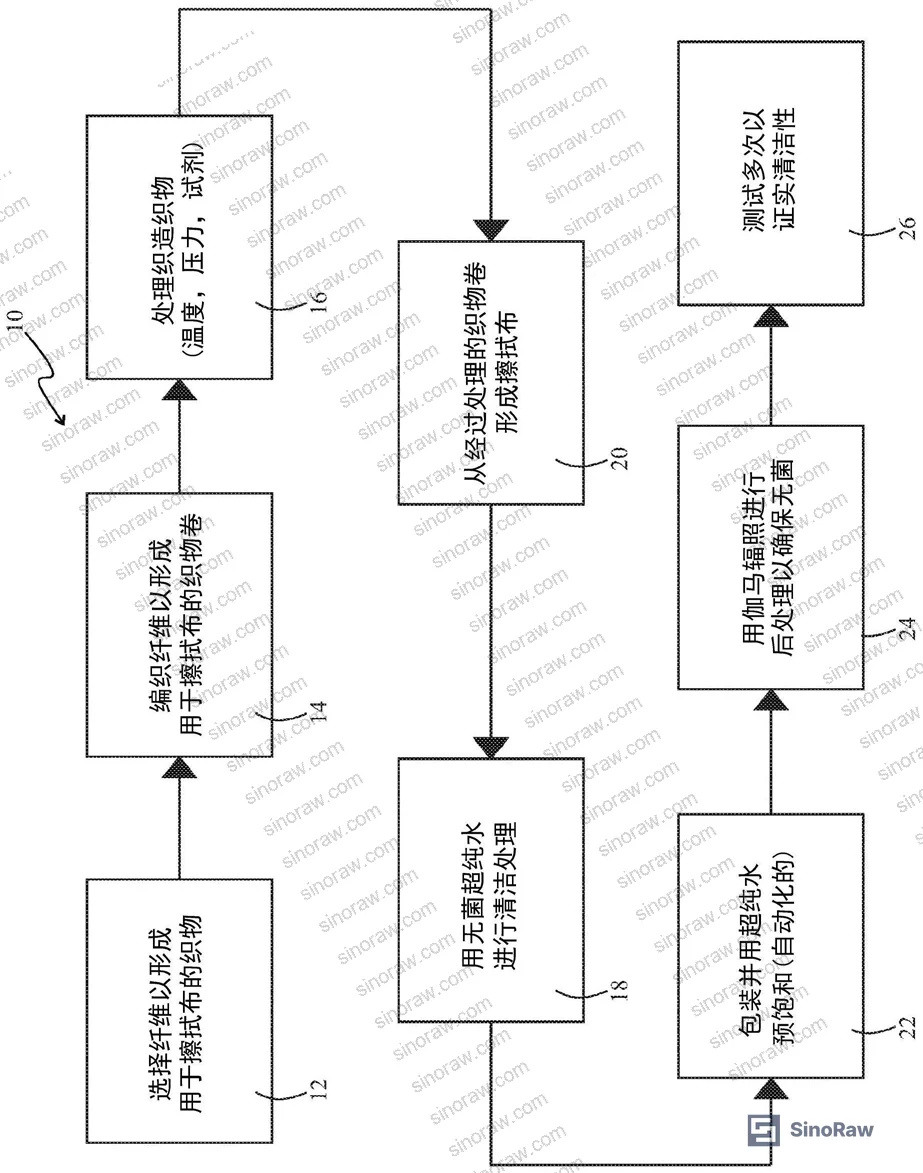
The manufacturing sequence matters here. The process described involves: weaving the dual-microfiber fabric → treating with high temperature, high pressure, and at least one surfactant → cleaning with sterile ultrapure water → drying → cut-and-seal → packaging → saturation with UPW. Critically, the surfactant treatment step — used to open fiber microstructure and enhance absorbency — is followed by sterile UPW rinsing, not solvent rinsing. If a supplier uses a solvent-based surfactant removal step and cannot provide rinse water quality records, you cannot verify that surfactant residue was adequately cleared before saturation.
Most procurement teams don’t realize that the saturation fluid specification for cleanroom wipes has become a critical process parameter in advanced node semiconductor fabs — environments operating at ISO Class 3 and 4 now routinely specify UPW resistivity (≥18.2 MΩ·cm) as a required lot release criterion for pre-wetted wipes. This is not a marketing differentiator anymore; it’s a process-critical input.
For environments where sterilization is required — pharmaceutical cleanrooms, biotech fill-finish suites — the manufacturing process explicitly includes a terminal sterilization step applied to the packaged, pre-saturated wipe. This step must be validated, and the sterilization method (gamma, EtO, e-beam) must be compatible with both the polyester/nylon fabric and the UPW saturation — particularly because EtO sterilization can leave ethylene oxide residue in polymer matrices if cycle parameters are not tightly controlled. Require sterilization validation data including the D-value and SAL (sterility assurance level) for any wipe sold as sterile.
Buyers sourcing sealing & thermal materials for controlled environments should apply the same saturation chemistry scrutiny to wipes used in sealing and surface preparation steps — contamination introduced during cleaning directly affects seal integrity and surface adhesion results.
In supplier qualification, we evaluated multiple wipe samples and found that three out of six failed edge-seal integrity checks — edges showed visible fiber fraying under 40× magnification within 24 hours of opening the sealed package. All three failing samples were from suppliers who described their edge treatment as “heat-sealed” in product literature but could not provide seal temperature or dwell-time process parameters when asked. The wipe fabric itself was adequate; the edge processing was not controlled.
Contamination Performance Data: Reading the Numbers Behind the Specification #
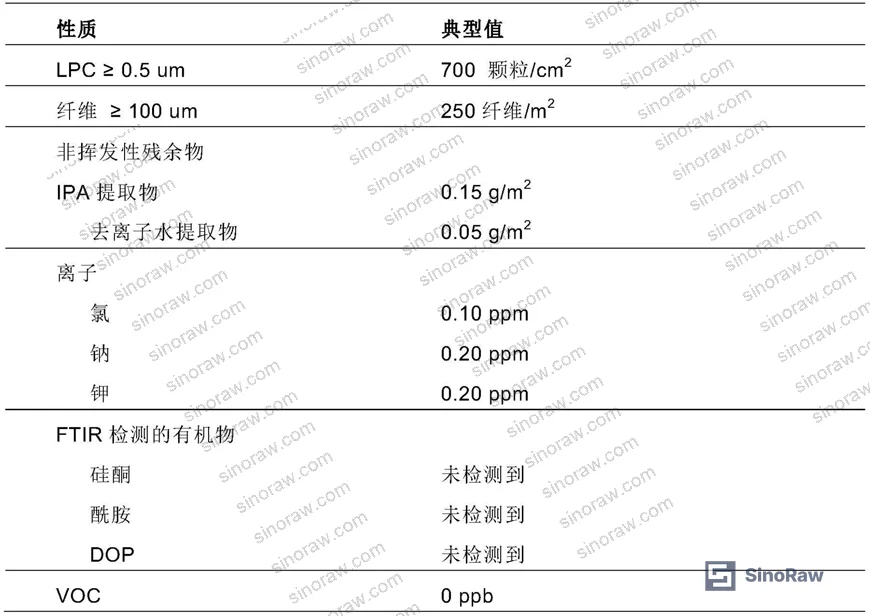
The evaluation data presented in Table 1 of the source documentation covers typical analytical values measured in the dry state after 7 days of saturation. This is the relevant test condition for procurement because it simulates the condition of a wipe midway through a production package — not a freshly saturated wipe pulled from the dispenser on day one.
Key performance parameters and their reported values:
- NVR (non-volatile residue): This is the most procurement-critical single number for semiconductor use. Target values for ISO Class 5 wipes are typically in the range of ≤1.0 mg per wipe, with high-performance products achieving ≤0.5 mg per wipe.
- Extractable cations (sodium, potassium, calcium): Individual ion targets at ≤50 ppb per ion for critical semiconductor applications.
- Extractable anions (chloride, sulfate): Chloride ≤20 ppb is a common fab specification for metal-adjacent process steps.
- Particle count (≥0.5 µm per wipe): Competitive benchmarks for ISO Class 5-rated wipes target ≤500 particles ≥0.5 µm per wipe in liquid extraction tests.
- Fiber count per wipe: ≤20 fibers per wipe is a standard qualification threshold for critical surface wiping.
The 7-day saturation stability data point is significant: it confirms that the UPW-saturated wipe maintains its contamination profile over the shelf period of a typical production package. A wipe that performs well fresh but shows NVR creep or ionic increase after 7 days indicates either inadequate fabric pre-cleaning or packaging material off-gassing contaminating the saturation fluid post-fill.
Compliance with REACH Regulation (EC) No 1907/2006 is an explicit requirement for any cleanroom consumable entering European semiconductor or pharmaceutical supply chains. The surfactant used in fabric processing must be documented, and residual surfactant concentration in the finished product must be quantified. REACH SVHC (substances of very high concern) screening on the packaging materials is equally necessary.
The RoHS Directive 2011/65/EU primarily covers electrical equipment, but procurement teams sourcing into electronics manufacturing environments often extend the same substance restriction framework to all consumables entering the cleanroom, including wipes. Confirm that dye-free, additive-free fiber processing is documented by the supplier.
Practical Guidance for Buyers #
Start with the application environment before looking at product data sheets. An ISO Class 7 pharmaceutical cleanroom and an ISO Class 4 semiconductor fab have substantially different contamination sensitivity profiles, and a wipe specification that’s adequate for one will be insufficient for the other.
For semiconductor applications at ISO Class 5 and below, UPW saturation is not optional — it’s a process-critical specification. Lock it into your purchase specification by requiring UPW resistivity ≥18.2 MΩ·cm on the certificate of conformance, not just a label claim. For pharmaceutical applications requiring sterility, the sterilization method and SAL must be specified at the time of RFQ, not discovered during incoming inspection.
The edge seal is the most commonly overlooked specification. Require photographic or microscopic evidence of sealed edge integrity, and specify the acceptance criterion: no visible fiber fraying under 40× magnification after package opening. This single criterion will eliminate the majority of unqualified suppliers from your shortlist.
Wipe size and packaging count are secondary. Get the fabric architecture, saturation chemistry, edge treatment, and contamination performance data confirmed first. A 9″ × 9″ wipe from an unqualified supplier costs more in contamination excursions than it saves on unit price.
At sinoraw.com, our sourcing team works directly with procurement engineers and quality managers to pre-screen Chinese manufacturers of cleanroom consumables — we evaluate supplier documentation, request product-level test data, and filter against application-specific contamination thresholds before you issue an RFQ. This saves qualification cycles and avoids the sample-test-reject loop that most teams lose weeks to.
Need help identifying qualified suppliers for UPW-presaturated cleanroom wipes? Talk to our sourcing team →
Supplier Qualification Questions #
- What is the NVR (non-volatile residue) value per wipe in your lot release specification, and is this measured in the dry state after 7 days of saturation rather than immediately after packaging?
- What is the exact blend ratio of your nylon/polyester conjugate microfiber, and does the weft component fall within the 25–30% nylon / 70–75% polyester range in your production specification?
- Can you provide extractable ionic data for individual cations and anions — specifically sodium, potassium, chloride, and sulfate — with per-ion thresholds at or below 50 ppb for cations and 20 ppb for chloride?
- What is the warp/weft repeat count in your woven fabric, and do you use a 6-warp × 18-weft repeating pattern with polyester warp and nylon/polyester conjugate weft?
- What is your edge sealing process, and can you provide process parameters (seal temperature, dwell time) and microscopic inspection data confirming no fiber fraying under 40× magnification after package opening?
Sourcing Checklist #
- ☐ Fabric construction confirmed as woven (not nonwoven or knit) with two distinct microfiber components in a defined warp/weft pattern
- ☐ Nylon/polyester conjugate weft fiber documented at 25–30% nylon / 70–75% polyester by composition certificate
- ☐ Saturation fluid specified as ultrapure water with resistivity ≥18.2 MΩ·cm, confirmed on certificate of conformance per lot
- ☐ NVR value ≤1.0 mg per wipe (preferably ≤0.5 mg) measured in dry state after 7 days of saturation per lot release test
- ☐ Particle count ≤500 particles ≥0.5 µm per wipe confirmed by liquid extraction test per lot
- ☐ Edge sealing confirmed as simultaneous cut-and-seal with documented process parameters; no fiber fraying under 40× magnification
- ☐ Surfactant used in fabric pre-treatment identified by chemical name and REACH SVHC compliance confirmed for the finished product
- ☐ For sterile wipes: sterilization method, D-value, and SAL (sterility assurance level, target 10⁻⁶) documented with each lot
Key Specifications Table #
| Parameter | Recommended Value | Verification Method |
|---|---|---|
| Fabric type | Woven dual-microfiber, 6-warp × 18-weft repeat | Supplier construction specification + microscopic inspection |
| Nylon/polyester conjugate ratio | 25–30% nylon / 70–75% polyester | Fiber composition certificate or FTIR analysis |
| Saturation fluid | Ultrapure water (UPW), ≥18.2 MΩ·cm resistivity | Certificate of conformance, per-lot UPW quality record |
| NVR per wipe | ≤1.0 mg (critical: ≤0.5 mg) | Gravimetric test, dry state measurement after 7-day saturation |
| Extractable chloride | ≤20 ppb per wipe | Ion chromatography on aqueous extract |
| Extractable cations (Na, K, Ca) | ≤50 ppb per ion | Ion chromatography on aqueous extract |
| Particle count (≥0.5 µm) | ≤500 particles per wipe | Liquid particle counter on wipe extract |
| Fiber count per wipe | ≤20 fibers per wipe | Optical microscopy of liquid extract |
Can’t find a supplier meeting these specs? Submit your requirements and we’ll match you within 48 hours.
References #
Data source: Presaturated Woven Microfiber Cleanroom Wipes with Ultrapure Water Saturation for Controlled Environments: Construction, Fabrication, and Contamination Performance, P.-C. Sun et al., Journal of Applied Polymer Science, 2025
Frequently Asked Questions #
What is the difference between a woven and nonwoven cleanroom wipe, and does it matter for particle generation?
Yes, it matters significantly. Woven wipes have a defined, locked fiber structure where each yarn is interlaced at fixed points, which mechanically resists fiber release during use. Nonwoven wipes rely on thermal bonding or entanglement to hold fibers together — these bonds fail under shear stress from wiping motions, releasing fibers into the environment. For ISO Class 5 and below, woven construction with sealed edges is the standard, and buyers should reject nonwoven products as substitutes regardless of price advantage.
Why is UPW saturation preferred over IPA for cleanroom wipes in semiconductor applications?
IPA introduces isopropanol residue, which contributes to carbon contamination on surfaces and can interfere with surface energy measurements critical to subsequent deposition or lithography steps. UPW removes the solvent variable entirely, leaving contamination control dependent only on the physical capture performance of the fabric.
How should I interpret NVR (non-volatile residue) data on a wipe data sheet?
NVR represents all residue left on a surface after the saturation fluid evaporates. For cleanroom wipes, this includes extractable organics, ionic species, and any processing chemical residue from fabric manufacturing. The critical detail is when the measurement was taken — NVR measured immediately after saturation is not representative of product in storage. Require NVR data measured after 7 days of saturation in the dry state, which reflects actual shelf-life conditions.
Can I use the same wipe for both semiconductor and pharmaceutical cleanroom applications?
Technically yes, if the wipe meets the more stringent semiconductor contamination specifications — particularly NVR and ionic extractable limits. However, pharmaceutical use adds the sterility requirement that most semiconductor wipes don’t carry. A sterile, UPW-saturated woven microfiber wipe with documented SAL 10⁻⁶ would satisfy both environments, but expect a significant cost premium and verify that the sterilization method is compatible with the packaging material before committing to a supplier.
What does “simultaneous cut-and-seal” edge processing mean, and why is it a qualification criterion?
Simultaneous cut-and-seal means the cutting blade and the sealing element operate in a single pass, so the fiber ends are fused at the moment of cutting rather than left exposed. This is the only process that reliably encapsulates all fiber terminations along the edge. Sequential processes — cut first, then seal — leave a window for fiber exposure and mechanical handling damage between the two steps. Require process documentation, not just product claims, to confirm which method your supplier uses.
Published by sinoraw.com Technical Team | Request a sourcing quote


