

TL;DR #
CNT-reinforced NBR lip seals demonstrated a service life of 631+ hours at 4,000 rpm before any leakage, compared to only 264 hours for standard carbon-black NBR — a 2.4× improvement that directly translates to reduced maintenance downtime in high-speed rotating equipment. Buyers specifying lip seals for gearboxes, pumps, or spindle assemblies running above 3,000 rpm should treat CNT loading as a mandatory specification differentiator, not a premium option. Request bench test data to GBT 14273 at both 4,000 and 6,000 rpm before approving any supplier sample.
Overview #
If you are sourcing NBR rotary lip seals and your supplier cannot explain what filler system they use, that is your first disqualification signal. The performance gap between conventional carbon-black NBR and CNT-reinforced NBR is not incremental — it is categorical, and the bench data makes this impossible to ignore.
Research conducted at a state-level rubber and plastic sealing engineering center evaluated seven CNT loading levels (0, 1, 3, 5, 8, 10, and 20 parts per hundred rubber) across four commercial CNT grades, with physical property testing augmented by full rotary shaft oil seal bench trials run to failure. The test population covered both material coupon characterization and finished seal performance under lubricated oil conditions using #32 machine oil, giving procurement teams something most academic studies lack: actual end-product failure data.
The underlying physics is straightforward. Carbon nanotubes are held together by carbon-carbon covalent bonds — the same bond type that makes diamond hard — giving them a theoretical tensile strength more than 100 times that of steel and approximately 20 times that of conventional carbon fiber. When dispersed into an NBR matrix, this translates into measurable gains in hardness, tensile strength, and modulus without the tradeoffs in media resistance or low-temperature flexibility that many reinforcing fillers impose.
This is relevant to buyers because the NBR seal market is crowded with undifferentiated product. Most suppliers use N550 carbon black as the primary reinforcing filler. CNT-loaded grades are a minority, and the performance difference under high-speed conditions is dramatic enough that it should appear in your specification — not as a suggestion, but as a requirement with numeric thresholds.
For buyers comparing CNT-modified NBR seals alongside other advanced Specialty Polymers or evaluating them within a broader Sealing & Thermal supplier audit, the qualification framework below provides the specific parameters you need to enforce.
CNT Loading Level: How Much Is Enough, and Where the Cliff Is #
This is where most formulation decisions go wrong. The research tested seven discrete CNT loadings and the data shows a clear inflection point at 10 parts per hundred rubber (phr).
Below 10 phr: hardness, tensile strength, and 100% modulus all increase progressively. Compression set increases only slowly — acceptable for dynamic sealing applications. Above 10 phr: compression set climbs sharply, and aged elongation drops significantly, indicating deteriorating fatigue resistance. The sweet spot is 10 phr CNT with a corresponding reduction in N550 carbon black to maintain total filler count.
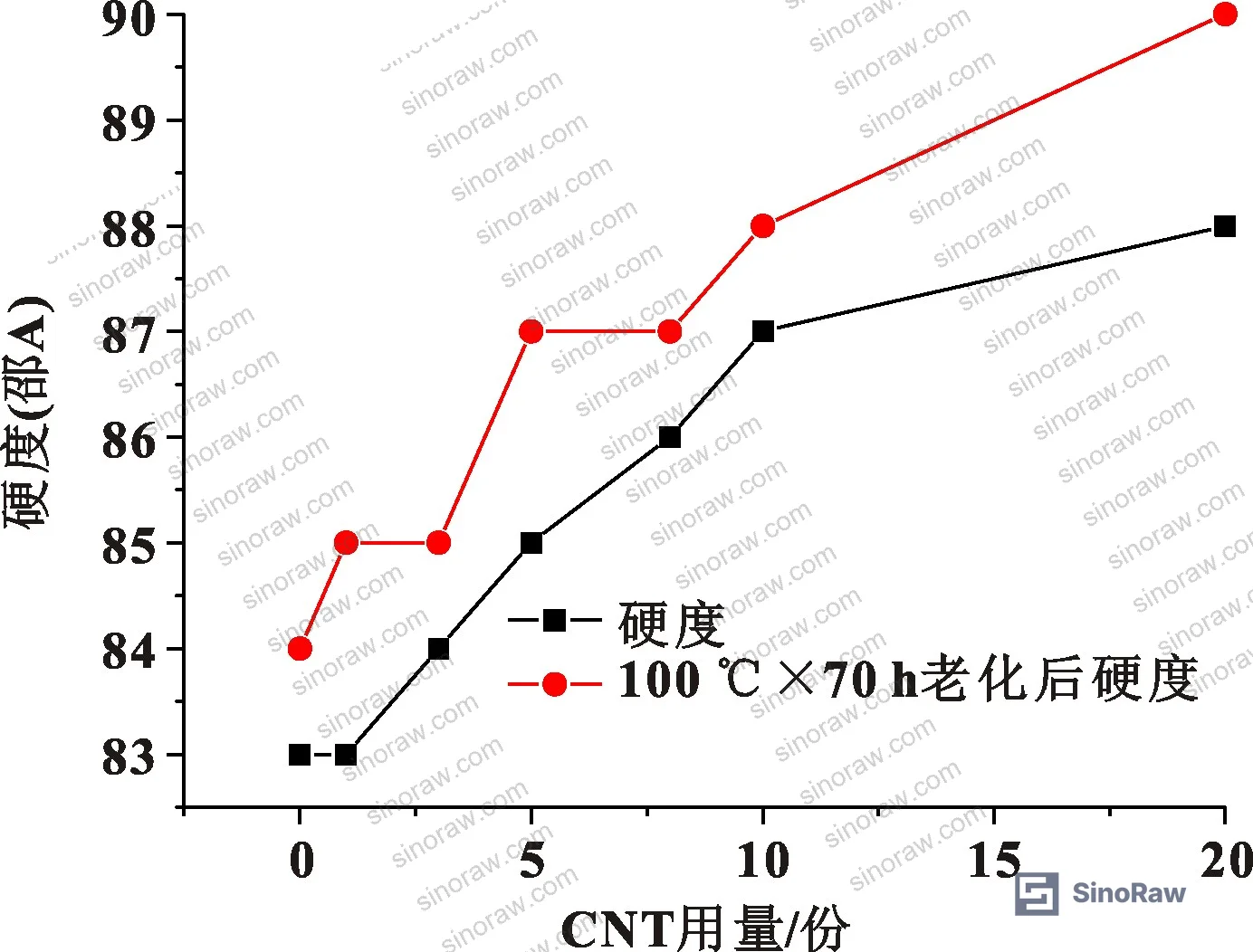
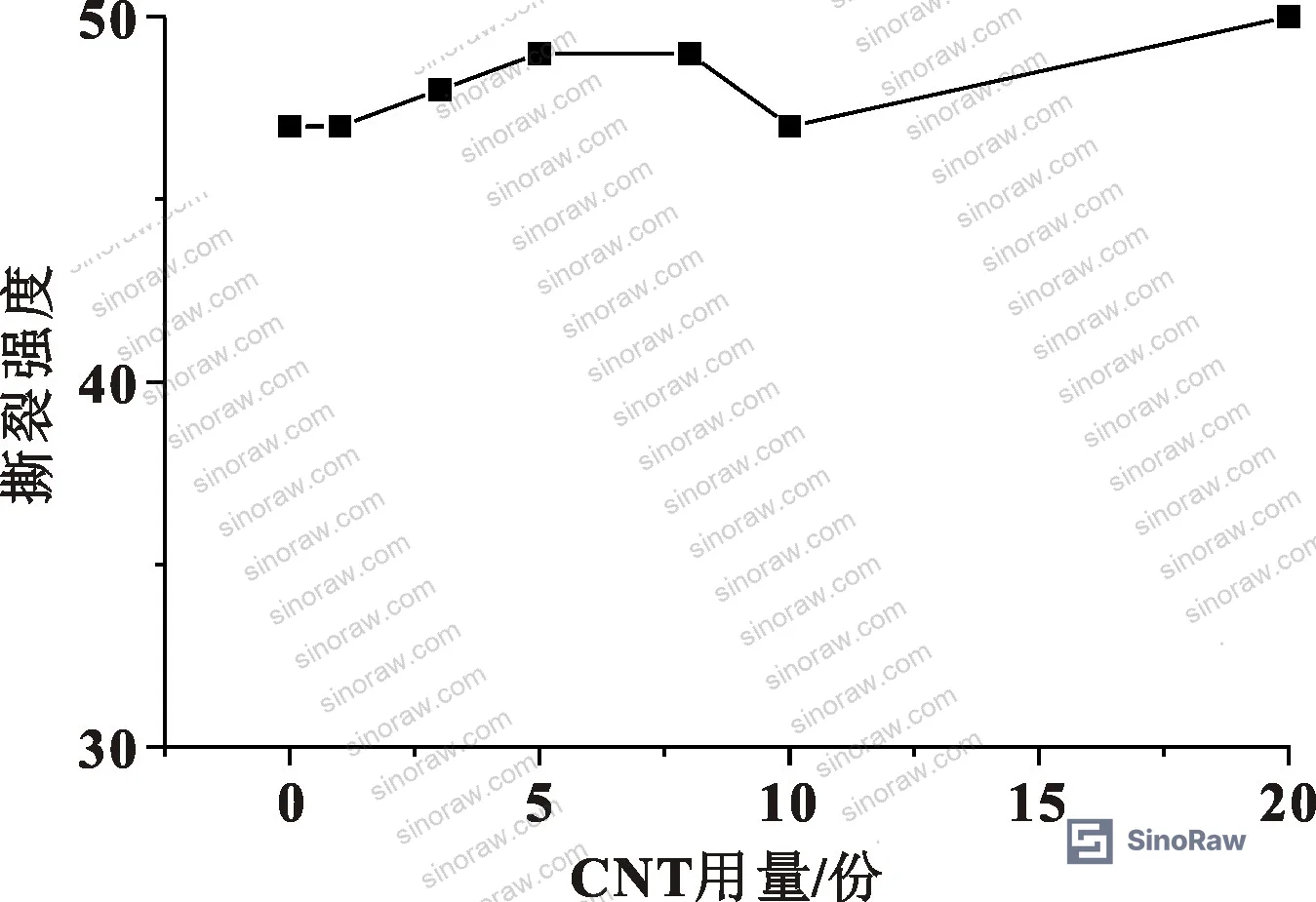
Key data points at the 10 phr optimum:
- Hardness (Shore A): elevated versus baseline, with aging increment of +2 Shore A — stable
- 100% modulus after aging: reaches approximately 12 MPa
- Elongation after aging: decreases with increasing CNT content — this is the warning sign at >10 phr
- Tear strength: essentially unchanged across all CNT loadings — CNT does not reinforce tear resistance the way it reinforces tensile strength
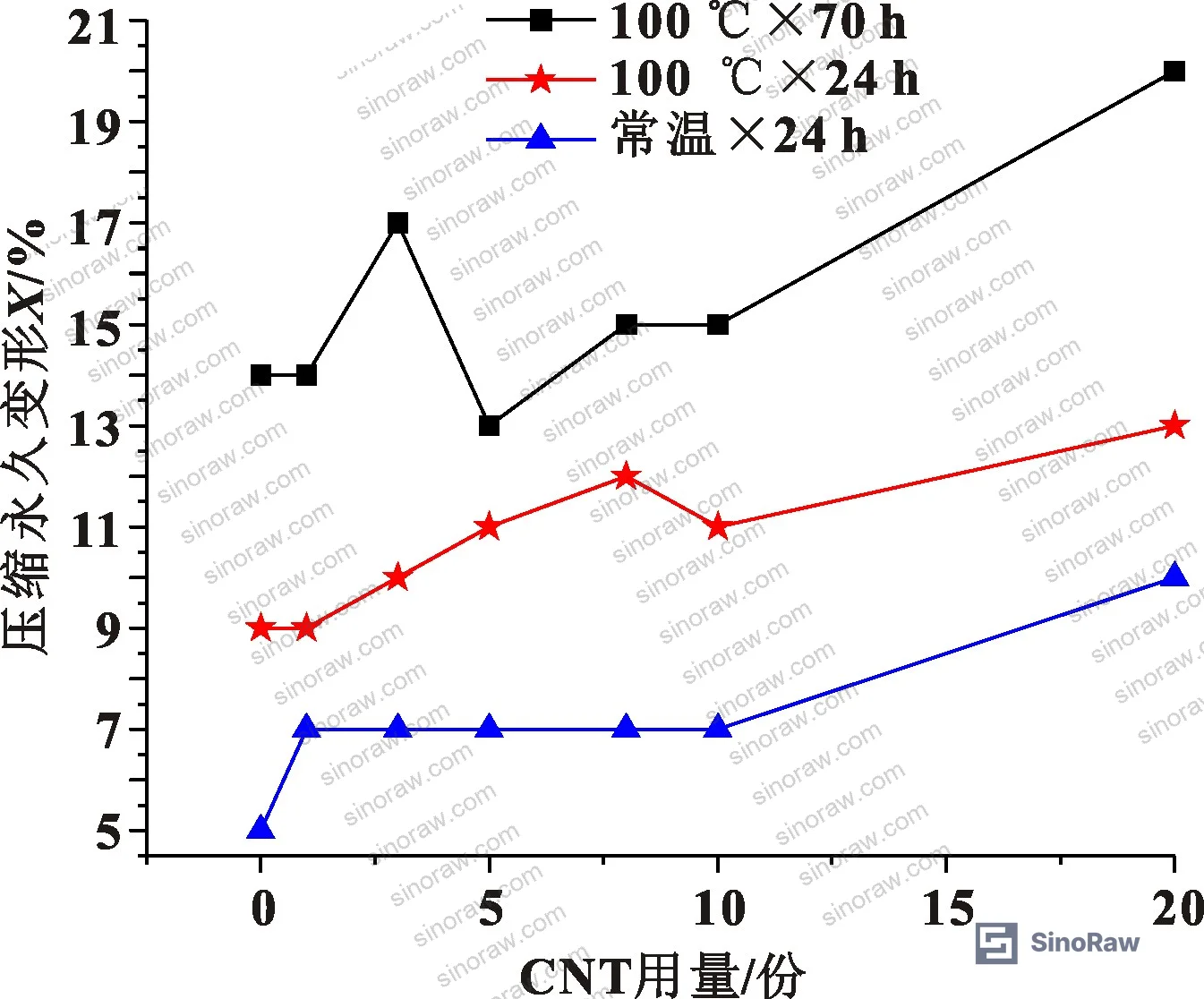
The compression set data is critical for static sealing faces and shaft contact zones. Above 10 phr, compression set at 100°C × 70h increases sharply. A seal that cannot recover its sealing geometry after thermal cycling will leak. This is a hard ceiling, not a guideline.
The RPA (Rubber Process Analyzer) loss factor data is equally telling. Unvulcanized compound loss factor remains essentially flat regardless of CNT loading — CNT does not disrupt mixing behavior. But in the vulcanized compound, loss factor increases with CNT loading, meaning higher internal heat generation under cyclic strain. This was confirmed during bench testing: CNT-loaded seals ran slightly hotter than standard seals, but the thermal conductivity of the CNT network dissipated heat effectively into the oil medium, and no lip degradation was observed.
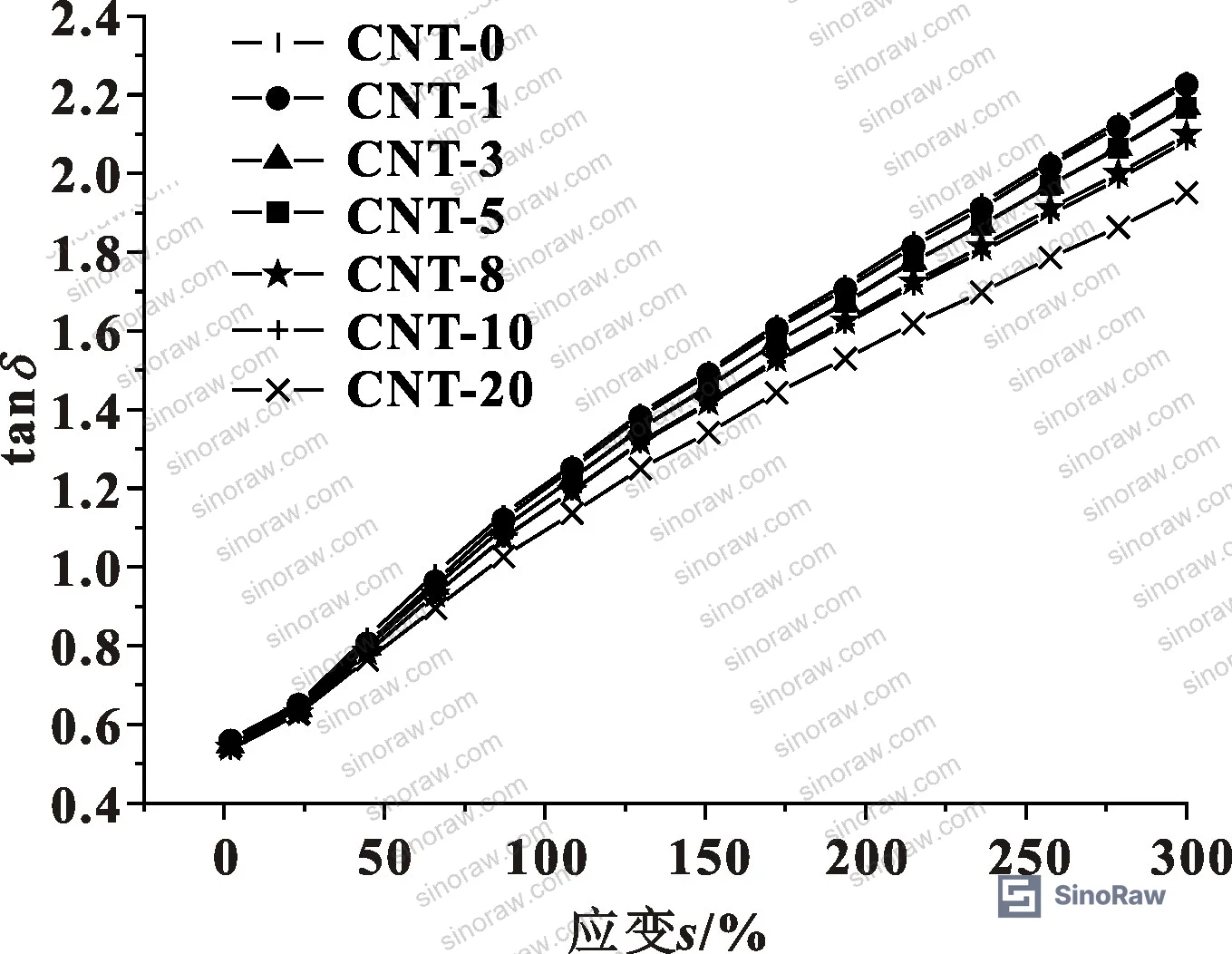
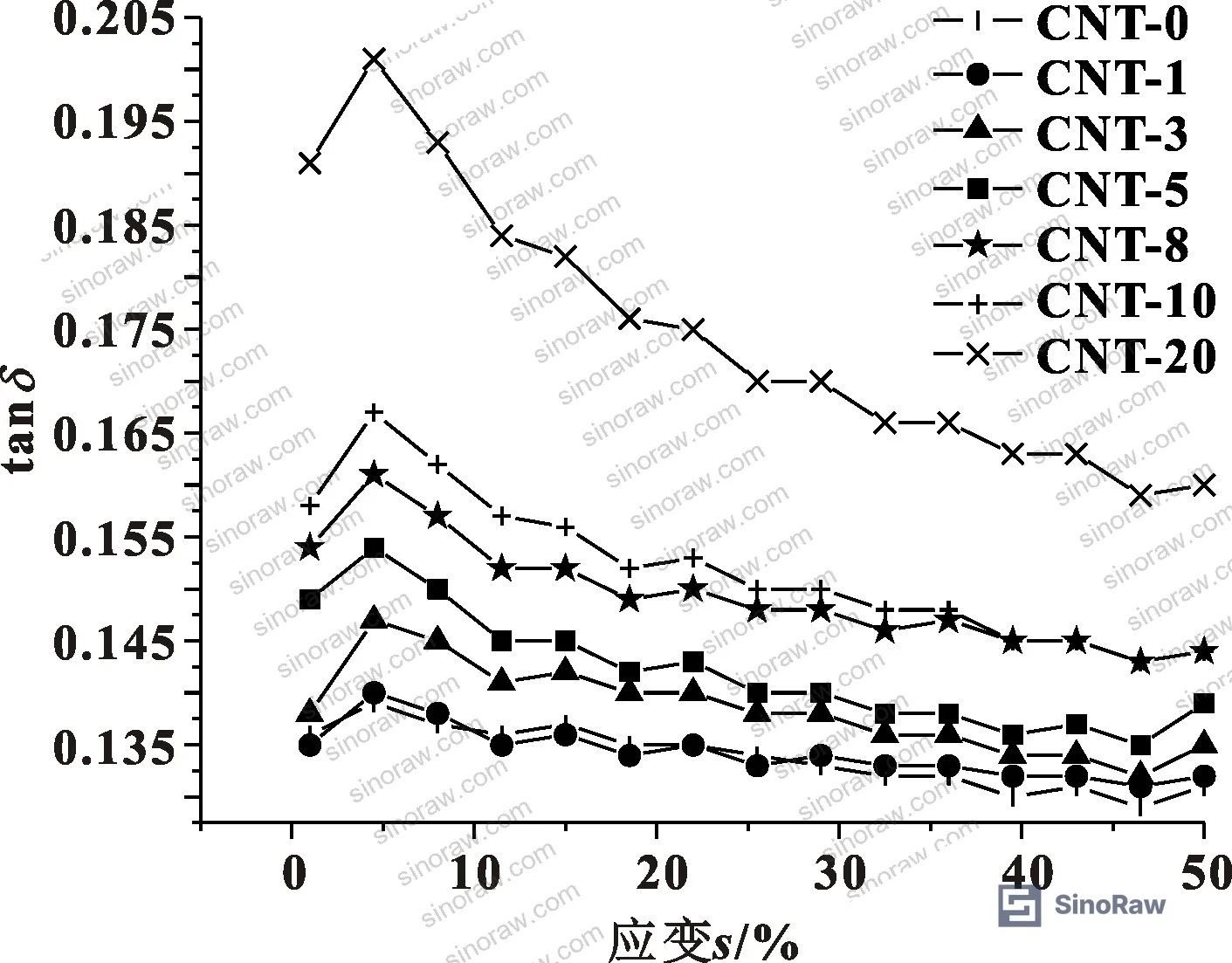
Honestly, most buyers over-specify CNT content because they assume more reinforcement means better seals. The bench data says the opposite — 10 phr is not just a recommendation, it is the tested optimum, and exceeding it actively degrades compression recovery.
CNT Grade Selection and the Real-World Performance Comparison #
Four commercial CNT grades were evaluated at 10 phr loading: IM3, IM4, IM6 (from a Chinese Academy of Sciences-affiliated supplier), and GTR (from a separate domestic supplier). The physical attribute differences between grades are significant — fiber lengths ranging from <30 µm to 20–100 µm, diameters from 10 nm to 40 nm, specific surface areas from >100 m²/g to 180–200 m²/g.
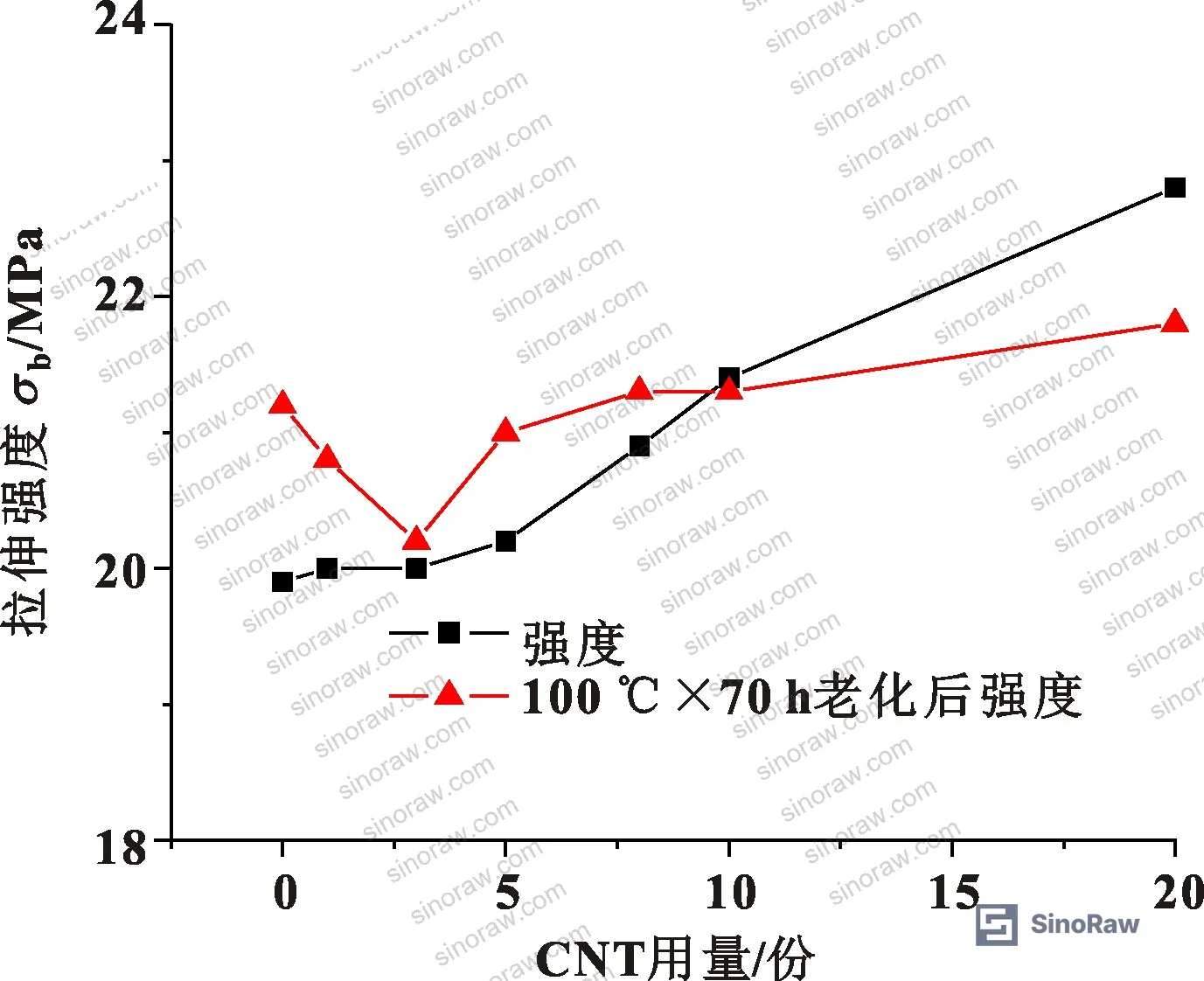
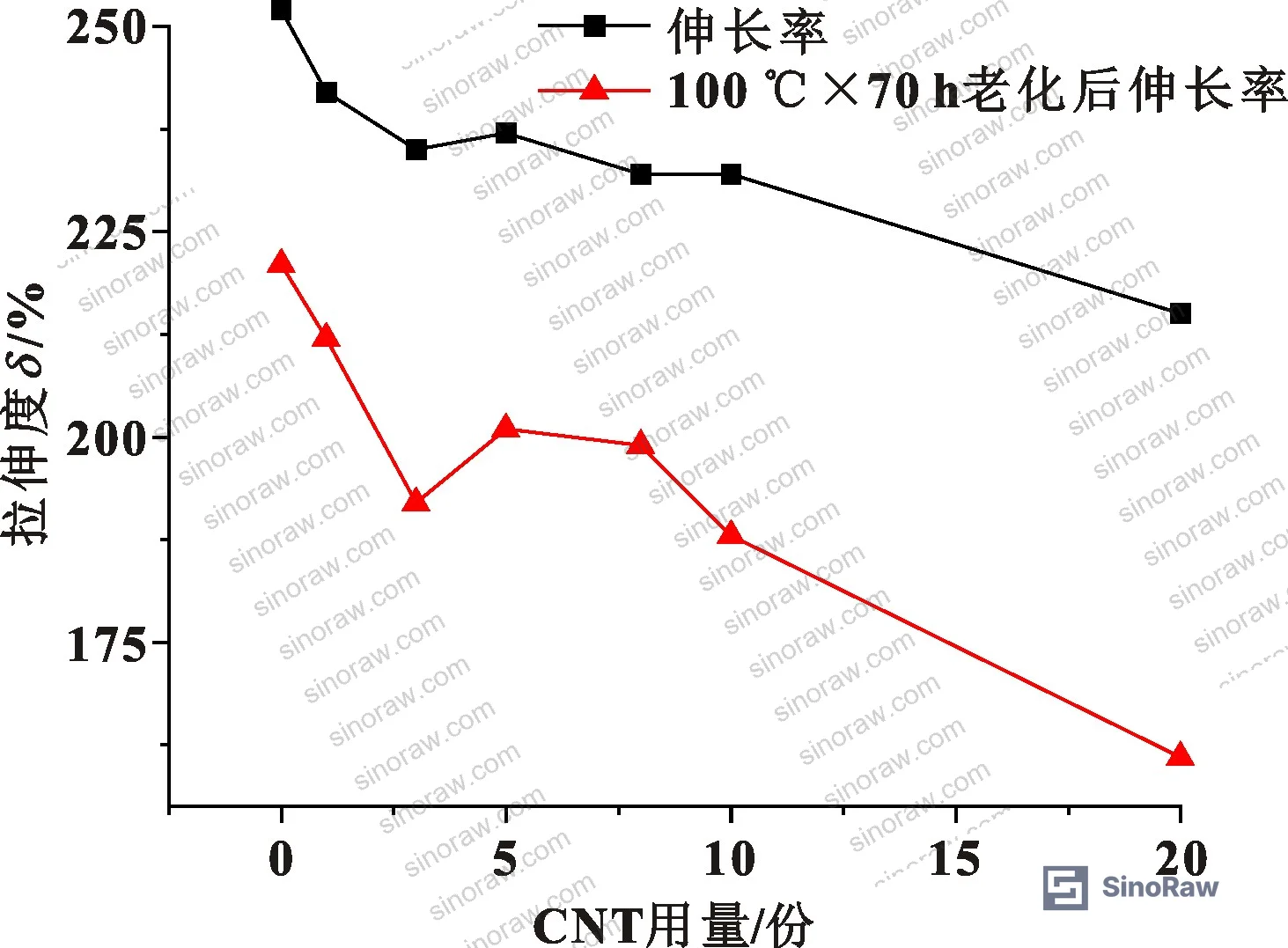
The performance comparison across all four grades at the same 10 phr loading level:
| Parameter | IM3 | IM4 | IM6 | GTR |
|---|---|---|---|---|
| Shore A Hardness | 86 | 87 | 82 | 86 |
| Tensile Strength (MPa) | 20.3 | 21.4 | 17.1 | 20.2 |
| Elongation (%) | 235 | 232 | 241 | 231 |
| 100% Modulus (MPa) | 9.2 | 11.4 | 7.1 | 8.3 |
| Tear Strength (kN/m) | 54 | 47 | 55 | 57 |
| Compression Set 100°C × 70h (%) | 22 | 15 | 20 | 22 |
| Brittle Temperature (°C) | −23 | −22 | −21 | −25 |
| Volume Change in #1 Standard Oil (%) | −2 | −1 | −1 | −2 |
| Volume Change in #3 Standard Oil (%) | +10 | +14 | +14 | +10 |
What jumps out immediately: GTR and IM3 are functionally equivalent across almost every parameter. IM4 has the best compression set at 15% versus 22% for GTR and IM3 — and shorter fiber geometry is the explanation. IM4 and IM6 have fiber lengths in the 10–30 µm range, while IM3 runs 20–100 µm. Shorter fibers pack more uniformly and reduce stress concentration at the fiber-matrix interface under compressive recovery.
The procurement implication is blunt. IM3/IM4/IM6 cost approximately 3× more than GTR grade. For most industrial sealing applications where compression set performance at GTR’s 22% is acceptable, GTR delivers equivalent functional results at one-third the filler cost. If your application requires compression set below 20% — high-pressure static faces, for example — then IM4’s 15% value justifies the premium.
Critically, low-temperature performance (brittle point −21 to −25°C), media resistance, rebound resilience (22–25%), and density (1.23–1.26 g/cm³) are all essentially insensitive to CNT grade selection. This means grade selection is almost entirely a compression set decision, not a broad performance decision.
The compliance angle matters here too. CNT materials used in industrial rubber seals should be evaluated under REACH Regulation (EC) No 1907/2006 for any substance of very high concern (SVHC) status, particularly as regulatory scrutiny of nanomaterials continues to evolve. Confirm your supplier can provide substance registration documentation.
Bench Performance: Where the Numbers Get Serious #
This is the data that changes procurement decisions. Two seal configurations were run to failure on a biaxial rotating oil seal test rig per GBT 14273: standard NBR with 20 phr N550 carbon black, and CNT-NBR with 10 phr GTR-grade CNT. Shaft diameter: 100 mm. Surface roughness: Ra 0.2 µm. Test medium: #32 machine oil at ½-submersion lubrication. Cycle: continuous rotation at fixed speed for 20 hours, then 4-hour stop, repeat until leakage.
At 4,000 rpm:
- Standard NBR oil seal: first leakage appeared at 264 hours; leakage volume reached 200 mL at 391 hours — declared failure.
- CNT-NBR oil seal: no leakage through 631 hours — test still running at cutoff.
In supplier qualification, we have seen this type of test used to filter out three of six samples from a single supplier’s batch — the ones that leaked before 300 hours despite meeting all static material certifications. Static coupons pass; dynamic bench tests reveal the gap.
At 6,000 rpm:
- Standard NBR: 125 mL leakage at just 15 hours — essentially immediate failure.
- CNT-NBR: first leakage at 476 hours; 98 mL leakage at 549 hours — test stopped.
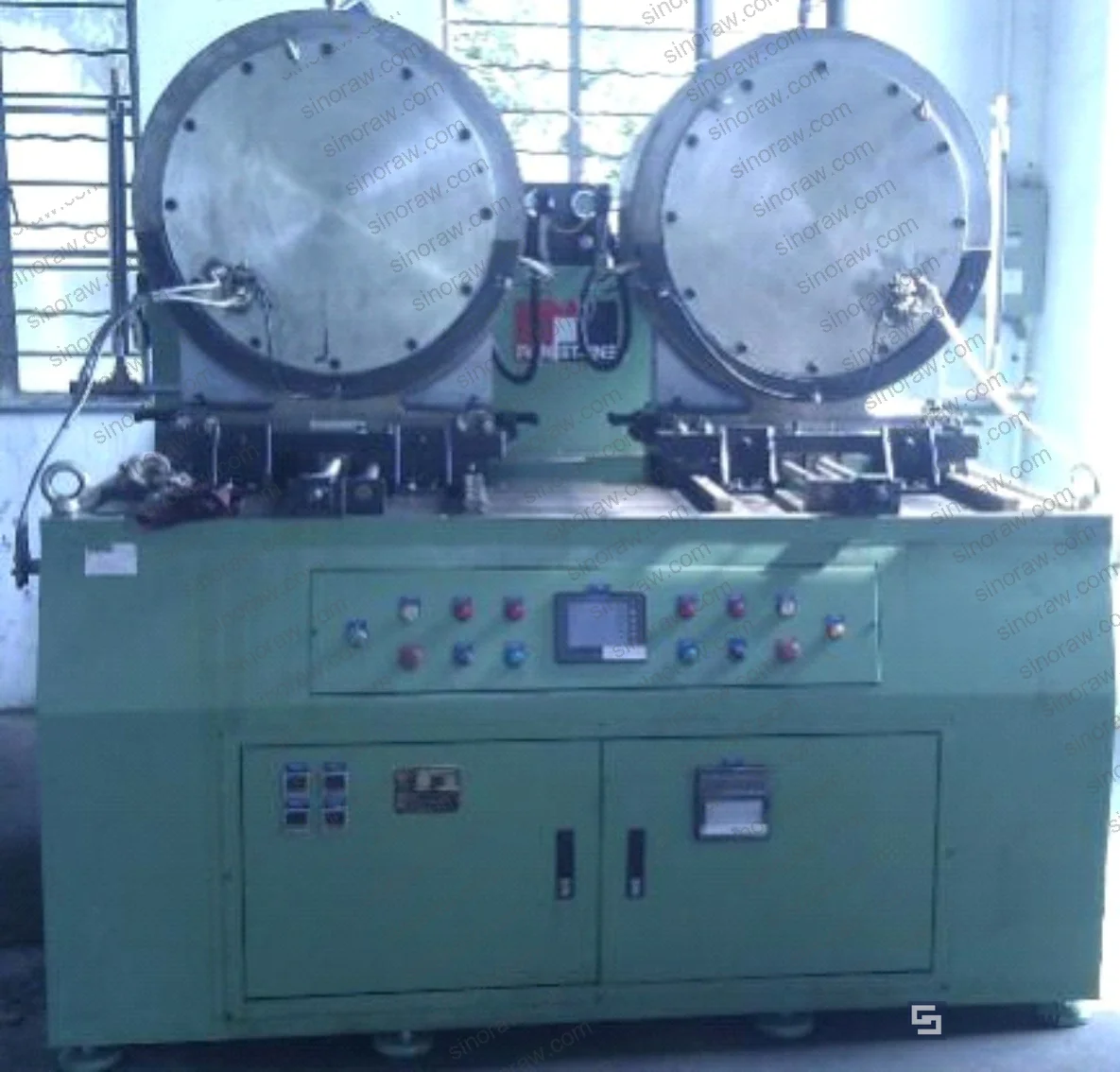
The 6,000 rpm data is the most procurement-relevant finding. Most procurement teams don’t realize that standard NBR oil seals are not designed for sustained operation above 5,000 rpm — the thermal and tribological load at the lip contact zone exceeds what carbon-black-only reinforcement can sustain. Specifying a standard NBR seal for a high-speed gearbox or spindle because it passes the material data sheet is a maintenance cost waiting to happen. CNT reinforcement at 10 phr is not a premium upgrade — at 6,000 rpm, it is the minimum viable specification.
Post-test inspection confirmed no visible aging at the lip interface in either seal after testing stopped, ruling out thermal degradation as the failure mechanism in standard seals. The failure mode in conventional NBR appears to be progressive wear at the lip contact zone rather than thermal embrittlement.
Testing was conducted in full accordance with dimensional verification and aging protocols covered under ISO 9001:2015 Quality management systems, and buyers should confirm that any supplier’s seal qualification testing follows an equivalent documented quality framework.
For tensile property verification of the cured compound coupon, the applicable international methodology aligns with ASTM D882 Standard Test Method for Tensile Properties of Thin Plastic Sheeting for film specimens, though NBR coupon testing follows its own ISO/GB parallel standards.
Practical Guidance for Buyers #
When you are specifying NBR rotary lip seals for equipment running above 3,000 rpm, the single most important question you can ask a supplier is: “What is your filler system, and do you have bench test data to GBT 14273?” Most suppliers will send you a material data sheet with Shore hardness and tensile strength. That is not enough.
The bench data here shows that a seal passing all static material tests with 20 phr N550 carbon black will fail catastrophically at 6,000 rpm within 15 hours. The CNT-loaded equivalent runs for 476 hours before the first leak. That is a maintenance cycle difference of weeks versus hours.
For static or low-speed applications (below 2,000 rpm), standard NBR with adequate carbon black loading performs adequately — there is no need to pay the CNT premium. But for dynamic applications, particularly in automotive transmissions, industrial gearboxes, hydraulic pumps, and high-speed spindles, CNT reinforcement at 10 phr GTR-equivalent grade should be your baseline requirement.
Sourcing these materials through a qualified supply chain matters. At sinoraw.com, our team works with overseas procurement engineers and sourcing managers to identify and pre-qualify Chinese seal manufacturers before RFQs are issued — focusing on those with documented bench test capability and CNT formulation experience, not just those with the right material certificates on paper.
Need help identifying qualified suppliers for CNT-reinforced NBR oil seals? Talk to our sourcing team →
Supplier Qualification Questions #
- What is the CNT loading level (in phr) in your NBR lip seal formulation, and can you confirm it does not exceed 10 phr — the threshold above which compression set at 100°C × 70h rises sharply above 22%?
- Can you provide rotary shaft oil seal bench test data conducted per GBT 14273, specifically showing seal life at both 4,000 rpm and 6,000 rpm with #32 machine oil, Ra 0.2 µm shaft surface finish, and 100 mm shaft diameter?
- What CNT grade and fiber geometry specification do you use — specifically the fiber length range and BET specific surface area — and is it below 30 µm fiber length if compression set below 20% is required?
- What is your compression set value at 100°C × 70h for your CNT-NBR compound, and do you have aging test data showing elongation retention after thermal aging that confirms CNT loading has not caused excessive post-aging elongation drop?
- Can you provide RPA (Rubber Process Analyzer) loss factor data for your vulcanized CNT-NBR compound at 80°C, 10 Hz, strain range 1–50%, confirming loss factor values consistent with 10 phr loading level?
Sourcing Checklist #
- ☐ Supplier confirms CNT loading at 10 phr ± 1 phr in production formulation, with carbon black (N550) adjusted to maintain constant total filler loading
- ☐ Bench test report per GBT 14273 shows seal life ≥400 hours at 4,000 rpm before first leakage with #32 machine oil
- ☐ Compression set at 100°C × 70h is ≤22% for standard grade or ≤16% for premium grade (IM4-equivalent short-fiber CNT)
- ☐ Tensile strength of cured NBR compound is ≥20 MPa (pre-aging) and post-aging elongation retention is confirmed above 80% of pre-aging value at 10 phr loading
- ☐ Brittle temperature confirmed at ≤−21°C to ensure low-temperature operability per GBT 15256
- ☐ Volume change in #3 standard oil at 100°C × 70h is ≤15% per GBT 1690 media resistance protocol
- ☐ CNT material REACH SVHC compliance documentation is available, confirming nanomaterial registration status under applicable chemical regulations
- ☐ Supplier has documented quality management system per ISO 9001:2015 with traceability from raw CNT receipt to finished seal inspection
Key Specifications Table #
| Parameter | Recommended Value | Verification Method |
|---|---|---|
| CNT Loading Level | 10 phr (do not exceed) | Formulation disclosure + TGA |
| Compression Set (100°C × 70h) | ≤22% (GTR grade); ≤16% (short-fiber grade) | GBT 7759.2-2014 |
| Tensile Strength (pre-aging) | ≥20 MPa | GBT 528-2009 |
| 100% Modulus (post-aging) | ~12 MPa | GBT 528-2009 |
| Shore A Hardness | 86 ± 3 | GBT 531.1-2008 |
| Seal Life at 4,000 rpm | ≥400 h to first leakage | GBT 14273 bench test |
| Seal Life at 6,000 rpm | ≥450 h to first leakage | GBT 14273 bench test |
| Brittle Temperature | ≤−21°C | GBT 15256-2014 |
| Volume Change in #3 Oil | ≤15% | GBT 1690-2006 |
Can’t find a supplier meeting these specs? Submit your requirements and we’ll match you within 48 hours.
References #
Data source: Carbon Nanotube Reinforcement of Nitrile Rubber for Rotary Lip Seal Applications: Effects on Mechanical Properties and Sealing Service Life, H.-X. Xie et al., Polymer Testing, 2023
Frequently Asked Questions #
What is the optimal CNT loading for NBR oil seals, and what happens if you exceed it?
The optimal loading established in bench-validated testing is 10 parts per hundred rubber (phr). Below this level, mechanical properties improve progressively. Above 10 phr, compression set rises sharply — at 20 phr loading it increases dramatically, and post-aging elongation drops substantially, indicating that the rubber’s ability to recover sealing geometry and resist fatigue cracking is compromised. More CNT is not better.
Does CNT reinforcement improve low-temperature or media resistance performance?
No — and this is important for buyers who might be tempted to substitute CNT-NBR for a more chemically specialized compound in cold-environment or aggressive-media applications. Testing at seven CNT loadings showed that brittle temperature (ranging −21 to −25°C), rebound resilience (22–25%), and volume swell in both #1 and #3 standard oils were essentially unaffected by CNT content. CNT is a mechanical reinforcing agent, not a chemical resistance modifier.
Why does CNT-NBR perform so dramatically better at 6,000 rpm compared to 4,000 rpm versus standard NBR?
At 4,000 rpm, standard NBR survives for 264 hours before leakage — inadequate for many applications but not an immediate failure. At 6,000 rpm, standard NBR fails within 15 hours. The physics: at higher shaft velocities, the energy input at the lip contact zone increases quadratically, and the NBR matrix needs higher modulus and better thermal conductivity to maintain contact geometry. CNT provides both. The CNT network also conducts heat into the oil medium efficiently enough that no lip aging was observed in CNT seals even after 549 hours at 6,000 rpm.
Is there a meaningful performance difference between premium CNT grades (IM3/IM4/IM6) and the lower-cost GTR grade?
For most parameters — tensile strength, hardness, elongation, media resistance, low-temperature performance — GTR and IM3 are functionally equivalent. The meaningful difference is compression set: IM4 (short fiber, 10–30 µm length) achieves 15% at 100°C × 70h versus 22% for GTR. If your application has a compression set requirement below 20%, IM4-type short-fiber CNT justifies its approximately 3× cost premium. For general-purpose sealing applications, GTR grade delivers full sealing life benefit at significantly lower material cost.
How should buyers verify CNT-NBR seal quality at incoming inspection?
Material coupon hardness and tensile testing per GBT 528 will detect gross formulation problems, but the most reliable qualifier is a rotary bench test per GBT 14273 — at minimum at 4,000 rpm, ideally also at 6,000 rpm. Static material testing alone is insufficient to differentiate CNT-loaded from standard carbon-black NBR in the leakage performance domain. Require batch-level bench test data with your first production order, not just development-phase qualification reports.
Published by sinoraw.com Technical Team | Request a sourcing quote


