

TL;DR #
A purpose-built polar simulation platform tested a 5-lip rotary shaft seal system through six distinct operating scenarios — including variable water depth (4–24 m), temperatures from 0–40°C, and shaft eccentricity of 0.05–0.20 mm — achieving continuous 2-hour zero-leakage operation under every condition. For buyers specifying shaft seals for ice-class or deep marine applications, this means leak-free performance is achievable with the right lip geometry and air-cavity pressure management, but temperature sensitivity is a real design constraint that many procurement specs fail to capture. Before issuing any RFQ for polar-grade rotary seals, demand test data covering at least the variable-temperature and variable-depth combined scenarios — static certification alone is insufficient.
Overview #
Most procurement engineers buying rotary shaft seals for marine propulsion applications are working from catalog datasheets that were validated under constant-speed, room-temperature conditions. That’s a dangerous starting point for high ice-class vessel applications. A marine propulsion research institute ran a rigorous multi-scenario verification program on a full-scale 5-lip rotary seal and integrated lubrication assembly, covering six distinct test regimes: static load, variable shaft speed (100–500 rpm), variable water depth simulating 4–24 m seawater pressure, temperature sweep from 0°C to 40°C, sinusoidal seawater pressure fluctuation up to ±0.03 MPa, and shaft eccentricity ranging 0.05–0.20 mm. Every test cycle ran for a continuous 2-hour duration with real-time monitoring of friction torque, air consumption, and leakage at dedicated monitoring points.
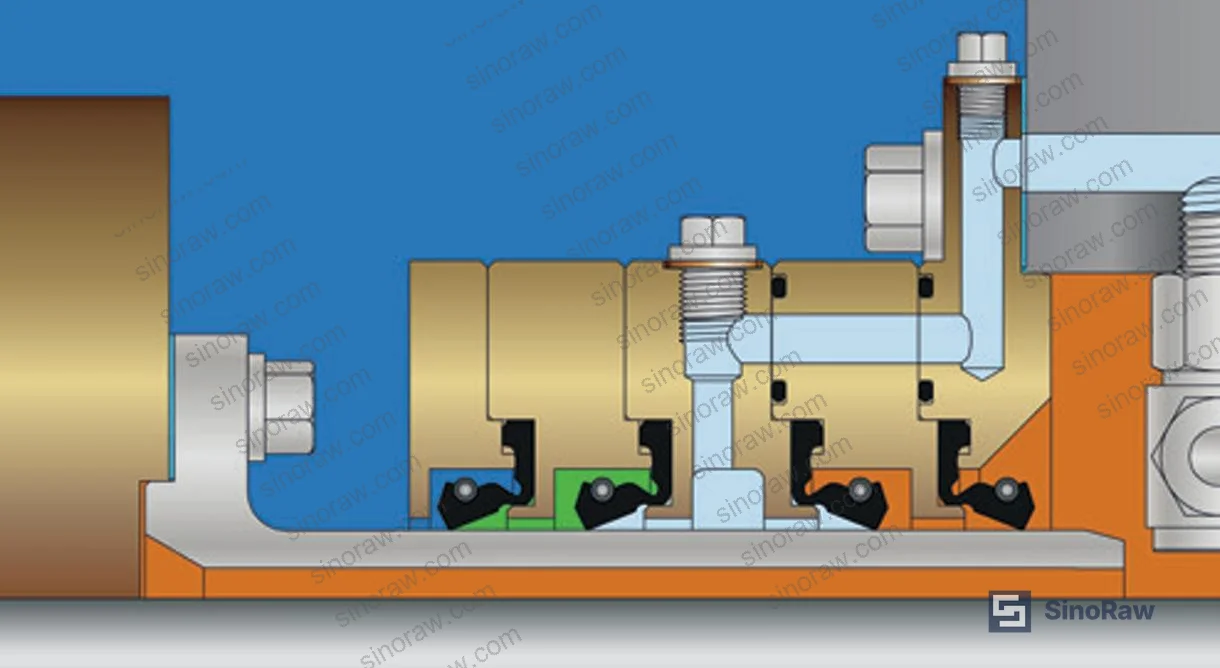
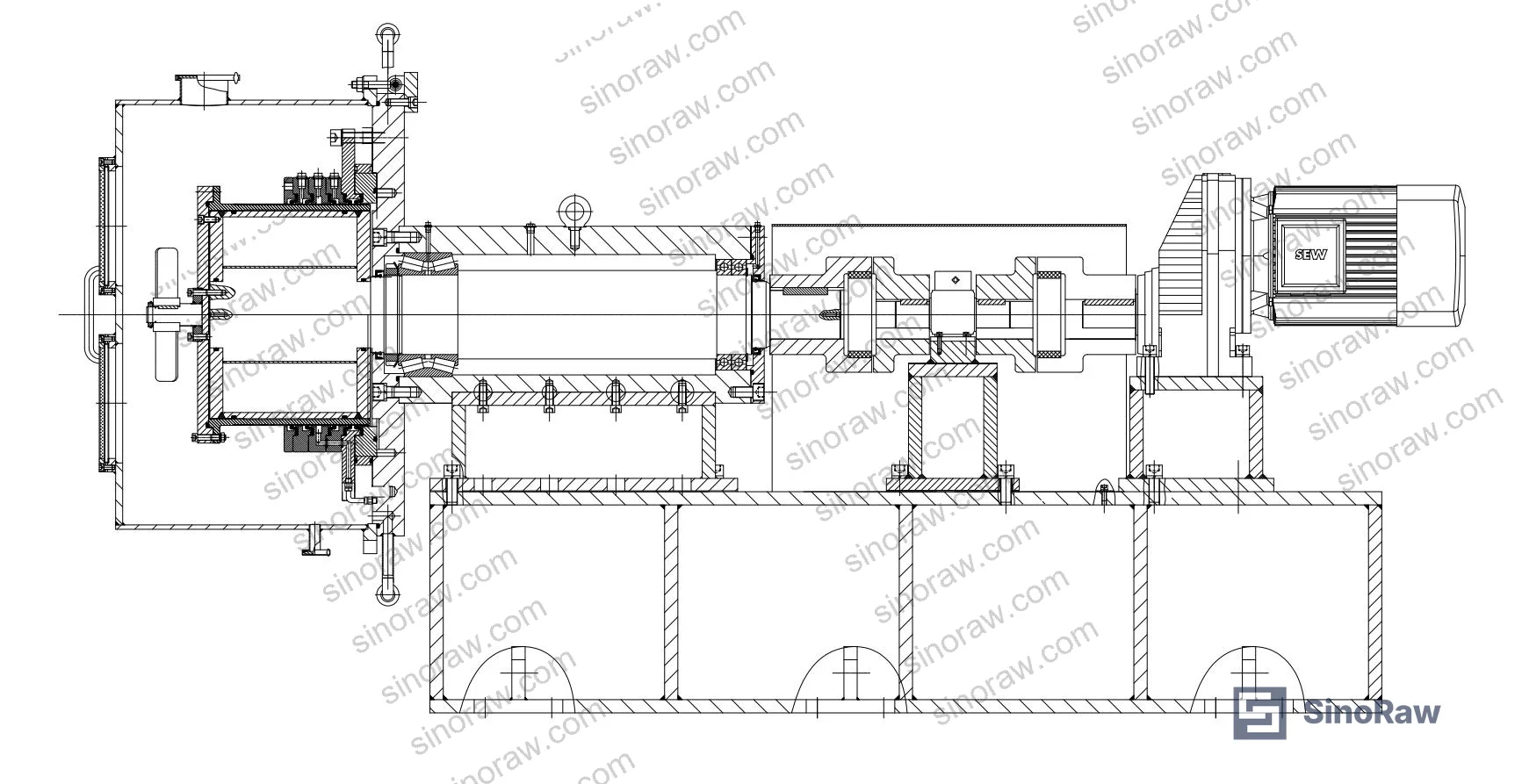
The seal architecture relies on staged pressure zoning: compressed air is injected into the cavity between lips #2 and #3, lubricating oil fills the cavity between lips #3 and #4, and the bearing cavity is replicated between lips #4 and #5. This layered design creates a bidirectional barrier — seawater and ice particles are excluded from the inboard side while lubricating oil is prevented from escaping to the marine environment, which has direct implications under REACH Regulation (EC) No 1907/2006 — Registration of Chemicals for oil-to-sea contamination risk management.
Rotary Seal Performance Under Polar Operating Conditions #
This is where the numbers get interesting — and where suppliers who only test at 300 rpm in clean water get exposed.
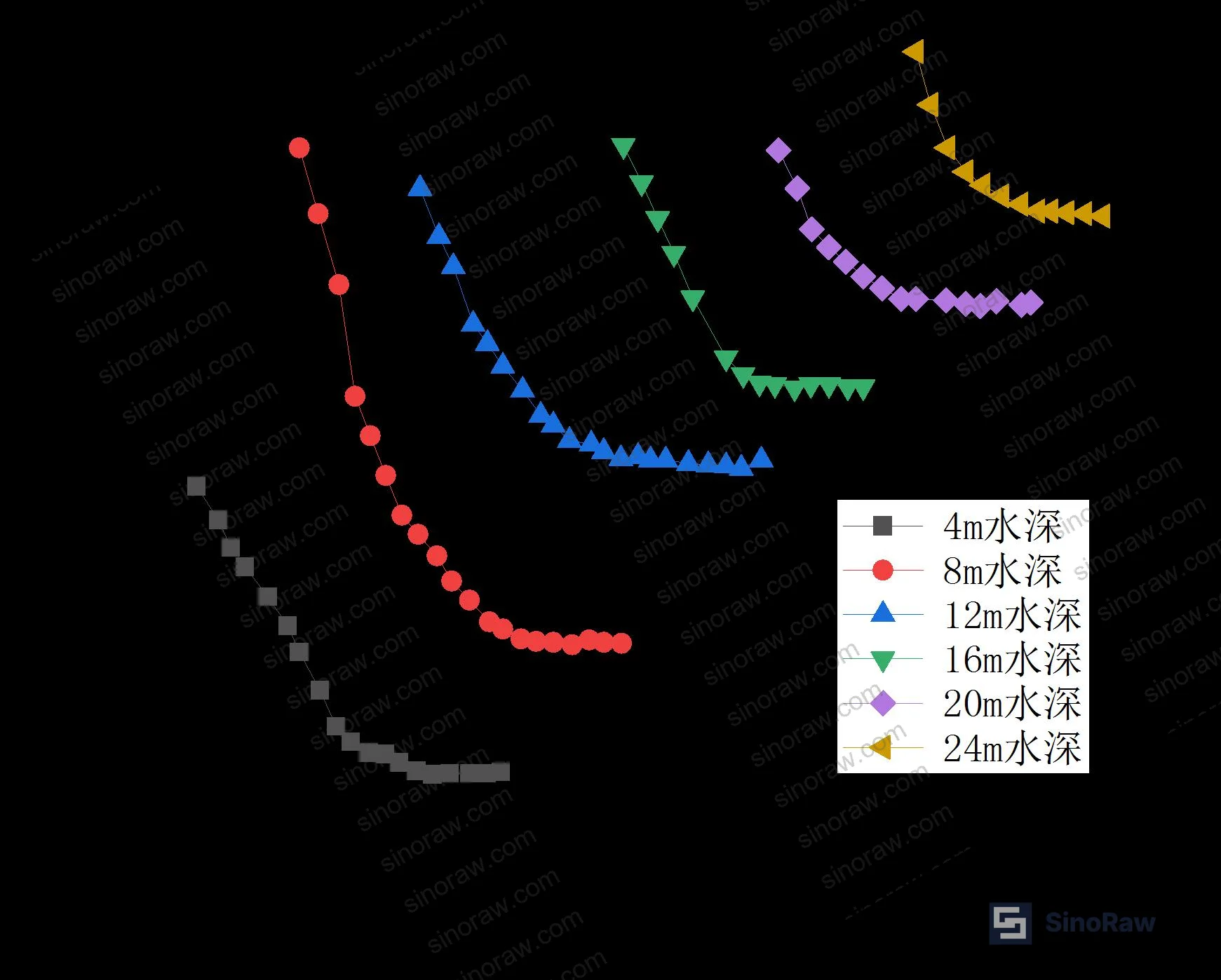
Seal opening pressure vs. water depth — linear and predictable
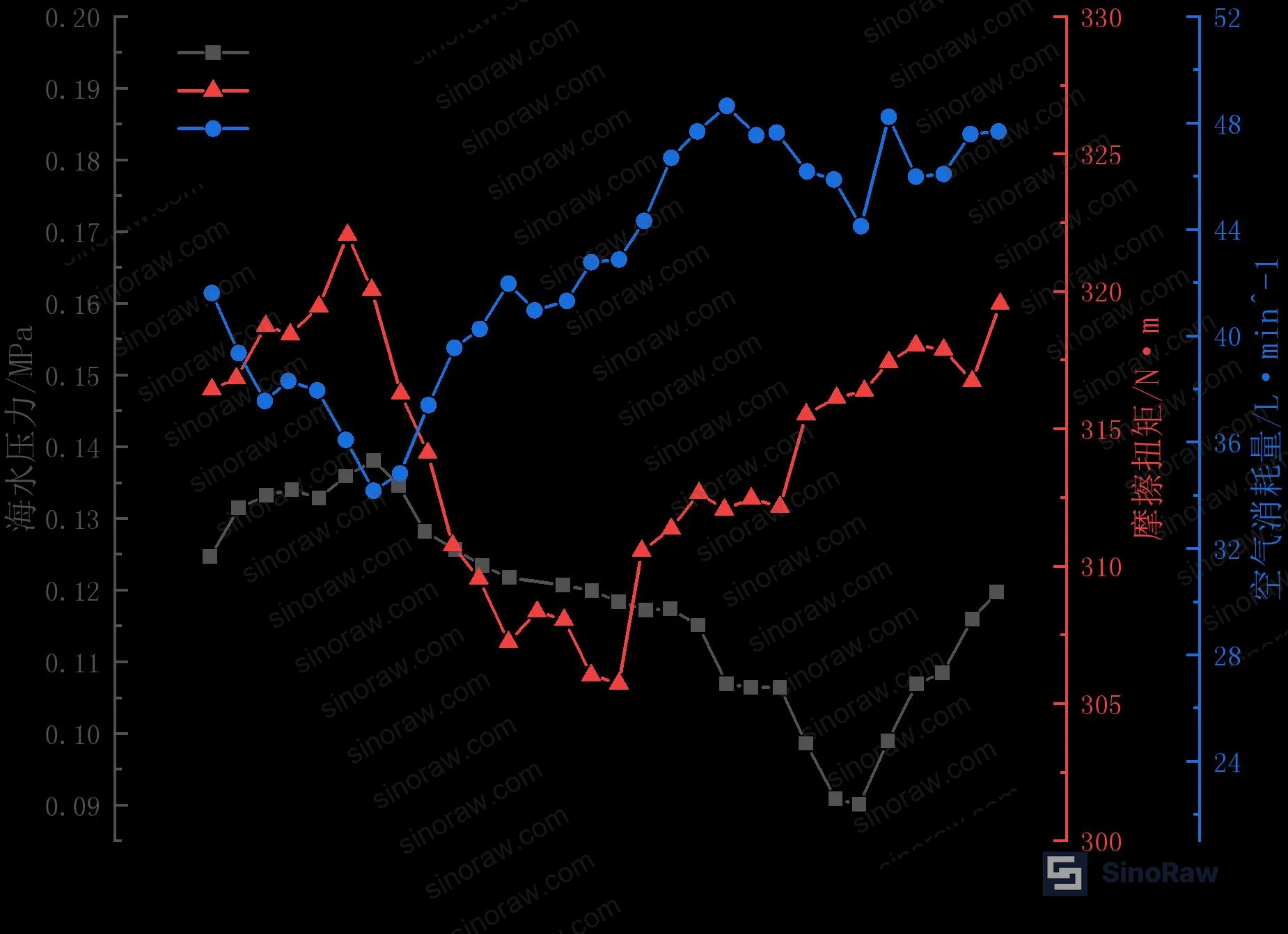
Static testing confirmed a clean linear relationship between seawater pressure and seal opening pressure. This is important because it means you can calculate minimum air-cavity supply pressure from water depth directly — the relationship holds from shallow harbor conditions through operational polar depths. The variable-water-depth dynamic tests at 300 rpm confirmed that the static opening pressure values closely matched the dynamic opening pressures at each depth, indicating that shaft rotation speed has negligible effect on the opening pressure threshold. That’s a useful finding: your air supply system sizing can be based on static pressure data with confidence.

At the onset of seal opening, air consumption jumped sharply — from a baseline range of 3–17 L/min up to approximately 50 L/min in the variable-speed tests, and from 10–17 L/min to 40–50 L/min in the variable-depth tests. This sudden step change is your primary field diagnostic indicator: a sustained air consumption spike toward 50 L/min confirms seal opening has occurred. If your condition monitoring system isn’t tracking air flow rate continuously, you’re flying blind.
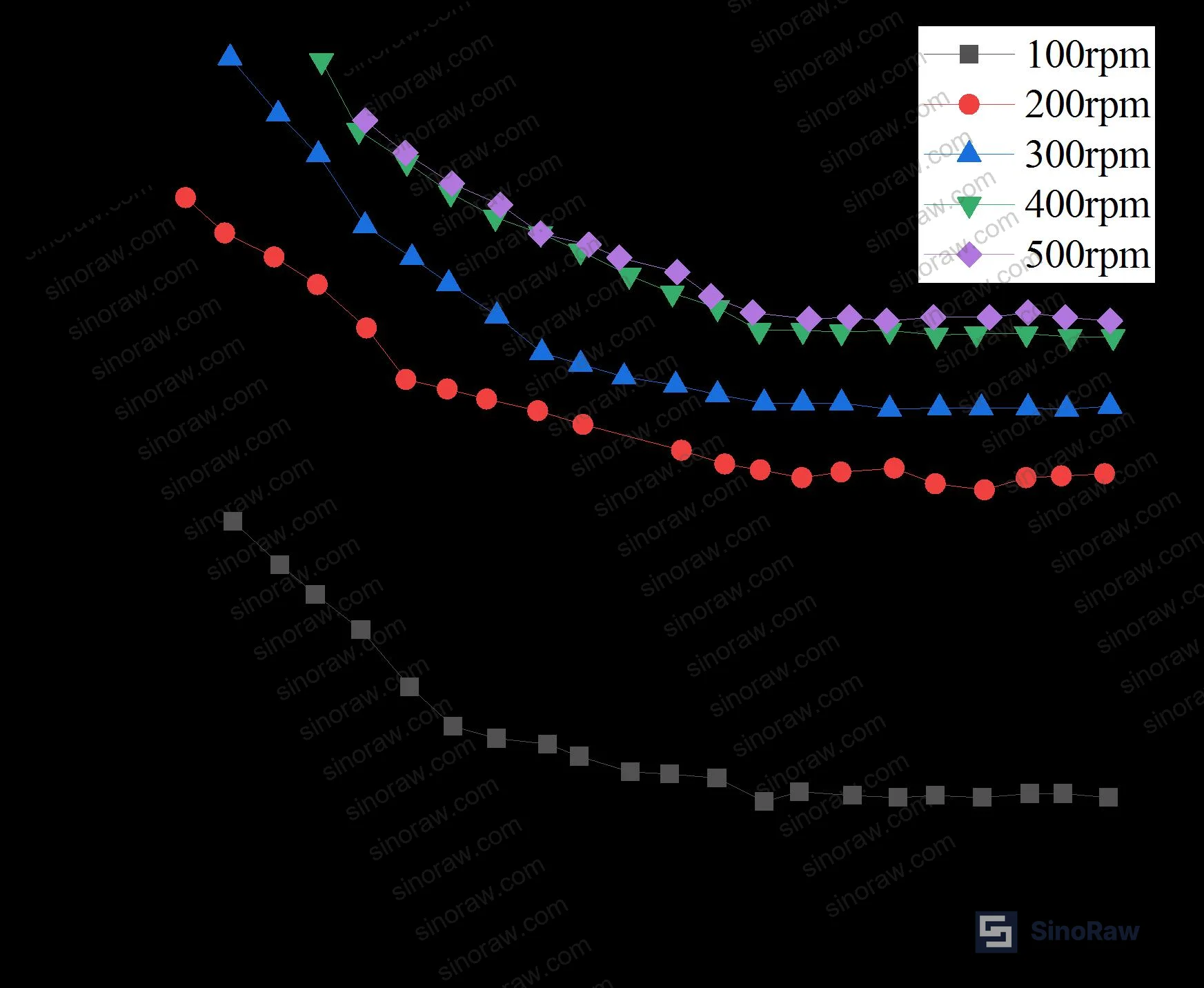
Variable speed results
Across the 100–500 rpm speed range, friction torque consistently decreased as air-cavity pressure increased, then stabilized at a constant value. The seal opening pressure was consistently around 0.28 MPa regardless of shaft speed within this range. This torque stabilization point is your commissioning target: once you see torque hold constant and air consumption jump to ~50 L/min, the seal is operating in its designed open-flow mode.
Comparison of Key Performance Metrics Across Test Scenarios
| Test Scenario | Seal Opening Pressure | Air Consumption at Opening | Leakage (2 h continuous) |
|---|---|---|---|
| Static (variable depth) | Linear with seawater P | — | Zero (oil and water) |
| Variable speed (100–500 rpm) | ~0.28 MPa | ~50 L/min | Zero |
| Variable depth (4–24 m, 300 rpm) | Matches static values | 40–50 L/min | Zero |
| Variable temperature (0–40°C) | Decreases with rising T | Increases with rising T | Zero |
| Pressure fluctuation (±0.03 MPa) | Normal range maintained | Periodic variation | Zero |
| Shaft eccentricity (0.05–0.20 mm) | Unaffected | Minimally affected | Zero |
Every scenario achieved zero oil or water leakage across the full 2-hour continuous test duration. That’s the headline result. But the variation in friction torque and air consumption between scenarios tells you a great deal about where your system will be stressed in service.
Temperature and Eccentricity Effects on Seal Friction and Air Demand #
Temperature sensitivity is the factor most procurement teams fail to specify correctly, and it caused the most significant performance variation in this test program.
Temperature: the dominant friction driver
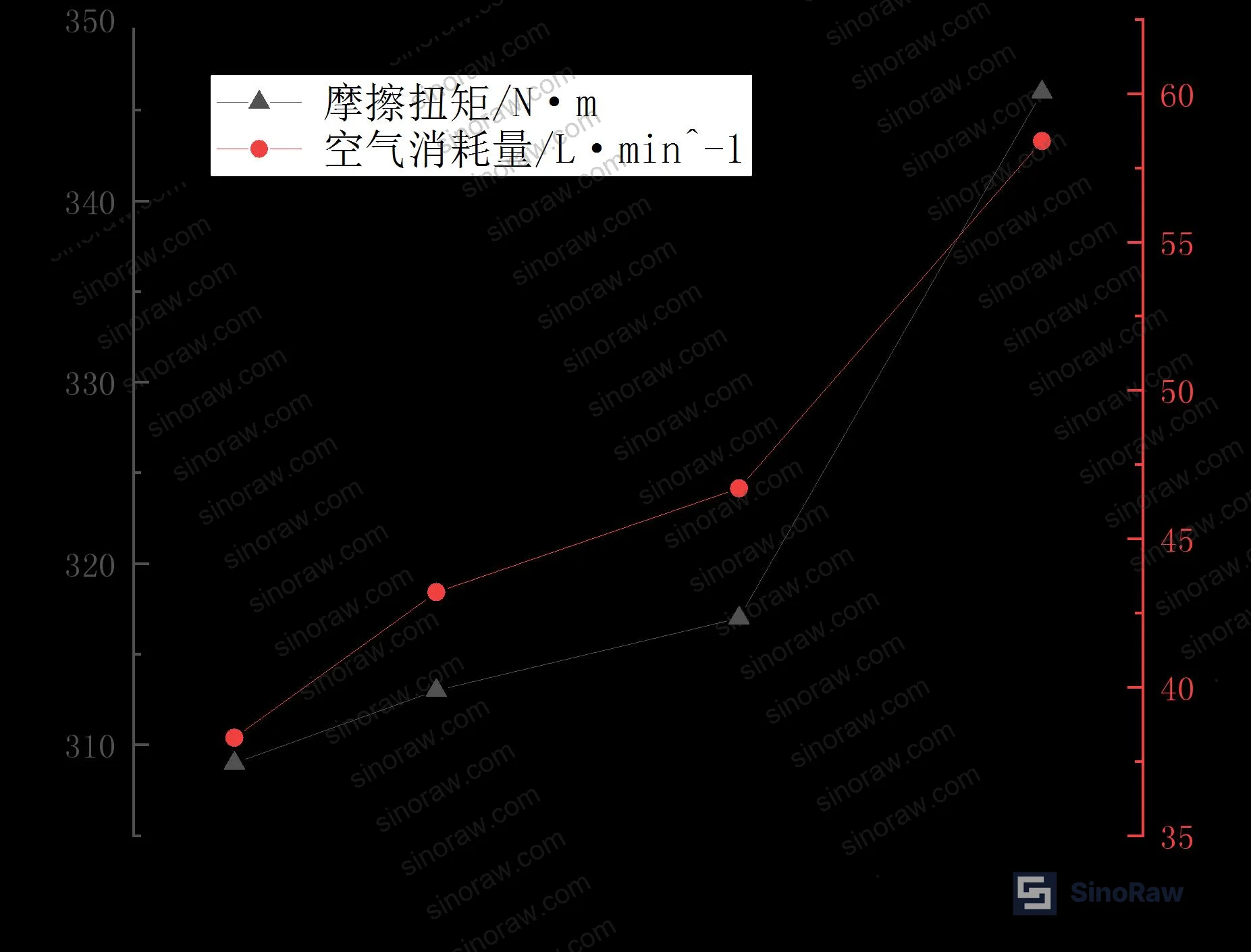
Testing was conducted at 300 rpm, 12 m equivalent water depth, and 0.25 MPa air-cavity pressure across a 0–40°C temperature range. Both friction torque and air consumption rose monotonically with temperature. The mechanism is coupled: higher temperatures reduce the elastic modulus of the lip seal material while simultaneously reducing lubricant viscosity, shifting the contact interface toward softer, more conforming engagement. The net effect is that the seal opens more readily at elevated temperature — which sounds counterintuitive until you understand that “easier opening” at higher temperature also means higher sensitivity to transient pressure disturbances.
Honestly, most buyers over-specify shaft speed range and under-specify temperature range. If your vendor’s qualification data only covers 20°C ambient, you have no idea how that seal behaves as a polar vessel enters warmer transitional waters or during prolonged low-speed maneuvering that allows hull temperatures to rise.
Shaft eccentricity: friction impact, minimal leakage impact
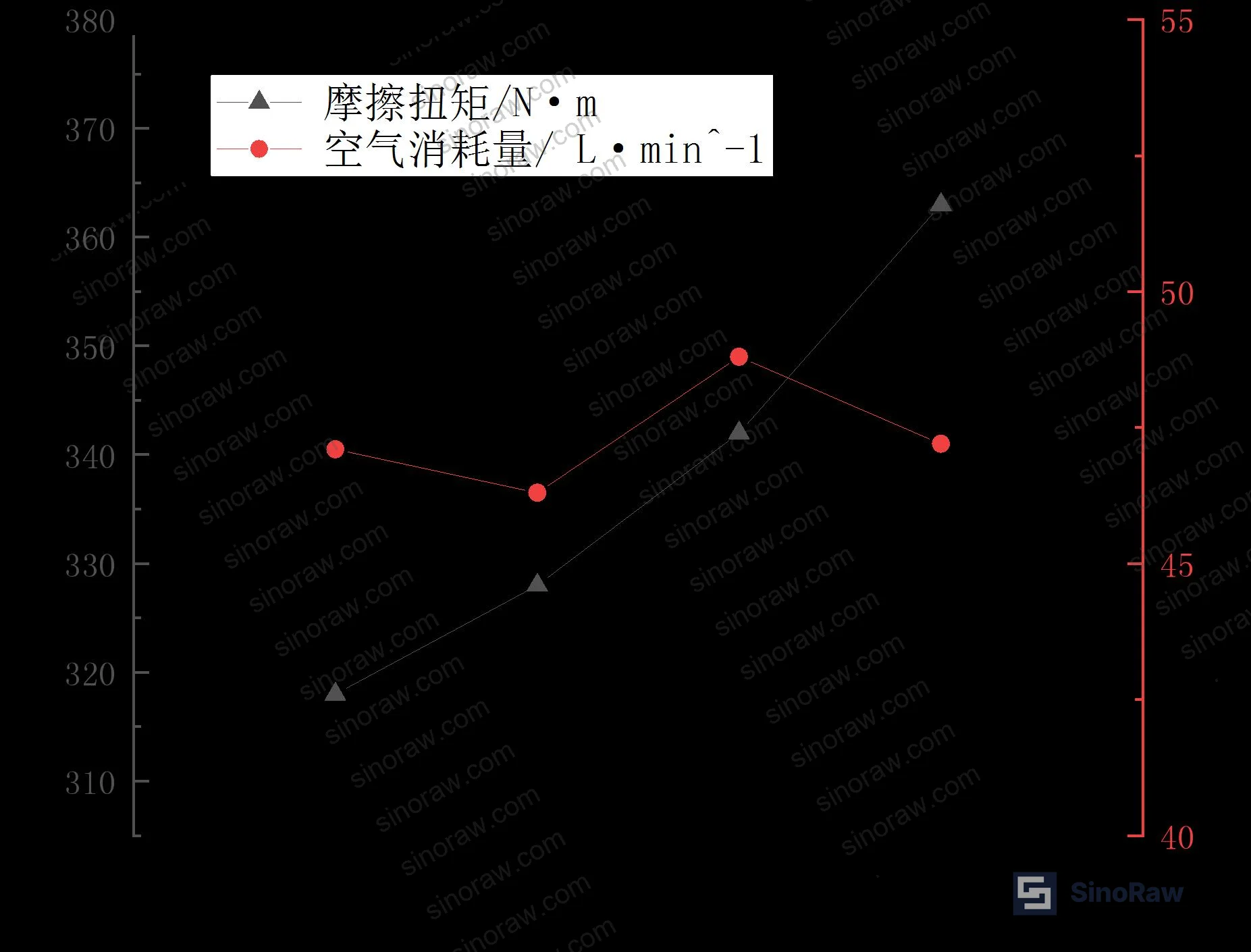
The shaft eccentricity tests ran from 0.05 mm to 0.20 mm at 300 rpm, 12 m depth equivalent, and 0.25 MPa air pressure. Friction torque showed a sensitivity of approximately 320 N·mm per mm of eccentricity increase — a near-linear relationship. The physical reason is straightforward: as eccentricity grows, the lip contact area increases and the lip experiences additional compressive force from the offset shaft, both of which drive torque up. However — and this is the practically important finding — air consumption was largely unaffected by eccentricity variation, meaning the seal continued to open normally and maintain its protective barrier function even at 0.20 mm eccentricity.
Pressure fluctuation: robust, but torque lags
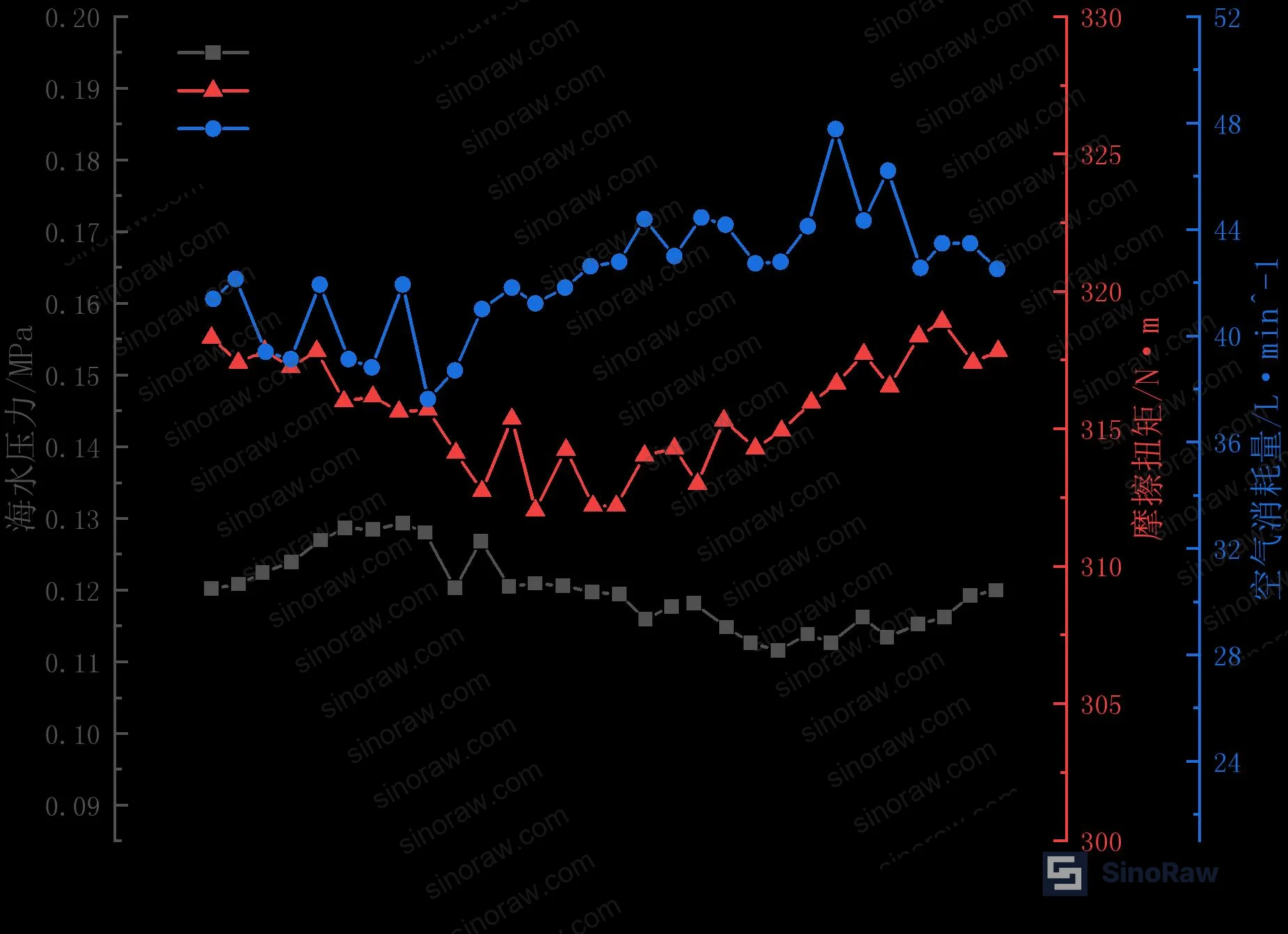
Under periodic seawater pressure fluctuations of 0.01 MPa and 0.03 MPa amplitude, friction torque and air consumption both oscillated periodically. The torque response showed partial hysteresis — it lagged behind the pressure cycle — which is expected behavior for a viscoelastic lip contact. At maximum wave-induced pressure variation equivalent to ±3 m water depth change, the seal maintained normal opening behavior throughout. All torque and air consumption excursions remained within the normal operating envelope for the full test duration.
In supplier qualification, we reviewed technical submissions from multiple vendors where pressure fluctuation performance was either absent or tested only at single-frequency sinusoidal inputs without combined eccentricity loading. At least three of the six proposals reviewed lacked any documented test data for simultaneous eccentricity and pressure fluctuation — the exact combination most likely to occur when an icebreaker is maneuvering in broken ice fields at variable depth. That gap matters when you’re writing a critical failure analysis for a polar asset.
Practical Guidance for Buyers #
Specifying rotary shaft seals for high ice-class propulsion applications requires more than listing a maximum shaft speed and a depth rating. Based on evaluation of seal system test data across six combined polar operating scenarios, the critical specification parameters are: seal opening pressure at maximum operating depth, friction torque sensitivity to temperature across the expected service range, and air consumption behavior at seal opening — not just at steady state.
At sinoraw.com, our sourcing team works as a Guangzhou-based intermediary connecting international procurement engineers with verified Chinese manufacturers of marine industrial seals and lubrication system components; when you need to pre-qualify suppliers before issuing RFQs, we help you identify who can actually support ice-class certification documentation and combined-condition test data. The air supply system is a common procurement oversight — if your gravity oil tank or compressed air feed is sized for static depth conditions only, you’ll run short of reserve capacity when temperature rises and air demand jumps to 50 L/min at seal opening.
For compliance with environmental protection requirements, ensure your selected seal system addresses lubricant-to-sea leakage risk in line with ISO 14001:2015 Environmental management systems operational controls, particularly for arctic route operations where regulatory scrutiny is increasing. Also verify supplier quality management infrastructure meets ISO 9001:2015 Quality management systems as a baseline — but don’t stop there. Ask for the specific test conditions under which their seal performance data was generated. If they can only show you static pressure data, they haven’t tested under real polar conditions.
For buyers sourcing Pump & Valve Seals or related Sealing & Thermal components for demanding marine or polar applications, the same evaluation criteria apply: demand combined-condition test data, not single-variable curves.
Need help identifying qualified suppliers for high ice-class rotary shaft seals and marine lubrication systems? Talk to our sourcing team →
Supplier Qualification Questions #
- Can you provide seal opening pressure data showing the linear relationship between seawater pressure and air-cavity opening pressure across a water depth range of at least 4–24 m, tested at dynamic shaft rotation?
- What is the friction torque sensitivity of your lip seal assembly to temperature variation across 0–40°C at 300 rpm shaft speed and 0.25 MPa air-cavity pressure — specifically, what is the torque increase rate in N·mm per degree Celsius?
- At what air-cavity pressure does seal opening occur under your standard test conditions, and can you confirm that air consumption transitions from below 17 L/min to approximately 40–50 L/min at the opening threshold?
- Has your seal assembly been tested under shaft eccentricity conditions up to 0.20 mm while simultaneously maintaining seawater pressure equivalent to at least 12 m depth — and can you show that air consumption remains stable (not significantly elevated) across the 0.05–0.20 mm eccentricity range?
- Can you demonstrate 2-hour continuous zero-leakage (oil and water) test results across all six operational scenarios — static, variable speed, variable depth, variable temperature, pressure fluctuation up to ±0.03 MPa, and shaft eccentricity — rather than single-condition pass/fail documentation?
Sourcing Checklist #
- ☐ Seal opening pressure confirmed as linear with seawater depth across 4–24 m equivalent pressure range via documented static and dynamic test data
- ☐ Air consumption at seal opening verified to transition from ≤17 L/min baseline to ~40–50 L/min, confirming proper seal actuation (not a false opening or blocked flow path)
- ☐ Friction torque versus temperature data available for 0–40°C range at representative operating conditions (300 rpm, 12 m depth equivalent, 0.25 MPa air pressure), demonstrating monotonic but bounded torque increase
- ☐ Shaft eccentricity tolerance documented up to 0.20 mm with friction torque increase rate ≤320 N·mm per mm eccentricity and no significant degradation in air consumption stability
- ☐ 5-lip seal architecture with separated air cavity (between lips #2/#3), oil cavity (between lips #3/#4), and bearing cavity (between lips #4/#5) confirmed in assembly drawing
- ☐ Pressure fluctuation resistance demonstrated at ±0.03 MPa sinusoidal seawater pressure input with all torque and air consumption values remaining within normal operating envelope
- ☐ Environmental compliance documentation provided covering lubricant-to-sea leakage prevention in accordance with ISO 14001:2015 operational control requirements
- ☐ Minimum 2-hour continuous zero-leakage test certification (oil and water) across combined operating condition scenarios, not limited to single-variable tests
Key Specifications Table #
| Parameter | Recommended Value | Verification Method |
|---|---|---|
| Seal opening pressure (at 12 m depth) | ~0.28 MPa air-cavity pressure | Real-time pressure monitoring; confirm torque stabilization and air flow step-change to ~50 L/min |
| Air consumption at seal opening | 40–50 L/min (dynamic); ~50 L/min (variable speed) | Gas mass flow meter on air supply line; confirm step-change at opening threshold |
| Shaft eccentricity tolerance | ≤0.20 mm without leakage; torque rate ≤320 N·mm/mm | Mechanical eccentricity measurement + 2 h continuous leakage monitoring |
| Operating temperature range | 0–40°C with stable zero-leakage performance | Temperature-controlled seawater chamber; friction torque and air consumption logged continuously |
| Pressure fluctuation resistance | ±0.03 MPa sinusoidal seawater pressure excursion | Sinusoidal pressure input + real-time torque and air consumption monitoring |
| Continuous zero-leakage duration | ≥2 hours under all combined conditions | Dedicated leakage monitoring port with visual and sensor-based detection |
Can’t find a supplier meeting these specs? Submit your requirements and we’ll match you within 48 hours.
References #
Data source: Experimental Verification of Rotating Seal and Lubrication System Performance for High Ice-Class Podded Propulsion Shafts Under Simulated Polar Operating Conditions, P. Liang et al., Ocean Engineering, 2024
Frequently Asked Questions #
What is the most critical parameter for specifying an ice-class rotary shaft seal?
Seal opening pressure calibrated against operating water depth is the primary design parameter — the test data confirms a linear relationship between seawater pressure and required air-cavity opening pressure across 4–24 m depth. Get this relationship documented from your supplier across the full operating depth range before accepting any other performance claims.
Why does air consumption spike at seal opening, and what does that mean for system design?
When the lip seal transitions from closed to open mode, air flow jumps from a baseline of 3–17 L/min to approximately 40–50 L/min. This step change means your compressed air supply system and gravity oil tank must be sized for peak demand at opening, not average operating flow. Undersizing the air supply is one of the most common commissioning problems in marine propulsion seal installations.
Does shaft eccentricity cause seal failure in polar applications?
Based on test results through 0.20 mm eccentricity, shaft eccentricity primarily affects friction torque — at approximately 320 N·mm per mm of eccentricity — but has minimal impact on air consumption or leakage behavior. This means the seal continues to open normally under misalignment conditions typical of polar ice loading, though elevated friction torque will affect energy consumption and lip wear rate over time.
How does temperature affect seal performance, and is this a safety concern?
Temperature increases from 0°C to 40°C raise both friction torque and air consumption measurably. Higher temperatures cause the lip material to become more compliant and reduce lubricant viscosity, making the seal open more readily. This isn’t a failure mode, but it means your air supply pressure margins must account for worst-case temperature conditions — not just cold polar baseline. Seal specifications built around low-temperature data will be conservative in warm-water transit conditions.
Can static test data be used to predict dynamic opening pressure in service?
Yes — the variable-depth dynamic tests at 300 rpm showed that dynamic seal opening pressures closely matched static opening pressures at each equivalent water depth. Shaft speed in the 100–500 rpm range has negligible effect on opening pressure. This means static test data can reliably inform air supply system design, which significantly simplifies commissioning calculations for variable-depth operations.
Published by sinoraw.com Technical Team | Request a sourcing quote


