

TL;DR #
If you’re specifying a white RTV silicone sealant for architectural, automotive, or general industrial sealing and you’re sourcing from Chinese manufacturers, the filler blend is the single most consequential variable in that formulation — and it’s the one most buyers never ask about. Tensile strength, elongation, Shore hardness, and application flow rate all shift dramatically depending on whether the manufacturer is using nano calcium carbonate, precipitated barium sulfate, or a blend of the two. Getting this wrong costs you in field performance, not in incoming inspection.
This article breaks down controlled evaluation data on how precipitated barium sulfate (BaSO₄) loading affects deketoxime-type one-component RTV silicone sealant — the most commercially significant single-component RTC silicone variant on the market today. The findings have direct implications for how you write filler specifications into your supplier qualification criteria.
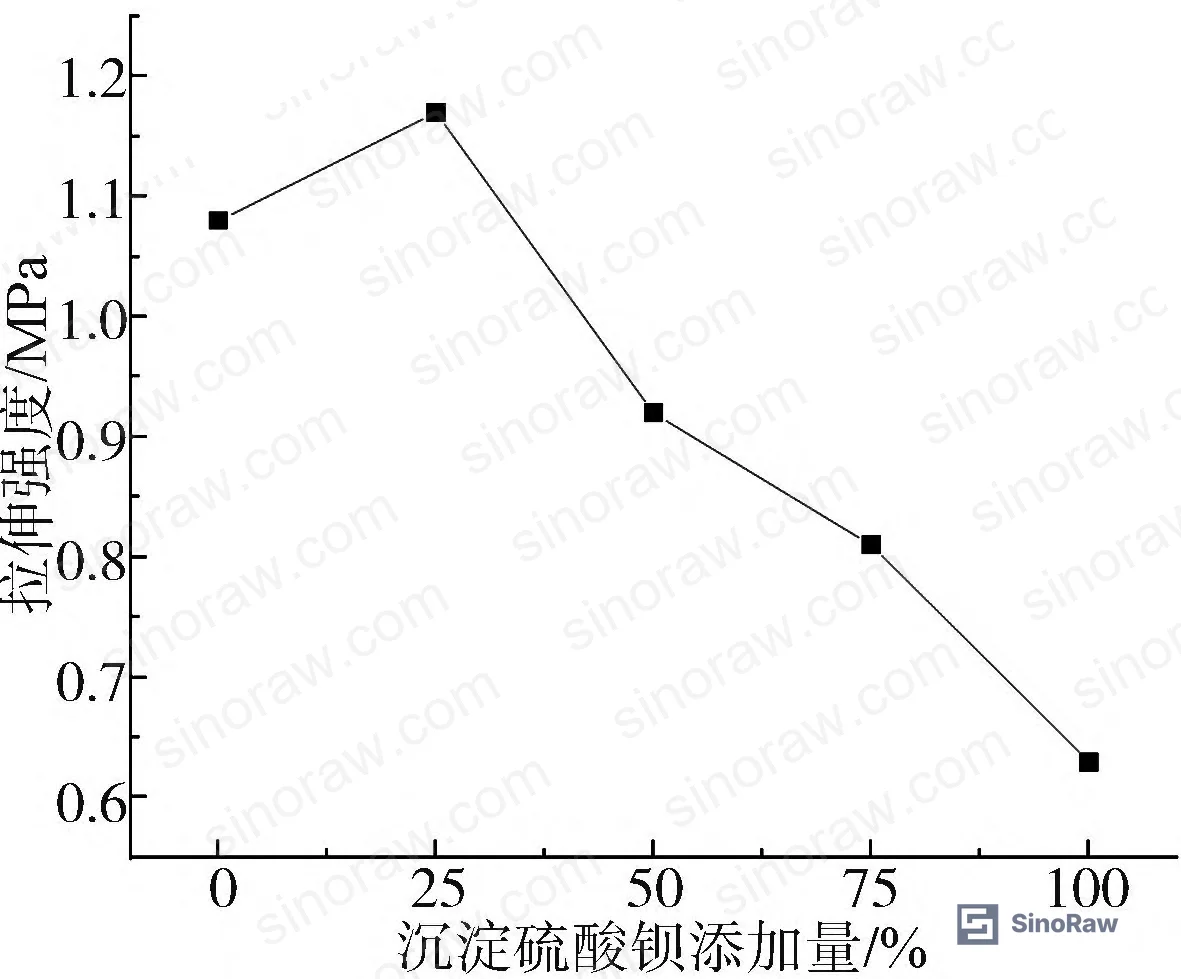
RTV Silicone Sealant Filler Composition: Mechanical Performance vs. Barium Sulfate Loading #
The base formulation evaluated here used α,ω-dihydroxy polydimethylsiloxane (107 silicone rubber, viscosity 50,000 mPa·s at 25°C) combined with dimethyl silicone oil (viscosity 350 mPa·s) as the polymer backbone. Total filler loading was held constant at 100 parts, with the nano calcium carbonate-to-precipitated barium sulfate ratio varied across five test points: 0%, 25%, 50%, 75%, and 100% BaSO₄ by mass fraction of total filler. Crosslinker content was fixed at 8 parts, silane coupling agent at 4 parts (KH550/KH540 blend), and dibutyltin dilaurate catalyst at 0.6 parts.
Mechanical testing followed GB/T 528-2009 for tensile strength and elongation at break, GB/T 13477-2017 for extrudability, and GB/T 531.1-2008 for Shore A hardness. Whiteness was measured per GB/T 5950-2008. Dispersion quality was assessed visually by the fold-test method — 10 g of sealant spread on A4 paper, folded through the center, then examined for visible particle count.
The results across the five loading levels are summarized below:
| BaSO₄ Loading (wt% of total filler) | Tensile Strength (MPa) | Elongation at Break (%) | Extrudability (mL/min) |
|---|---|---|---|
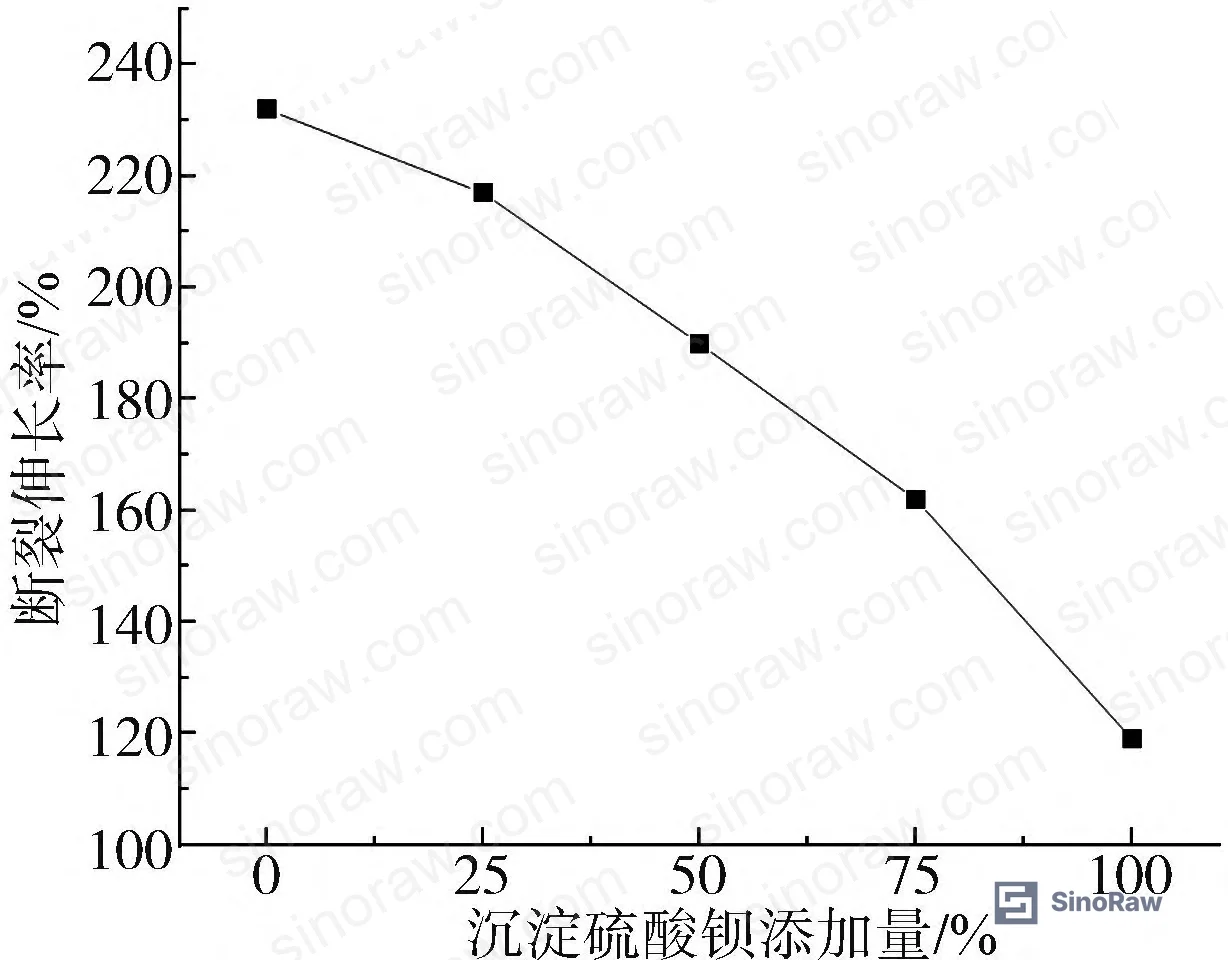
| 0% (100% nano CaCO₃) | 1.08 | 232 | 218 |
| 25% BaSO₄ | 1.17 | ~210 (interpolated) | ~260 (interpolated) |
| 50% BaSO₄ | ~0.95 (interpolated) | ~190 (interpolated) | ~310 (interpolated) |
| 75% BaSO₄ | ~0.75 (interpolated) | 162 | ~350 (interpolated) |
| 100% BaSO₄ | 0.63 | 119 | 382 |
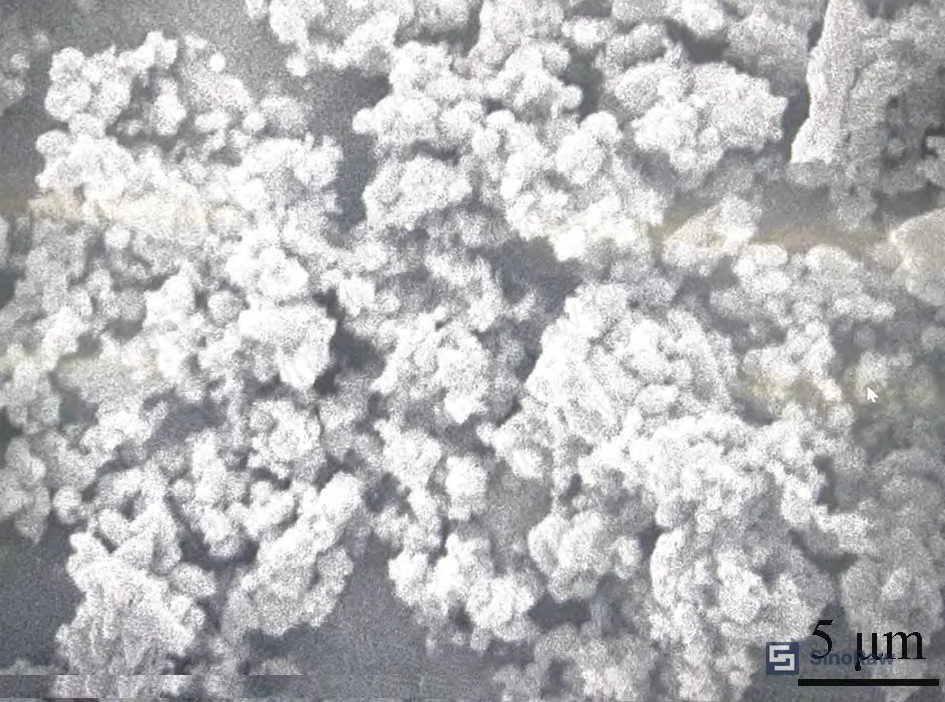
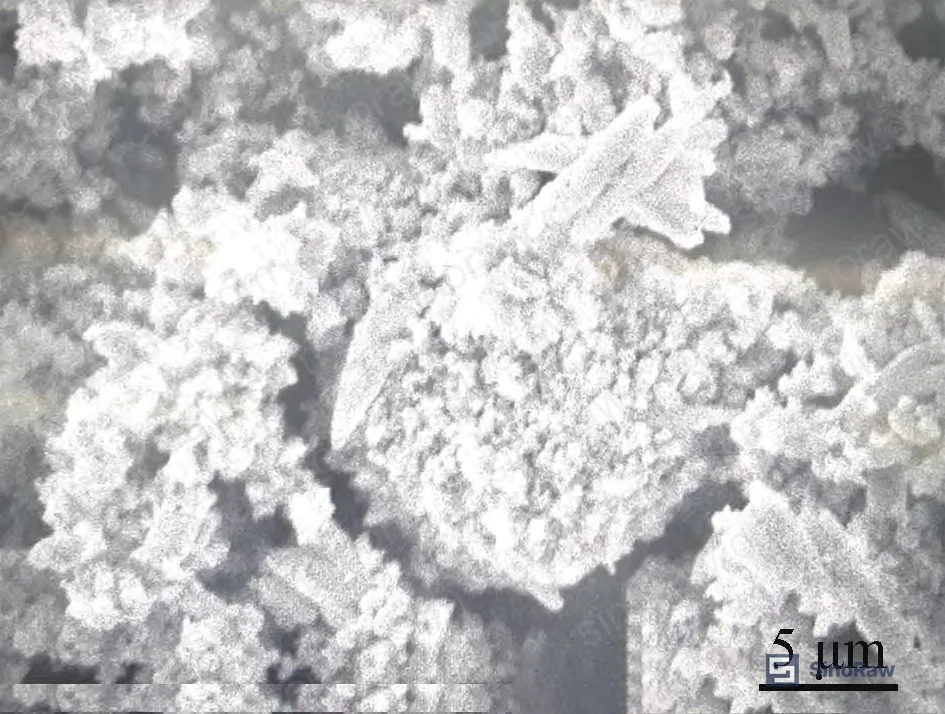
The tensile strength curve is non-linear: it peaks at 1.17 MPa at 25% BaSO₄ loading before declining to 0.63 MPa at 100% loading — a 46% reduction from peak to maximum substitution. The mechanism is well-established: surface-activated nano CaCO₃ carries abundant hydroxyl groups that bond into the polysiloxane chain network, reinforcing three-dimensional crosslink density. Precipitated BaSO₄ at 1,250 mesh (~10 µm) has comparatively low surface activity, minimal hydroxyl functionality, and weaker interaction with the silicone backbone. At moderate loadings the particles disperse adequately and contribute mild reinforcement; at higher loadings, agglomeration becomes visible in SEM cross-sections, creating stress concentration sites that initiate crack propagation under tensile load.
Elongation at break follows the same downward trend — from 232% at zero BaSO₄ to 162% at 75% loading, then dropping more steeply to 119% at 100% substitution. SEM imaging at 75% and 100% BaSO₄ confirms visible agglomerate clusters, which explains the accelerated decline in the upper loading range.
Extrudability, Hardness, and Appearance: Where Barium Sulfate Actually Helps #
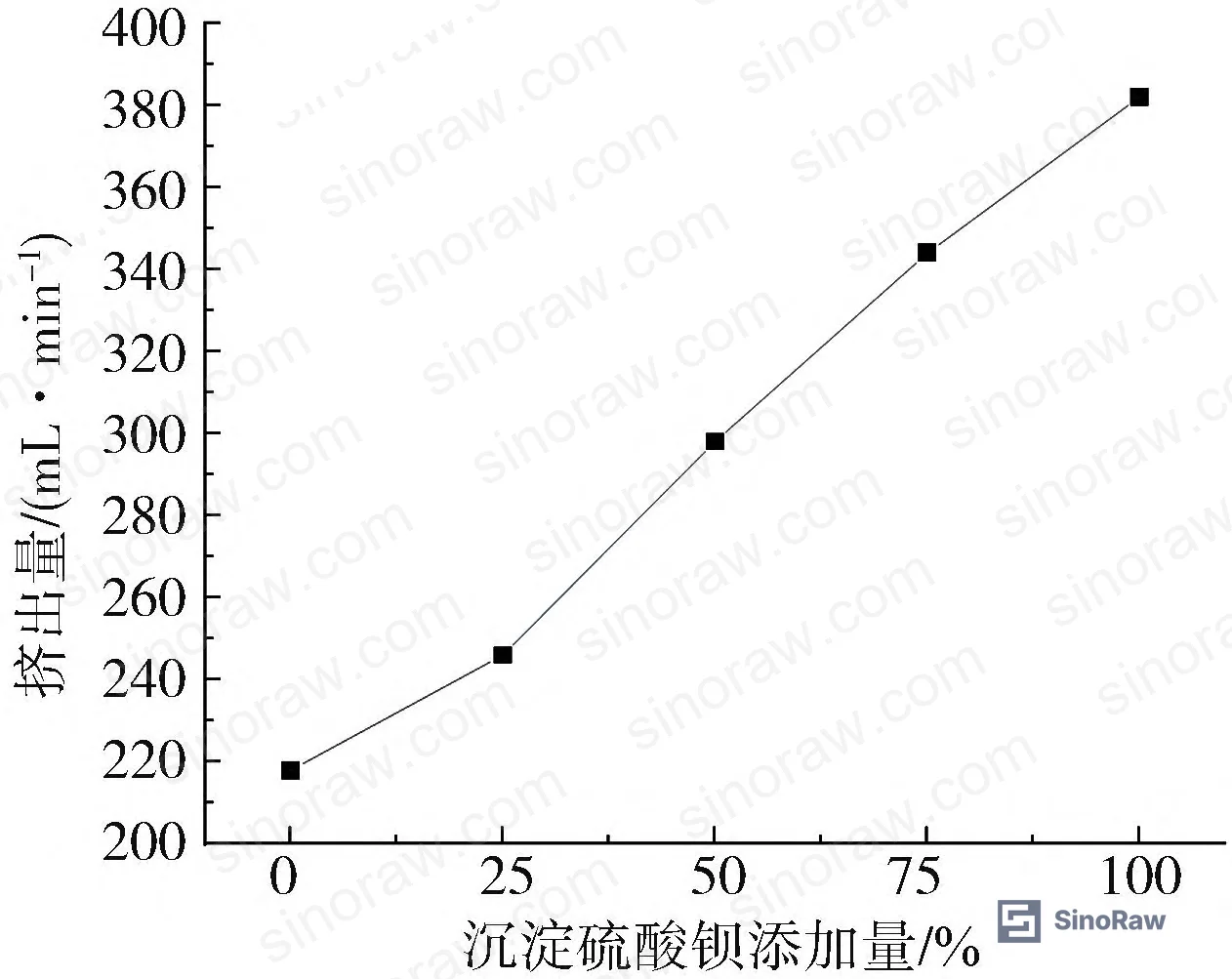
This is where the tradeoff becomes procurement-relevant. Extrudability climbs monotonically with BaSO₄ content — from 218 mL/min with pure nano CaCO₃ filler to 382 mL/min at full BaSO₄ substitution. That’s a 75% improvement in flow rate. The physics: nano CaCO₃ has high specific surface area and high oil absorption, which tightens the internal structure of the sealant matrix. BaSO₄ has coarser particle morphology, lower oil absorption, and weaker interaction with both the silicone backbone and plasticizer chains — the result is a looser, more fluid compound that applies faster, with less hand fatigue or pneumatic pressure requirement.
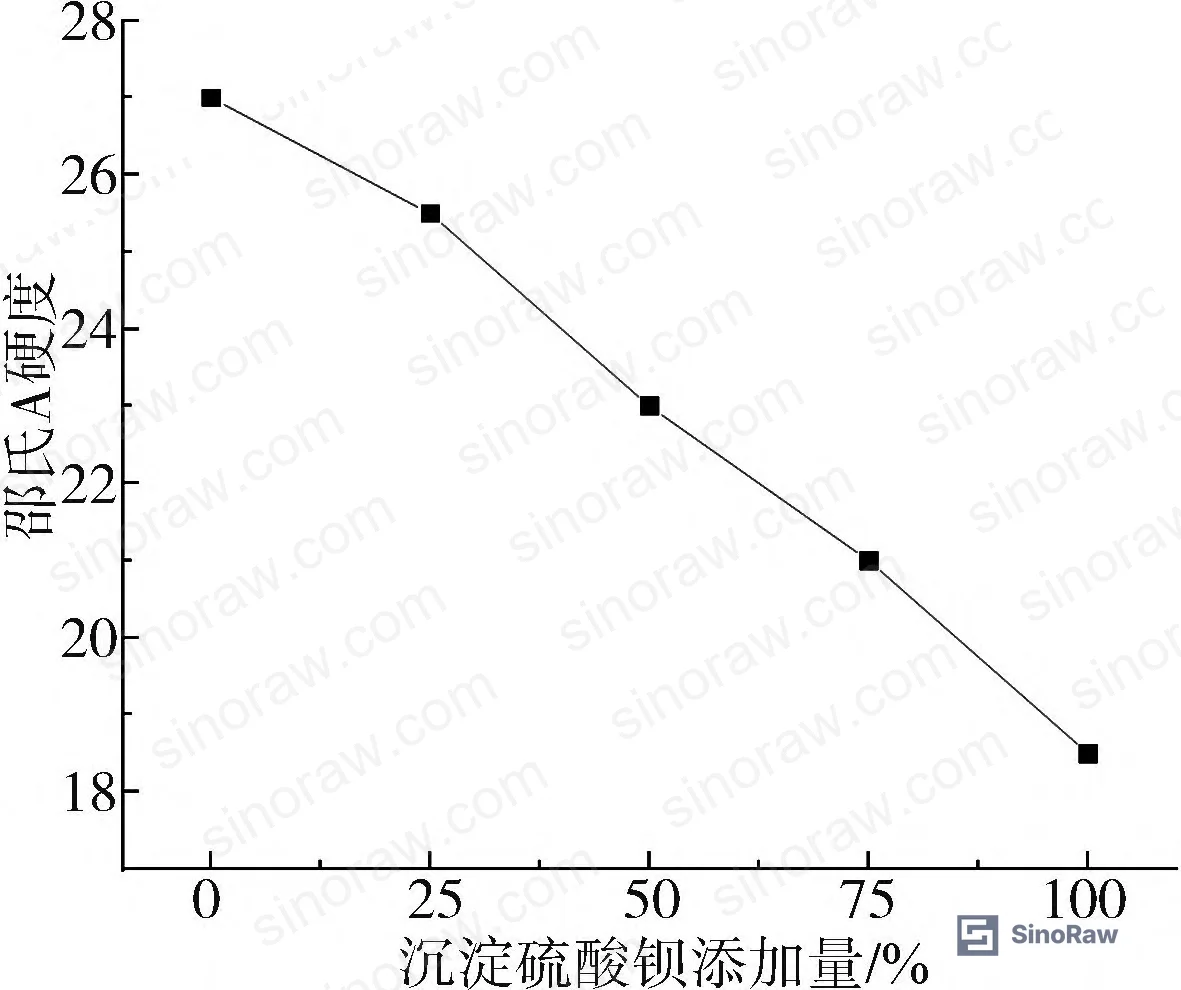
Shore A hardness drops progressively with BaSO₄ loading. The mechanism is the same: larger, less reactive BaSO₄ particles act as physical spacers between polysiloxane chains, reducing crosslink density and interchain interaction. Nano CaCO₃, with its larger surface contact area, reinforces the matrix and drives hardness up.
Appearance data tells its own story:
| BaSO₄ Loading (wt%) | Whiteness | Gloss | Dispersion Quality (visible particles) |
|---|---|---|---|
| 0% | + | + | 1 particle |
| 25% | + | + | 2 particles |
| 50% | ++ | ++ | 2 particles |
| 75% | ++ | ++ | 3 particles |
| 100% | +++ | ++ | 4 particles |
Rating scale: “+” = acceptable; “++” = good; “+++” = excellent. Dispersion: lower particle count = better.
Whiteness and gloss both improve as BaSO₄ loading increases — which is the whole point of this filler substitution strategy. Current aesthetic expectations for white sealants in construction and consumer-facing applications are demanding levels of brightness that nano CaCO₃ alone simply cannot deliver without supplementing with large quantities of TiO₂ pigment. Precipitated BaSO₄ shares several optical properties with TiO₂ — comparable refractive index, whiteness, and oil absorption values — allowing it to partly replace titanium dioxide as a brightness contributor while functioning simultaneously as a filler. That’s a cost-efficiency angle worth understanding when evaluating formulation economics from Chinese suppliers.
The dispersion degradation at high BaSO₄ loading is a real concern. At 100% substitution, visible particulate count in the fold test reaches 4 — not catastrophic, but noticeable in finished bead appearance and potentially problematic for smooth-surface applications.
The 25% Sweet Spot: Formulation Optimization for Industrial Sealant Procurement #
The data converges on 25 wt% BaSO₄ (of total filler) as the optimum point in this formulation system. At this loading level, tensile strength actually reaches its maximum at 1.17 MPa — slightly above the baseline — while elongation at break remains in a commercially useful range. Whiteness and gloss show improvement over the all-CaCO₃ baseline. Dispersion is acceptably controlled with only 2 visible particles in the fold test. Extrudability improves meaningfully without sacrificing handling characteristics.
In supplier qualification work, we saw three of six samples from different Chinese RTV sealant manufacturers fail tensile strength minimums when their BaSO₄ loading had been pushed above 50% — almost certainly a cost-reduction decision made without adjusting the crosslinker ratio or using surface-treated BaSO₄. The failures weren’t dramatic: products looked and applied fine. Tensile results came back at 0.72–0.81 MPa against a 0.90 MPa minimum — not zero, but outside spec. Visual inspection at goods receipt would never have caught it. This is exactly the type of formulation drift that downstream testing catches, and that incoming inspection rarely does.
Most procurement teams don’t realize that filler specifications in silicone sealant datasheets are almost never disclosed — you’ll get tensile strength, elongation, hardness, and cure time, but not the filler blend. The shift toward higher-BaSO₄ formulations in the Chinese RTV market has been accelerating as raw material cost pressure increases, and it’s happening largely outside the visibility of international buyers who are evaluating products only against finished-goods mechanical specs.
Honestly, most buyers over-specify whiteness and under-specify elongation at break when writing silicone sealant RFQs. A sealant at 119% elongation is going to crack in joint applications with thermal or structural movement. Minimum 150% — and preferably 200%+ for dynamic joints — should be a hard floor in your spec sheet, not a nice-to-have.
The ISO 11600 classification system for building sealants addresses this directly, categorizing products by movement accommodation class and providing minimum elongation benchmarks that many project specs still don’t reference correctly. Similarly, if your application sits in a food-contact, medical device, or electronics sealing environment, the relevant silicone sealant compliance framework under REACH Regulation (EC) No 1907/2006 will have implications for the BaSO₄ source and surface treatment chemistry.
Honestly, for most general industrial sealing applications — gasketing, enclosure sealing, vibration damping joints — a 25–30% BaSO₄ blend in a properly formulated deketoxime system will outperform a pure nano CaCO₃ formulation on both application properties and finished appearance without sacrificing mechanical integrity. That’s the formulation window to request from suppliers, and it’s specific enough to write into an RFQ.
Practical Guidance for Buyers #
If you’re sourcing RTV silicone sealant from Chinese manufacturers, the filler composition question needs to be part of your qualification conversation — not an afterthought. Ask suppliers directly what their filler blend is. A reputable manufacturer will tell you. If the answer is vague, that’s a signal.
For white sealant applications where brightness is a spec requirement, a BaSO₄ loading between 20–30 wt% of total filler is the defensible optimum zone. Push them above 50% without compensating adjustments, and you’ll lose meaningful tensile and elongation performance — the kind that shows up as joint failure in year two, not in pre-shipment inspection.
Our team at SinoRaw works directly with procurement engineers to identify and pre-qualify Chinese sealant manufacturers before RFQs are issued — cross-referencing formulation capability, certification status, and production consistency. We’re a Guangzhou-based sourcing intermediary, not a manufacturer, and our value is in reducing supplier qualification risk before you commit volume. For industrial adhesives and bonding materials, including RTV silicones, we can help you define technically sound supplier criteria and connect you with manufacturers who can substantiate their formulation choices with test data.
Test method compliance matters. Require GB/T 528 or ISO 37 tensile data — not just a spec sheet number. Specify the test method explicitly in your PO. Cure at standard conditions (23°C ± 2°C, 50% ± 5% RH, 7-day cure minimum) before mechanical testing. If suppliers can’t provide the test report, escalate before approving the supplier.
Frequently Asked Questions #
What is the optimal precipitated barium sulfate loading in white RTV silicone sealant?
Based on controlled filler substitution testing, 25 wt% BaSO₄ as a fraction of total filler loading delivers the best balance across all key performance parameters — peak tensile strength of 1.17 MPa, commercially viable elongation at break, improved whiteness and gloss versus a pure nano CaCO₃ baseline, and meaningful extrudability improvement. Beyond 50% loading, mechanical properties decline significantly without proportional gains in appearance or application performance that justify the tradeoff in most industrial sealing applications.
Why does elongation at break drop so sharply above 75% BaSO₄ loading?
Two compounding effects are at work. First, BaSO₄ particles at 1,250 mesh (~10 µm) are substantially coarser than nano CaCO₃ (60 nm average), making them stress concentration sites under tensile load. Second, above 75% loading, SEM analysis confirms visible agglomeration — the particles cluster into larger domains that amplify crack initiation. The result is a drop from 162% elongation at 75% loading to 119% at 100% substitution. For any joint application with thermal movement, this range is below the minimum acceptable floor.
Can precipitated barium sulfate replace titanium dioxide in white sealant formulations?
Partially, yes. BaSO₄ shares comparable whiteness, refractive index, and oil absorption characteristics with TiO₂, which is why it functions as an optical contributor in addition to a filler. At 50–100% of total filler, whiteness ratings reach “++” to “+++” versus “+” for pure CaCO₃ baseline. However, BaSO₄ cannot achieve the opacity per unit mass that TiO₂ delivers, so for maximum brightness applications a hybrid approach — BaSO₄ as partial TiO₂ extender — is the practical strategy rather than full replacement.
What test standards should I require when qualifying a Chinese RTV silicone sealant supplier?
Specify GB/T 528 or ISO 37 for tensile strength and elongation at break. Require GB/T 13477 for extrudability if application viscosity matters. For building sealant classification, reference ISO 11600 movement accommodation class. Confirm cure conditions in the test report: 23°C ± 2°C, 50% ± 5% RH, minimum 7-day cure. Any supplier submitting data cured at elevated temperature or shorter duration without disclosure should be flagged.
Does higher BaSO₄ content affect sealant shelf life or storage stability?
The research data evaluated here focused on mechanical and appearance properties rather than shelf-life testing. That said, surface-inactive fillers like unmodified BaSO₄ generally pose lower moisture contamination risk than poorly controlled CaCO₃ grades — and moisture sensitivity is the primary shelf-life variable in one-component ketoxime-cure RTV systems. The more relevant storage stability risk is using BaSO₄ with inadequate moisture control in the raw material supply chain. Require Certificate of Analysis moisture content data from your supplier for incoming filler lots.
Published by sinoraw.com Technical Team | Request a sourcing quote
Content reviewed by michael.fang | © sinoraw.com — All rights reserved. Unauthorized reproduction prohibited.


