

TL;DR #
If you’re sourcing nano calcium carbonate (NCC) for RTV silicone sealant — particularly for photovoltaic modules, electrical enclosures, or any application where volume resistivity is a specification line item — the filler grade you specify will quietly determine whether your sealant system passes or fails long-term electrical insulation requirements. Most procurement teams focus their attention on the silicone polymer itself. That’s the wrong place to look.
Measured resistivity of commercial NCC grades sits between 10⁸ and 10¹⁰ Ω·cm across tested samples. Pure calcite-phase calcium carbonate measures 6.97 × 10¹¹ Ω·cm under the same test conditions. That’s a gap of one to three orders of magnitude — and it’s the filler dragging the system down, not the polymer. Silicone polymers run at 10¹⁴ to 10¹⁶ Ω·cm. So when your formulated sealant underperforms on volume resistivity, the NCC grade is almost certainly the limiting component, not the base resin.

NCC Resistivity in RTV Silicone Sealant: What the Data Actually Shows #
The core question is simple: why does NCC made from the same mineral (limestone → calcium hydroxide → carbonation) vary so dramatically in electrical resistivity? The answer is ionic contamination — and most of it comes from process inputs, not raw limestone quality.
Test methodology used a three-phase fluid system: propylene glycol / deionized water / NCC at a mass ratio of 10:20:10. Conductivity electrodes were immersed vertically, readings stabilized before recording, and three measurements averaged per sample. Background conductivity of 11.3 × 10⁻⁶ S·cm⁻¹ was subtracted. Resistivity was derived from the reciprocal of conductivity (ρ = 1/κ).
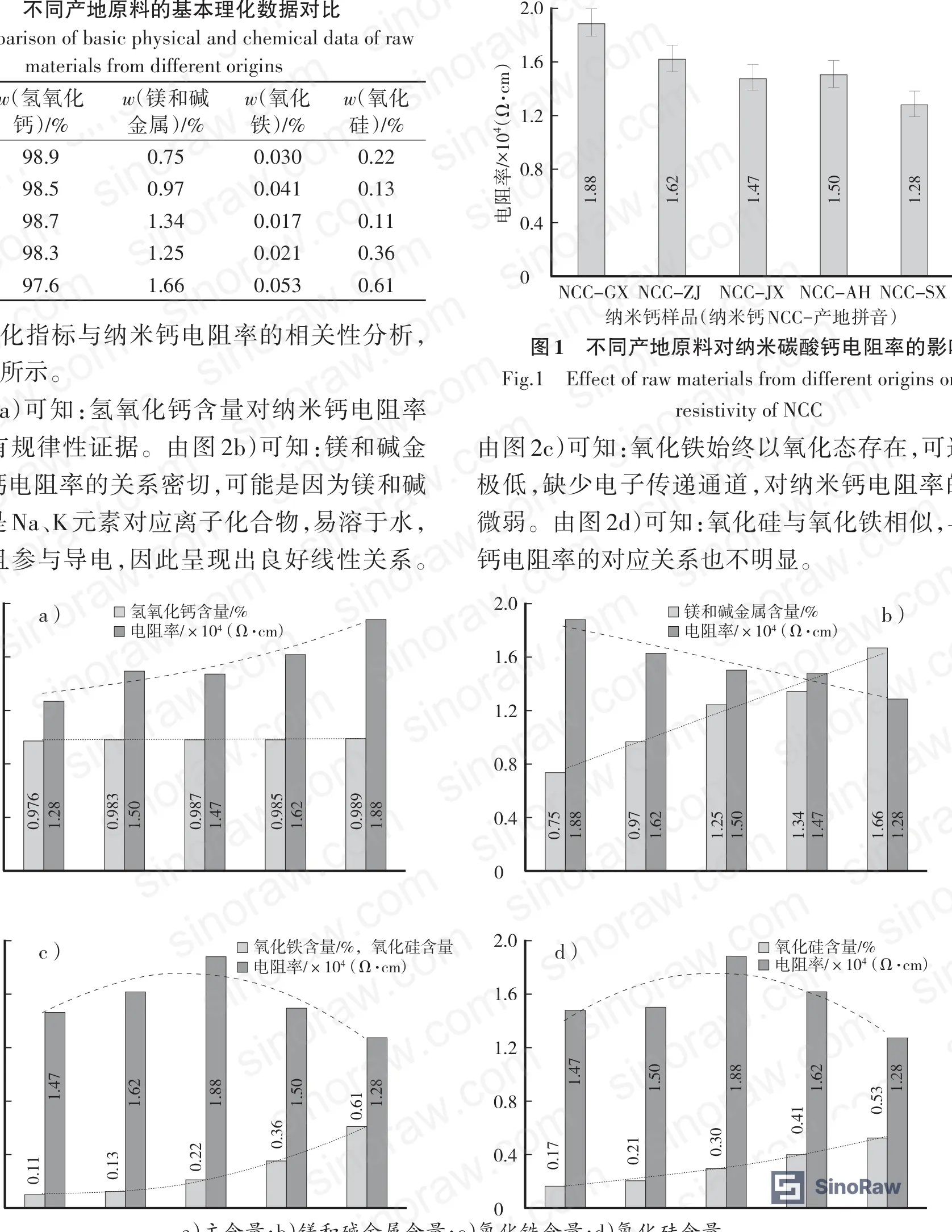
Raw Material Origin: Real but Secondary #
Five calcium hydroxide sources were tested under identical synthesis conditions. Resistivity results by origin:
| Ca(OH)₂ Origin | Resistivity (×10⁴ Ω·cm) | Mg + Alkali Metal Content (%) | Fe₂O₃ Content (%) |
|---|---|---|---|
| Guangxi (GX) | 1.88 | 0.75 | 0.030 |
| Zhejiang (ZJ) | 1.62 | 0.97 | 0.041 |
| Jiangxi (JX) | 1.50 | 1.34 | 0.017 |
| Anhui (AH) | 1.47 | 1.25 | 0.021 |
| Shanxi (SX) | 1.28 | 1.66 | 0.053 |
The correlation is clear: higher magnesium and alkali metal content (Na, K compounds) correlates with lower resistivity. The mechanism is straightforward — Na⁺ and K⁺ ions dissolve completely in water and participate fully in conductivity. Fe₂O₃ and SiO₂, by contrast, remain in oxidized or insoluble form with negligible ion mobility, and their correlation with resistivity is weak.
What this tells a procurement engineer: origin specification on NCC is a valid secondary lever. Guangxi-sourced calcium hydroxide showed consistently better resistivity performance. But controlling origin is insufficient on its own — process chemistry dominates.
Crystal Shape Control Agents: Minimal Impact #
Eight carbonization experiments tested different crystal shape control agents (sucrose, zinc sulfate, sodium citrate, EDTA, and combinations) at 0.5% addition levels with a carbonization temperature of 20–25 °C, gas flow rate of 100 L/min, and carbonization endpoint at pH 7–7.5. BET specific surface areas ranged from 18.26 to 28.31 m²/g across the sample set.
Resistivity variation across all eight samples was narrow: roughly 1.03 to 1.30 × 10⁴ Ω·cm. The reason is physical: crystal shape control agents primarily incorporate into NCC particles through doping and bonding during the carbonation phase. Very little remains on the outer particle surface. The small amount that does reside on particle surfaces undergoes constant adsorption-desorption equilibrium in the water-solid interface. Net mobile ion concentration from these agents is low — too low to materially affect resistivity.
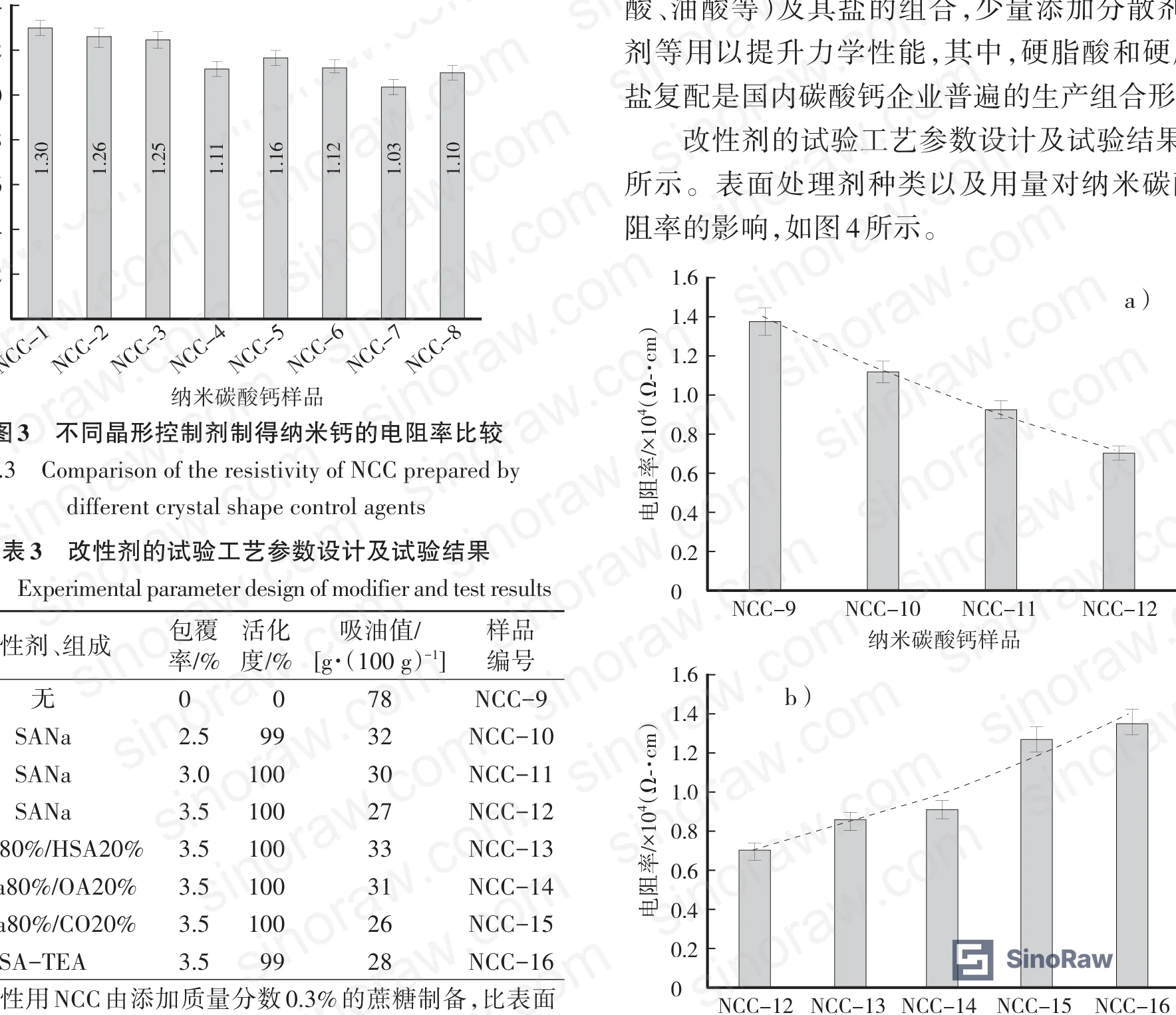
Surface Treatment Agent Selection and Its Outsized Effect on RTV Sealant Electrical Performance #
This is where the procurement conversation needs to shift. Surface treatment agent type and loading have the most significant impact on NCC resistivity — standard deviation analysis across all tested factors confirmed this ranks first by a clear margin.
Honestly, most buyers reviewing NCC datasheets never ask about surface treatment agent chemistry. They check BET surface area, activation rate, and oil absorption. Those are valid mechanical performance indicators, but they tell you nothing about how the coating will affect the electrical insulation properties of the finished sealant.
Surface Treatment Agent Data #
Samples NCC-9 through NCC-16 were modified at 70 °C for 45 minutes at 150 rpm with 0.3% SDS dispersant. Base NCC was prepared with 0.3% sucrose as crystal shape control agent, giving a BET of 27.78 m²/g.
The result from varying sodium stearate (SANa) loading is direct: resistivity decreases systematically as SANa loading increases from 2.5% to 3.5%. More sodium stearate means more Na⁺ ions on the particle surface, means lower resistivity.
The more actionable finding comes from substituting surface agents. When equivalent mass of fatty acids (stearic acid, oleic acid, poorly ionized coconut oil) replaces sodium stearate at fixed total loading, resistivity increases. Replacing fatty acid sodium salt entirely with a low-ionization composite modifier yielded a maximum resistivity increase of 95.7% compared to sodium stearate baseline samples.
| Surface Treatment Agent (NCC-12 to NCC-16) | Coating Rate (%) | Activation Degree (%) | Relative Resistivity |
|---|---|---|---|
| SANa 80% / Stearic Acid 20% | 100 | 33 | Moderate-High |
| SANa 80% / Oleic Acid 20% | 100 | 31 | Moderate-High |
| SANa 80% / Coconut Oil 20% | 100 | 26 | High |
| SA-TEA composite modifier | 99 | 28 | Highest |
| SANa only (3.5%) | 100 | 27 | Baseline |
Oil absorption values ranged from 26 to 33 g/100g across these surface-treated grades. Coating rate and activation degree remain at or above 99–100% for the high-resistivity formulations — so the electrical improvement does not come at the cost of mechanical compatibility with the silicone matrix.
Process Water: Matters at the Slurry Stage, Less in Finished Powder #
Five water types were evaluated: primary process water (conductivity 265 × 10⁻⁶ S·cm⁻¹), recirculated process water (371 × 10⁻⁶ S·cm⁻¹), surface runoff (127 × 10⁻⁶ S·cm⁻¹), municipal tap water (133 × 10⁻⁶ S·cm⁻¹), and deionized water (10 × 10⁻⁶ S·cm⁻¹).
The gap between slurry conductivity and finished powder resistivity is telling. Slurry-state conductivity varied dramatically across water sources — soluble ions release fully in liquid phase. But after filtration and drying, resistivity of finished powders from all water types converged near deionized water levels. Most soluble ions are removed with the liquid phase during solid-liquid separation.
The practical implication: process water quality is a manageable variable. A supplier using recirculated process water but with robust filtration and drying protocols can still produce high-resistivity NCC. Conversely, process water is not a shortcut to high-resistivity NCC if the surface treatment chemistry is wrong.
The Ionic Mechanism: Why NCC Grades Fail Electrical Specs #
In supplier qualification runs, when we analyzed why NCC samples from different manufacturers cluster at different resistivity levels despite nominally similar specifications, the answer traces back to two distinct ion-transport mechanisms operating in parallel.
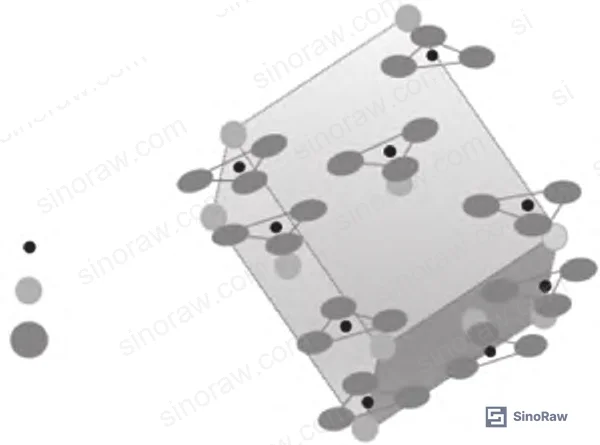
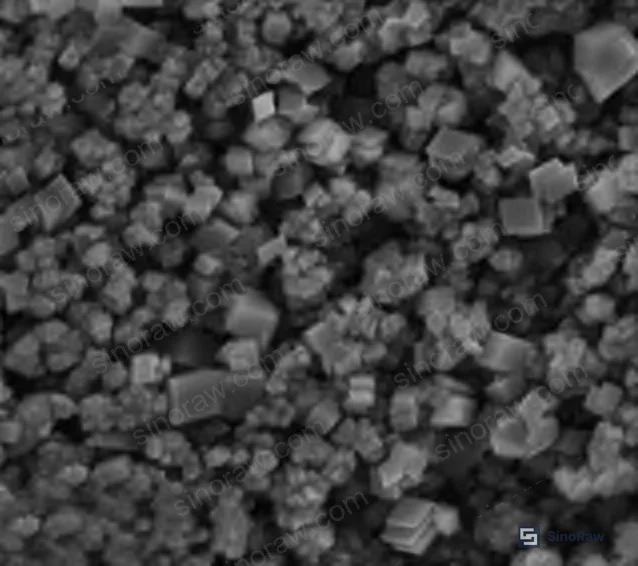
The first — and more damaging — is capillary tunneling by Na⁺ and OH⁻. These ions are introduced primarily through process chemistry: sodium-salt surface treatment agents, residual NaOH from process alkalis, and unreacted Ca(OH)₂ carryover. Na⁺ and OH⁻ concentrations in finished NCC reach approximately 10⁻² mol/100 g CaCO₃. Under an electric field, these ions migrate directionally through the sub-micron capillary channels that form between tightly packed NCC particles. OH⁻ carries a molar conductivity of 198.3 S·cm²/mol — significantly higher than Na⁺, Mg²⁺, Fe²⁺, Ca²⁺, or CO₃²⁻, which all fall in the 50–70 S·cm²/mol range. High concentration, high molar conductivity, and a continuous capillary network create the conditions for sustained ion tunneling through the material matrix.
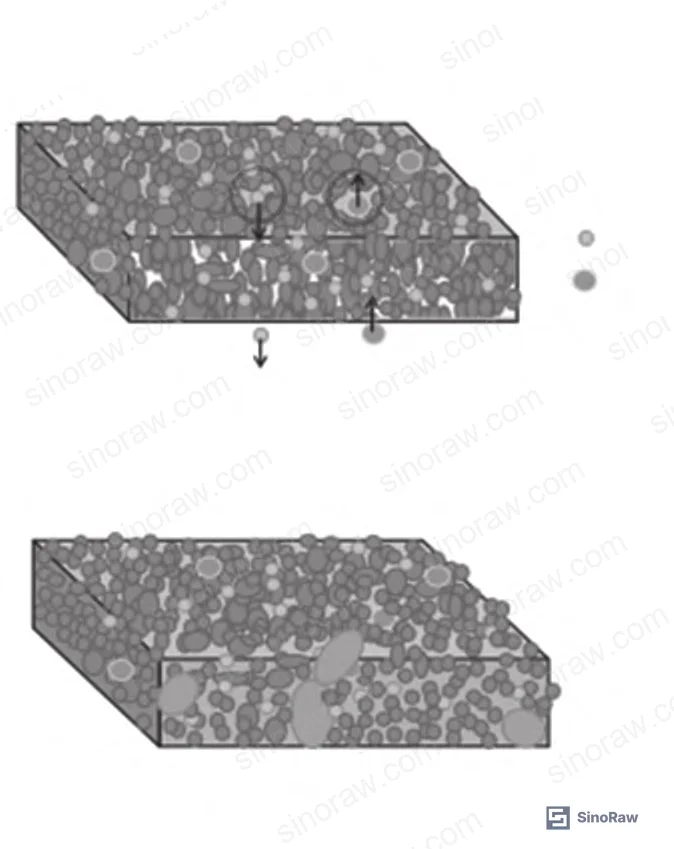
The second mechanism — far less damaging — is the “salt pool” effect from raw material-introduced ions: Mg²⁺, Fe²⁺, Ca²⁺, CO₃²⁻. These exist at concentrations no higher than 10⁻⁵ mol/100 g CaCO₃ — three orders of magnitude lower than process-introduced ions. They cannot form the continuous ion-transport pathways required for tunneling. Instead, they dissolve into trace free water pockets distributed sparsely through the powder matrix, forming isolated salt pools that can only conduct if adjacent pools connect. Connection probability is low. Impact on resistivity is correspondingly minor.
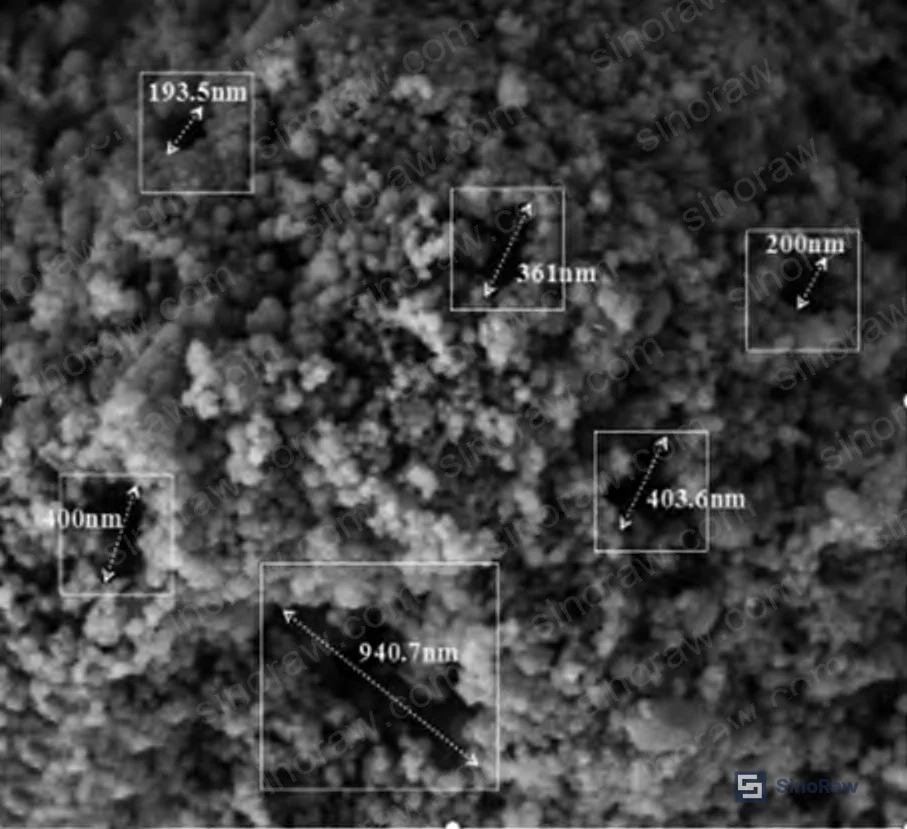
Most procurement teams don’t realize that the resistivity floor of commercial NCC is not set by the limestone mineral — it’s set by the sodium chemistry in the surface treatment process. You can source the purest limestone in Guangxi and still produce electrically mediocre NCC if you’re using sodium stearate at 3.5% loading with minimal post-treatment washing.
Practical Guidance for Buyers #
When specifying NCC for electrically sensitive silicone sealant applications — photovoltaic module encapsulation, electrical cabinet gaskets, wire-and-cable sealing — resistivity should be treated as a primary specification parameter, not an afterthought. Request resistivity test data from your NCC supplier, ask specifically which surface treatment agent system they use, and push back if they can only provide stearic acid activation rate as a quality metric.
At SinoRaw, our role as a Guangzhou-based B2B sourcing service is to help overseas procurement engineers identify and qualify Chinese NCC and silicone sealant manufacturers before RFQ — including technical review of surface treatment chemistry, resistivity test data, and process controls. We’ve seen the specification gap firsthand: most Chinese NCC suppliers can quote BET surface area and activation degree same-day, but fewer than half can provide resistivity data without a specific request.
For formulators targeting high electrical insulation performance, the actionable levers in priority order are: (1) surface treatment agent type — move away from sodium stearate toward fatty acid or low-ionization composite systems; (2) raw material origin — prefer low alkali-metal calcium hydroxide, with Guangxi-origin showing best baseline; (3) post-treatment washing protocol — critical for Na⁺/OH⁻ removal; (4) process water quality — use deionized or at minimum low-conductivity water in carbonation and surface modification stages.
Reference standards relevant to NCC for silicone sealant procurement include ISO 9277 (BET surface area), ASTM D257 (volume resistivity of insulating materials), and GB/T 19590 (nano calcium carbonate). For finished sealant electrical performance, IEC 60093 covers volume resistivity test methods for solid insulating materials.
Explore our coverage of silicone and RTV sealant and specialty polymer additives for related supplier evaluation guidance.
Frequently Asked Questions #
Why does nano calcium carbonate lower the electrical resistivity of silicone sealant?
NCC particles contain adsorbed and trapped ions — primarily Na⁺ and OH⁻ introduced through surface treatment chemistry, plus Mg²⁺, Fe²⁺, Ca²⁺, and CO₃²⁻ from raw limestone. Under an electric field, Na⁺ and OH⁻ migrate through the sub-micron capillary channels between tightly packed particles, creating continuous ion-transport pathways through the material. Because these ions exist at concentrations around 10⁻² mol/100 g CaCO₃ and OH⁻ carries a molar conductivity of 198.3 S·cm²/mol, the conductivity contribution is disproportionately large relative to raw-material-introduced ions, which sit at concentrations three orders of magnitude lower and rarely form connected pathways.
What surface treatment agent should I specify for high-resistivity NCC?
Avoid or minimize sodium stearate (SANa) loading. Test data shows that NCC resistivity decreases systematically as SANa content increases from 2.5% to 3.5%, because each additional percentage point introduces more Na⁺ to the particle surface. Substituting equivalent mass with stearic acid, oleic acid, or coconut oil raises resistivity. Using a low-ionization composite modifier in place of fatty acid sodium salts produced the highest measured resistivity — a 95.7% improvement over the sodium stearate baseline in controlled trials.
Does the origin of calcium hydroxide raw material matter for resistivity?
Yes, but it’s a secondary factor. Guangxi-sourced calcium hydroxide produced NCC with the highest resistivity (1.88 × 10⁴ Ω·cm), while Shanxi-origin produced the lowest (1.28 × 10⁴ Ω·cm) under identical synthesis conditions. The driver is alkali metal content: higher Na and K impurity levels correlate directly with lower resistivity. That said, process chemistry — specifically surface treatment — has roughly twice the influence of raw material origin based on standard deviation analysis across all tested variables.
Can process water quality be used to improve NCC resistivity?
Process water has a significant effect on NCC slurry conductivity but a surprisingly small effect on finished powder resistivity. After filtration and drying, most soluble ions introduced by process water are removed with the liquid phase. Finished NCC from all five tested water sources (including recirculated process water at 371 × 10⁻⁶ S·cm⁻¹) showed similar resistivity, converging near deionized water baseline values. Use deionized or low-conductivity water as standard practice, but don’t expect water quality alone to compensate for a high-sodium surface treatment system.
What resistivity value should I require for NCC used in electrically insulating silicone sealants?
The benchmark reference point is pure calcite-phase calcium carbonate at 6.97 × 10¹¹ Ω·cm — that’s the theoretical ceiling for an ion-free NCC grade. Commercial NCC as supplied typically measures 10⁸ to 10¹⁰ Ω·cm. For photovoltaic and electrical insulation applications, specify NCC with resistivity ≥ 10¹⁰ Ω·cm and require the supplier to provide test data using a standardized conductivity measurement method. Use ASTM D257 or IEC 60093 as the basis for finished sealant volume resistivity acceptance criteria.
Published by sinoraw.com Technical Team | Request a sourcing quote
Content reviewed by michael.fang | © sinoraw.com — All rights reserved. Unauthorized reproduction prohibited.


