

TL;DR #
Gas automatic shut-off valves must close before voltage drops to 15% of rated value, and spring closing force must maintain sealing density above 1 N per meter of seal length — even after 400,000 durability cycles for small-bore valves. If your supplier cannot demonstrate post-durability sealing force retention and residual magnetism control, you are carrying latent safety risk in every gas circuit you commission. Before issuing an RFQ, require documented spring closing force measurements both before and after the full durability cycle sequence.
Overview #
Automatic shut-off valves are not interchangeable commodity components. The performance gap between a valve that merely passes incoming inspection and one that maintains sealing integrity across its full service life is where most field failures originate — and where most procurement teams underinvest in qualification.
Technical analysis conducted at a national gas appliance quality testing and inspection center, drawing on evaluation of production samples against international and domestic standard requirements, provides a rigorous framework for understanding where these valves fail and why. The work examined three core performance domains — non-programmatic closure, gas-tightness and sealing force, and durability — across valve size classes ranging from DN <10 up to DN >150.
The governing international standard for this product category is ISO 23551-1:2012, which defines automatic shut-off valves as safety devices in gas circuits with a mandatory safety-closure function. Maximum working pressure under this standard is 0.5 MPa. The domestic Chinese equivalent, GB/T 37499—2019, aligns technically with the international standard and has been in active implementation for several years — long enough to surface a clear pattern of recurring quality deficiencies in commercial production.
For buyers sourcing these valves from Chinese manufacturers, understanding the specific failure modes and the standard thresholds behind them is the difference between a qualified supply chain and a gas safety incident waiting to happen.
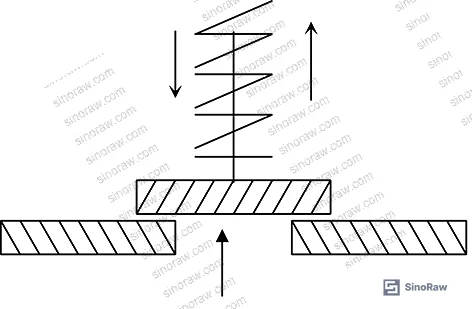
Non-Programmatic Closure: The Defining Safety Requirement for Gas Shut-Off Valves #
This is the specification that separates a safety valve from a control valve. A control valve closes on command. A safety valve must close even when the control system has failed.
ISO 23551-1:2012 defines non-programmatic closure with two hard requirements:
Closure capability: The valve must automatically close before supply voltage drops to 15% of rated voltage. This threshold is not arbitrary — it is calculated to ensure the spring closing force has sufficient margin to overcome residual magnetic force (剩磁力) even at near-zero electromagnetic input. If a valve only closes at, say, 8% of rated voltage, the spring is undersized relative to the residual magnetism in that spool assembly.
Closure time: Class A, B, and C valves must achieve full closure within 1 second of the electrical control signal being cut. Class J valves are permitted up to 5 seconds. These times must be verified at both the minimum and maximum rated operating temperatures.
The operating principle is straightforward but the failure modes are subtle. When powered, electromagnetic opening force compresses the spring and lifts the seal away from the seat. When de-energized, the spring must extend and drive the seal back against the seat — but it is working against residual magnetism that continues to act upward on the spool even after power is cut. The net closing force is: spring closing force minus residual magnetic force. The valve closes when this net value is positive and sufficient.
Here is where the design constraint becomes critical for procurement: the spring must be strong enough to close against maximum expected residual magnetism, but not so strong that it prevents valve opening at 85% of rated voltage (the opening voltage threshold). This means the closure voltage window must fall within 15% to 85% of rated voltage. Oversize the spring and you get reliable closure but difficult opening. Undersize it and you get easy opening but failure to close when residual magnetism has accumulated after repeated cycling.
Honestly, most buyers over-specify valve pressure rating and under-specify spring closing force margin. The pressure rating is easy to verify; the closing force margin requires testing that most incoming inspection routines don’t include.
Gas-Tightness, Sealing Force, and the Durability Requirements That Expose Real Quality #
Gas-Tightness Standards #
Gas-tightness is tested in two modes. Internal gas-tightness measures leakage past the closed element from inlet to outlet. External gas-tightness measures leakage from the gas-containing body to atmosphere. Test pressure is whichever is greater: 15 kPa or 1.5× maximum working (inlet) pressure.
Maximum allowable internal leakage rates by valve bore size (nominal diameter, DN):
| DN Range | Max Internal Leakage (cm³/h) | Max External Leakage (cm³/h) |
|---|---|---|
| DN < 10 | 20 | 20 |
| 10 ≤ DN ≤ 25 | 40 | 40 |
| 25 < DN ≤ 80 | 60 | 60 |
| 80 < DN ≤ 150 | 100 | 60 |
| DN > 150 | 150 | 60 |
Note that external leakage limits are capped at 60 cm³/h regardless of valve size above DN 80 — the standard treats atmospheric leakage as categorically more hazardous than internal bypass.
Sealing Force Requirements #
Sealing force is distinct from gas-tightness, though both are expressed as leakage measurements. The critical difference: gas-tightness is tested with pressure applied from the inlet; sealing force is tested with pressure applied from the outlet. This tests the seal’s own mechanical integrity independent of upstream pressure assistance.
The sealing force requirement by valve class:
| Valve Class | Test Pressure (kPa) | Max Leakage |
|---|---|---|
| Class A | 15 | Equal to internal gas-tightness limit for that DN |
| Class B | 5 | Equal to internal gas-tightness limit for that DN |
| Class C | 1 | Equal to internal gas-tightness limit for that DN |
Additionally, per meter of seal length, closing force must exceed 1 N. Class D valves have no sealing force requirement. Class J valves are tested by removing the spring and compressing to the closed position to measure spring closing force directly.
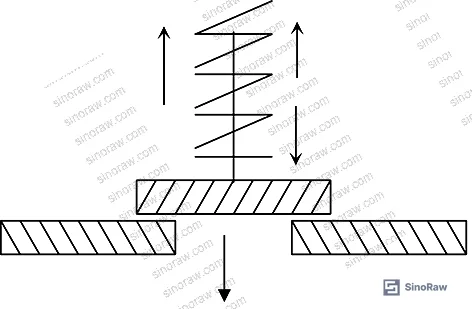
Durability: Where the Real Failures Surface #
The durability requirements in ISO 23551-1:2012 are deliberately more demanding than appliance-level requirements. The intent is to ensure the valve remains the safest component in the system across its full service life.
Required cycle counts by valve size and conditions:
| DN / Condition | Cycles at (20±5)°C | Cycles at Max Temp or ≥(60±5)°C |
|---|---|---|
| DN ≤ 25, opening time ≤1s, working pressure ≤5 kPa | 100,000 | 400,000 |
| DN ≤ 25, opening time >1s, working pressure >15 kPa | 50,000 | 150,000 |
| 25 < DN ≤ 80 | 25,000 | 75,000 |
| 80 < DN ≤ 150 | 25,000 | 25,000 |
| DN > 150 | 5,000 | 20,000 |
That 400,000-cycle elevated temperature requirement for small-bore valves is not a typo. It reflects the operating reality of residential and commercial gas appliances that cycle frequently over multi-year service lives.
In supplier qualification, we saw a clear pattern where three of the most common failure modes identified during post-implementation review of GB/T 37499—2019 all shared the same root cause: sealing force degradation after durability cycling. Specifically:
- Insufficient spring closing force causing sealing force to fall below the design requirement before durability testing even begins
- Spring closing force further degraded post-durability, pushing an already marginal valve into non-compliance
- Poor valve seat machining precision and seal gasket flatness causing progressive leakage increase through the duty cycle
These are not edge-case failures. They represent systematic quality deficiencies in production valves from suppliers who understand the standard at a surface level but have not engineered to the failure modes.
The technical root cause of residual magnetism increase over service life is well understood: repeated energize/de-energize cycling causes progressive accumulation of magnetic flux in the spool. The control parameter is the heat treatment of the spool material. Annealing processes that reduce material impurities, promote grain growth, reduce magnetic reluctance, and increase permeability will lower residual magnetism. Suppliers who cannot speak to their spool annealing specification are not engineering to the standard — they are hoping to pass it.
This connects to a broader issue that most procurement teams miss. The IEC 62619:2022 safety framework for secondary energy systems and the UN 38.3 dangerous goods transport standard both reflect the same philosophy embedded in ISO 23551-1: safety-critical components must demonstrate integrity across their full operational envelope, not just at initial commissioning. Buyers who only test at incoming inspection are missing the durability dimension entirely.
Practical Guidance for Buyers #
When you are evaluating Chinese suppliers of gas automatic shut-off valves, the qualification conversation needs to go well beyond pressure rating and certification paperwork. The failure modes documented in post-implementation review of the GB/T 37499—2019 standard are directly traceable to gaps in how suppliers engineer the spring-spool-seat assembly.
Ask specifically for spring closing force data measured before and after the applicable durability cycle sequence. Ask for residual magnetism measurement data at the end of the duty cycle, not just at initial production. Request valve seat surface finish specifications — roughness values matter because seat flatness directly affects sealing force retention after cycling.
For DN ≤ 25 valves going into high-cycle commercial or small industrial applications, the 400,000-cycle elevated temperature durability requirement is the specification that exposes supplier capability. A supplier who has tested to this level and can show sealing force retention data post-cycle is a fundamentally different proposition from one offering only standard documentation.
At sinoraw.com, our team works specifically with overseas procurement engineers and technical buyers to identify and pre-screen Chinese manufacturers of fluid control components like these — assessing not just certification status but actual test data depth. For fluid control procurement more broadly, our Fluid Control and Sensors & Detection category pages cover related component categories where similar qualification rigor applies.
The IEC 61960-3 standard for secondary lithium cells illustrates a recurring pattern in safety-critical component standards: the post-cycle performance retention requirement is always more discriminating than the initial specification. The same principle applies here — a valve that passes initial gas-tightness testing but degrades post-durability is not a compliant valve for safety-circuit use.
Need help identifying qualified suppliers for gas automatic shut-off valves? Talk to our sourcing team →
Supplier Qualification Questions #
- What is your measured spring closing force value after the full durability cycle sequence, and how does it compare to the pre-durability value? Specifically, can you show that closing force remains sufficient to close the valve before voltage drops to 15% of rated voltage post-durability?
- What is the residual magnetic flux density (剩磁) measured in your spool assemblies after the applicable durability cycle count — 400,000 cycles at ≥60°C for DN ≤ 25 valves with opening time ≤1 second? How does this compare to your design maximum allowable residual magnetism?
- What spool material annealing specification do you use to control residual magnetism accumulation over service life, and what magnetic permeability and grain size targets does your heat treatment process aim to achieve?
- What is the valve seat surface roughness specification (Ra value or equivalent) and what machining process controls do you use to ensure seal gasket flatness and seat contact precision sufficient to maintain sealing force ≥1 N per meter of seal length post-durability?
- For internal gas-tightness at 15 kPa test pressure, what is your production batch maximum leakage value for your target DN range, and how much margin below the ISO 23551-1:2012 limit does your typical production achieve? Can you provide batch-level test records?
Sourcing Checklist #
- ☐ Supplier holds current certification to ISO 23551-1:2012 or GB/T 37499—2019 with scope covering the target DN range
- ☐ Closure voltage documented to fall within 15%–85% of rated voltage range, verified by test records
- ☐ Closure time verified ≤1 second for Class A/B/C valves at both minimum and maximum rated operating temperatures
- ☐ Post-durability internal gas-tightness leakage within DN-specific limits (e.g., ≤40 cm³/h for 10 ≤ DN ≤ 25) confirmed by third-party or in-house post-cycle test report
- ☐ Sealing force ≥1 N per meter of seal length confirmed after full durability cycle sequence (400,000 cycles at ≥60°C for DN ≤ 25 / ≤5 kPa / opening time ≤1 s)
- ☐ Residual magnetism measurement data available for spool assemblies at end-of-life cycle count, with documented margin against maximum allowable residual force
- ☐ Valve seat surface finish and seal gasket flatness specifications documented with in-process measurement records
- ☐ Spool heat treatment (annealing) process specification available, confirming magnetic property control
Key Specifications Table #
| Parameter | Recommended Value | Verification Method |
|---|---|---|
| Closure voltage threshold | Valve closes at ≥15% of rated voltage (closure voltage window: 15%–85% of rated) | Variable-voltage power supply + leak detector connected to valve inlet; slowly reduce voltage and record closure voltage |
| Closure time (Class A/B/C) | ≤1 second from signal cut to closed position | Timed from electrical signal interruption to confirmed closed position; tested at min and max rated temperatures |
| Internal gas-tightness (10 ≤ DN ≤ 25) | ≤40 cm³/h at 15 kPa or 1.5× max working pressure (whichever is greater) | Integrated leak detector connected to valve inlet at specified test pressure |
| Sealing force per unit seal length | >1 N per meter of seal length | Pressure applied from outlet at Class-appropriate test pressure (15/5/1 kPa for A/B/C); leakage measured against internal gas-tightness limits |
| Durability cycle count (DN ≤ 25, ≤5 kPa, opening time ≤1 s) | 100,000 cycles at (20±5)°C; 400,000 cycles at ≥(60±5)°C | Automated cycling rig; gas-tightness and sealing force re-verified post-cycle |
| External gas-tightness (DN > 80) | ≤60 cm³/h (cap applies regardless of valve size) | Leak detector connected to atmosphere-side test port |
Can’t find a supplier meeting these specs? Submit your requirements and we’ll match you within 48 hours.
References #
Data source: Safety Design Analysis of Automatic Gas Shut-Off Valves Based on International Standard Requirements, C.-D. Guo et al., Journal of Natural Gas Science and Engineering, 2025
Frequently Asked Questions #
What is the difference between internal and external gas-tightness in automatic shut-off valves?
Internal gas-tightness measures leakage past the closed sealing element from the valve inlet to the outlet — essentially, how well the valve blocks gas flow when commanded closed. External gas-tightness measures leakage from the gas-containing body of the valve to the surrounding atmosphere. Both are tested at whichever pressure is greater: 15 kPa or 1.5 times the maximum working (inlet) pressure. External leakage is treated as categorically more dangerous because it releases gas directly into the installation environment.
Why does the 15% rated voltage threshold matter for spring closing force design?
It defines the minimum spring closing force margin. The valve must close before voltage drops to 15% of rated — meaning the spring must overcome residual magnetic force at very low electromagnetic input. If spring force is marginal, accumulated residual magnetism after many operating cycles can prevent closure. The design target is to ensure the closure voltage falls between 15% and 85% of rated voltage, balancing closure reliability against opening ease.
What causes sealing force to degrade after durability cycling?
Three mechanisms are documented: insufficient initial spring closing force that provides no margin for degradation; spring fatigue reducing closing force over the duty cycle; and valve seat surface defects or seal gasket flatness errors that cause progressive seal-to-seat contact deterioration. The spool’s residual magnetism also increases with cycling, which reduces the net downward closing force available at any given voltage level.
How do the durability cycle requirements in ISO 23551-1:2012 compare to appliance-level standards?
They are intentionally more demanding. Small-bore valves (DN ≤ 25) operating at low pressure with fast opening times must complete 400,000 cycles at elevated temperature (≥60°C). The intent is that the shut-off valve remains the most reliable safety component in the appliance across its entire installed service life — it should outlast the appliance it protects.
Is GB/T 37499—2019 equivalent to ISO 23551-1:2012 for procurement purposes?
For the core automatic shut-off valve performance requirements — closure function, gas-tightness, sealing force, and durability — the two standards are technically aligned. GB/T 37499—2019 was developed specifically to incorporate the ISO 23551-1:2012 technical content and extend coverage to commercial and small industrial gas burning appliances, beyond the household-only scope of the earlier domestic standard. Buyers can treat certification to either as meeting equivalent technical thresholds, but should confirm the specific DN range and valve class in the certification scope.
Published by sinoraw.com Technical Team | Request a sourcing quote


