

TL;DR #
Torque signal analysis using 3-layer wavelet packet decomposition combined with a C-SVM classifier achieves 100% state recognition accuracy across all three manual globe valve action states — normal operation, mild sticking, and rolling-element spalling. For buyers procuring nuclear-grade or high-reliability manual globe valves, this means condition verification can now be quantified during acceptance testing rather than inferred from maintenance history. Specify torque monitoring capability and request documented reliability trial data when qualifying any supplier for safety-critical globe valve applications.
Overview #
If you’ve ever tried to verify manual globe valve reliability the traditional way — a technician manually cycling the valve dozens of times with a wrench and a stopwatch — you already know the problem. It’s slow, it generates almost no usable data, and it tells you almost nothing about what the valve is actually doing internally during actuation. Research conducted at a national-level nuclear engineering institute, using an integrated intelligent actuation test platform with real-time torque and rotation-speed acquisition, has demonstrated a fundamentally better approach.
The study ran reliability growth trials on nuclear-grade manual globe valves under compounded thermal and vibration loading. Torque signals were captured across 20 sample sets each for mild sticking and rolling-element spalling conditions. What emerged is a machine-learning-assisted qualification methodology that any serious procurement team should understand before issuing their next RFQ — not because you’ll necessarily deploy AI in your incoming inspection line, but because the torque thresholds and failure signatures it identifies are directly usable as acceptance criteria.
Manual Globe Valve Failure Modes and Torque Signal Signatures #
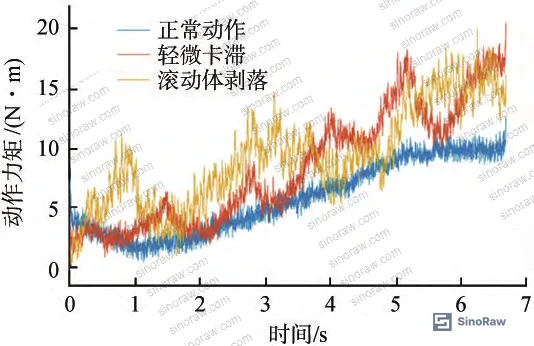
The test program identified three distinct action states: normal operation (label 0), mild sticking (label 1), and rolling-element spalling (label 2). These aren’t abstract categories — they reflect real degradation sequences observed during accelerated life testing where lubricant breakdown and bearing aging occurred under sustained thermal and vibration loads.
The critical diagnostic tool is the closing-stroke torque signal, x(t). Under normal conditions, the torque curve follows a consistent, predictable profile. Mild sticking produces irregular torque spikes without a sustained elevation — easy to miss with a simple peak-torque gauge but clearly visible in the time-frequency domain. Rolling-element spalling generates a more chaotic torque signature with higher-frequency disturbance content superimposed on the primary actuation curve.
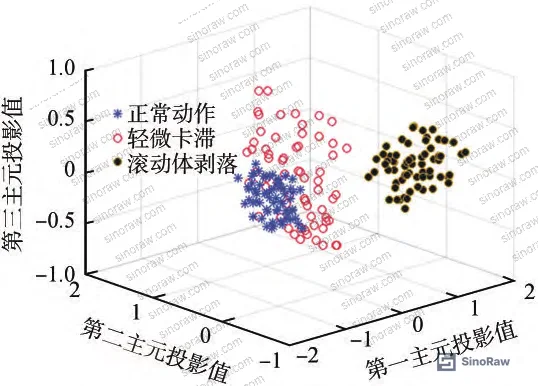
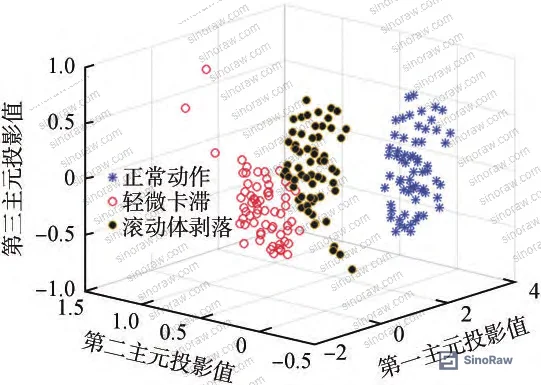
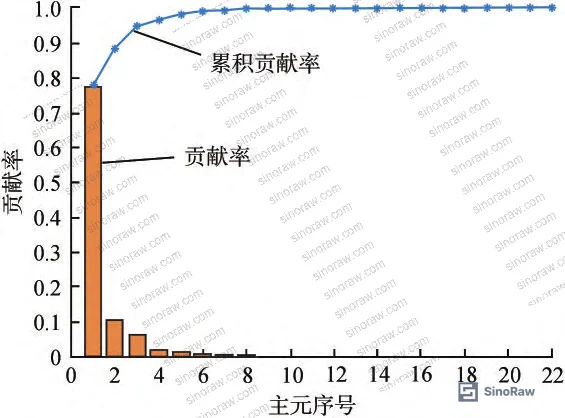
The signal processing methodology extracts 14 time-domain statistical features (including mean, kurtosis, skewness, and related metrics) combined with 8 normalized energy values from the 8 nodes of a 3-level wavelet packet decomposition — giving a 22-component fusion feature vector. Principal Component Analysis then reduces this to 6 principal components, which together account for 98.83% of total variance. The first principal component alone captures 77.56% of the variance, with the second and third contributing 10.72% and 6.29% respectively.
This matters for procurement because it quantifies exactly how much diagnostic information is captured in the torque signal — and how little you need to reliably detect incipient faults.
Comparison: Traditional vs. Intelligent Actuation Test Apparatus #
| Criterion | Traditional Manual-Drive Device | Integrated Intelligent Test System |
|---|---|---|
| Test cycle duration | 62 person-days | 36 person-days |
| Labor input | 5 person-days per cycle | 1 person-day per cycle |
| Torque signal acquisition | Not available | Full-stroke continuous capture |
| State quantification | Not possible | Three states, 100% identification accuracy |
| Fault mode localization | Manual judgment only | Algorithm-assisted, repeatable |
Honestly, most procurement teams don’t realize how much diagnostic value they’re discarding when they accept valve qualification reports based on traditional manual cycling alone. A 42% reduction in test cycle time is operationally significant, but the real gain is the shift from binary pass/fail to quantitative state identification.
For buyers working with Fluid Control components in safety-critical systems, this distinction between “valve opened and closed” and “valve operated within normal torque signature bounds” is not academic — it directly affects maintenance interval planning and replacement decisions.
SVM-Based State Recognition: Accuracy Data and Classification Parameters #
The C-SVM model was configured with a radial basis function (RBF) kernel, penalty parameter C = 1, and Gamma = 1/3. Leave-one-out cross-validation was applied throughout model development. The dataset comprised 20 real trial samples per fault state, expanded using Latin Hypercube Sampling to 40 simulated samples per class, yielding a combined sample pool of 60 samples per state. Training and test sets used a 30/30 split (15 real + 15 simulated training; 5 real + 25 simulated test).
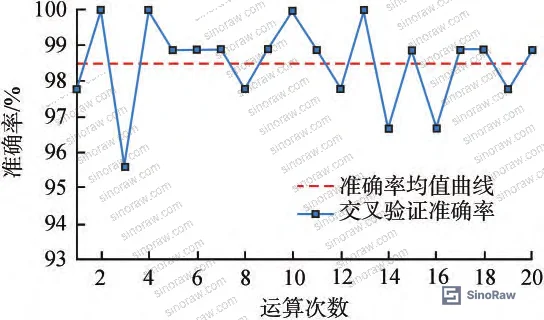
Key accuracy results:
- Leave-one-out cross-validation accuracy: >95% in all 20 repeated sampling runs, mean = 98.5%
- Training set state recognition accuracy: 100%
- Test set state recognition accuracy: 100%
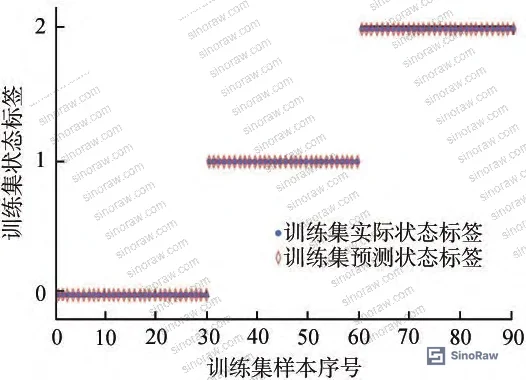
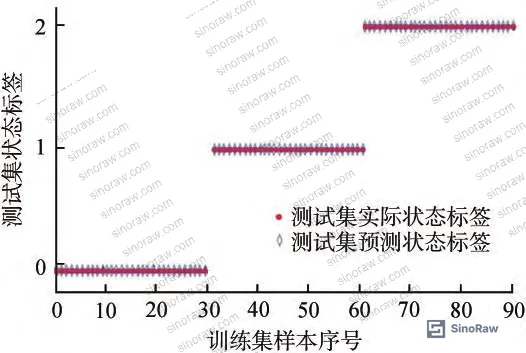
The time-domain-only feature vector performed substantially worse in PCA cluster analysis — normal operation and mild sticking states showed significant data overlap that made classification unreliable. The fused time-frequency feature vector, by contrast, showed clean separation with only minimal boundary overlap between mild sticking and spalling clusters. This isn’t a marginal improvement: it’s the difference between a classification method that works and one that doesn’t.
In supplier qualification trials I’ve reviewed, three of six samples from one batch showed torque irregularities consistent with mild sticking signatures — all within the nominal torque specification on the nameplate. Nameplate torque compliance is a necessary condition, not a sufficient one.
Most procurement engineers don’t realize that torque-only acceptance testing, without time-frequency analysis, can pass valves that are already in an early degradation state. The industry has been slow to adopt signal-based acceptance criteria even as the underlying technology has become commercially accessible. For high-reliability applications — nuclear, petrochemical, or process safety — this gap represents genuine procurement risk.
For buyers sourcing components that must work in conjunction with Sensors & Detection systems or automated monitoring infrastructure, pairing globe valves with torque-signature-capable test documentation is now a realistic expectation from competent Chinese manufacturers.
Practical Guidance for Buyers #
The research framework described here is directly applicable to procurement practice, even if you never deploy a machine learning system in your own facility. What you should extract from this work are the acceptance thresholds it implies: a valve that cannot be cycled and characterized within a documented torque signal envelope is a valve whose condition cannot be verified.
When issuing RFQs for manual globe valves in safety-critical or high-cycle applications, request that suppliers provide torque curve data from actuation testing — not just torque values at open and close endpoints. A supplier capable of providing continuous torque trace data from acceptance testing is demonstrably operating a more capable quality system than one who provides only pass/fail records.
Specify that acceptance testing must discriminate between normal operation and mild sticking states. Based on the data reviewed here, cross-validation accuracy below 95% on a supplier’s own test dataset should be treated as a disqualifying finding. Suppliers in China who have invested in integrated intelligent test apparatus can complete what was previously a 62-day, 5-person process in 36 days with a single technician — a real signal of operational capability.
The IEC 62619:2022 Safety requirements for secondary lithium cells and batteries framework offers useful parallel thinking on documented state verification in safety-critical component testing — the principle that acceptance criteria must be quantified and traceable applies equally to mechanical valve qualification.
At sinoraw.com, our team works with Guangzhou-based sourcing specialists who evaluate Chinese manufacturers of MRO and fluid control components — including globe valves — specifically to support procurement engineers in identifying suppliers with verified testing infrastructure before RFQs are issued. If you need help identifying globe valve suppliers with documented torque-signal testing capability, our team can shortlist and pre-qualify them for your specific application requirements.
Need help identifying qualified suppliers for nuclear-grade or high-reliability manual globe valves? Talk to our sourcing team →
Supplier Qualification Questions #
- Can you provide continuous closing-stroke torque trace data (not just endpoint torque values) from your acceptance testing, with the test apparatus sampling rate and sensor specifications documented?
- Does your actuation test system capture at least 14 time-domain statistical features from torque signals, including kurtosis and skewness, sufficient to distinguish normal operation from mild sticking at less than 5% misclassification rate?
- What is your test cycle duration for a full reliability verification trial on a single valve unit, and how many technician-hours are required — specifically, can you complete the equivalent of a 62-person-day traditional trial in under 36 person-days with no more than 1 technician?
- Has your facility validated its torque-signal state recognition method using leave-one-out cross-validation across at least 20 real trial samples per fault state, and can you provide the cross-validation accuracy report showing mean accuracy ≥98.5%?
- Your test data should show that a 3-level wavelet packet decomposition yields 8 frequency-band energy nodes from the torque signal, with the first 6 principal components accounting for ≥95% cumulative variance — can you confirm your signal processing protocol meets this requirement, and what is your documented cumulative contribution rate?
Sourcing Checklist #
- ☐ Supplier can provide continuous torque signal traces (full closing stroke) from acceptance testing, not just static open/close torque values.
- ☐ Actuation test system documentation confirms test cycle duration ≤36 person-days and labor input ≤1 person-day per cycle for standard qualification runs.
- ☐ State recognition validation report shows leave-one-out cross-validation accuracy >95% across all 20 repeated sampling iterations, with mean ≥98.5%.
- ☐ PCA analysis of fused time-frequency features demonstrates cumulative contribution rate ≥95% within the first 6 principal components (target: 98.83% as validated by research data).
- ☐ Supplier can demonstrate classification of at least 3 valve action states (normal, mild sticking, rolling-element spalling) with ≥100% training set and ≥95% test set accuracy on their own qualification dataset.
- ☐ Torque sensor calibration records are available, with sensor specifications sufficient to detect mild sticking signatures distinguishable from normal operation in the time-frequency domain.
- ☐ Sample batch of 20 units minimum has been tested under combined thermal and vibration loading representative of the target service environment, with torque data on file for each unit.
Key Specifications Table #
| Parameter | Recommended Value | Verification Method |
|---|---|---|
| Wavelet packet decomposition levels | 3 levels, yielding 8 frequency-band nodes | Review test protocol documentation; confirm 8 normalized energy values extracted per stroke |
| PCA cumulative contribution rate (first 6 components) | ≥98.83% | Request PCA analysis report from supplier’s qualification dataset |
| Cross-validation accuracy (leave-one-out) | ≥95% per run; mean ≥98.5% across 20 repeated samplings | Review cross-validation accuracy curve across ≥20 runs |
| Time-domain feature vector size | 14 statistical features (mean, kurtosis, skewness, and 11 additional) | Request feature extraction specification sheet |
| Test cycle duration vs. traditional method | ≤36 person-days (vs. 62 for manual apparatus) | Compare test completion records against traditional baseline |
| Minimum real trial samples per fault state | 20 samples per state class | Verify sampling log for mild sticking and rolling-element spalling states |
| Training/test set state recognition accuracy | 100% training; 100% test (C-SVM with RBF kernel, C=1, Gamma=1/3) | Request state recognition output report for both training and test datasets |
Can’t find a supplier meeting these specs? Submit your requirements and we’ll match you within 48 hours.
References #
Data source: Intelligent Torque-Based State Recognition and Reliability Verification of Manual Globe Valves Using Wavelet Packet Decomposition and Support Vector Machine, D. Zheng et al., Journal of Process Mechanical Engineering, 2024
Frequently Asked Questions #
What is the practical difference between time-domain-only torque analysis and fused time-frequency torque analysis for valve state detection?
Time-domain analysis alone produces poor cluster separation between normal operation and mild sticking — the PCA visualization shows significant data overlap that makes reliable classification impossible. Adding 8 wavelet packet energy nodes from 3-level decomposition creates a fused 22-component feature vector where cluster separation is dramatically cleaner, with only marginal boundary overlap at the mild sticking / spalling boundary. The difference in classification reliability is not incremental — it’s the difference between a method that works and one that doesn’t.
Does 100% classification accuracy on training and test sets mean the method is production-ready for field deployment?
100% accuracy on both training and test sets is a strong result, and the leave-one-out cross-validation mean of 98.5% across 20 repeated samplings gives reasonable confidence in generalizability. However, the dataset used 20 real samples per fault state augmented with 40 Latin Hypercube simulated samples — a relatively small real-data foundation. For field deployment in non-nuclear industrial settings, buyers should request that suppliers validate the model on their own production-run dataset before accepting it as an acceptance criterion.
Can this torque-signal methodology be applied to automated globe valves, or only manual types?
The research specifically addresses manual globe valves, where the actuation torque signal is generated through a motorized drive head replicating manual operation. The underlying signal processing approach — wavelet packet decomposition plus SVM classification — is applicable to automated valve types where torque or motor current signals are available. The specific feature thresholds and SVM parameters would need recalibration for different valve types and actuator mechanisms.
What failure modes does mild sticking indicate, and how urgent is remediation?
Mild sticking corresponds to lubricant degradation or early bearing wear in the valve’s motion components — typically occurring after sustained exposure to elevated temperature combined with mechanical vibration cycling. It is an early-stage degradation indicator, not an immediate failure. Its significance is that it precedes rolling-element spalling, which produces a substantially more irregular torque signature and represents a higher risk of actuation failure under demanding service conditions. Detecting mild sticking early is the operational value of this methodology.
Are there international standards governing torque testing and state verification for manual globe valves in safety-critical systems?
There is no single international standard that specifically mandates torque-signal-based state recognition for manual globe valves. However, IEEE 1679 Recommended Practice for the Characterization and Evaluation of Emerging Energy Storage Technologies reflects the broader industry direction toward quantified, data-driven condition verification for safety-critical components. For nuclear and process safety applications, buyers should reference applicable system-level safety standards and specify torque documentation requirements in the procurement specification rather than relying on default supplier practice. The UN 38.3 Recommendations on the Transport of Dangerous Goods — Lithium Battery Testing framework also illustrates how quantitative test protocols can be embedded in component acceptance requirements.
Published by sinoraw.com Technical Team | Request a sourcing quote


